Narrow Therapeutic Index Drugs: Stricter Bioequivalence Requirements Explained
Jan 16 2026

When your body’s potassium levels, a vital electrolyte that helps nerves and muscles work, including your heartbeat. Also known as serum potassium, it’s not something you hear about often—until something goes wrong. Too little or too much can cause muscle cramps, irregular heartbeat, or even sudden cardiac events. Most people don’t check their potassium unless they’re sick, on certain meds, or have kidney issues—but it’s one of the most overlooked players in daily health.
Low potassium, called hypokalemia, a condition where potassium drops below 3.5 mmol/L, often shows up after heavy sweating, vomiting, or taking diuretics. It’s common in people with high blood pressure on water pills, or those with eating disorders. On the flip side, hyperkalemia, when potassium climbs above 5.0 mmol/L, is dangerous too—especially for people with kidney disease or those taking ACE inhibitors, NSAIDs, or certain heart meds. Both conditions can sneak up silently. A simple blood test catches it, but many don’t get tested until symptoms hit hard.
What you eat matters. Bananas and potatoes get all the attention, but spinach, beans, avocados, and even yogurt have more potassium per serving. Yet, if you’re on a low-sodium diet or cutting carbs, you might be eating more of these foods without realizing it. Meanwhile, processed foods are stripped of potassium and loaded with sodium, throwing your balance off. And here’s the thing: potassium doesn’t work alone. It teams up with sodium, magnesium, and calcium. If one’s off, the others feel it. That’s why people with chronic kidney disease, heart failure, or diabetes often need regular monitoring.
Some meds can tank your potassium—like laxatives, steroids, or insulin. Others can push it up—like potassium-sparing diuretics, ARBs, or even some salt substitutes. If you’re on any of these, your doctor should be checking your levels every few months. But too many patients assume their meds are fine because they feel okay. That’s a mistake. Potassium imbalances don’t always cause obvious symptoms until it’s too late.
You’ll find posts here that dig into how common drugs like diuretics and statins affect your potassium, what to do if you’re taking supplements, and why skipping meds or overdoing salt substitutes can backfire. There’s also real talk about how kidney problems, diet trends, and even dehydration play into this. No fluff. Just what works, what doesn’t, and what your doctor might not tell you unless you ask.
Dec
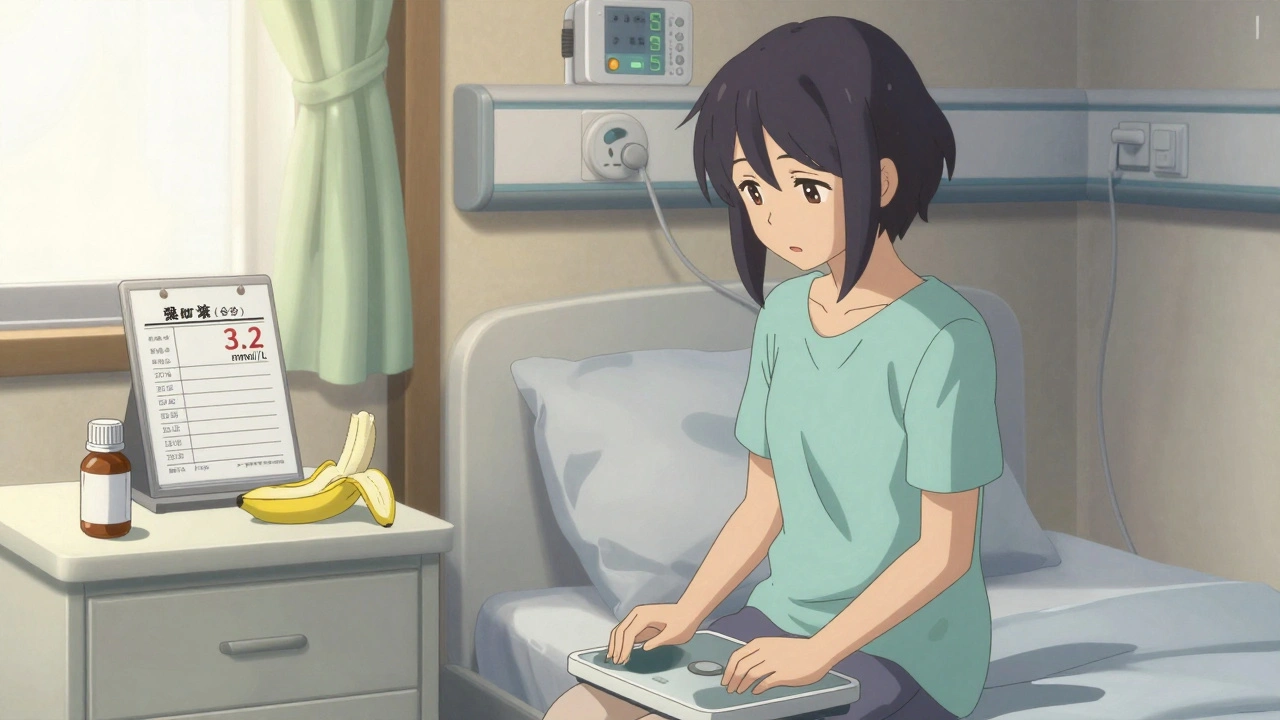
Diuretics help manage fluid in heart failure but often cause dangerous low potassium. Learn how to prevent and treat hypokalemia with proven strategies like potassium supplements, MRAs, and SGLT2 inhibitors.
Jan 16 2026
Oct 12 2025

Nov 18 2025

Mar 26 2025

Feb 11 2026