
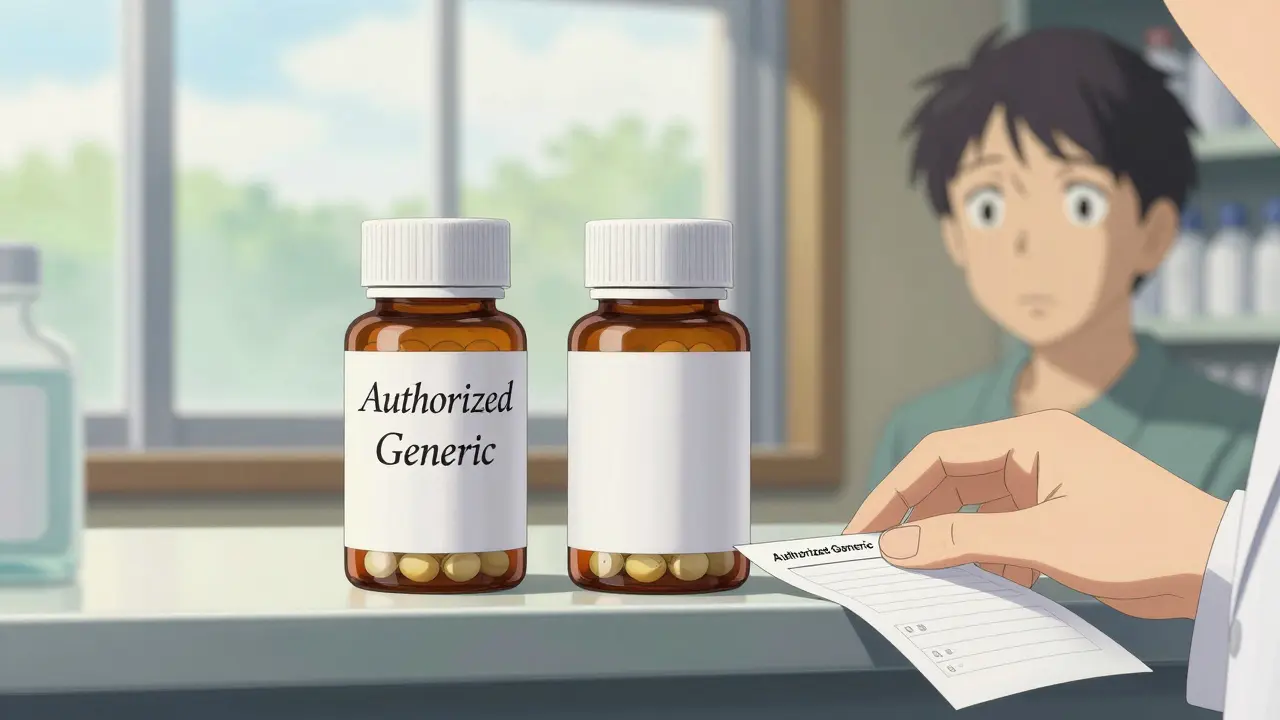
When a brand-name drug’s patent runs out, the market doesn’t just flip open to cheap generics overnight. Instead, something quieter - and more strategic - often happens. The original manufacturer, the same company that spent millions developing and marketing the drug, quietly launches its own version. Same pills. Same ingredients. Same effectiveness. But no brand name on the box. This is an authorized generic.
What Exactly Is an Authorized Generic?
An authorized generic isn’t a copy. It’s the exact same drug the brand company made all along. The only difference? It’s sold without the brand name. No logo. No fancy packaging. Just the medicine inside, often in a plain bottle or blister pack. The FDA calls it the same drug because it is - same active ingredient, same inactive fillers, same manufacturing process. It’s not a generic in the traditional sense. It’s the brand product, repackaged.Traditional generics must prove they work the same way through expensive testing. Authorized generics skip that step entirely. They’re made under the original drug’s approval (called an NDA), not a new generic application (ANDA). That means no extra FDA review. Just a simple notice. This is why you won’t find them listed in the FDA’s Orange Book - they’re not treated as new drugs. They’re just the same drug with a new label.
Why Do Brand Companies Do This?
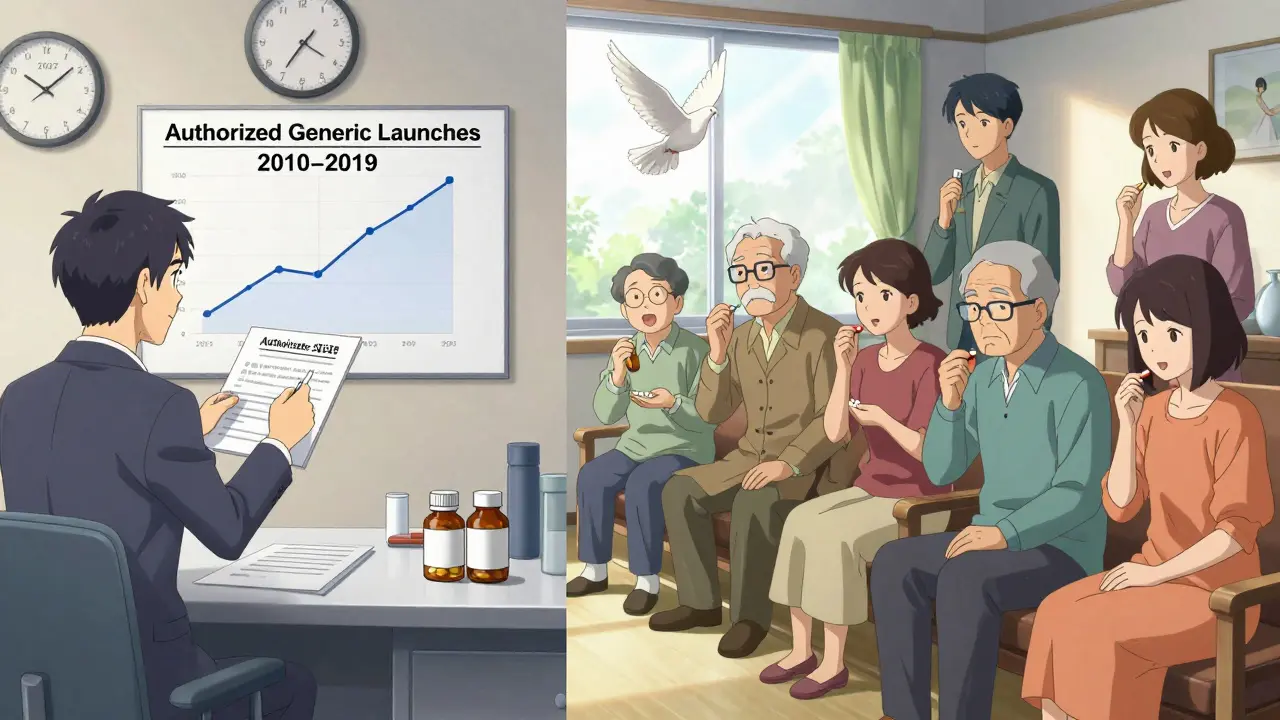
It’s not charity. It’s business. When a patent expires, a competitor can apply to be the first generic maker and get 180 days of exclusive rights to sell the generic version. That’s a huge advantage. But here’s the twist: the brand company can launch its own authorized generic right before or during that 180-day window. And when they do, prices drop - fast.According to a 2022 study in Health Affairs, between 2010 and 2019, there were 854 authorized generic launches. The peak? 2014. And in markets where authorized generics entered during the first generic’s exclusivity period, prices were 15-20% lower than in markets without them. That’s money saved for patients and insurers.
But here’s the catch: by launching their own version, brand companies can split the market. Instead of one generic company taking all the sales, now there are two: the first generic and the brand’s own authorized version. That can slow down other generics from entering. Critics say this delays true competition. Supporters say it gives patients more options and lowers prices right away.
Authorized Generics vs. Traditional Generics
It’s easy to confuse the two. But they’re not the same.Traditional generics only need to match the brand’s active ingredient. They can use different fillers, dyes, or coatings. For most drugs, that’s fine. But for drugs with a narrow therapeutic index - like blood thinners, seizure meds, or thyroid pills - even tiny differences in inactive ingredients can cause problems. That’s where authorized generics shine. They’re identical. No guesswork.
Here’s a quick breakdown:
| Feature | Authorized Generic | Traditional Generic |
|---|---|---|
| Active Ingredient | Identical to brand | Identical to brand |
| Inactive Ingredients | Identical to brand | May differ |
| Regulatory Path | Made under brand’s NDA | Requires ANDA approval |
| Appears in FDA Orange Book | No | Yes |
| Price Compared to Brand | 30-70% lower | 80-90% lower |
For example, Colcrys (brand) and its authorized generic from Prasco Labs are chemically the same. So are Concerta and its authorized version from Actavis. Patients who switched from brand to traditional generic and had side effects often report no issues when switching to the authorized version.
Why Patients Get Confused
Here’s the real problem: patients don’t know what they’re getting. A 2023 survey by US Pharmacist found that 68% of pharmacists say patients are confused about authorized generics. One patient on Drugs.com wrote: “I got this ‘generic’ but it looks identical to the brand I used before-is this actually generic?”They’re not wrong. It is identical. But the word “generic” makes people think it’s a cheaper, possibly inferior copy. That’s not true here. Authorized generics are the same medicine, just cheaper. But without clear labeling, patients think they’ve been handed a knockoff.
Pharmacists struggle too. A 2021 survey by the National Community Pharmacists Association found that 57% of independent pharmacies saw a spike in patient questions after the FDA pushed for clearer labeling in 2019. Even then, labeling rules are vague. The only requirement? No brand name. No color codes. No symbols. So one authorized generic might look like a white pill with “A1” on it. Another might look just like the brand - same shape, same imprint.
How Pharmacies Handle Them
Pharmacies aren’t always equipped to handle this complexity. Many pharmacy systems don’t flag authorized generics separately. That means a pharmacist might dispense one thinking it’s a traditional generic - and miss the fact that it’s the exact same drug as the brand.Some systems have improved. Epic Systems updated its software in 2021 to identify authorized generics and reduce mislabeling errors by 67%. But not every pharmacy uses Epic. Smaller clinics and independent pharmacies often rely on outdated systems or manual checks.
Training is another issue. AmerisourceBergen’s 2022 materials show that 73% of pharmacy technicians needed 2-3 weeks of extra training to correctly identify and explain authorized generics to patients. That’s time and money many pharmacies don’t have.
Who Benefits?
The answer isn’t simple.Patients benefit from lower prices - especially during the critical 180-day window. The FTC’s 2011 report found that authorized generics reduce costs without sacrificing quality. For drugs like levothyroxine or celecoxib, where consistency matters, they’re often the safest choice.
Insurers and pharmacy benefit managers (PBMs) like Express Scripts and OptumRx actively promote authorized generics. Express Scripts reported 28% higher use of authorized generics compared to traditional ones because they’re seen as more reliable.
But the brand companies? They win too. They keep revenue flowing after patent loss. They maintain relationships with prescribers. They control the supply chain. And they prevent other generics from dominating the market too quickly.
Some experts call it smart strategy. Others call it market manipulation. Dr. Jerry Avorn from Harvard called it a “sophisticated market manipulation strategy that ultimately benefits brand manufacturers more than consumers in the long term.”
The Future of Authorized Generics
The market is growing. As of October 2025, the FDA lists 1,247 authorized generics - up from 854 in 2019. Evaluate Pharma predicts that by 2027, 45% of major branded drugs will have an authorized generic version, up from 32% in 2022.But pressure is building. In 2023, Congress introduced the “Promoting Competition in Pharmaceutical Markets Act,” which would ban brand companies from launching authorized generics during the first generic’s 180-day exclusivity period. If passed, it could change how the whole system works.
For now, authorized generics remain a key tool in the brand drug playbook. They’re not a loophole. They’re a legal, regulated, and increasingly common response to patent expiration. And for patients who need stability - especially with high-risk medications - they’re often the best option available.
What You Should Know as a Patient
If you’re prescribed a drug that’s now available as an authorized generic:- Ask your pharmacist: “Is this the same as the brand?” If they say yes - it probably is.
- Don’t assume “generic” means different. Authorized generics are identical.
- If you’ve had issues with traditional generics before, ask for the authorized version.
- Check the pill imprint. If it matches your brand pill, it’s likely an authorized generic.
- Don’t panic if the bottle looks different. That’s normal.
Authorized generics aren’t magic. But they’re not a trick either. They’re a middle ground - a way for brand companies to stay in the game while giving patients access to the same medicine at a lower price. Understanding them can help you make smarter choices - and save money without risking your health.
Are authorized generics the same as brand-name drugs?
Yes. Authorized generics contain the exact same active and inactive ingredients as the brand-name drug. They’re made in the same factory, on the same生产线, and meet the same quality standards. The only difference is the packaging and labeling - no brand name appears on the authorized version.
Why aren’t authorized generics listed in the FDA’s Orange Book?
The Orange Book only lists drugs approved under the Abbreviated New Drug Application (ANDA) process. Authorized generics are marketed under the original brand’s New Drug Application (NDA), so they don’t go through the generic approval process. The FDA considers them the same drug, just sold under a different label, so they’re not included in the Orange Book.
Do authorized generics cost less than traditional generics?
Usually not. Traditional generics often cost even less because multiple companies compete to make them. Authorized generics are priced lower than the brand, but typically higher than traditional generics - because they’re made by the original manufacturer. Still, they’re often cheaper than the brand and more consistent than traditional generics.
Can I ask my pharmacist to give me an authorized generic?
Yes. You can ask specifically for the authorized generic version of your medication. Pharmacists can usually order it if it’s available. It’s especially helpful if you’ve had problems with traditional generics - like side effects or inconsistent results - because the authorized version is chemically identical to the brand.
Are authorized generics safe for people with allergies?
Yes - and often safer than traditional generics. Since authorized generics use the exact same inactive ingredients (like dyes or fillers) as the brand, if you’ve tolerated the brand without allergic reactions, you’ll likely tolerate the authorized generic too. Traditional generics can change inactive ingredients, which may trigger reactions in sensitive patients.
Why do some authorized generics look different from the brand?
Manufacturers sometimes change the color, shape, or imprint to distinguish the authorized generic from the brand - even though the medicine inside is identical. This is done to avoid confusion on pharmacy shelves and for regulatory reasons. But the formulation hasn’t changed. Always check with your pharmacist if you notice a visual difference.
Is there a list of all authorized generics available?
The FDA doesn’t maintain a public list, but the agency does track them internally. Some third-party sites like GoodRx and Drugs.com now include authorized generics in their databases. You can search by brand name and look for the label “Authorized Generic” next to the generic option. As of October 2025, the FDA’s internal list includes over 1,200 authorized generic products.


Comments
Dylan Smith
So the brand company just makes the exact same pill and sells it cheaper to crush the competition? That’s not business that’s sabotage with a lab coat
Colleen Bigelow
Of course they do. Big Pharma doesn’t care if you live or die - they care if their quarterly profits look pretty. Authorized generics? More like authorized monopoly extensions. They’re not letting you win. They’re letting you think you’re winning while they still own the board. 🤡
Elizabeth Bauman
Actually, this is exactly how free markets are supposed to work. The brand company is using its own IP to compete fairly - no cheating, no patent trolling. If you can’t beat ‘em, join ‘em. That’s American capitalism at its finest. Stop crying about big pharma and thank them for keeping prices down without sacrificing quality.
Ron Williams
Been on an authorized generic for my thyroid med for three years. Zero side effects. Same pill, same factory, just cheaper. My pharmacist didn’t even tell me until I asked. Honestly? If you’ve had bad reactions to generics before, this is the quiet hero you didn’t know you needed.
Joanna Ebizie
Ugh so you're telling me I paid $200 for a brand name when I could’ve gotten the exact same thing for $15? I feel so stupid. And now they’re gonna make me feel like I’m lucky they let me have it? Nah.
Billy Poling
It is imperative to note, with the utmost gravity, that the structural economic incentives embedded within the pharmaceutical patent regime are not merely operational but deeply normative - the authorized generic represents a form of regulatory arbitrage that exploits the ambiguity between NDA and ANDA pathways, thereby subverting the intended competitive equilibrium envisioned by the Hatch-Waxman Act of 1984. This is not innovation - it is institutionalized rent-seeking under the guise of consumer benefit.
SHAMSHEER SHAIKH
Let me explain this like you're 10: Imagine you make a chocolate bar called ‘YummyBar’. Then, when someone else tries to copy it, you just make your own version without the logo, sell it for half price, and now no one buys the copy. You still win. Everyone else loses. That’s what they’re doing. It’s not illegal. It’s just… sad.
Dave Alponvyr
So you’re telling me the company that spent millions to make this drug… is now the one selling it cheaper? Wow. What a hero. /s
Kitty Price
My mom switched to the authorized generic for her blood pressure med and her numbers stabilized for the first time in a year. She didn’t even know the difference until I told her. I’m just glad she got the same medicine without the brand markup 😊
James Rayner
It’s funny how we call it ‘generic’ when it’s actually the most authentic version… isn’t that the whole paradox of capitalism? We reward the original creator, then punish them for being the only one who can replicate their own work. We want cheaper drugs, but we also want to hate the people who make them. We’re all just trying to survive… while pretending we’re moral crusaders.
Aditya Kumar
Too much text. I just want to know if it’s safe.
Cassandra Collins
theyre lying. the pills are different. they put tracking chips in the authorized ones. i saw it on a video. the brand ones dont have it. trust me i did my research
Tiffany Machelski
so if its the same why do they even bother calling it authorized generic? just call it the brand but cheaper. why make it confusing? i just want my medicine not a puzzle
Mike Smith
Let’s not lose sight of the bigger picture. The fact that a company can innovate, invest, and then responsibly transition its product into a lower-cost option - without compromising safety - is a model of responsible stewardship. This isn’t exploitation. It’s evolution. And for patients who rely on precise dosing, it’s a lifeline. Let’s celebrate the systems that protect health, not just the ones that lower prices.
sue spark
I’ve been on the same med for years and switched to the authorized generic last year. No issues. Honestly I didn’t even notice until I checked the receipt. I’m just glad it works and costs less