
Opioid Dependence vs. Addiction Assessment Tool
This assessment tool helps you understand if you're experiencing physical dependence or opioid use disorder (OUD). Based on DSM-5 criteria and clinical evidence, it's designed to help you distinguish between these two conditions. This is NOT a diagnosis, but a tool to help guide your conversation with a healthcare provider.
Physical Dependence Isn’t Addiction - And This Mistake Is Hurting People
You’ve been prescribed opioids for pain after surgery. After a few weeks, you start feeling sick if you miss a dose. Your heart races. You sweat. You can’t stop yawning. You panic - am I addicted? You’re not alone. Most people think this is addiction. It’s not. It’s physical dependence. And confusing the two is causing people to suffer needlessly - either by being denied pain relief or being wrongly labeled as addicts.
Let’s cut through the noise. Physical dependence and addiction are not the same. They don’t even work the same way in your body. One is a normal, expected reaction to taking a medicine. The other is a brain disorder that changes how you think, feel, and act. Mixing them up leads to stigma, poor care, and even death.
What Physical Dependence Really Means
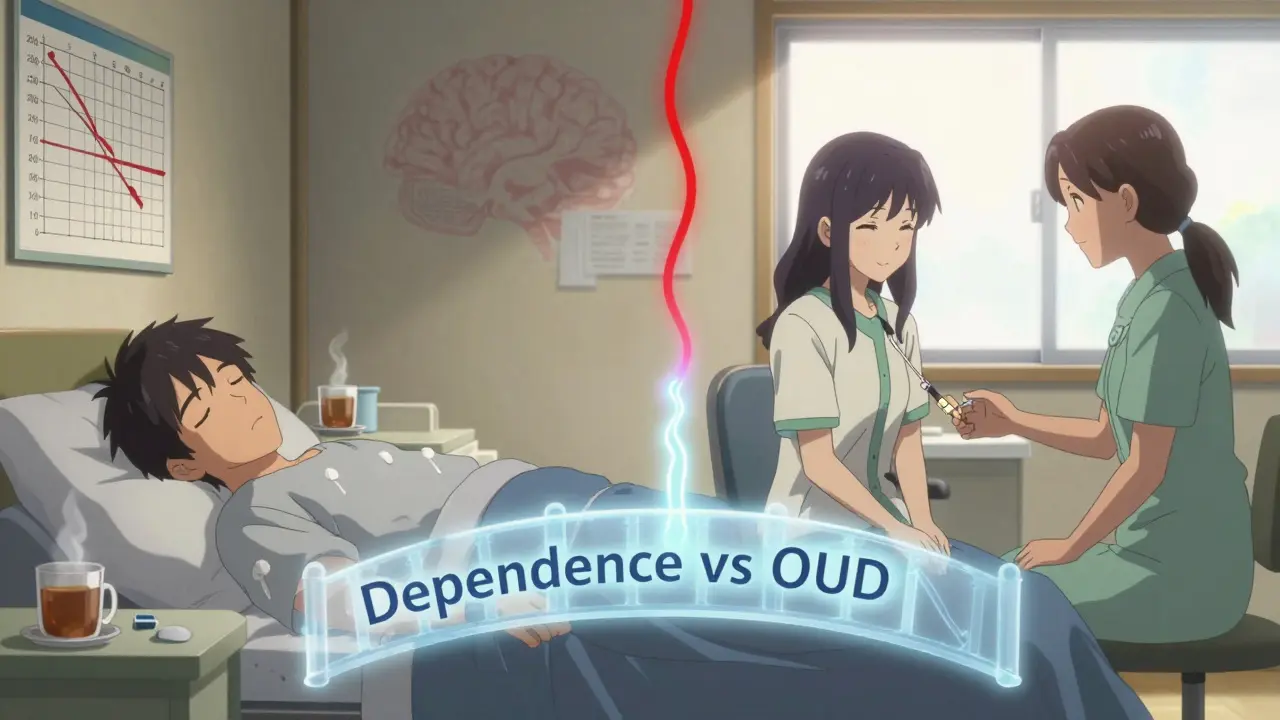
Physical dependence happens when your body gets used to a drug being there. It’s not about cravings. It’s not about lying, stealing, or losing your job. It’s biology. Your brain adjusts. It builds new pathways to keep things running smoothly while the drug is present. When you stop taking it, those pathways are thrown off balance - and that’s when withdrawal kicks in.
For opioids, this usually starts within 7 to 10 days of daily use at doses above 30 morphine milligram equivalents (MME). That’s not a lot. Even someone taking 10 mg of oxycodone twice a day for a week can develop it. And here’s the key: almost everyone who takes opioids regularly for more than a month becomes physically dependent. It’s that common. It’s not a sign you’re failing. It’s your body doing its job.
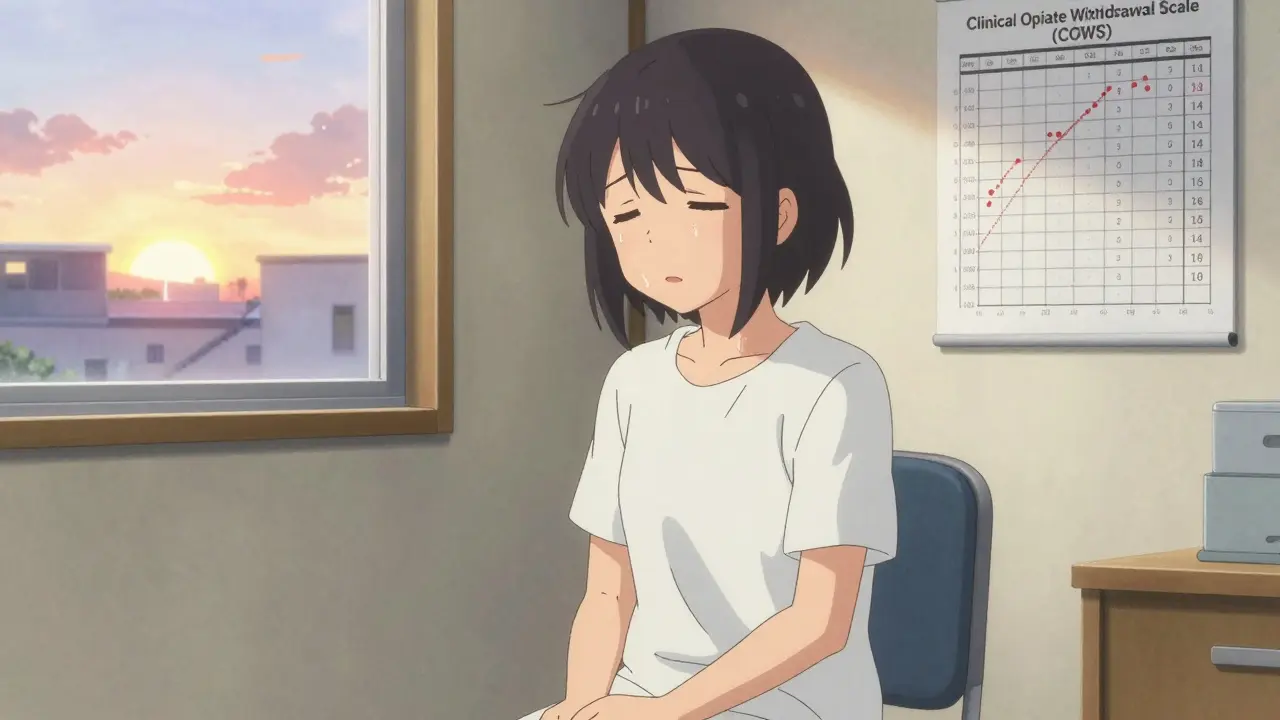
Withdrawal symptoms are unmistakable: nausea (92% of cases), vomiting (85%), diarrhea (68%), sweating (78%), anxiety (89%), and yawning (76%). These aren’t psychological. They’re measurable. Doctors use the Clinical Opiate Withdrawal Scale (COWS) to track them. A score above 12 means you’re in moderate withdrawal - and need medical help.
But here’s the thing: once you stop the drug, these symptoms fade. Within a few weeks, your brain resets. Your body returns to baseline. No lasting damage. No change in your ability to make decisions. No compulsion to use. Just discomfort - and then it’s over.
What Addiction Actually Is
Addiction - now called Opioid Use Disorder (OUD) - is different. It’s not about withdrawal. It’s about loss of control. It’s about using the drug even when it’s destroying your life.
The brain changes here are deep and lasting. Addiction hijacks the reward system. The dopamine pathways in your brain’s nucleus accumbens get rewired. The prefrontal cortex - the part that helps you say no - weakens. The amygdala, which handles fear and stress, goes into overdrive. This isn’t a choice. It’s a disease of the brain.
The DSM-5, the standard used by doctors worldwide, lists 11 criteria for OUD. You need at least two to be diagnosed. These include:
- Craving the drug (83% of severe cases)
- Using more than you planned
- Failed attempts to quit
- Spending lots of time getting, using, or recovering from the drug
- Neglecting responsibilities at work, school, or home
- Continuing use even when it harms your relationships
- Using in dangerous situations (like driving)
- Giving up hobbies or activities you used to love
- Needing more to get the same effect (tolerance)
- Withdrawal symptoms (which everyone gets - but this is about behavior, not symptoms)
Real-life examples show the difference. One person tapers off 60 MME/day of oxycodone over eight weeks with their doctor. They feel awful for 10 days - but never once think about using it for fun. They go back to work. They sleep normally. They don’t lie. They don’t steal. They’re physically dependent - not addicted.
Another person keeps refilling prescriptions they don’t need. They lie to their doctor. They steal money from family. They drive two hours to get pills after losing their job. They know it’s hurting them - but they can’t stop. That’s OUD.

Why the Confusion Exists - And Why It’s Dangerous
For years, doctors, patients, and even insurance companies used the word “dependence” to mean addiction. That’s wrong. And it’s had deadly consequences.
A 2020 study found 68% of chronic pain patients thought withdrawal meant they were addicted. So they stopped their meds - even when their pain was still bad. A 2021 report showed 42% of chronic pain patients quit opioids out of fear of addiction - even though only 0.7% to 1% of opioid-naïve patients develop OUD after short-term use for surgery.
Meanwhile, people with real OUD are being ignored. When doctors think “dependence = addiction,” they assume anyone on opioids is at risk. So they cut them off abruptly. No taper. No support. No MAT (Medication-Assisted Treatment). That’s dangerous. Sudden withdrawal can trigger relapse - and worse, drive people to street drugs like fentanyl.
The CDC says clearly: Physical dependence is not a reason to stop opioid therapy if it’s helping your pain. The American Medical Association passed a resolution in 2021 telling doctors to stop confusing the two. And yet, it still happens.
How to Tell Them Apart - A Simple Guide
Here’s how to tell if you’re dealing with physical dependence or OUD:
| Factor | Physical Dependence | Opioid Use Disorder (Addiction) |
|---|---|---|
| Primary cause | Brain adapting to medication | Brain circuit changes affecting motivation and control |
| Key sign | Withdrawal symptoms when stopping | Compulsive use despite harm |
| Behavior | Follows prescription. No deception | Lies, steals, manipulates to get more |
| Cravings | Mild or absent | Intense, persistent (83% in severe cases) |
| Duration of brain changes | Resolves in weeks after stopping | Lasts years - even after quitting |
| Impact on life | No major disruption | Job loss, broken relationships, legal issues |
| Treatment needed | Gradual taper under supervision | Medication-Assisted Treatment + counseling |
If you’re taking opioids as prescribed and just feel sick when you skip a dose - you’re dependent. Not addicted. If you’re using beyond what’s prescribed, hiding it, or it’s wrecking your life - you need help for OUD.
What to Do If You’re Dependent
If you’ve been on opioids for more than a few weeks and your doctor wants to stop them, don’t panic. Don’t quit cold turkey. Ask for a taper.
The CDC recommends reducing your dose by 5% to 10% every 2 to 4 weeks. If you’re on over 100 MME/day, go slower - 5% per month. Use the COWS scale to track withdrawal. If symptoms get too bad, pause the taper. That’s normal.
Some doctors now use lofexidine, a non-opioid medication approved by the FDA in 2023, to ease withdrawal symptoms. It doesn’t treat addiction - but it makes the process bearable.
What to Do If You Have OUD
If you recognize signs of addiction - cravings, loss of control, harm to your life - you need more than a taper. You need Medication-Assisted Treatment (MAT).
MAT combines FDA-approved medications with counseling:
- Buprenorphine - reduces cravings and withdrawal. Lowers death risk by 70-80%
- Methadone - stabilizes brain chemistry. Lowers death risk by 50%
- Naltrexone - blocks opioids. Best for people already detoxed
These aren’t “replacing one drug with another.” They’re restoring brain function. Studies show people on MAT are more likely to keep their jobs, stay in housing, and rebuild relationships. And they’re far less likely to die.
Insurance must cover MAT under the Mental Health Parity Act. If you’re being denied, ask for help from a patient advocate or local health department.
The Bigger Picture: Why This Matters
The opioid crisis didn’t start with street drugs. It started with doctors prescribing pain pills - and then blaming patients for getting dependent. That misunderstanding fueled the epidemic.
From 2018 to 2022, opioid overdoses cost the U.S. $1.53 trillion. Over 80,000 people died in 2021 alone. But here’s the irony: the crackdown on prescriptions - meant to reduce addiction - pushed many into heroin and fentanyl. Why? Because people with chronic pain were cut off. And people with OUD had no access to treatment.
Today, the CDC, NIDA, and the American Medical Association all agree: we must separate dependence from addiction. We must treat pain without fear. We must treat addiction without shame.
And it’s working. New brain scans can now distinguish between dependence and OUD with 89% accuracy by measuring prefrontal cortex activity. Within the next few years, these tools could be in every clinic - making misdiagnosis rare.
Until then, remember: Dependence is not a moral failing. Addiction is not a choice. Both need understanding - not judgment.
Can you be physically dependent on opioids without being addicted?
Yes. Nearly everyone who takes opioids daily for more than a month becomes physically dependent. That’s a normal body response. Addiction involves compulsive use, cravings, and harm to your life - which only affects about 8% of long-term users.
Does withdrawal mean I’m addicted?
No. Withdrawal is a sign of physical dependence - not addiction. Many people on prescribed opioids experience nausea, sweating, and anxiety when they stop - but they don’t crave the drug, lie to get it, or use it recreationally. That’s dependence, not addiction.
What’s the difference between tolerance and addiction?
Tolerance means you need more of the drug to get the same effect. It often happens with physical dependence. Addiction means you keep using even when it hurts you - you lose control. You can have tolerance without addiction. But addiction always includes tolerance.
Can I taper off opioids safely on my own?
It’s not recommended. Tapering too fast can cause severe withdrawal, relapse, or even seizures. The CDC advises reducing doses by 5-10% every 2-4 weeks under medical supervision. Your doctor can also use medications like lofexidine to ease symptoms.
Is buprenorphine just replacing one drug with another?
No. Buprenorphine reduces cravings and withdrawal without causing a high. It helps your brain heal. People on buprenorphine are more likely to keep their jobs, stay in treatment, and avoid overdose. It’s medicine - not substitution.
How do I know if I need MAT for OUD?
If you’ve tried to quit but keep using, lie about your use, neglect responsibilities, or use opioids in dangerous situations, you likely have OUD. Talk to a doctor about MAT. It’s covered by most insurance and saves lives.
Next Steps
If you’re on opioids and worried about dependence: talk to your doctor about a taper plan. Don’t quit cold turkey. Ask about lofexidine if withdrawal is too tough.
If you’re struggling with cravings, lying, or losing control: reach out. You’re not broken. You’re sick - and treatable. Call a local addiction helpline or ask your doctor about buprenorphine or methadone.
If you’re a caregiver or loved one: learn the difference. Don’t shame someone for withdrawal. Support them. Help them find care - not judgment.
This isn’t about blame. It’s about science. And it’s about saving lives.


Comments
Kipper Pickens
Physical dependence is a neuroadaptive response mediated by μ-opioid receptor internalization and downstream cAMP upregulation in the locus coeruleus - it’s a homeostatic mechanism, not a behavioral pathology. The DSM-5’s diagnostic criteria for OUD explicitly separate physiological tolerance/withdrawal from compulsive use, yet clinicians still conflate them due to legacy terminology. This isn’t semantics - it’s pharmacological literacy.
Aurelie L.
My cousin died because her doctor cut her off cold turkey. She was dependent. Not addicted. Just sick. And now she’s gone.
Sally Dalton
OH MY GOSH THIS IS SO IMPORTANT!!! 🥹 I’ve been on oxycodone for 6 months after my back surgery and I was SO scared I was an addict because I got shaky when I missed a dose… but now I get it!! It’s just my body being a little dramatic 😅 Thank you for explaining the difference so clearly - I feel like a weight’s been lifted. I’m gonna ask my doc about a slow taper now!!
Allie Lehto
People don’t want to hear this because it makes them feel guilty for judging others. But let’s be real - if you’re not addicted, why are you still on opioids? The system is broken. Everyone’s looking for an excuse to stay on the sauce. Tolerance isn’t normal - it’s a red flag. And MAT? That’s just another form of control. You’re trading one prison for another.
And don’t give me that ‘it’s a disease’ crap. We used to say alcoholism was a disease too - and look where that got us. Personal responsibility still matters. 😒
Henry Jenkins
Interesting breakdown, but I’m curious - how do you account for the fact that many people who develop OUD started with legitimate prescriptions? The transition from dependence to addiction isn’t always clear-cut. There’s a gray zone where psychological reinforcement kicks in - the relief from pain becomes tied to emotional regulation, not just physical symptom management. And while the DSM-5 criteria are useful, they’re still behavioral proxies for underlying neurochemical dysfunction. The real issue is that we don’t have reliable biomarkers yet - brain scans are promising, but not accessible. So we’re left relying on self-reporting and clinician judgment, which is why misdiagnosis persists. We need better tools, but also better training. Most primary care docs get 2 hours on pain management in med school.
Dan Nichols
You're wrong. Withdrawal = addiction. Period. If you need the drug to feel normal then you're addicted. Your body isn't 'just adapting' - it's screaming for more. The fact you call it 'normal' is dangerous. People die because of this soft language. No more coddling. Cut the pills. Build resilience. Stop enabling.
Renia Pyles
Oh please. You think this is about science? It’s about money. Pharma made billions pushing opioids. Now they’re pushing buprenorphine. Same game. Same players. MAT is just a new product line. And you? You’re just the marketing department with a white coat.
They don’t care if you’re dependent or addicted. They care if you keep buying.
Rakesh Kakkad
Respected sir, your elucidation of neurobiological mechanisms is profoundly insightful. However, in the Indian context, access to lofexidine or MAT remains extremely limited, particularly in rural regions. The stigma surrounding opioid use is even more severe here - patients are often ostracized, not treated. While your data is accurate, implementation requires systemic reform, not just clinical education.
Perhaps we should advocate for community-based peer support models, modeled after successful HIV/AIDS outreach programs?
Nicholas Miter
I’ve been on a low dose for 18 months after a car accident. Never used it for fun. Never lied. Never stole. Just took it when I needed to get through the day. When my doc tried to cut me off, I had night sweats and couldn’t sleep for weeks. I didn’t feel like an addict. I felt like a person who’d been through hell and was being punished for surviving. I’m glad someone finally said this out loud.
Suresh Kumar Govindan
This is a Western narrative. In Asia, opioids are tightly controlled. Dependence is not normalized. The idea that addiction is a disease is a liberal myth designed to absolve personal failure. You are not sick. You are weak. And your weakness is poisoning society.