Age-Related Hearing Loss: Understanding Presbycusis and Effective Amplification Strategies
Jan 15 2026

When you hear interchangeable biosimilars, biologic drugs approved by the FDA to be substituted for a brand-name biologic without the prescriber’s involvement. Also known as biosimilar substitutes, they work just like the original but cost far less—often 15% to 35% cheaper. Unlike regular generics, which copy small-molecule drugs, biosimilars are made from living cells and are incredibly complex. But if a biosimilar gets the "interchangeable" label, it means the FDA has confirmed you can swap it for the brand-name drug at the pharmacy without your doctor having to approve each switch.
This matters because biologic medications, complex drugs used to treat autoimmune diseases, cancer, and chronic conditions like rheumatoid arthritis and Crohn’s disease can cost over $20,000 a year. Many people on these drugs struggle to afford them. generic drugs, simpler, chemically identical copies of small-molecule drugs have been saving patients money for decades—but until recently, there wasn’t a path for similar savings with biologics. Interchangeable biosimilars changed that. They’re not just cheaper versions—they’re proven to produce the same clinical results, with no increased risk of side effects.
But here’s the catch: not all biosimilars are interchangeable. Many are biosimilar, but only a few have passed the extra testing required to be labeled interchangeable. That means your pharmacist can’t swap them automatically unless the drug has that specific designation. And even then, state laws vary—some let pharmacists substitute without telling you, others require notice. If you’re on a biologic, ask your doctor or pharmacist: is my drug interchangeable? Can I switch? Will it affect my coverage?
You’ll find real-world stories in the posts below: how people saved hundreds a month switching to an interchangeable biosimilar, how insurance companies push these drugs to cut costs, what happens when a substitution goes wrong, and why some patients still hesitate even when the science says it’s safe. We also cover how formularies treat these drugs, what to do if your plan denies coverage, and how to tell the difference between a biosimilar and a true interchangeable version. This isn’t theoretical. It’s about your prescription, your budget, and your health.
Dec
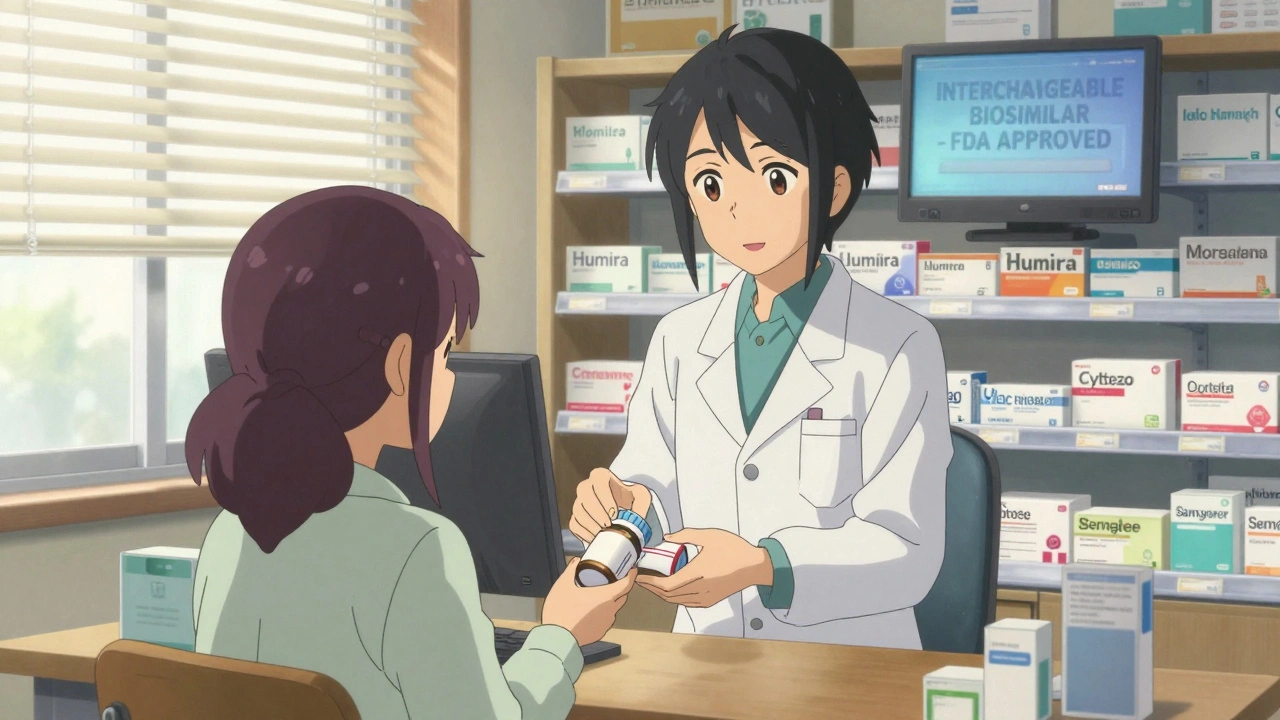
Interchangeable biosimilars can be swapped automatically at U.S. pharmacies, but only if FDA-approved and allowed by state law. Learn how this affects cost, safety, and patient access to biologic drugs.

Jan 15 2026

Jan 13 2026

Nov 26 2025

Mar 15 2025

Nov 18 2025