

When your body mistakes a harmless food like peanut or milk for a dangerous invader, it doesn’t just cause a stomach upset-it can trigger a life-threatening reaction in minutes. This is the reality of IgE-mediated food allergies, the most common and dangerous form of food allergy. Unlike delayed reactions that creep in hours later, IgE reactions strike fast, often within seconds to two hours after eating. They’re responsible for nearly all cases of anaphylaxis, the severe, whole-body allergic response that can shut down breathing or drop blood pressure to dangerous levels. Understanding how this happens-and what actually works to stop it-is no longer just for doctors. It’s critical for parents, caregivers, and anyone living with or near someone at risk.
How IgE Turns Food Into a Threat
It starts with a mistake. Your immune system, designed to protect you, learns to see a specific protein in peanut, egg, shellfish, or milk as a threat. This doesn’t happen because the food is toxic-it happens because your body’s alarm system got confused. The first time you’re exposed, your immune cells-dendritic cells-grab bits of the food protein and show them to T cells. In allergic people, those T cells turn into Th2 cells, which tell B cells to make a special kind of antibody: IgE.
These IgE antibodies don’t float around freely. They latch onto mast cells and basophils, mostly in the skin, gut, and lungs. Think of them like landmines waiting for a trigger. The next time you eat that food, the proteins bind to the IgE on those cells. When enough IgE molecules are pulled together, the cell explodes, releasing histamine, leukotrienes, and other chemicals. That’s when symptoms begin: hives, swelling, vomiting, wheezing, dizziness. And if enough systems are hit at once-your airways closing, your blood pressure crashing-that’s anaphylaxis.
What makes this even more dangerous is how little it takes. Some people react to less than a milligram of peanut protein-enough to be in a crumb from a shared toaster. Others can handle more. But there’s no safe amount for someone with a true IgE allergy. And once you’ve had one reaction, your risk of another goes up.
The Big Shift in Prevention: Early Exposure
For decades, the advice was simple: avoid allergens. Keep peanuts away from kids. Don’t give egg until they’re older. But in 2015, everything changed. The landmark LEAP study showed that high-risk infants who ate peanut protein regularly between 4 and 11 months had an 81% lower chance of developing peanut allergy by age 5. That’s not a small reduction-it’s a revolution.
Now, guidelines from the NIAID and other major health bodies say: introduce peanut-containing foods to high-risk babies (those with severe eczema or egg allergy) as early as 4 to 6 months, after checking with your doctor. For moderate-risk kids, aim for around 6 months. And for low-risk kids? No need to delay. Just introduce peanut like any other solid food-mixed into purees or dissolved in water.
It’s not just peanuts. The EAT study found that introducing cooked egg at 3 months instead of 6 months cut egg allergy risk by 44%. The pattern is clear: early, regular oral exposure trains the gut to tolerate the food. It’s the opposite of what we used to believe.
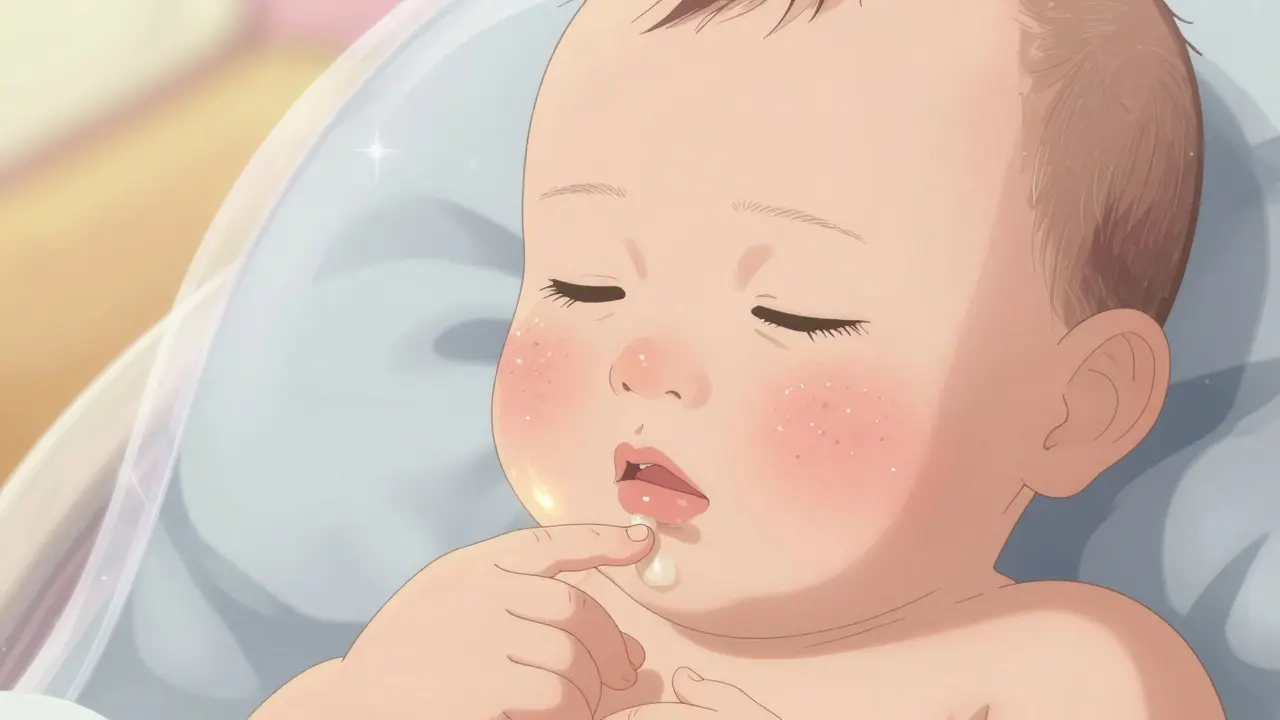
But here’s the twist: if your baby has cracked, dry skin from eczema, that’s not just a cosmetic issue. It’s a gateway. Studies show up to 40% of peanut sensitizations happen through the skin-not the mouth. Allergens from creams, lotions, or even dust in the home can sneak in through broken skin and trigger allergy. That’s why the BEEP trial found that applying petroleum jelly daily from birth reduced food allergy risk by half in high-risk babies. Keeping skin healthy might be just as important as what you feed them.
What You Can Do Now
If you’re pregnant or have a newborn, here’s what actually helps:
- Introduce allergens early: Start peanut and egg around 4-6 months (after starting solids). Don’t wait. Mix peanut butter into warm water or puree, or use peanut puffs. Offer a small amount once or twice a week.
- Protect the skin: If your baby has eczema, use fragrance-free moisturizer at least twice a day. Petroleum jelly works well. Keep skin hydrated-it’s a barrier.
- Check vitamin D: Studies link higher vitamin D levels (above 30 ng/mL) to more regulatory T cells, which help the immune system stay calm. Most pediatricians now recommend 400 IU daily for infants and 600 IU for kids.
- Don’t overdo supplements: Probiotics? A 2020 Cochrane review found no clear benefit for preventing food allergies. Stick to food, not pills.
For adults with food allergies, prevention means avoiding triggers-but also preparing for the worst. The biggest mistake? Not carrying epinephrine. Or carrying it but never practicing how to use it.
Anaphylaxis: The Emergency You Can’t Afford to Ignore
Anaphylaxis doesn’t wait. It hits fast, and every minute counts. Epinephrine is the only treatment that stops it. Antihistamines? They help with hives. Steroids? They reduce swelling later. But only epinephrine saves lives by tightening blood vessels, opening airways, and stopping the cascade.
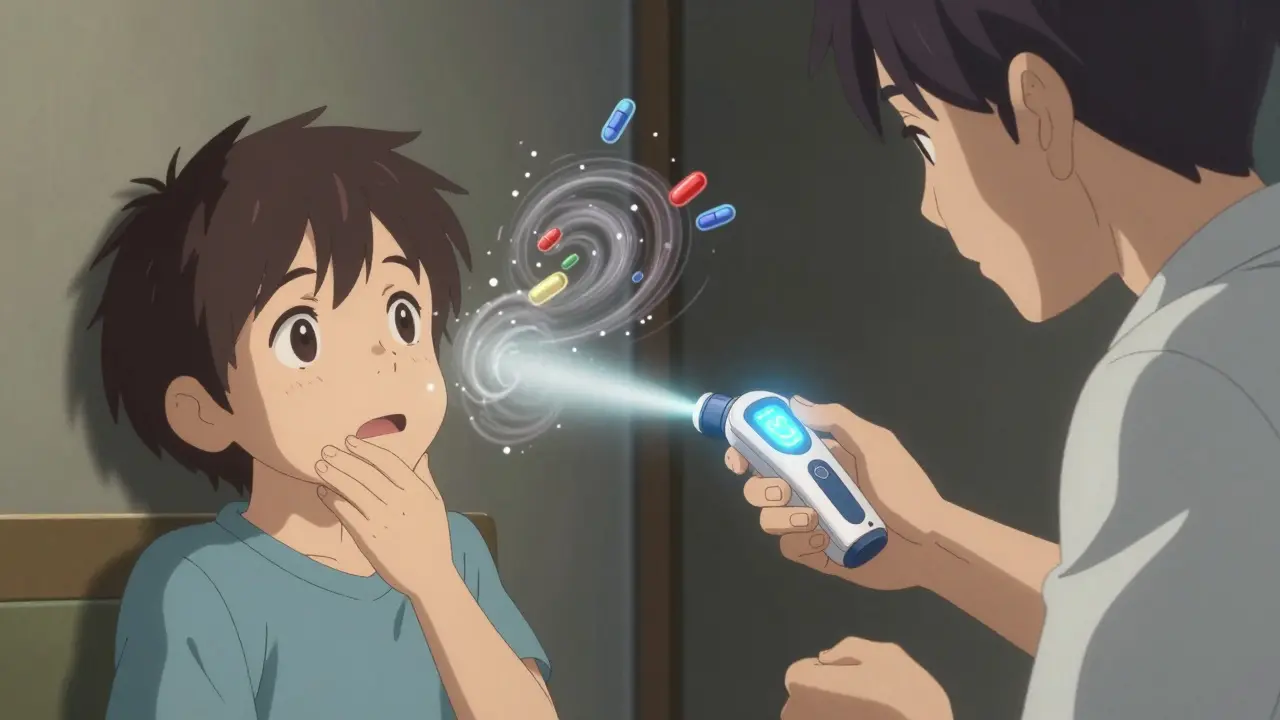
Auto-injectors like EpiPen and Auvi-Q are designed for this. EpiPen delivers 0.3 mg for people over 30 kg. Auvi-Q has voice instructions and delivers 0.15 mg for kids 15-30 kg. Use it at the first sign of trouble: trouble breathing, swelling of the tongue, dizziness, or vomiting with hives. Don’t wait to see if it gets worse. Don’t call 911 first-use the injector, then call.
Studies show that if you wait more than 30 minutes to use epinephrine, your chance of a second reaction (biphasic) jumps by 68%. You’re also 2.3 times more likely to need intensive care. And here’s the shocking part: only half of people prescribed epinephrine carry it all the time. Forty percent misuse it during a real reaction-using it on the wrong side, holding it wrong, or not pressing hard enough.
That’s why training matters. Practice with a trainer device. Teach teachers, babysitters, coworkers. Use the new Auvi-Q with voice prompts-it boosts correct use from 60% to 92% in simulations. Schools with full allergy policies see 32% fewer emergency visits. Ask your child’s school if they have an anaphylaxis protocol. If not, push for one.
What About Treatment After Diagnosis?
If you or your child already has a food allergy, avoidance is still the rule-but new options are changing the game. Oral immunotherapy (OIT) is now FDA-approved for peanut allergy in kids 4-17. Palforzia, a powdered peanut extract, helps kids build tolerance. In trials, 67% could eat the equivalent of two peanuts without a reaction. That doesn’t mean they’re cured-but it means accidental exposure is less likely to be deadly.
Sublingual immunotherapy (SLIT), where you hold a drop of allergen under the tongue, is less effective but safer. It works for some, but you need to do it daily for years. Omalizumab (Xolair), an anti-IgE drug, is being used with OIT to make the process faster and safer. It cuts reaction rates during dose increases by half.
And the future? Researchers are testing peptide vaccines that avoid triggering IgE, nanoparticles that deliver allergens without setting off alarms, and drugs that block the IL-4 pathway (like dupilumab). These aren’t cures yet-but they’re getting closer.
Prognosis: Will They Outgrow It?
Not all allergies last forever. About 80% of kids outgrow milk and egg allergies by age 16. But only 20% outgrow peanut, and 10% outgrow tree nuts. Why? It’s in the proteins. Milk and egg have heat-sensitive proteins that break down during baking. Kids who can eat muffins with egg or cheese pizza without a reaction are far more likely to outgrow the allergy. Component testing can show this: IgE to Gal d 1 (heat-labile egg protein) means better odds. IgE to Gal d 2 (heat-stable) means the allergy is more likely to stick.
And don’t forget: accidental exposure is common. Half of kids with peanut allergy have at least one reaction over five years. One in three needs epinephrine. That’s why vigilance doesn’t stop at diagnosis-it lasts a lifetime.
What’s Coming Next
The PREPARE trial is testing whether giving pregnant moms 4,400 IU of vitamin D daily reduces food allergy in babies by age 3. The EAT2 study is seeing if introducing six allergens (milk, egg, peanut, sesame, white fish, wheat) at 3 months cuts allergy rates even more. And in labs, TLR9 agonists combined with allergen therapy are showing 80% desensitization in early trials.
One thing is clear: prevention is no longer about avoidance alone. It’s about timing, skin health, and immune training. And for those who already have allergies, new treatments are turning survival into safety.



Comments
Ray Foret Jr.
So I just found out my kid has a peanut allergy and I’m freakin’ out 😅 But this post? Absolute lifesaver. I had no idea skin care could be this important. We’ve been slathering on petroleum jelly since day one-turns out that’s not just for dry skin? Wild. Also started peanut puffs at 5 months. No reaction yet. Fingers crossed 🤞
Samantha Fierro
Thank you for sharing such a comprehensive, evidence-based overview. This is exactly the kind of clarity families need when navigating food allergies. The emphasis on early introduction and skin barrier integrity is not just thoughtful-it’s transformative. For parents who feel overwhelmed, this guide offers both direction and hope. Please continue spreading this information-it saves lives.
Robert Bliss
Man I never knew about the skin thing. My daughter had eczema and we used that weird lotion with fragrance. Maybe that’s why she got the allergy? 😔 Anyway, we’re doing peanut butter in water now. No problems. Keep it simple, folks. Moisturize. Introduce early. Don’t panic.
Peter Kovac
The data presented here is methodologically unsound. The LEAP study had selection bias, and the EAT trial lacked adequate blinding. Furthermore, the recommendation to introduce allergens at 4 months contradicts WHO guidelines on exclusive breastfeeding for 6 months. The assertion that vitamin D reduces allergy risk is correlational, not causal. This post dangerously oversimplifies immunological complexity.
APRIL HARRINGTON
OMG I CRIED READING THIS. My son had anaphylaxis at 18 months and I felt like the worst mom ever. But now I know it wasn’t my fault. The skin thing? I didn’t know. I used scented lotion. I feel so guilty. But also so hopeful. We’re doing OIT now. I’m so proud of him. Epinephrine in the car. Always. #AllergyMomStrong
Leon Hallal
I’ve had a peanut allergy since I was 5 and I still can’t believe people think you can just feed it to babies. It’s not a game. My cousin died from it. This isn’t some trendy parenting hack. It’s reckless. I’m not saying avoid science-but don’t turn life-saving advice into a TikTok trend.
Judith Manzano
This is fascinating. I’ve been wondering why my daughter outgrew her egg allergy but not her milk one. The heat-sensitive protein explanation makes so much sense. I’m going to get component testing done. Also, I didn’t know about the vitamin D link. We’re upping our dosage now. Thanks for the science-backed clarity-it’s rare to see this level of detail without jargon.
rafeq khlo
WHO says exclusive breastfeeding for 6 months but you are pushing allergens at 4 months what is this western arrogance you think your studies are better than global health guidelines you are playing god with childrens immune systems no one asked for your opinion
Morgan Dodgen
Let’s be real-the entire IgE model is a pharmaceutical narrative. Mast cells? Histamine? Allergy is a symptom of gut dysbiosis and glyphosate toxicity. The real solution is raw milk, fermented foods, and avoiding EMF exposure. OIT? That’s just conditioning your body to accept poison. The FDA approves this? Of course-they’re owned by Big Pharma. I’ve been using colloidal silver since 2012. No allergies. Ever.
Jazminn Jones
The empirical rigor of the LEAP study is fundamentally compromised by its reliance on parental self-reporting, a method notoriously susceptible to recall bias. Moreover, the generalizability of these findings to non-Western populations remains unaddressed. The suggestion that vitamin D supplementation confers immunological protection is a reductionist fallacy, ignoring the pleiotropic nature of immune regulation. This is not medicine-it is algorithmic health advice masquerading as science.
Stephen Rudd
You’re telling parents to feed peanuts to babies? In America? With all the processed food and corporate control? That’s like handing a loaded gun to a toddler and calling it ‘education’. I’ve been feeding my kid organic goat milk since birth and he’s never had a reaction. You think Big Agri wants you to know that? Nope. Stick to whole foods, avoid all packaged products, and don’t trust any study funded by a pharmaceutical company. I’ve been doing this for 15 years. I’m right.
Dan Mayer
Everyone’s forgetting the real issue-your gut. Allergies are caused by leaky gut from gluten and sugar. I stopped eating bread and my peanut allergy disappeared. Also, you’re not supposed to use epinephrine unless you’re dying. I read it on a blog. And why are we giving kids peanut butter at 4 months? That’s insane. My nephew got hospitalized because his mom followed this advice. Don’t believe the hype.