

Why Vaccines Don’t Work the Same for Everyone
If you’re on medication for an autoimmune disease like rheumatoid arthritis, lupus, or Crohn’s, you’ve probably heard that vaccines are extra important for you. But you might also have heard they don’t work as well. That’s not just a myth - it’s science. People taking drugs like rituximab, a B-cell depleting antibody used for autoimmune conditions and some cancers, or methotrexate, a common disease-modifying drug for arthritis and other inflammatory conditions, often have much weaker responses to vaccines. Studies show antibody levels after two doses of mRNA COVID-19 vaccines can be 56% lower in transplant patients compared to healthy people. That doesn’t mean vaccines are useless - it means timing matters more than ever.
Best Time to Get Vaccinated: Before Treatment Starts
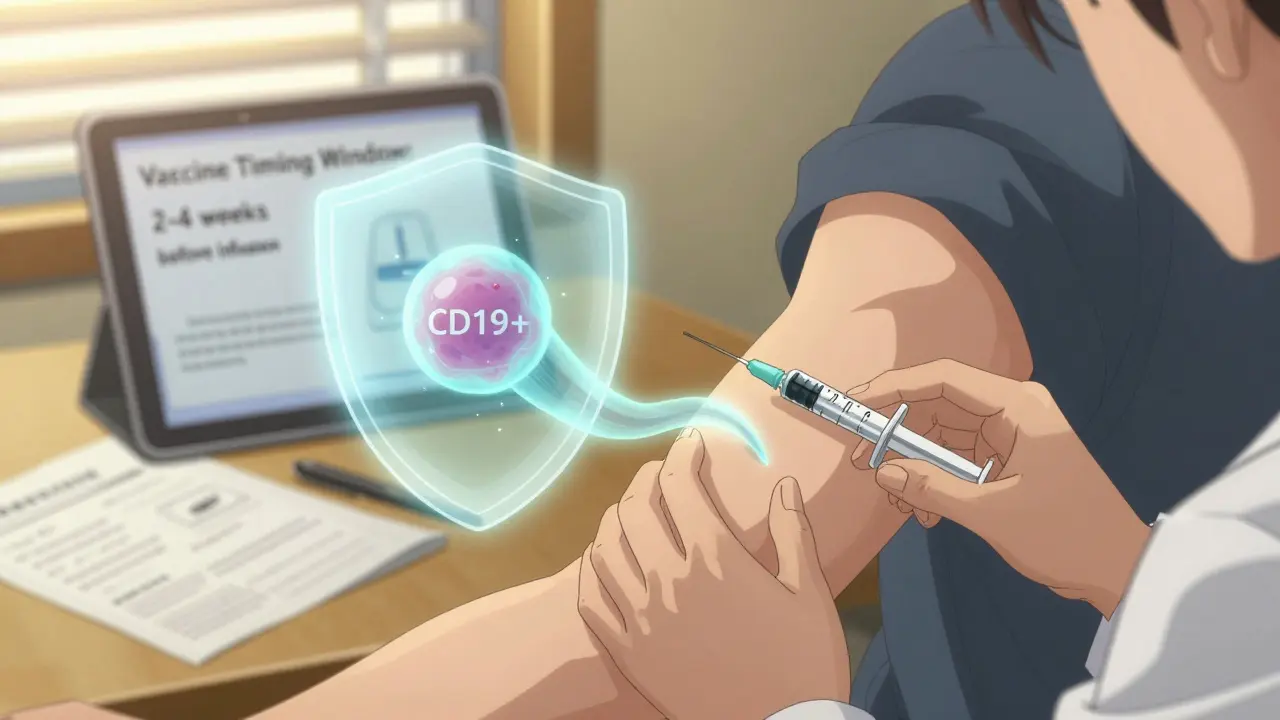
The single most effective strategy is to get vaccinated before you start immunosuppressive therapy. The Centers for Disease Control and Prevention (CDC), the U.S. public health agency that sets national vaccination guidelines recommends at least 14 days between your last vaccine and your first dose of drugs like azathioprine, an immunosuppressant used for organ transplants and autoimmune disorders or cyclophosphamide, a chemotherapy and immune-modifying drug used in severe autoimmune cases. This gives your body time to build a strong immune memory before the drugs start shutting down key immune cells. Many patients don’t realize this window exists - they get diagnosed and immediately start treatment, missing the chance to protect themselves.
Timing Vaccines Around Specific Drugs
Not all immunosuppressants are the same. Some hit your immune system harder and longer than others. Here’s what you need to know based on the latest guidelines from the Infectious Diseases Society of America (IDSA), a professional organization that sets evidence-based infection control standards and the American College of Rheumatology (ACR), the leading group setting standards for rheumatology care in the U.S.:
- Rituximab (and similar drugs like obinutuzumab, a B-cell depleting monoclonal antibody used in lymphoma and autoimmune diseases): Wait at least 4-5 months after your last infusion before getting any non-live vaccine. If you’re due for another infusion, get vaccinated 2-4 weeks before it. Some experts at Memorial Sloan Kettering Cancer Center (MSK), a leading cancer research and treatment center in New York say waiting 9-12 months gives better results, especially if your disease isn’t flaring.
- Methotrexate: Hold your weekly dose for two weeks after getting the flu shot. This simple step can boost your response by up to 30%, according to ACR data from 2022. Don’t stop it without talking to your rheumatologist - you risk a flare.
- Prednisone: If you’re on more than 20mg daily, wait until your dose drops below that level for vaccines like shingles or pneumococcal. High-dose steroids blunt immune responses across the board.
- Anti-TNF drugs (like adalimumab, a biologic drug that blocks tumor necrosis factor, used for rheumatoid arthritis and psoriasis or infliximab, a TNF inhibitor administered intravenously for inflammatory bowel disease): These are less disruptive. You can usually stay on them while getting vaccines. No need to pause.
What About After a Transplant?
For people who’ve had a kidney transplant, a surgical procedure to replace a failing kidney with a healthy one from a donor, liver transplant, a surgical procedure to replace a diseased liver with a healthy one, or any solid organ transplant, timing is even trickier. You’re on lifelong immunosuppressants to prevent rejection, which also blocks vaccine effectiveness. The IDSA says wait at least 3 months after transplant before vaccinating. The CDC says 1 month is okay. Why the difference? Some centers worry about triggering rejection if the immune system is too active right after surgery. Others say delaying too long leaves you exposed. Most experts agree: if you’re in a high-risk area with lots of flu or COVID circulating, get the vaccine sooner rather than later - even if it’s not perfect.
Why Some Vaccines Are Off-Limits
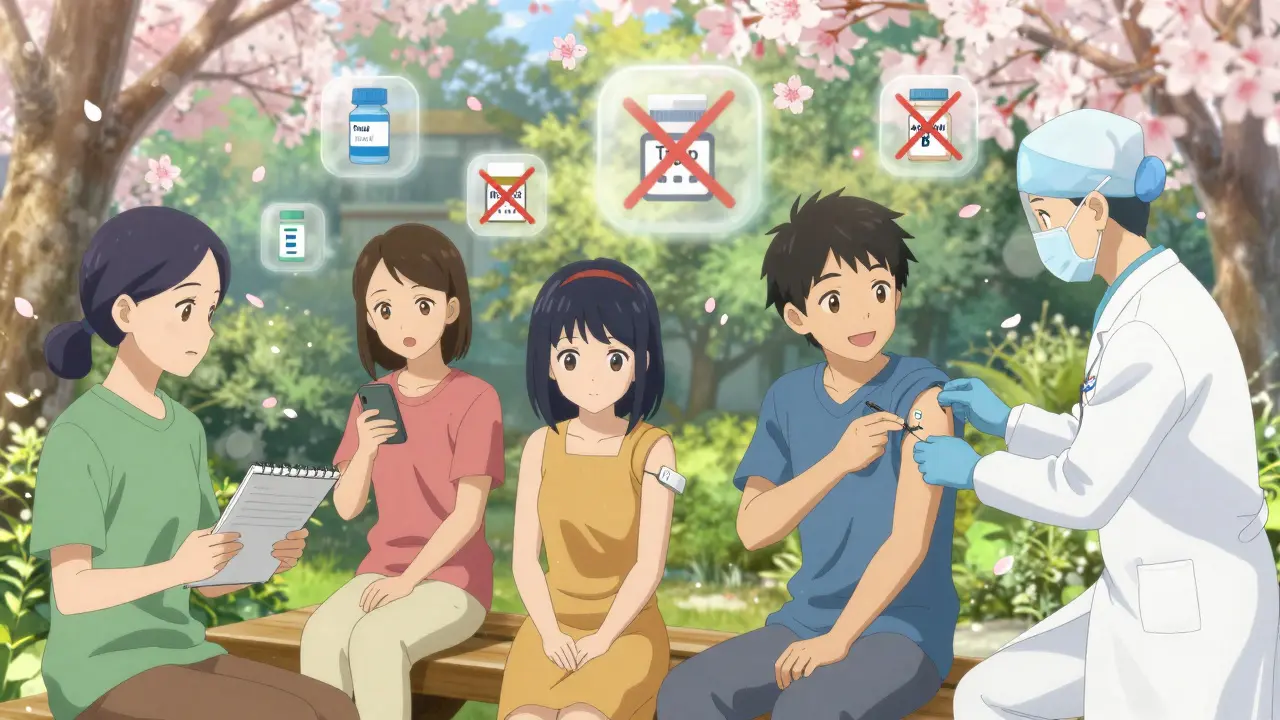
Not all vaccines are safe for people with weakened immune systems. Live vaccines - like MMR, a combined vaccine for measles, mumps, and rubella, varicella, the chickenpox vaccine, and nasal flu spray, a live attenuated influenza vaccine delivered through the nose - can cause infection in immunosuppressed people. These are generally avoided unless you’ve been off immunosuppressants for at least 6 months and your doctor says it’s safe. Stick to inactivated vaccines, vaccines made from killed viruses or parts of viruses that cannot cause disease like the flu shot, Tdap, pneumococcal, and hepatitis B. They’re safe, even if they’re less effective.
Effectiveness Isn’t All or Nothing
Just because your antibody levels are low doesn’t mean you’re unprotected. A 2021 study from the Veterans Health Administration, the largest integrated healthcare system in the U.S., serving military veterans found that even with immunosuppressants, mRNA vaccines were still 80.4% effective at preventing severe COVID-19 in people with inflammatory bowel disease. That’s far better than nothing. Your T-cells - another part of your immune system - often keep working even when antibodies drop. That’s why getting boosted matters. The CDC now recommends at least one dose of the current season’s COVID vaccine for everyone over 6 months old who’s immunosuppressed, with extra doses based on your history and risk.
Real-World Problems: Missed Appointments and Fragmented Care
Even with perfect guidelines, things fall through the cracks. A 2022 study in the American Journal of Transplantation found that nearly half of transplant centers don’t follow optimal vaccine timing. Why? Because care is split between your rheumatologist, your transplant team, your primary care doctor, and your pharmacist. No one person is tracking your vaccine schedule. You might get your flu shot at the pharmacy, but your rheumatologist doesn’t know you got it - so they don’t adjust your methotrexate. Or you’re scheduled for rituximab next week, but no one told you to get vaccinated now. That’s why you need to be your own advocate. Keep a log: what drugs you’re on, when you got your last vaccine, and when you’re due for the next infusion. Bring it to every appointment.
What’s Coming Next: Personalized Timing
Right now, we guess when to vaccinate based on fixed time windows. But what if we could test your immune system instead? The National Institutes of Health (NIH), the primary federal agency for medical research in the United States is funding a $12.5 million trial to see if measuring CD19+ B-cell counts, a type of white blood cell that produces antibodies and is targeted by drugs like rituximab can tell us exactly when your body is ready to respond to a vaccine. Early data suggests that even at the 6-month mark after rituximab, 60-70% of patients still have poor responses. If we can identify who’s truly ready, we can stop guessing and start personalizing. That’s the future - and it’s coming fast.
What to Do Today
You don’t need to wait for perfect science to protect yourself. Here’s what to do now:
- Check your medication list. Are you on rituximab, methotrexate, or high-dose steroids?
- Look at your next infusion or dose date. Can you schedule a vaccine 2-4 weeks before it?
- Ask your doctor: “Is there a safe window to get my vaccines before I start or restart my meds?”
- Get the current season’s COVID vaccine - even if you’ve had it before. Boosters matter more for you.
- Don’t skip the flu shot or pneumococcal vaccine. These are your first line of defense.
- Keep a simple log: drug, date, vaccine, date. Share it with every provider.
There’s no magic formula. But there’s a clear path: be informed, be proactive, and don’t assume your doctor knows everything about your vaccine schedule. You’re the only one who’s with you every day. Use that power.
Can I get vaccinated while on immunosuppressants?
Yes, but not all vaccines are safe or equally effective. Inactivated vaccines like the flu shot, COVID-19 mRNA vaccines, and pneumococcal shots are safe and recommended. Live vaccines like MMR or nasal flu spray should be avoided unless you’ve been off immunosuppressants for at least 6 months and your doctor approves. Timing matters - getting vaccinated before starting treatment or during a drug-free window gives the best results.
Why do I need more than one dose of the COVID vaccine?
People on immunosuppressants often don’t build strong immunity from just two doses. Studies show that a third or even fourth dose can significantly improve antibody levels. The CDC recommends at least one dose of the current season’s vaccine for everyone in this group, with additional doses based on your medical history and risk. Don’t assume one shot is enough - follow your provider’s advice on boosters.
Should I stop my meds to get a vaccine?
Never stop your medication without talking to your doctor. For some drugs, like methotrexate, holding the dose for two weeks after the flu shot can help your immune response without triggering a flare. For others, like rituximab, timing the vaccine before your next infusion is better than stopping the drug entirely. Your rheumatologist or specialist will help you balance vaccine effectiveness with disease control.
Are vaccines less effective for people with autoimmune diseases?
Yes, but they’re still valuable. Studies show vaccine effectiveness can drop by 30-80% depending on the drug. For example, mRNA COVID vaccines were 94% effective in healthy people but only 80% effective in those on immunosuppressants. That still means you’re far less likely to end up in the hospital. Protection isn’t all-or-nothing - even partial immunity saves lives.
What if I missed the chance to get vaccinated before starting treatment?
It’s not too late. While getting vaccinated before starting immunosuppressants is ideal, many people don’t realize they’re at risk until they’re already on treatment. Talk to your doctor about the best timing based on your specific drugs. For example, if you’re on rituximab, you can still get vaccinated 4-5 months after your last infusion. Even if your response is weaker, vaccination reduces your risk of severe illness.
Final Thought: Your Immune System Is Still Fighting
You’re not broken. You’re not helpless. Your immune system is just working under tough conditions. Vaccines aren’t perfect for you - but they’re still your best tool. The goal isn’t to be as protected as someone off meds. The goal is to be as protected as you can be. That means getting the right vaccines, at the right time, with the right support. You’ve already done the hard part: managing a chronic condition. Now, take this next step. Talk to your team. Ask the questions. Schedule the shots. Your future self will thank you.



Comments
Alexandra Enns
So let me get this straight-you’re telling me I should wait MONTHS after my rituximab infusion to get a vaccine? That’s insane. In Canada, we don’t have the luxury of waiting. I got my flu shot two weeks after my last infusion and I’m still standing. Stop overcomplicating things. Your immune system isn’t a magic switch. It’s biology. And biology doesn’t care about your CDC pamphlets.
Marie-Pier D.
I just want to say thank you for writing this 💛 I’ve been on methotrexate for 7 years and no one ever told me to hold my dose after the flu shot. I did it last year and felt like I finally had some control. To everyone else reading: you’re not alone. Your body is fighting hard. Keep showing up for yourself. 🌸
Himanshu Singh
There’s a deeper truth here: medicine treats diseases, but not people. We’re told to follow timelines like they’re written in stone. But what if your body’s rhythm doesn’t match the algorithm? Maybe the real solution isn’t waiting 4 months-it’s listening. What if your fatigue, your sleep, your stress levels matter more than the calendar? Science is great-but wisdom is quieter.
Jamie Hooper
so like… i got my covid booster last week and my rheum doc was like ‘uhhh you’re on methotrexate right?’ and i was like ‘yeah’ and she said ‘oh cool’ and that was it. no advice. no pause. nothing. like… are we just guinea pigs now? 🤡
Gina Beard
The system is broken. Not you.
Don Foster
The CDC and IDSA guidelines are basically a suggestion box at this point. Anyone who actually follows them is either rich enough to have a personal immunologist or dumb enough to believe bureaucracy cares if you live or die. I’ve been on rituximab since 2019. My antibody levels are zero. I still get boosters. Why? Because hope isn’t a strategy but it’s the only thing left.
siva lingam
lol so wait you want me to stop taking my meds just so a shot can maybe work better? bro i have a 3 year old and a flare means i cant even hold her. you think i wanna risk that for a 30% boost? nah. ill take my 20% and my life thank you very much
Tommy Sandri
This post represents a critical intersection of public health policy, clinical practice, and patient autonomy. The fragmentation of care across specialties is not an oversight-it is a structural failure of integrated healthcare delivery. A centralized digital vaccine registry tied to medication schedules could mitigate this. The NIH’s B-cell trial is promising, but implementation requires systemic coordination, not just individual advocacy.
Sushrita Chakraborty
I appreciate the depth of this article, and I’m especially grateful for the inclusion of specific drug names, timeframes, and institutional references. However, I must emphasize that patients in low-resource settings-especially in India-often cannot access even basic vaccines, let alone coordinate timing with specialists. While the guidelines are excellent, they assume a level of healthcare access that simply doesn’t exist for millions. We need global equity, not just precision medicine.
Shanta Blank
Okay so let me get this straight-you’re telling me I have to play vaccine Jenga with my life? One wrong move and my immune system collapses like a Jenga tower made of wet spaghetti? And the doctors? They’re just sitting there with a clipboard like ‘well, we tried’. I’m not a lab rat. I’m a person who just wants to go to the grocery store without dying. This isn’t science. This is a horror movie written by a bureaucrat with a thesaurus.
Chloe Hadland
i just got my fourth covid shot last week and i cried in the parking lot. not because i was scared. because for the first time in years, i felt like someone finally saw me. you don’t have to be perfect to be protected. you just have to keep showing up. you’re doing better than you think
Amelia Williams
I’m 28 and on rituximab. I got my last infusion in January. I’ve been counting down the days until April to get my shot. I’ve been tracking every single dose of every med I’ve ever taken in a little notebook. I’ve called my rheumatologist three times. I’ve researched every study I could find. And I still feel like I’m begging for permission to be safe. If you’re reading this and you’re on meds too-you’re not crazy. You’re a warrior. Keep going.
Viola Li
I’m sorry, but this whole post feels like a guilt trip. You’re telling people to be their own advocates, but what if they’re too sick to advocate? What if they’re elderly? Disabled? Depressed? This isn’t empowerment-it’s victim-blaming disguised as advice. The system should adapt to us, not the other way around.
Marlon Mentolaroc
I work in a clinic. We have a patient who got her flu shot two weeks after her rituximab. Her antibody titers were near zero. We told her to get another one. She did. Still zero. Then she got a third. Still nothing. She asked us: ‘So what’s the point?’ I didn’t have an answer. That’s the real tragedy here. Not the science. The silence.
Shelby Marcel
wait so if i hold methotrexate after the flu shot i might get a lil more protection?? i did that last year and my joints still felt like glass… sooo… what was the point again??