How to Avoid Duplicate Medications After Specialist Visits
Dec 25 2025

When your pharmacy says your drug is on formulary tiers, a system pharmacies and insurers use to categorize prescription drugs by cost and coverage. Also known as drug tiers, it’s how your insurance decides what you pay out of pocket. It’s not about which drug is better—it’s about who gets to pay what. If your medication is on Tier 3, you’re paying more than someone on Tier 1. And if it’s not on the formulary at all? You might pay full price.
Drug formulary, a list of medications approved by your insurance plan is built by pharmacy benefit managers (PBMs) and insurers. They group drugs into tiers based on cost, effectiveness, and whether a generic version exists. Tier 1 usually includes low-cost generics—think metformin or lisinopril. Tier 2 is brand-name drugs with generic alternatives. Tier 3 is higher-cost brands with no cheap option. Tier 4 and 5? Those are specialty drugs—like GLP-1 weight loss meds or chemotherapy drugs—that can cost hundreds or thousands. Your plan might even require prior authorization or step therapy before approving them.
It’s not random. Insurance drug coverage, the rules that determine which drugs your plan pays for and how much is shaped by negotiations between insurers and drug makers. A drug company might offer a bigger discount to get their pill on Tier 1. That’s why two people with the same condition might pay wildly different prices—because their plans have different formularies. You can’t always choose your formulary, but you can check it. Most insurers publish their drug lists online. Look for your medication and see what tier it’s on. If it’s high, ask your doctor: Is there a similar drug on a lower tier? Could a generic work?
And don’t confuse formulary tiers with medication cost sharing, how you split the cost with your insurer—copay, coinsurance, or deductible. A Tier 2 drug might have a $15 copay, while a Tier 4 could be 30% of the price. That’s why someone on a high-deductible plan might pay $500 for a drug that costs $200 for someone with a low-deductible plan. It’s not the drug’s fault—it’s the structure.
What you’ll find below are real stories and guides from people who’ve navigated this system. How to get a formulary exception when your drug’s not covered. Why your insurer switched your medication last month. How to use state assistance programs to cut costs. What to do when your Tier 3 drug suddenly becomes Tier 4. These aren’t theory pieces—they’re practical fixes from people who’ve been there.
Dec
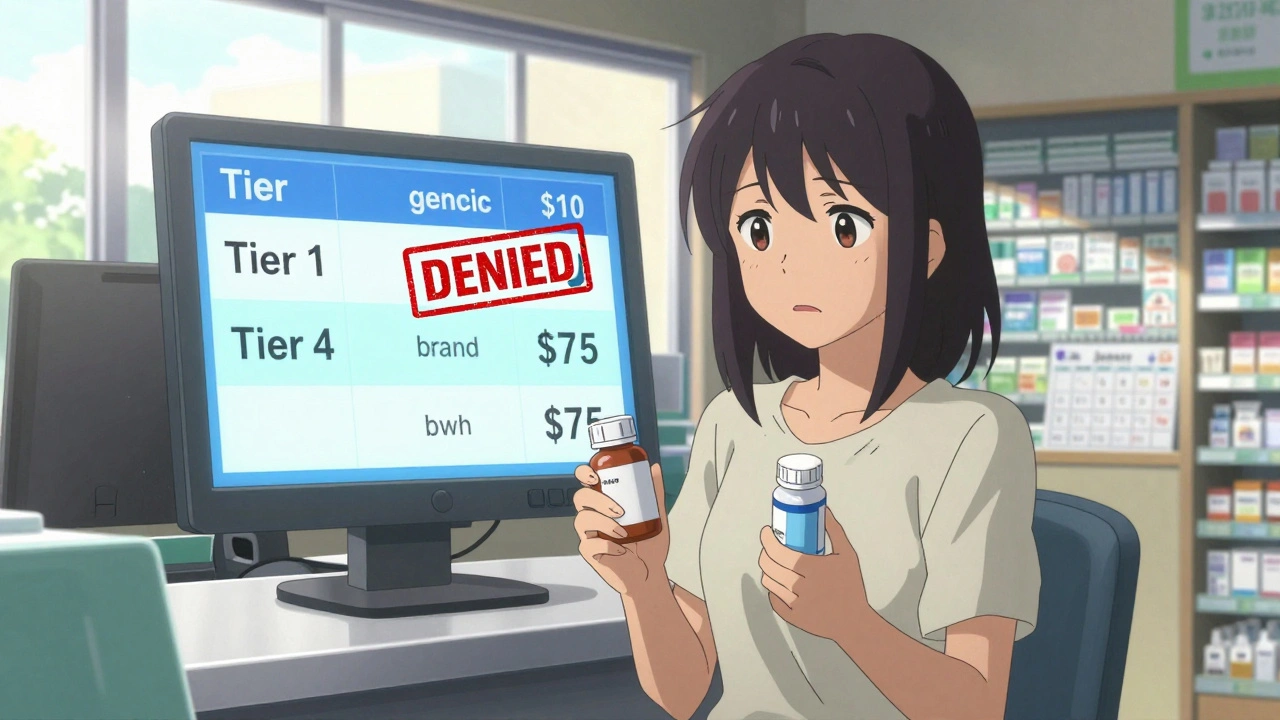
Employer health plans use tiered formularies to push generic drugs and cut costs-but the savings don't always reach you. Learn how formularies work, why drugs get dropped, and what you can do to protect your coverage.
Dec 25 2025

Sep 30 2025

Jan 22 2026

Mar 16 2025

Jun 2 2025