Generic vs Brand Identification in Pharmacy Systems: Best Practices for Accurate Medication Dispensing
Nov 7 2025

When you hear biosimilar, a type of biologic drug that mimics another biologic medication after its patent expires or generic drugs, chemically identical copies of brand-name pills after patent protection ends, it’s easy to think they’re just cheaper versions of the same thing. But they’re not. Biologics, complex medicines made from living cells, like insulin or rheumatoid arthritis treatments can’t be copied exactly like a pill. That’s why biosimilars exist — they’re highly similar, but not identical, to the original biologic. Generic drugs, on the other hand, are exact chemical copies of small-molecule drugs like metformin or lisinopril. The difference isn’t just science — it’s your wallet, your insurance, and sometimes your health.
Why does this matter? Because if you’re prescribed a biosimilar, you’re getting a drug that works almost like the original biologic, but with slightly different manufacturing. It’s not a copy-paste job — it’s more like a hand-built replica of a luxury car. The FDA requires rigorous testing to prove it’s safe and effective, but it’s still more complex than a generic pill. Generics, by contrast, are straightforward: same active ingredient, same dose, same effect. They’re made in labs, not cell cultures. That’s why generics are often cheaper than biosimilars. Insurance companies push both to save money, but they treat them differently. Some plans won’t cover a biosimilar unless you’ve tried the brand-name first, while generics are usually the first-line choice. And if you’re switching from a brand-name biologic to a biosimilar, your doctor needs to explain why — because even small changes in how your body reacts can matter, especially with conditions like Crohn’s, psoriasis, or cancer.
Looking at the posts here, you’ll see real-world examples of how these differences play out. Some articles talk about how employer health plans, insurance structures that favor low-cost drugs to cut expenses push generics but hesitate with biosimilars. Others explain why formularies, drug lists that determine what your insurance covers treat biosimilars differently than generics. You’ll also find guides on how to challenge a denial, understand your prescription, or talk to your doctor when your drug changes. This isn’t just jargon — it’s about whether your next shot, infusion, or pill works the way it should, and whether you’ll pay $50 or $500 for it. What follows is a collection of practical, no-fluff guides that cut through the confusion and show you exactly what you need to know — whether you’re managing a chronic condition, fighting insurance, or just trying to save money without risking your health.
Dec
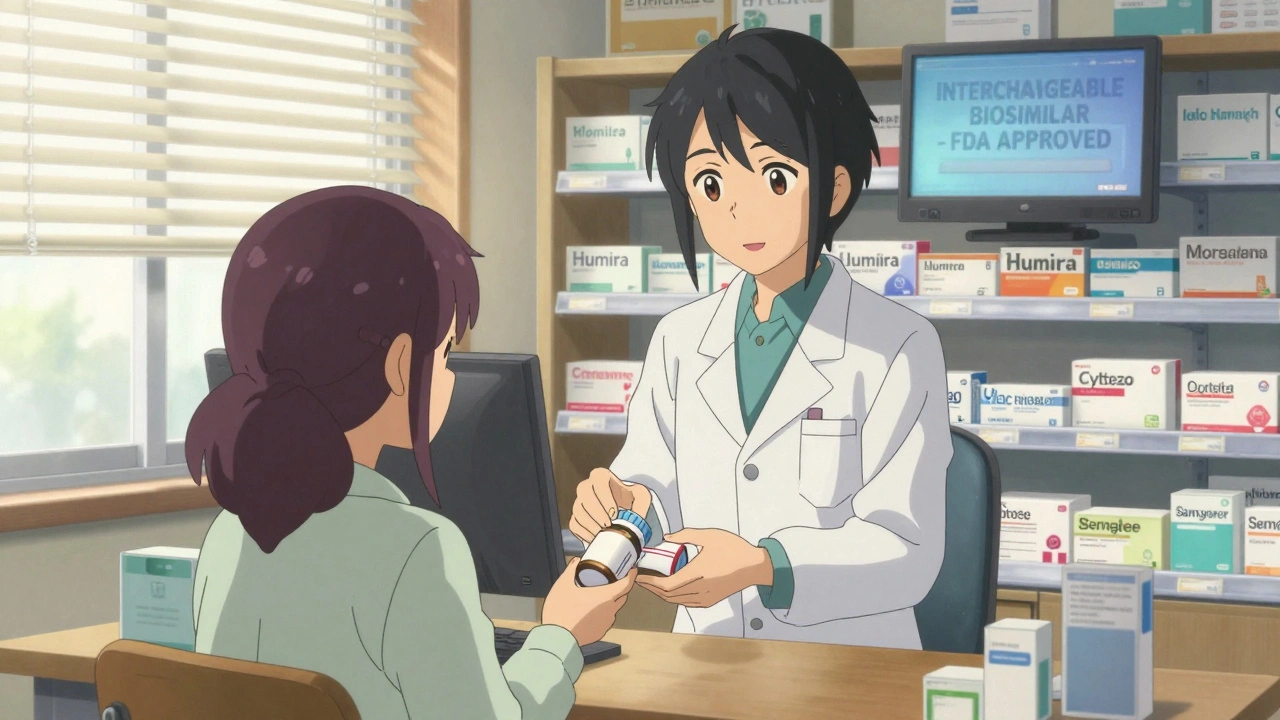
Interchangeable biosimilars can be swapped automatically at U.S. pharmacies, but only if FDA-approved and allowed by state law. Learn how this affects cost, safety, and patient access to biologic drugs.
Nov 7 2025

Oct 13 2025
Dec 11 2025

Sep 28 2025

May 27 2025