
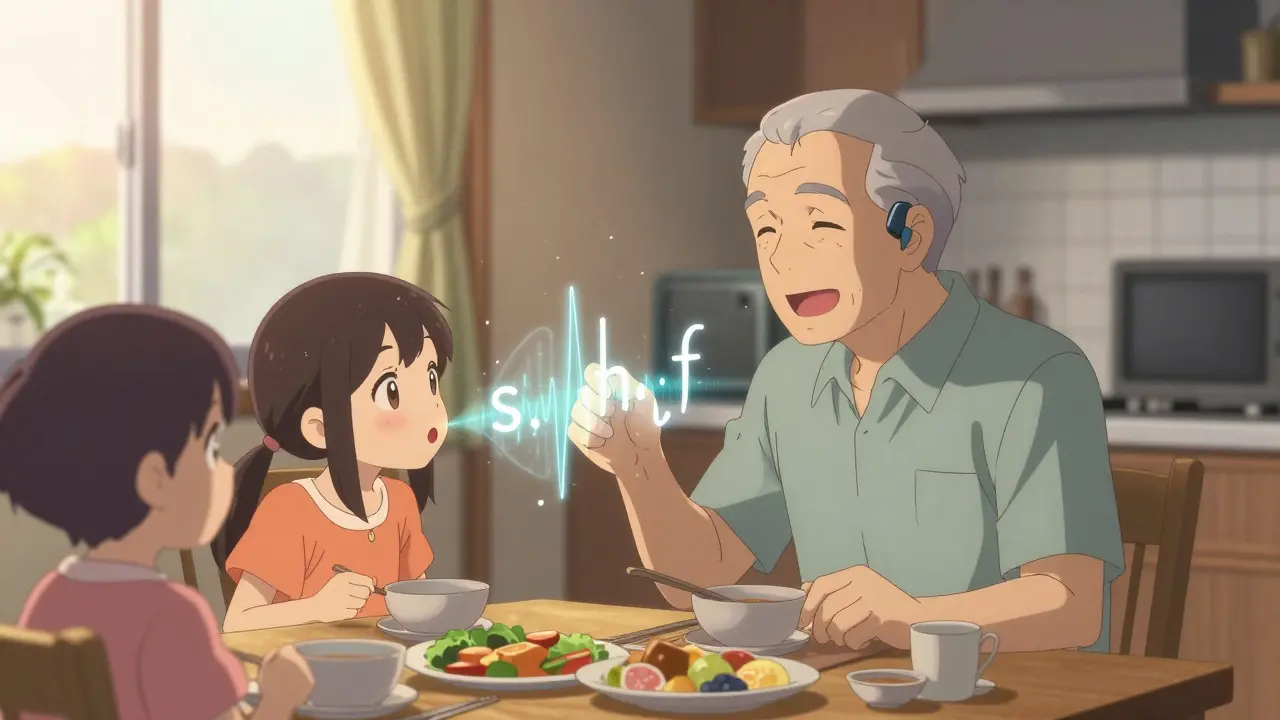
By the time you’re 70, there’s a good chance you’ve started missing parts of conversations - not because people are mumbling, but because your ears have changed. This isn’t just about turning up the TV. It’s presbycusis, the medical term for age-related hearing loss, and it affects nearly half of all Americans over 75. Unlike sudden hearing loss from an injury or infection, presbycusis creeps in slowly. You might not even notice it until you’re asking people to repeat themselves at dinner, or your grandkid’s voice sounds like a squeak. The good news? You don’t have to live with it. Modern amplification strategies can bring back clarity, connection, and confidence - if you know what to look for.
What Exactly Is Presbycusis?
Presbycusis isn’t just "getting old." It’s a specific type of sensorineural hearing loss caused by the gradual breakdown of tiny hair cells in your inner ear. These cells convert sound waves into electrical signals your brain understands. You’re born with about 16,000 of them - and once they’re gone, they don’t come back. After age 30, you lose roughly 1% per year. By 65, many people have lost enough to notice a difference.
This loss doesn’t hit all frequencies equally. High-pitched sounds go first. That means consonants like "s," "th," and "f" become muffled. Words like "think" and "fish" start sounding like "thi_k_" and "fi_h." You might hear someone speaking but still not understand what they said. That’s why people with presbycusis often say, "I can hear you, but I can’t make out the words."
According to the National Institute on Deafness and Other Communication Disorders, about one in three people between 65 and 74 have hearing loss. For those over 75, it’s nearly half. And it’s not just about volume - it’s about clarity. In noisy places like restaurants or family gatherings, speech comprehension drops by up to 25% compared to quiet rooms. That’s not a choice. That’s biology.
Why It’s More Than Just Missing Words
Untreated hearing loss doesn’t just make socializing harder - it rewires your brain. Studies show people with unaddressed presbycusis are 50% more likely to develop dementia over time. Why? Because your brain has to work harder to fill in the gaps. That constant strain wears down memory and thinking centers. A 2020 Lancet Commission report linked hearing loss to faster cognitive decline, and Johns Hopkins researchers found that treating it by age 60 could reduce dementia risk by 8-10% over a decade.
The social toll is just as real. About 41% of older adults with hearing loss avoid gatherings because they’re tired of pretending they heard everything. One in five reports feeling isolated. Depression rates jump by 32% compared to those with normal hearing. And it’s not just emotional - it’s physical. A 2021 Johns Hopkins study found 37% of people with untreated hearing loss had missed a fire alarm, car horn, or other critical warning sound at least once in the past year.
There’s also a financial impact. A 2021 Better Hearing Institute analysis showed people with untreated hearing loss earn $30,000 less annually on average than peers with normal hearing - not because they’re less capable, but because communication gaps affect job performance, promotions, and even client trust.
What’s Causing It? It’s Not Just Age
Yes, aging is the main driver - but it’s not the whole story. Genetics play a role in 35-50% of cases. If your parents or grandparents had trouble hearing in their 60s, you’re more likely to too. Genes like GRHL2 and GJB2 have been linked to faster hair cell deterioration.
But your environment matters just as much. Long-term exposure to loud noise - even from lawn mowers, power tools, or concerts - increases your risk by 40%. The World Health Organization says noise over 85 decibels for more than 8 hours a day is dangerous. That’s the level of heavy city traffic or a blender on high.
Medical conditions also accelerate the damage. Diabetes raises your risk by 28%. High blood pressure by 23%. Smoking? That’s a 15.1% higher chance of hearing loss, according to CDC data. These conditions reduce blood flow to the inner ear, starving the hair cells of oxygen. It’s not just about your ears - it’s about your whole body.
Tinnitus - that ringing, buzzing, or hissing sound - shows up in nearly 60% of people with presbycusis. It’s not the cause, but a symptom. And it makes everything harder. Trying to focus on a conversation when your ears are screaming? That’s exhausting.
Hearing Aids: The Real Solution (Not a Last Resort)
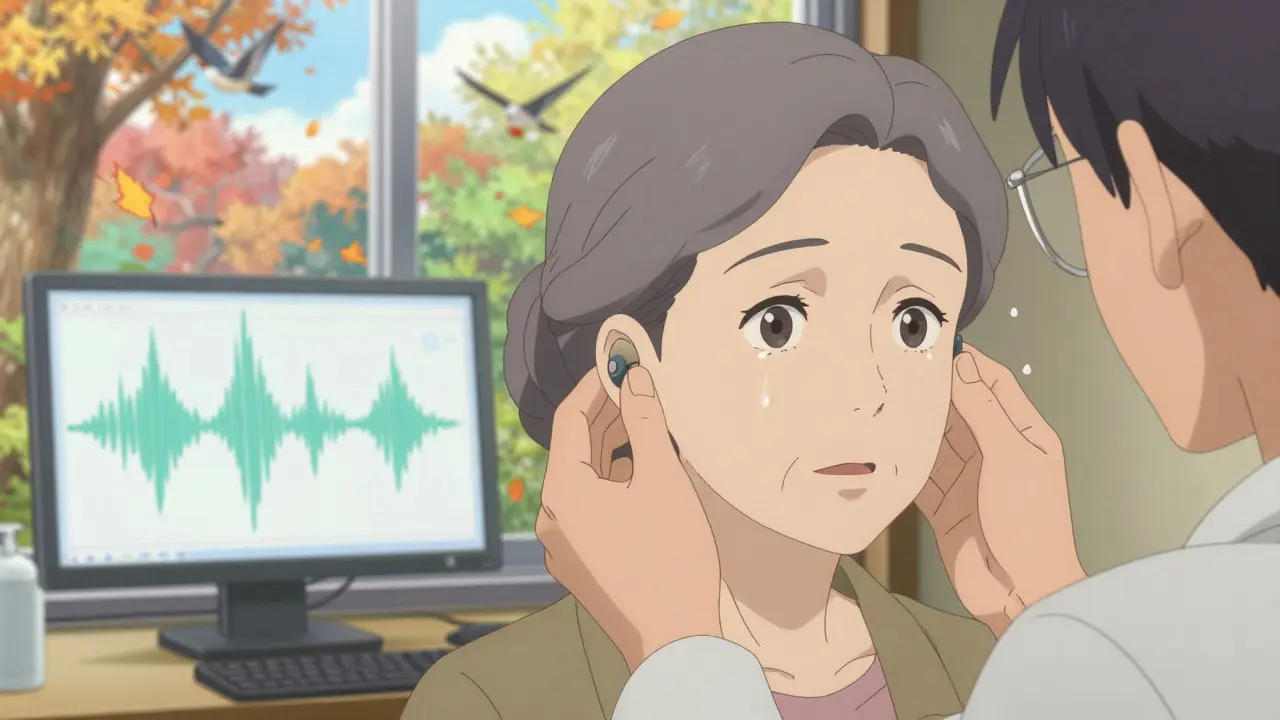
There’s no cure for presbycusis. But there’s a proven fix: amplification. Hearing aids aren’t just louder speakers. Modern ones are tiny computers. They use 16 to 64 frequency channels to boost only the sounds you’re missing - like high-pitched speech - while keeping background noise down. Directional microphones improve your ability to hear someone across the table by 3-6 decibels. Bluetooth lets you stream phone calls, TV, and music straight to your ears.
Properly fitted hearing aids can improve speech understanding by 40-60% in quiet settings and 25-40% in noisy ones. That’s not a small gain. That’s life-changing. A 2023 American Academy of Audiology survey found 85% of users report better communication after getting hearing aids.
But here’s the catch: only 30% of people who could benefit actually use them. Why? Cost, yes - but also fear, stigma, and bad experiences. Many people buy cheap, over-the-counter (OTC) devices that don’t fit right or aren’t programmed for their specific hearing loss. They get frustrated, then give up.
Prescription hearing aids from an audiologist cost between $1,800 and $3,500 per ear. OTC models range from $200 to $1,000 per pair. Top-rated prescription brands like Phonak Paradise, Oticon More, and Signia Styletto scored 85-87 out of 100 in Consumer Reports’ 2023 ratings. Jabra Enhance Select leads OTC options at 78/100. Medicare Advantage plans now cover hearing aids for 28 million people as of 2024, which helps - but many still pay out of pocket.
What to Expect When You Get Hearing Aids
Getting hearing aids isn’t a one-and-done deal. It’s a process. First, you need a full hearing test from an audiologist. Don’t rely on phone apps - they’re not accurate enough for diagnosis.
After the test, you’ll try a 30-60 day trial. Most clinics offer this. Use it. Don’t just wear them for 10 minutes while watching TV. Wear them all day. Your brain needs time to relearn how to filter sounds.
Expect some discomfort at first. Your ears might feel full. Sounds might seem too sharp or tinny. That’s normal. Most users adapt within 4-6 weeks. But if you’re still struggling after a month, go back. The fit or settings can be adjusted. About 45% of people who quit hearing aids do so because they weren’t fitted properly.
Modern devices have rechargeable batteries that last 16-20 hours. You’ll need to clean them daily with a soft brush and dry them overnight. Some models have smartphone apps for fine-tuning volume and noise settings - but learning them takes about 12 hours of practice, according to Vanderbilt University research.
And yes, they still struggle in restaurants. About 42% of users report difficulty in noisy places. That’s why features like AI-powered noise reduction (like Signia’s Nx platform) are a game-changer - they cut listening effort by 20%.

What You Can Do Right Now
You don’t have to wait until you’re struggling to act. The American Speech-Language-Hearing Association recommends a baseline hearing test at age 50, then every two years after that. If you’ve noticed any of these signs - asking people to repeat themselves, turning up the TV too loud, avoiding group chats - get checked now.
Ask your doctor for a referral to an audiologist. Don’t accept a quick screening at a pharmacy. Real testing takes 45 minutes and includes speech-in-noise tests, which are far more accurate than simple tone tests.
If cost is a barrier, look into Medicare Advantage plans, VA benefits (if you’re a veteran), or nonprofit programs like Hearing Loss Association of America’s financial aid resources. Some manufacturers offer payment plans. And OTC hearing aids are now a legitimate option - just make sure you pick one with adjustable settings and good reviews.
Don’t wait until you’re isolated or falling behind at work. The sooner you act, the better your brain can adapt. And the more you’ll enjoy the little things - your grandchild’s laugh, the birds outside your window, a quiet conversation with your partner.
What’s Next for Hearing Technology
The future of hearing aids is smart - and getting smarter. New devices now monitor your physical activity, track social engagement, and even detect falls. ReSound’s LiNX Quattro, for example, uses sensors to log how often you’re out and about - data your doctor can use to spot early signs of depression or isolation.
Direct-to-consumer hearing tests are growing fast. Beltone’s SoundClear app has over 1.2 million downloads. While they’re not a replacement for clinical testing, they’re a good first step if you’re unsure whether you need help.
Global sales of hearing aids are projected to hit $14.7 billion by 2030. That’s because awareness is rising - and technology is finally catching up to need. But the biggest barrier isn’t the tech. It’s the delay. People wait an average of 7-10 years after noticing hearing loss before doing anything about it.
That’s too long. Your brain doesn’t have that kind of time.
Is presbycusis the same as general hearing loss?
No. Presbycusis is a specific type of hearing loss caused by aging, mainly affecting high-frequency sounds due to inner ear hair cell damage. Other types of hearing loss can be caused by noise exposure, infections, medications, or genetics - and may happen at any age. Presbycusis is gradual and symmetric, meaning both ears are affected similarly over time.
Can hearing aids restore my hearing to normal?
They can’t restore what’s lost - the damaged hair cells don’t regenerate. But they can restore clarity. Most users report hearing speech much more clearly, especially in quiet settings. About 55% of users say they achieve what feels like "normal" hearing in daily life after proper fitting and adjustment. It’s not perfect, but it’s life-changing.
Are over-the-counter hearing aids worth it?
For mild to moderate presbycusis, yes - if you choose wisely. OTC devices are now regulated by the FDA and must meet performance standards. Brands like Jabra Enhance Select and Eargo are popular and well-reviewed. But they’re not customizable. If you have complex hearing loss, uneven loss between ears, or tinnitus, a professional fitting is still better. Always try to get a trial period.
Why do some people stop using hearing aids?
The top reasons are poor fit (45%), discomfort (30%), and not hearing well in noisy places (25%). Many users expect instant perfection. But hearing aids need tuning. If you’re struggling, go back to your audiologist. Most issues can be fixed with adjustments - it’s not a failure of the device, just a need for refinement.
Can I prevent presbycusis?
You can’t stop aging, but you can slow the damage. Protect your ears from loud noise. Use earplugs at concerts or when using power tools. Manage conditions like diabetes and high blood pressure. Don’t smoke. Get regular hearing checkups starting at age 50. Early detection means early help - and that makes all the difference.
How often should I get my hearing checked after 60?
At least every two years. If you already use hearing aids, annual checkups are recommended to adjust for changes in your hearing. Your hearing can decline gradually, and your devices may need recalibration. Don’t wait until you notice a problem - by then, you’ve already lost months of clarity.
Final Thought: It’s Not About the Device - It’s About Connection
Presbycusis doesn’t make you older. It just makes it harder to hear the people who matter most. The right amplification strategy isn’t a medical gadget - it’s a bridge back to laughter, conversation, and quiet moments that used to feel effortless. You don’t need to suffer in silence. The tools are here. The science is clear. And the time to act is now - before the next family gathering, before the next missed phone call, before the next time you pretend you heard what was said.




Comments
Crystel Ann
I've seen this happen to my mom. She started avoiding family dinners because she couldn't follow the conversation. Getting her hearing aids was the best thing we did. She's laughing again.
Haley Graves
This is the most comprehensive breakdown I've read on presbycusis. If you're reading this and hesitating-stop. Book the appointment today. Your brain will thank you.
Nicholas Urmaza
The data here is solid but the tone is overly optimistic. Hearing aids are expensive and not a magic fix. Many people still struggle even after spending thousands
Diane Hendriks
This country is falling apart. We used to take care of our elders. Now we shove them into silence and call it progress. The government doesn't want you to hear clearly-it wants you dependent.
Sarah Mailloux
My grandma got her first pair at 72. She cried because she heard the birds again. I didn't think it would matter that much-but it did. So much.
Arjun Seth
You think this is bad? Wait till you see what the pharmaceutical companies are hiding. Hearing loss is being pushed so they can sell more pills. Real solution? Stop eating processed food. Your ears are crying for clean blood.
Iona Jane
I'm not surprised they didn't mention the 5G towers. They're not talking about the real cause. You think it's aging? No. It's the radiation. Look at the stats-same spike in Europe and US since 2010. Coincidence? I think not.
Jaspreet Kaur Chana
Bro, I'm 38 and my hearing is going. I work in construction, loud tools every day. I thought I was fine till my daughter said I missed her school play because I thought she said 'pizza' instead of 'piano'. Now I wear earplugs and I'm saving up for OTC aids. Don't wait like I did.
Ayush Pareek
I've helped five elders in my village get hearing aids. One man hadn't heard his wife's voice clearly in 12 years. When he did, he just held her hand and cried. This isn't about technology. It's about love.
Frank Geurts
The scientific rigor presented in this article is exemplary. One must emphasize, however, that the prevalence of presbycusis is not merely a biological phenomenon, but also a sociocultural one-reflecting systemic neglect of geriatric auditory health in public policy. The integration of audiological care into primary care pathways is not only clinically prudent, but ethically imperative.
Dan Mack
They say it's aging. But why do only Americans have this problem? Europe doesn't have this. It's the food. The sugar. The meds. They're poisoning us slowly. And they don't want you to know.
Amy Vickberg
I'm so tired of people dismissing hearing loss as 'just part of getting old.' It's not. It's a disability that gets ignored until it's too late. I'm glad this post doesn't sugarcoat it. You're not weak for needing help-you're smart for seeking it.
Nishant Garg
I used to think hearing aids were for grandpas with big plastic boxes. Then I saw my uncle’s new ones-slim, Bluetooth, rechargeable. He started telling jokes again. The tech isn’t just good-it’s beautiful. We’re not fixing broken ears. We’re reconnecting souls.
ellen adamina
I had my first test at 55. My audiologist said I had early high-frequency loss. I got OTC aids. Took three months to adjust. Now I hear my cat purr. I didn't know I'd forgotten that sound.
Mike Berrange
The article says 30% of people who need hearing aids use them. That's because 70% know they're being scammed. OTC devices are garbage unless you have perfect hearing in one ear. Audiologists are expensive, but they're not the problem. The system is.