Lopinavir/Ritonavir Boosting: How CYP3A4 Interactions Impact Drug Safety and Efficacy
Nov 18 2025

When your body reacts badly to a medication, it’s not always just a rash or an upset stomach. A severe drug reaction, a dangerous immune or physiological response to a medication that can threaten life or cause lasting harm. Also known as hypersensitivity reaction, it can strike suddenly—even if you’ve taken the drug before without issue. This isn’t just "side effects"—it’s your body sounding a loud alarm. Think of it like a false alarm on a smoke detector, but instead of smoke, it’s triggered by a pill, an injection, or even a patch. And just like a real fire, you can’t ignore it.
Not all bad reactions are the same. A allergic reaction, an immune system overreaction to a drug, often involving histamine release. Also known as drug allergy, it can cause hives, swelling, trouble breathing, or anaphylaxis—where your blood pressure drops fast and your airways close. Then there’s drug intolerance, a non-immune reaction where your body can’t handle the dose, even if you’re not allergic. Also known as adverse drug reaction, it might mean nausea, dizziness, or liver damage. And then there’s chemotherapy hypersensitivity, a rapid, often life-threatening response during IV cancer treatment. Also known as infusion reaction, it can hit within minutes of the first dose. These aren’t the same. Mixing them up can lead to dangerous choices—like avoiding a life-saving drug because you think you’re allergic when you’re not.
What makes a severe drug reaction worse? Taking multiple drugs at once. Older adults, people with weakened immune systems, or those on chemo are at higher risk. Some drugs are more likely to trigger this—antibiotics like penicillin, NSAIDs, seizure meds, and certain cancer drugs. But it can happen with anything—even a common painkiller. The timing matters too. Some reactions happen right away. Others build up over days or weeks. That’s why tracking symptoms—when they started, what you took, how they changed—is critical. If you’ve ever been told "it’s probably just a side effect" and felt something was off, you were right to question it.
Knowing what to do next can save your life. Stop the drug. Call your doctor. If you’re having trouble breathing, swelling in your throat, or feel faint—call 911. Don’t wait. Keep a list of every medication you’ve reacted to, and make sure every provider has it. Some people carry emergency epinephrine if they’ve had anaphylaxis before. Others need allergy testing to confirm what they’re truly allergic to. You don’t have to live in fear, but you do need to be prepared.
The posts below give you real, practical advice on spotting these reactions, understanding what triggers them, and how to talk to your care team without panicking. You’ll find stories from people who thought they were allergic to penicillin—only to find out they weren’t. You’ll learn how chemo teams manage infusion reactions before they turn deadly. And you’ll see how simple steps like tracking symptoms or asking the right questions can prevent a bad reaction from becoming a crisis.
Nov
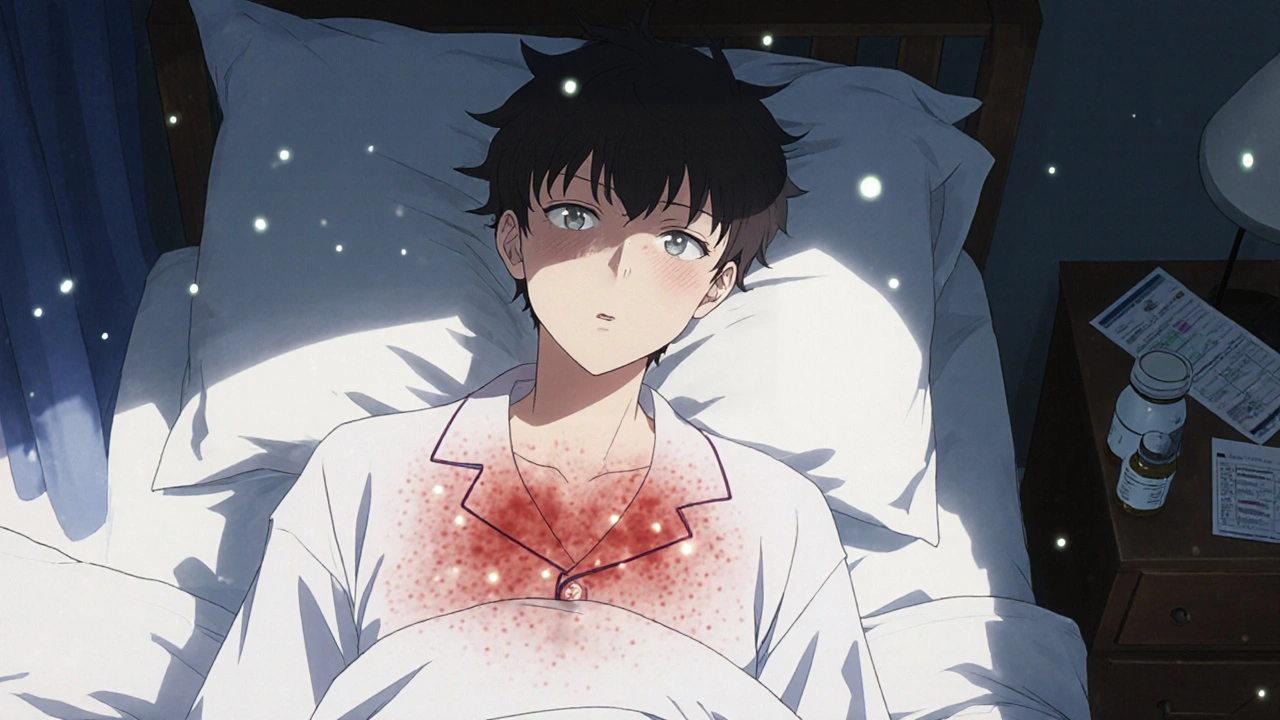
DRESS syndrome is a life-threatening drug reaction that causes fever, rash, organ damage, and high eosinophil levels. Often misdiagnosed, it requires immediate recognition and treatment to prevent death or long-term organ damage.

Nov 18 2025
Dec 23 2025

May 8 2025
Nov 27 2025
Dec 1 2025