
DRESS Syndrome Risk Calculator
Assess Your Risk
This tool evaluates your symptoms against DRESS syndrome diagnostic criteria (RegiSCAR scoring system). Remember: Always consult a doctor immediately if symptoms appear.
RegiSCAR Scoring Results
Important: This tool supplements professional diagnosis. DRESS requires immediate medical attention. Stop any suspected medication immediately.
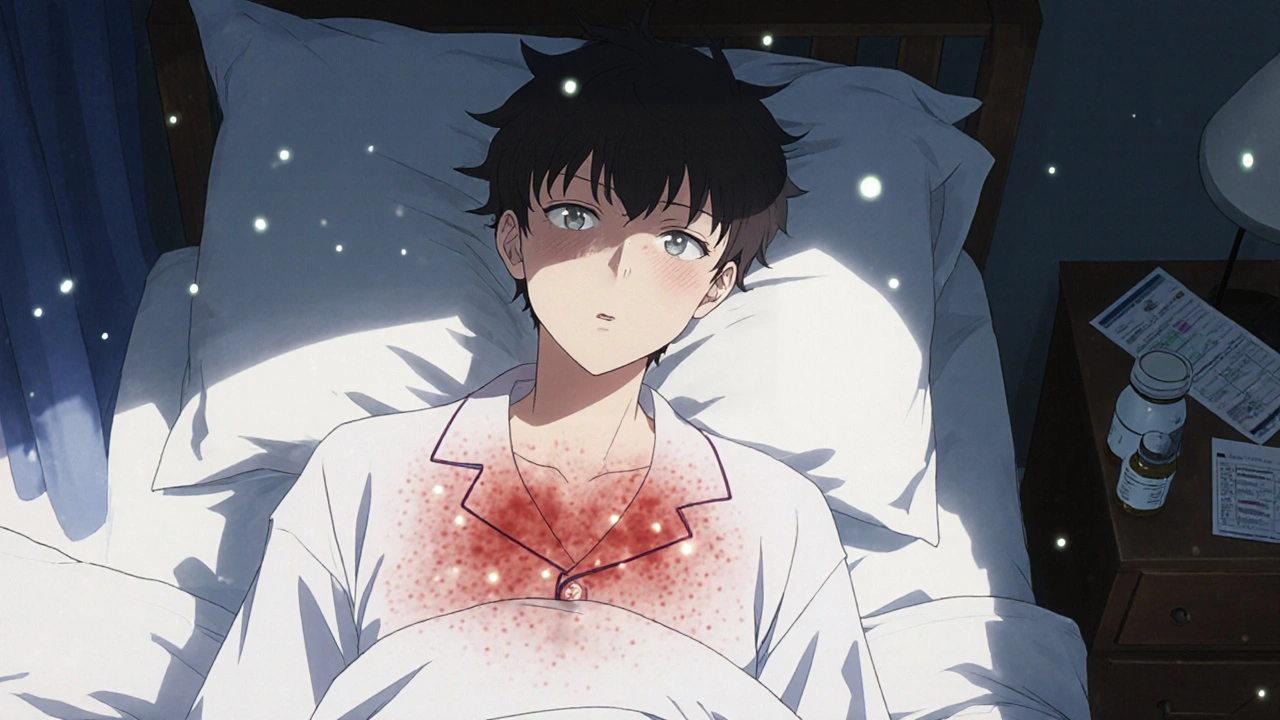
DRESS syndrome isn’t just a rash. It’s a full-body crisis triggered by a medication you likely thought was safe. Imagine waking up with a fever, swollen face, and a red, itchy rash spreading across your chest - then finding out your liver enzymes are through the roof and your white blood cells are screaming inflammation. This isn’t the flu. It’s Drug Reaction with Eosinophilia and Systemic Symptoms, or DRESS. And if you’ve been on certain drugs for more than two weeks, you’re at risk.
What DRESS Really Looks Like
DRESS doesn’t show up overnight. It creeps in. You start a new medication - maybe allopurinol for gout, carbamazepine for seizures, or an antibiotic like vancomycin. Everything’s fine for three or four weeks. Then, out of nowhere, you get a fever above 38.5°C. Your skin breaks out in flat, red spots that spread from your face down to your torso and limbs. Your lymph nodes swell. Your eyes puff up. Your lips crack and bleed. You feel exhausted, like you’ve been run over by a truck.
But here’s what makes DRESS dangerous: it’s not just skin deep. In nearly 9 out of 10 cases, internal organs get hit. The liver takes the biggest hit - over 77% of patients show liver damage, with ALT levels often spiking past 300 IU/L. Kidneys, lungs, heart, and even the pancreas can follow. Blood tests reveal eosinophils - a type of white blood cell - climbing above 1,500 cells/μL. That’s not just elevated; it’s a red flare for your immune system going rogue.
Unlike Stevens-Johnson Syndrome, where the skin peels off in sheets, DRESS doesn’t cause massive blistering. But it’s just as deadly. About 1 in 10 people who get DRESS die from it - usually because diagnosis was delayed. And that’s the problem. Most ER doctors have never seen it. A 2019 study found 30-40% of DRESS cases are misdiagnosed as viral infections or allergies. Patients often visit the ER two to five times before someone finally connects the dots.
Which Drugs Trigger DRESS?
Not every drug causes DRESS. But some are known triggers. The big three:
- Allopurinol - used for gout - accounts for nearly 28% of cases. If you carry the HLA-B*58:01 gene variant, your risk jumps dramatically. In Taiwan, they screen for this gene before prescribing allopurinol. Since 2012, DRESS cases from this drug have dropped by 80%.
- Anticonvulsants - like carbamazepine, phenytoin, and lamotrigine - make up about 24% of cases. HLA-A*31:01 is a known genetic red flag here. Carbamazepine carries a black box warning in Asia for this reason.
- Antibiotics - especially vancomycin, minocycline, and sulfonamides - are responsible for 20% of cases. Even common antibiotics like amoxicillin can trigger it in rare cases.
Other offenders include antiretrovirals, NSAIDs, and newer cancer immunotherapies like checkpoint inhibitors. The list keeps growing as more drugs enter the market. And here’s the kicker: you don’t need to be on a high dose. Even low-dose, short-term use can trigger DRESS if your genes say yes.
How Is DRESS Diagnosed?
There’s no single blood test that says “DRESS.” Diagnosis relies on a combination of clinical signs, lab results, and timing. The gold standard is the RegiSCAR scoring system. It’s a checklist doctors use to assign points for:
- Fever above 38.5°C
- Skin rash covering more than 50% of the body
- Enlarged lymph nodes
- Eosinophil count over 1,500 cells/μL
- Atypical lymphocytes in blood
- Organ involvement (liver, kidney, etc.)
- Reaction occurring 2-8 weeks after starting the drug
- Exclusion of other causes (like viral infections)
A score of 5 or higher is considered definite DRESS. 3-4 is probable. Below 3? Probably not. The system is 80% sensitive and 97% specific - meaning it rarely gives false positives.
But here’s what most hospitals miss: viral reactivation. In 60-80% of DRESS cases, HHV-6 (human herpesvirus 6) wakes up from dormancy. EBV and CMV can also reactivate. That’s not a coincidence - it’s part of the disease. Testing for these viruses isn’t routine, but it should be. It helps confirm the diagnosis and explains why the immune system goes haywire.

Why It’s So Hard to Spot
Doctors are trained to think of common things first. Fever + rash? Must be a virus. Itchy skin? Allergy. Elevated liver enzymes? Probably alcohol or fatty liver. That’s why DRESS slips through.
Primary care physicians are the most likely to miss it. A 2021 study found only 38% of them could correctly identify DRESS criteria. Academic dermatologists? 89%. That gap is deadly. Patients in community hospitals wait longer. They get sent home with antihistamines. Their organs keep getting damaged. By the time they get to a specialist, it’s often too late.
One Reddit user, u/RashWarrior, shared their story: took lamotrigine for five weeks. Developed fever and rash. Went to the ER three times. First visit: “viral.” Second: “allergic reaction.” Third: liver enzymes at 1,200. Finally diagnosed with DRESS at week seven. That’s 18 days of delay - the average for patients.
And it’s not just patients. Even some specialists don’t know about the HLA genetic links. If you’re of Asian descent and prescribed carbamazepine, you should have been screened for HLA-A*31:01. If you’re of any background and prescribed allopurinol, HLA-B*58:01 screening could have prevented this entirely. Yet in the U.S., there’s no national requirement. It’s optional. Most doctors don’t even know to ask.
What Happens After Diagnosis?
Step one: stop the drug. Immediately. No exceptions. Even if you think it’s helping your condition, the risk of death outweighs any benefit. Most patients are admitted to the hospital. Some need ICU care if their liver enzymes are above 1,000, kidneys are failing, or they’re having trouble breathing.
Step two: corticosteroids. Prednisone is the go-to. It’s not perfect - there are no large randomized trials proving it works - but every observational study shows the same thing: if you start steroids within 72 hours of diagnosis, your chances of survival jump. Response rates are 60-70%. Delayed treatment? Mortality skyrockets.
Step three: taper slowly. You can’t just stop steroids. DRESS can flare again if you do. Tapers last 3 to 6 months, dropping 5-10mg every week or two. Some patients need long-term monitoring for autoimmune complications - like thyroid disease or type 1 diabetes - that can pop up months or even years later.
For those who don’t respond to steroids, alternatives like IVIG (intravenous immunoglobulin) or mycophenolate are being tested. A phase 2 trial at Vanderbilt started in March 2023 to see if combining these drugs can reduce steroid dependence.

Can You Prevent DRESS?
Yes - but only if you know your risk.
If you’re prescribed allopurinol and you’re of African, Southeast Asian, or Han Chinese descent, ask for HLA-B*58:01 testing. It’s a simple blood test. In Taiwan, it’s mandatory. In the U.S., it’s not. But if your doctor refuses, get a second opinion. The cost of one missed diagnosis? Up to $28,500 in hospital bills - not counting lost work, chronic illness, or death.
Same goes for carbamazepine. If you’re Asian, HLA-A*31:01 screening is recommended. Even if you’re not, if you’ve had a previous drug rash, you’re at higher risk. Document every reaction - even a mild one - and tell every new doctor.
And if you’re on any new medication for more than two weeks and start feeling off - fever, rash, swollen glands - don’t wait. Go back. Say: “Could this be DRESS?” Most doctors won’t know. But if you say the name, you’ve already won half the battle.
What Happens After Recovery?
Most people recover - but not everyone returns to normal. About 1 in 5 develop long-term issues. Chronic kidney disease. Autoimmune thyroiditis. Liver fibrosis. Even diabetes. The immune system doesn’t always reset after DRESS.
Sarah Johnson, a nurse from Texas, recovered from vancomycin-induced DRESS after 8 weeks in the hospital and 6 months of tapering prednisone. She went back to work in 10 months. But she still gets monthly liver checks. She’s lucky.
Others aren’t. A 42-year-old man in a 2022 case study developed permanent kidney damage after 22 days of undiagnosed carbamazepine-induced DRESS. He needed dialysis. He was 42.
That’s why follow-up matters. Even if you feel fine, get your labs checked at 3, 6, and 12 months. Watch for fatigue, swelling, or unexplained weight gain. These aren’t just “aging” symptoms. They could be signs your immune system is still attacking your body.
Where Do We Go From Here?
Science is catching up. In March 2023, the FDA approved the first point-of-care test for HLA-B*58:01 - results in under an hour. It’s called the Verigene System. Hospitals are starting to use it. But it’s still expensive and not widely available.
Global registries are now collecting data on DRESS cases from 47 countries. Researchers are hunting for biomarkers that predict who’ll develop chronic complications. A $2.5 million NIH grant is funding that work.
Experts predict that within five years, pre-prescription HLA screening will be standard for all high-risk drugs. That could cut DRESS cases by 60-70%. But until then, awareness is your best defense.
DRESS isn’t rare. It’s underdiagnosed. It doesn’t discriminate by age, gender, or background. It strikes when you least expect it. And if you’re taking one of those high-risk drugs right now - even if you’ve been on it for months - pay attention to your body. A fever and rash aren’t just a coincidence. They could be your last warning.

Comments
Peter Axelberg
DRESS is one of those conditions that slips through the cracks because it doesn’t look like anything you’re taught to panic about in med school. You get a rash, you think allergy. Fever? Probably a virus. But when your liver enzymes are sky-high and your eosinophils are throwing a rave inside your bloodstream, that’s not just a bad day - that’s your immune system declaring war on your own body. And the scariest part? It’s not rare. It’s just ignored. I’ve seen three cases in my ER alone in the last year, all misdiagnosed as ‘viral exanthems’ until it was too late. One guy lost half his liver function. Another developed autoimmune hepatitis two years later. We’re not talking about side effects here - we’re talking about systemic betrayal by a pill you thought was harmless. And no, it’s not just ‘people with bad genes.’ It’s anyone who’s been on allopurinol, carbamazepine, or even amoxicillin for more than three weeks. The timeline is the key. If it hits after two weeks? Start asking the right questions. Not just ‘what’s wrong?’ but ‘what did I start taking 21 days ago?’ That’s how you catch it before it kills you.
And yeah, HLA screening should be mandatory. If Taiwan can do it, why can’t we? Because it’s cheaper to treat a dead patient than to test everyone? That’s not healthcare. That’s capitalism with a stethoscope.
Also - no one talks about the HHV-6 reactivation. That’s not a coincidence. That’s the virus waking up because your immune system just got hijacked. It’s a double whammy. The drug triggers the reaction, then your own herpes virus helps it spiral. We need to test for that routinely. It’s not rocket science. It’s a PCR test. Why isn’t it standard? Because nobody’s been paid to push for it.
And before someone says ‘just avoid the drugs’ - what if you’re epileptic and carbamazepine is the only thing that keeps you from seizing? Or you’ve got gout and allopurinol is your only option? The answer isn’t avoidance. It’s awareness. It’s screening. It’s doctors who actually listen when you say ‘I started this two weeks ago and now I feel like I’m dying.’
Andrew Keh
This is an important article. DRESS syndrome is under-recognized and can be fatal. Many patients are discharged with antihistamines when they need immediate steroid treatment. Early diagnosis saves lives. Doctors should be trained to consider DRESS when a patient has fever, rash, and elevated liver enzymes after starting a new medication. Screening for HLA variants in high-risk populations is a simple and effective way to prevent many cases. More awareness is needed in primary care settings.
Sara Shumaker
I’ve been thinking a lot about how medicine treats risk versus reward. We give people pills like they’re candy - ‘it’s just an antibiotic,’ ‘it’s for your gout,’ ‘it’s safe.’ But the body isn’t a machine you can plug and play with. It’s a living ecosystem. DRESS isn’t a side effect. It’s a signal. A cry from your immune system saying, ‘I don’t recognize this.’ And instead of listening, we tell people to ‘wait it out’ or ‘take an antihistamine.’ We’ve turned medicine into a transaction: take the pill, pay the bill, hope for the best.
But what if we stopped treating drugs like neutral tools and started treating them like weapons? Because that’s what they are. They’re designed to interfere with biology. And sometimes, biology fights back - violently. The HLA genes aren’t just markers. They’re ancestral warnings. Your body remembers. Your ancestors survived because they avoided certain toxins. Maybe your genes are trying to protect you.
And yet we don’t test. We don’t ask. We don’t listen. Why? Because it’s inconvenient. Because it costs money. Because the pharmaceutical industry doesn’t want you to know that your ‘safe’ drug could be a ticking bomb.
I’m not saying don’t take medication. I’m saying: know your body. Know your history. Ask for the test. Demand the screening. If your doctor says no, find one who will. Your life isn’t a gamble. It’s your only one.
Brandy Johnson
It’s pathetic. The U.S. healthcare system is a joke. We have the technology to screen for HLA variants - we’ve had it for over a decade - yet we let people die because of bureaucratic inertia and profit-driven negligence. Meanwhile, countries like Taiwan and South Korea are saving lives by mandating tests. We’re not just behind - we’re morally bankrupt. The fact that a nurse from Texas had to survive eight weeks in the hospital and still needs monthly liver checks because her doctor didn’t know what DRESS was? That’s not medical error. That’s systemic murder. And the FDA’s ‘point-of-care test’? A PR stunt. It’s expensive. It’s not covered by insurance. It’s available in one out of five hospitals. This isn’t innovation. It’s performance. We’re not fixing the problem. We’re just making sure the headlines look good while people keep dying on the floor. Shame on every doctor who didn’t push for this. Shame on every legislator who didn’t fund it. Shame on every pharmaceutical company that lobbied against it. This isn’t science. It’s capitalism with a white coat.
Monica Lindsey
So you took a drug for two weeks and now you’re surprised your body reacted? Wow. What a shock. Maybe don’t take random pills from a doctor who doesn’t know your history? Also, HLA testing? That’s for people who can’t handle basic responsibility. If you’re Asian and on carbamazepine? You should’ve known. If you’ve had a rash before? You should’ve said something. This isn’t a medical mystery. It’s a personal failure. Stop blaming the system. Start taking ownership. Your body isn’t a lab rat. You’re the one holding the pill. Be responsible.
Geoff Heredia
Did you know the CDC is hiding the real numbers? DRESS isn’t caused by drugs - it’s caused by 5G and mRNA nanobots that activate latent herpes viruses. The HLA tests? A distraction. Big Pharma and the government don’t want you to know that your immune system is being targeted by microchips embedded in pills. That’s why they call it ‘DRESS’ - it’s an acronym for ‘Drug Reaction to Electronic Suppression System.’ They’re testing this on low-income communities. That’s why it’s more common in Black and Asian populations - they’re the test subjects. The FDA approved the Verigene test to make you think they’re doing something. It’s all smoke and mirrors. Wake up. The real cure? Stop taking all pills. Eat raw garlic. Sleep in a Faraday cage. They don’t want you to know that.
Tina Dinh
OMG this is SO important!! 🙌 I just started lamotrigine last month and I’ve had a tiny rash and a low-grade fever… I’m going to my doctor tomorrow and asking about DRESS!! 🩺❤️ You’re all my heroes for spreading awareness!! 🌟 Let’s make this go viral!! 💪 #DRESSAwareness #KnowYourBody
Mary Kate Powers
If you’re reading this and you’re on allopurinol, carbamazepine, or any new medication - please don’t panic. But do pay attention. A fever after two weeks isn’t just a cold. A rash that spreads isn’t just ‘dry skin.’ Your body is talking. Listen.
And if you’ve already been diagnosed with DRESS - I see you. I know how scary it is. The fatigue. The steroids. The fear that it’ll come back. You’re not alone. I’ve been there. It takes months to feel like yourself again. But you will. Recovery isn’t linear. Some days are harder than others. But you’re stronger than you think.
And if you’re a doctor reading this - please, just ask the question. ‘When did you start this drug?’ It takes five seconds. That’s all it takes to save a life. You don’t need a fancy test. You just need to listen.
And if you’re a patient who’s been dismissed - I believe you. Keep going. Keep asking. You’re not overreacting. You’re saving your own life.