
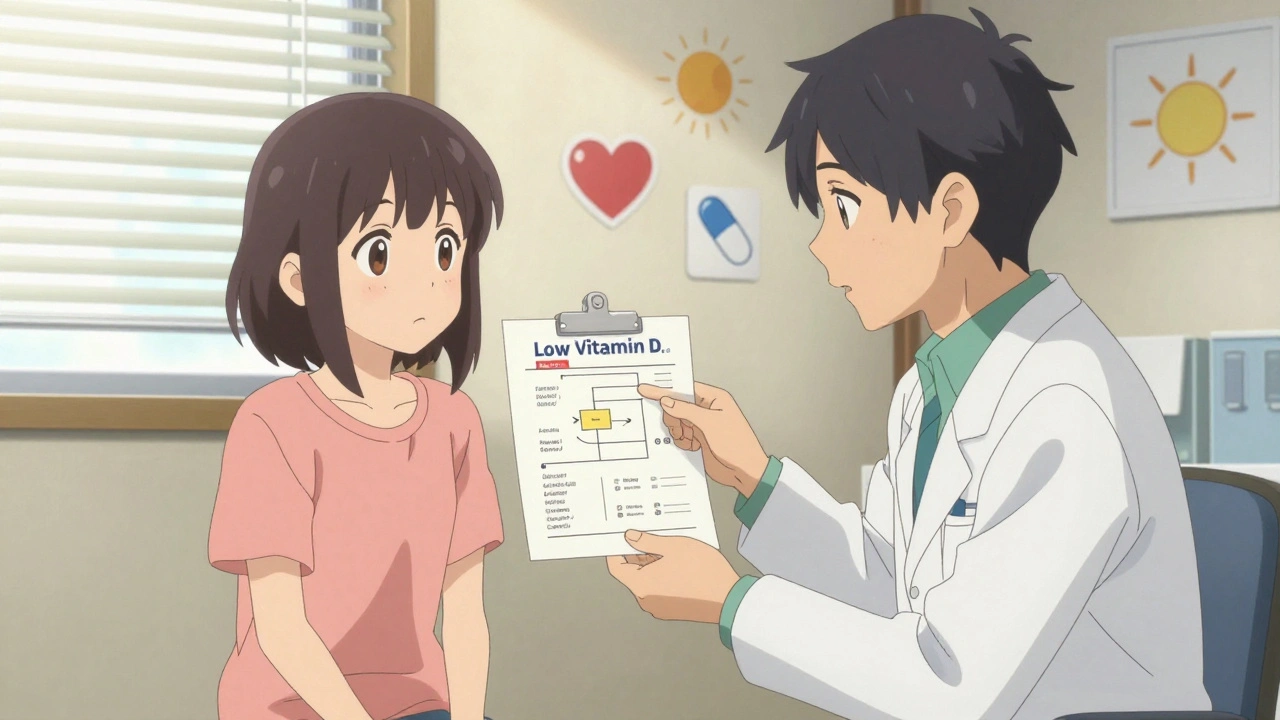
Vitamin D & Statin Tolerance Calculator
Vitamin D Status Check
Enter your vitamin D level to see if you might benefit from supplementation and which statins may be better tolerated.
Your Results
Clinical Evidence Summary
Based on the 2022 JAMA Cardiology study of over 2,000 patients, vitamin D supplementation alone does not reliably prevent statin muscle pain. However, patients with severe deficiency (<20 ng/mL) may experience improved tolerance after correction.
For millions of people taking statins to lower cholesterol and prevent heart attacks, muscle pain isn’t just an inconvenience-it’s a dealbreaker. About 1 in 5 patients stop their statin because of muscle aches, weakness, or cramps. And for years, doctors have wondered: could low vitamin D be the hidden culprit?
The idea sounds simple. If you’re low on vitamin D, your muscles might be weaker. If your muscles are weaker, statins might hit harder. So, fix the vitamin D, and maybe you can keep taking your statin. It’s a compelling story. But is it true?
What’s the connection between vitamin D and statin muscle pain?
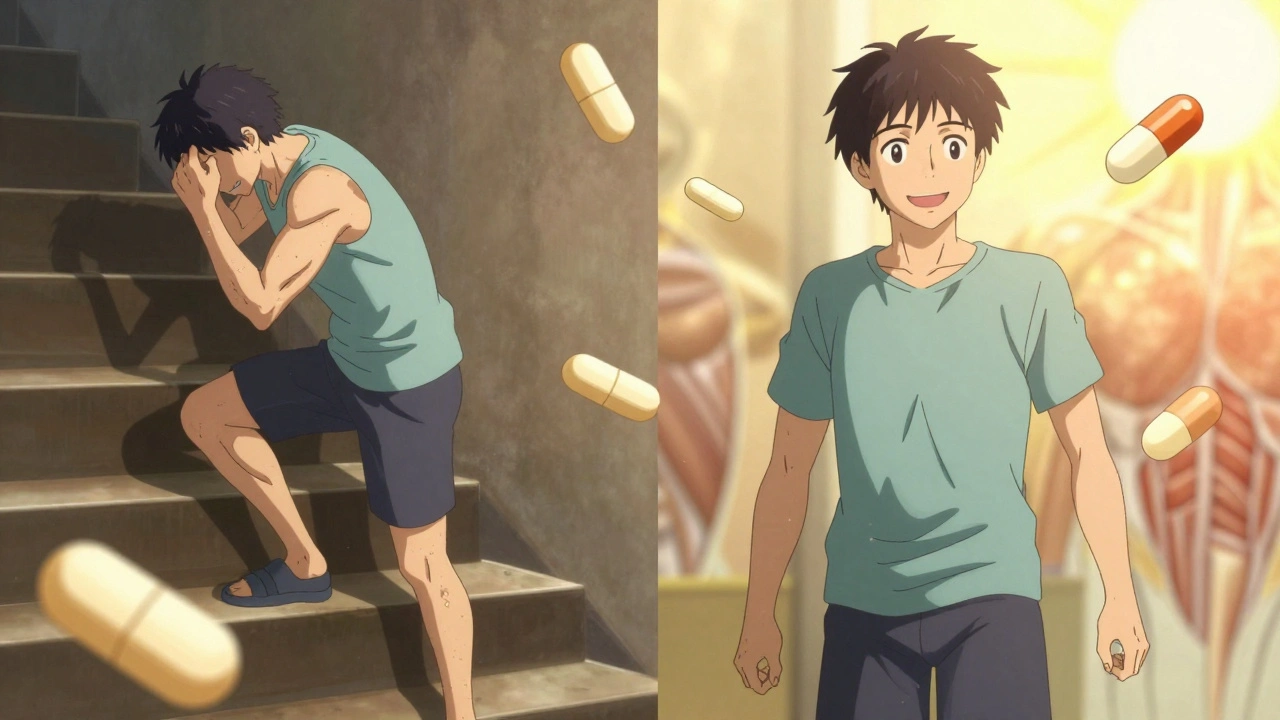
Vitamin D isn’t just for bones. It plays a direct role in muscle function. Low levels are linked to muscle weakness, fatigue, and even severe myopathy-a condition where muscle tissue breaks down. Statins, meanwhile, can cause a similar set of symptoms: soreness, cramps, stiffness, and in rare cases, dangerous muscle damage called rhabdomyolysis.
When these two things overlap, it’s hard to tell which is causing what. Is the muscle pain from the statin? Or from low vitamin D? Or both? Back in 2009, a small study found that 92% of patients who stopped statins due to muscle pain were able to restart them after correcting their vitamin D levels. That sparked a wave of clinical interest. Doctors started checking vitamin D levels in patients who couldn’t tolerate statins. Some even began supplementing before trying another statin.
By 2017, a larger study showed something striking: patients with vitamin D levels below 20 ng/mL had a 90% success rate in tolerating statins again after supplementation. Those with higher levels? Only 33%. That’s a huge difference. And it wasn’t just any statin-pravastatin and rosuvastatin worked best after vitamin D correction. That suggested not just a general link, but a specific, actionable path forward.
The big study that changed everything
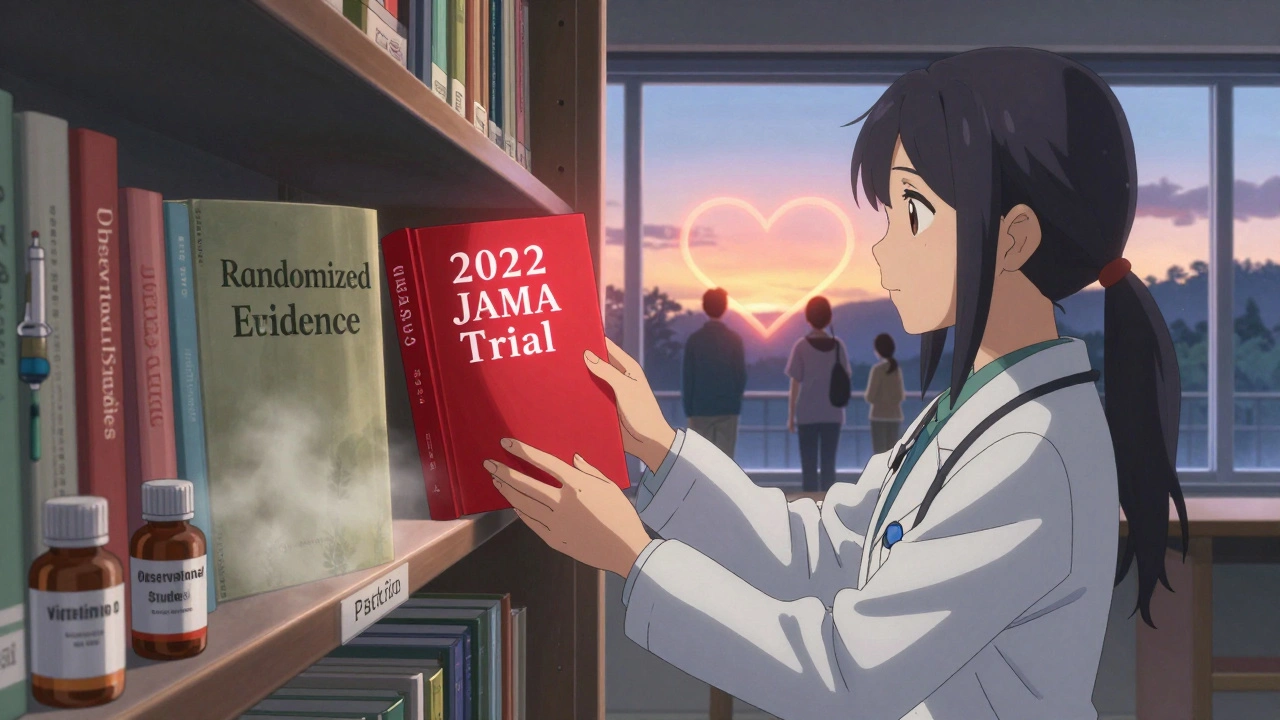
But science doesn’t stop at observational data. The real test is the randomized controlled trial-the gold standard. In 2022, the JAMA Cardiology study looked at over 2,000 people taking statins in the VITAL trial. Half got 2,000 IU of vitamin D daily. Half got a placebo. After a year, there was no difference in muscle pain. No difference in statin discontinuation. Zero benefit.
This wasn’t a small or flawed study. It was large, well-designed, and funded by the NIH. It didn’t just look at people who already had muscle pain-it tracked new statin users from the start. And it found nothing. That sent shockwaves through the medical community. If you’re a doctor who’s seen patients rebound after vitamin D correction, this result feels wrong. But if you’re a researcher who trusts rigorous trials, this is the answer.
The contradiction is real. Observational studies say: fix vitamin D, fix statin tolerance. The best RCT says: nope, doesn’t matter.
Why do the studies disagree?
The difference comes down to how the studies were done. Observational studies look back at patients who already had problems. They see that low vitamin D and statin pain often happen together. But correlation isn’t causation. Maybe people with low vitamin D are less active, eat worse, or have other health issues that make them more sensitive to statins. Maybe they’re more likely to report muscle pain because they’re already worried about side effects.
The 2015 study that found 53% of statin-intolerant patients could restart statins after vitamin D repletion didn’t use a placebo. Patients knew they were getting vitamin D. That’s a big problem. Placebo effects are powerful-especially with symptoms as subjective as muscle aches. If you believe your vitamin D is helping, you might feel better-even if it’s not doing anything.
The 2022 trial fixed that. No one knew if they were getting vitamin D or sugar pills. The results were identical. That’s why experts now say: the placebo effect might explain why so many people seemed to improve.
What do the experts actually do?
There’s no universal answer. Some lipid specialists still test vitamin D in every statin-intolerant patient. One practitioner noted in a 2020 article that they’ve seen it work repeatedly-especially in patients with levels below 20 ng/mL. They’ll supplement with 2,000-5,000 IU daily for 6-8 weeks, then try a different statin. Pravastatin and rosuvastatin are their go-tos because they’re less likely to interact with liver enzymes.
Others, especially those following the 2022 trial, have stopped testing altogether. Why spend time and money on a test that doesn’t change outcomes? They focus on other strategies: lowering the statin dose, switching to ezetimibe or PCSK9 inhibitors, or using statins every other day.
Here’s the reality: if your vitamin D is below 20 ng/mL, you should fix it-regardless of statins. Low vitamin D is linked to higher risks of falls, fractures, infections, and even depression. It’s not a statin fix. It’s a health fix.
Which statins are easier to tolerate after vitamin D correction?
If you’re trying again after correcting vitamin D, not all statins are equal. The 2017 study found that after supplementation, patients tolerated pravastatin most often (45% success), followed by rosuvastatin (27%). Why? These two are less dependent on liver enzymes (CYP3A4) that can be affected by low vitamin D. Atorvastatin and simvastatin, on the other hand, rely heavily on these enzymes-and are more likely to cause problems if metabolism is off.
Also, lower doses matter. Starting with 5 mg of rosuvastatin instead of 20 mg, or 10 mg of pravastatin instead of 80 mg, makes a big difference. You don’t need to jump back to your old dose. Sometimes, half the dose gives you 80% of the benefit.
Should you take vitamin D if you’re on a statin?
If your blood test shows a deficiency-below 20 ng/mL-yes, take it. You’re not doing it to fix statin tolerance. You’re doing it because your body needs it. Aim for 1,000-2,000 IU daily. Recheck levels in 3 months. Target 30-50 ng/mL.
If your vitamin D is normal (above 30 ng/mL), don’t take extra just to avoid statin side effects. The evidence says it won’t help. You’re not preventing muscle pain. You’re just spending money on pills that won’t change your outcome.
And if you’re already on a statin and feeling fine? No need to test. Routine screening isn’t recommended unless you have symptoms or risk factors like limited sun exposure, darker skin, obesity, or older age.
What’s the bottom line?
Here’s what you need to know:
- Vitamin D deficiency is common and harmful on its own. Fix it if you have it.
- Statin muscle pain is real and affects 1 in 5 people.
- Correcting low vitamin D might help some people tolerate statins again-but the best science says it’s not reliable.
- Pravastatin and rosuvastatin are your best bets if you’re restarting after a bad reaction.
- Placebo effect is powerful. Feeling better after taking a supplement doesn’t mean it worked.
- Don’t stop your statin unless your doctor agrees. The heart protection is real and life-saving.
The truth is messy. Medicine often is. For now, the safest path is simple: test vitamin D only if you’re deficient. Supplement if needed. But don’t expect it to be a magic key to statin tolerance. If you still can’t tolerate statins, talk to your doctor about alternatives. There are other ways to protect your heart.
What if vitamin D doesn’t help?
Then you’re not alone. Many people can’t tolerate statins, even with perfect vitamin D levels. That’s when you turn to other options:
- Ezetimibe lowers LDL by blocking cholesterol absorption in the gut. It’s well-tolerated and often used with low-dose statins.
- PCSK9 inhibitors (alirocumab, evolocumab) are injectables that cut LDL by 50-60%. They’re expensive but work for people who can’t take pills.
- Bempedoic acid is a newer oral pill that lowers cholesterol without affecting muscles. It’s a good option for statin-intolerant patients.
- Lifestyle changes still matter. Eating more fiber, losing weight, and moving more can reduce LDL by 10-20%.
Statin intolerance isn’t a dead end. It’s a detour. The goal isn’t to force a pill you can’t tolerate. It’s to keep your heart safe.
Can low vitamin D cause statin muscle pain?
Low vitamin D can cause muscle weakness and pain on its own, which may make statin side effects feel worse. But it doesn’t directly cause statin-induced myopathy. The link is indirect: if your muscles are already weak from low vitamin D, statins might push them over the edge. Correcting deficiency may help some people, but it’s not a guaranteed fix.
Should I take vitamin D supplements if I’m on a statin?
Only if your blood test shows you’re deficient (below 20 ng/mL). Taking extra vitamin D won’t prevent statin muscle pain if your levels are already normal. But if you’re deficient, supplementing is good for your bones, muscles, and immune system-regardless of statins.
What’s the best statin to try after vitamin D correction?
Pravastatin and rosuvastatin are most often tolerated after vitamin D repletion. They’re less dependent on liver enzymes that may be affected by low vitamin D. Avoid simvastatin and atorvastatin initially-they’re more likely to cause muscle issues. Start with the lowest dose possible.
How long should I take vitamin D before trying statins again?
Wait 6 to 8 weeks after starting supplementation. That’s how long it takes for vitamin D levels to stabilize and for muscle function to improve. Recheck your level before restarting a statin. Aim for 30-50 ng/mL.
Does the 2022 JAMA study mean vitamin D doesn’t matter at all?
It means vitamin D supplementation doesn’t prevent statin muscle pain in the general population. But it doesn’t rule out benefit in people with severe deficiency (below 20 ng/mL). Those patients may still respond, even if the overall trial didn’t show it. More research is needed to identify who might benefit.



Comments
Rudy Van den Boogaert
I’ve been on simvastatin for 5 years and had constant leg cramps. My doc checked my vit D - 14 ng/mL. Took 2000 IU daily for 8 weeks, retested at 42, and tried pravastatin at 10mg. No more pain. I’m not saying it works for everyone, but it worked for me. Don’t write off the anecdotal stuff - we’re not all placebo cases.
Also, the JAMA study didn’t target people with severe deficiency. It was a general population trial. That’s like saying aspirin doesn’t help headaches because it didn’t work for people who didn’t have them in the first place.
Bill Wolfe
Oh, so now we’re back to ‘my cousin’s yoga instructor’s acupuncturist told me’ medicine? 🤦♂️
The NIH-funded, 2,000-person, double-blind, placebo-controlled trial says vitamin D does NOTHING for statin tolerance. Not ‘maybe,’ not ‘sometimes,’ not ‘for people who really really want to believe.’ NOTHING. And yet here we are, 8 comments in, and people are still clinging to their 2009 observational study like it’s the Ten Commandments written in vitamin D.
Next up: ‘I took turmeric and my statin side effects vanished’ - because nothing says ‘evidence-based medicine’ like a TikTok testimonial from someone who googled ‘statins bad’ in 2017.
Also, if you’re supplementing just because you ‘feel better,’ congrats - you’ve unlocked the placebo effect. Now go buy a crystal and call it a day. 💎✨
Alex Piddington
While the randomized controlled trial is indeed the gold standard, we must also acknowledge the limitations of population-level data when applied to individual clinical scenarios.
Many patients presenting with statin intolerance have comorbid conditions - obesity, sedentary lifestyle, chronic inflammation - that independently correlate with low vitamin D. These confounders are not fully accounted for in large trials designed for generalizability.
Furthermore, muscle symptoms are inherently subjective. The absence of a statistically significant difference in pain scores does not negate the possibility of clinically meaningful improvement in a subset of patients with profound deficiency.
Practical medicine often balances population evidence with individualized care. For the patient with a vitamin D level of 12 ng/mL, supplementing is not a gamble - it’s basic physiological correction. Whether it resolves statin intolerance is secondary to restoring a fundamental nutrient deficiency.
Let us not confuse the absence of evidence with the evidence of absence.
Libby Rees
My mom took statins for years. She had muscle pain. Her vitamin D was low. She took supplements. The pain went away. She’s still on statins. She’s 72. Her heart is fine.
Science is great. But real life doesn’t always fit in a chart.
Test your levels. Fix what’s broken. Don’t overthink it.
Gillian Watson
My GP stopped testing vitamin D for statin patients after the JAMA paper. Said it’s a waste of time and money. I get it. But I still take 2000 IU daily anyway - because I live in the UK and it’s dark 10 months a year. Not for statins. For me.
Also, pravastatin is the only statin I’ve ever tolerated. Coincidence? Maybe. But I’m not risking it.
Gareth Storer
Of course the big study says it doesn’t work. Who funded it? Big Pharma? The same ones who make the statins? 🤨
Meanwhile, doctors who’ve seen patients rebound after vitamin D? They’re just ‘anecdotal’? That’s how science works now? If it doesn’t fit the corporate-funded narrative, it’s not real?
Next they’ll say sunlight doesn’t help depression either. Because the RCT was ‘inconclusive.’
Wake up. This is how they control the narrative. You’re not a patient. You’re a revenue stream.
George Graham
I’ve been a nurse for 18 years. I’ve seen patients get better after vitamin D. I’ve also seen patients take it and still have pain. Neither outcome surprises me anymore.
What I do know is this: if someone’s vitamin D is 15, they need it. Not because it’ll fix their statin tolerance, but because their body is crying out for it. Bone health, immunity, mood - all of it matters.
And if they feel better after taking it? That’s not placebo. That’s their body healing. Maybe it helps with the statin pain. Maybe it doesn’t. But they’re better off either way.
Don’t shame people for trying to feel better. Just because it’s not in the RCT doesn’t mean it’s not real for them.
Pavan Kankala
They don’t want you to know the truth. Vitamin D is free. Statins are a $50 billion industry. The JAMA study? A distraction. The real cause of muscle pain? The statins themselves - and the fact that your liver is being poisoned by synthetic chemicals. Vitamin D doesn’t fix it because it’s not supposed to. They want you to think it’s a deficiency, not a drug problem.
Take vitamin D? Fine. But stop taking statins. Your heart doesn’t need them. Your cholesterol is fine. It’s all a scam.
Watch the documentary. You’ll see.