Multiple System Atrophy: Understanding Parkinsonian Features and Poor Prognosis
Feb 1 2026

When the FDA interchangeability, a special designation given to certain generic drugs that can be automatically substituted for the brand-name version without a doctor’s permission. Also known as therapeutic equivalence, it’s the key that lets pharmacies switch your prescription without asking you or your doctor first. This isn’t just paperwork—it’s about your access, your cost, and your safety. Not every generic gets this stamp. Only those proven to behave exactly like the original in your body, with no meaningful difference in how well they work or how safe they are.
Behind FDA interchangeability are two big players: generic drugs, medications that contain the same active ingredient as brand-name drugs but are sold under a different name after the patent expires and biosimilars, complex biologic drugs that mimic another biologic medication but aren’t exact copies. While regular generics are chemically identical to their brand counterparts, biosimilars are more like close relatives—they’re highly similar but not identical. Only a few biosimilars have earned FDA interchangeability status, and even fewer are actually substituted in practice. That’s because the rules are stricter, the science is more complex, and pharmacists often need extra training to swap them.
What does this mean for you? If your prescription says "FDA interchangeable," your pharmacist can give you the cheaper version without calling your doctor. That saves time and money. But if it doesn’t have that label, even if it’s a generic, they can’t swap it without your doctor’s okay. This is why you sometimes get the brand drug even when a generic exists—it’s not because the generic doesn’t work. It’s because it hasn’t cleared the higher bar for interchangeability. And that’s not just about cost. It’s about consistency. If you’re on a drug that affects your immune system, your thyroid, or your heart rhythm, even tiny differences matter. The FDA requires real-world data, not just lab tests, to approve interchangeability. That’s why you’ll see this label mostly on insulin, epinephrine, and a handful of other critical medications.
You’ll find plenty of posts below that dig into how drug substitution works, why some generics are preferred over others, and how insurance formularies push certain drugs over others. You’ll also see how patients deal with unexpected switches, how pharmacists navigate these rules, and what happens when a drug loses its interchangeable status. This isn’t about marketing. It’s about real decisions that affect your daily health. Whether you’re saving money on insulin, managing a chronic condition, or just trying to understand why your pill looks different this month, knowing what FDA interchangeability really means helps you ask the right questions—and stay in control.
Dec
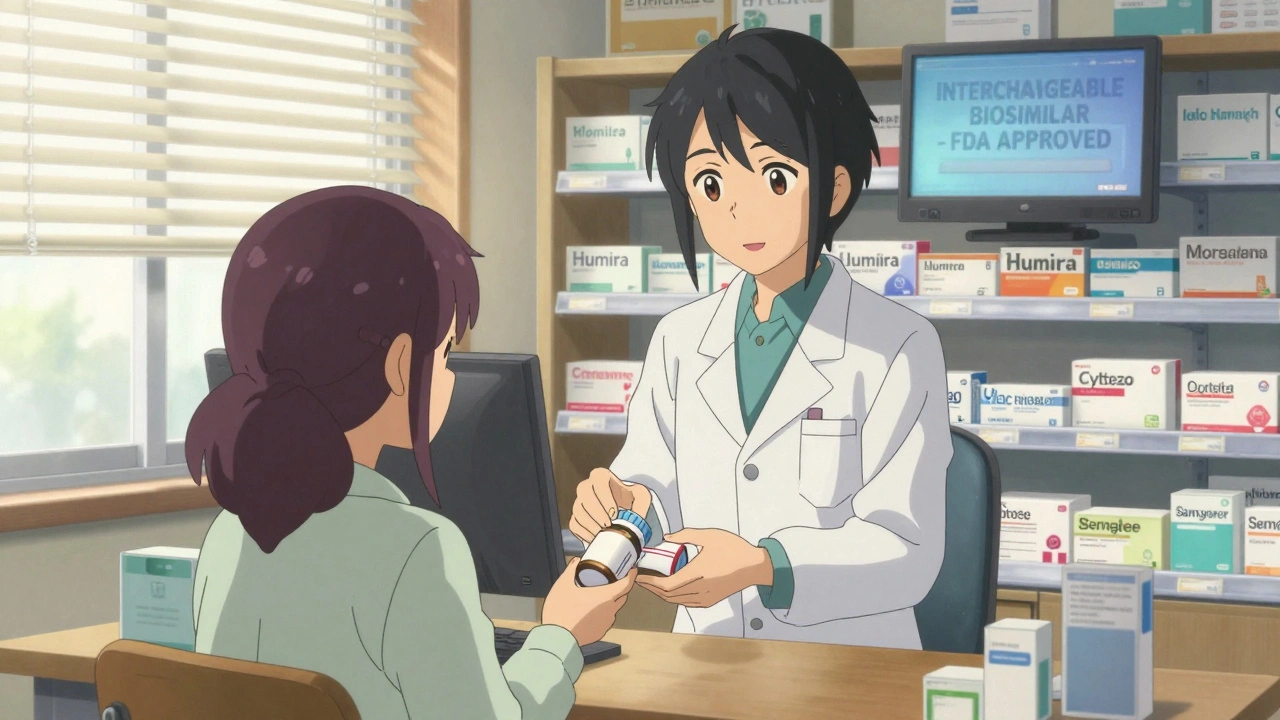
Interchangeable biosimilars can be swapped automatically at U.S. pharmacies, but only if FDA-approved and allowed by state law. Learn how this affects cost, safety, and patient access to biologic drugs.

Feb 1 2026

Oct 27 2025

Aug 28 2025

Dec 16 2025

Oct 13 2025