
Medication Risk Checker for Dizziness
Check Your Medication Risk
This tool estimates your risk of orthostatic hypotension based on the medications you're taking. It's not a diagnosis - consult your doctor for medical advice.
Your Risk Assessment
Next Steps:
- If high risk: Consult your doctor about possible medication adjustments
- Stay hydrated: Aim for 2-2.5 liters of water daily
- Stand slowly: Sit for 1-2 minutes before standing up
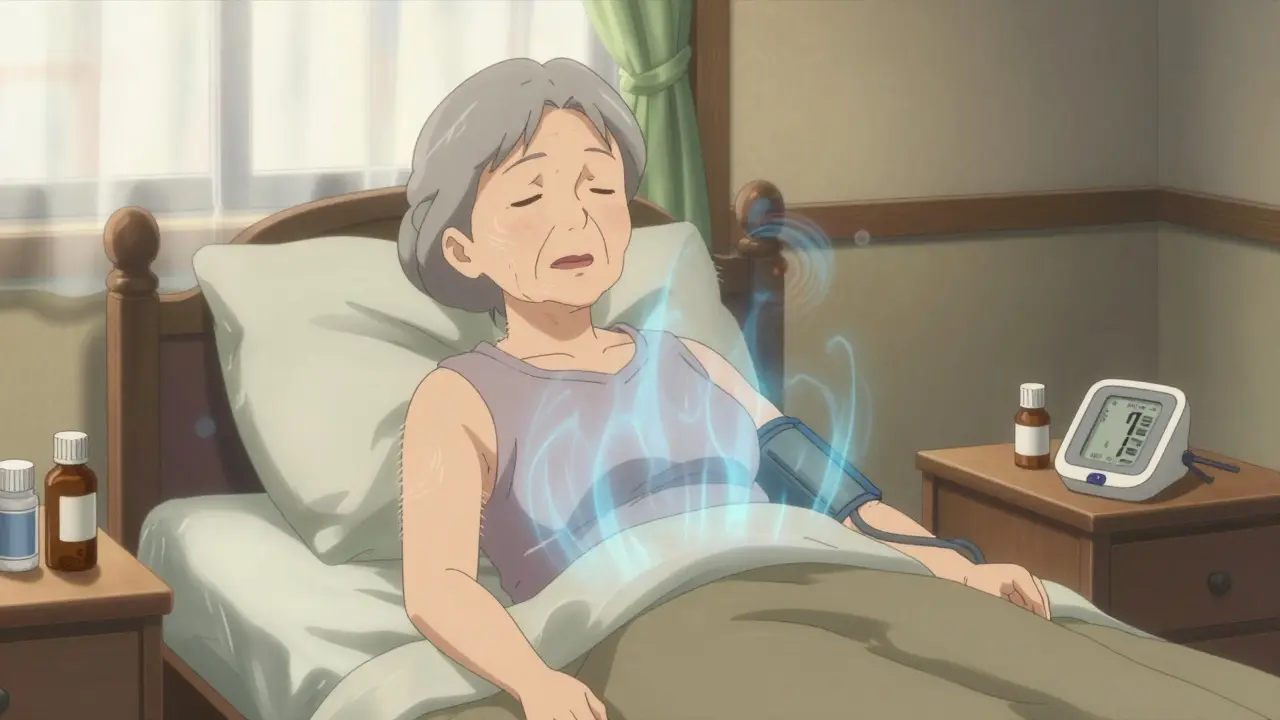
Standing up and feeling like the room is spinning? That dizzy spell isn’t just bad luck-it could be your medications. Orthostatic hypotension, or postural hypotension, is when your blood pressure drops too fast after standing, leaving you lightheaded, blurry-visioned, or even fainting. It’s not rare. In fact, up to 30% of older adults taking certain medicines experience it. And the worst part? Many people don’t connect the dots between their pills and their dizziness until they’ve fallen-or worse.
What Exactly Is Orthostatic Hypotension?
Orthostatic hypotension happens when your body can’t adjust blood pressure quickly enough after standing. Normally, when you rise from sitting or lying down, your heart beats faster and your blood vessels tighten to keep blood flowing to your brain. But if that system is disrupted, your brain gets a temporary shortage of oxygen. That’s when you feel dizzy, nauseous, or see black spots. The clinical definition is clear: a drop of 20 mm Hg in systolic pressure or 10 mm Hg in diastolic pressure within three minutes of standing. It’s not a disease itself-it’s a warning sign your body’s blood pressure control is under stress.Which Medications Cause This?
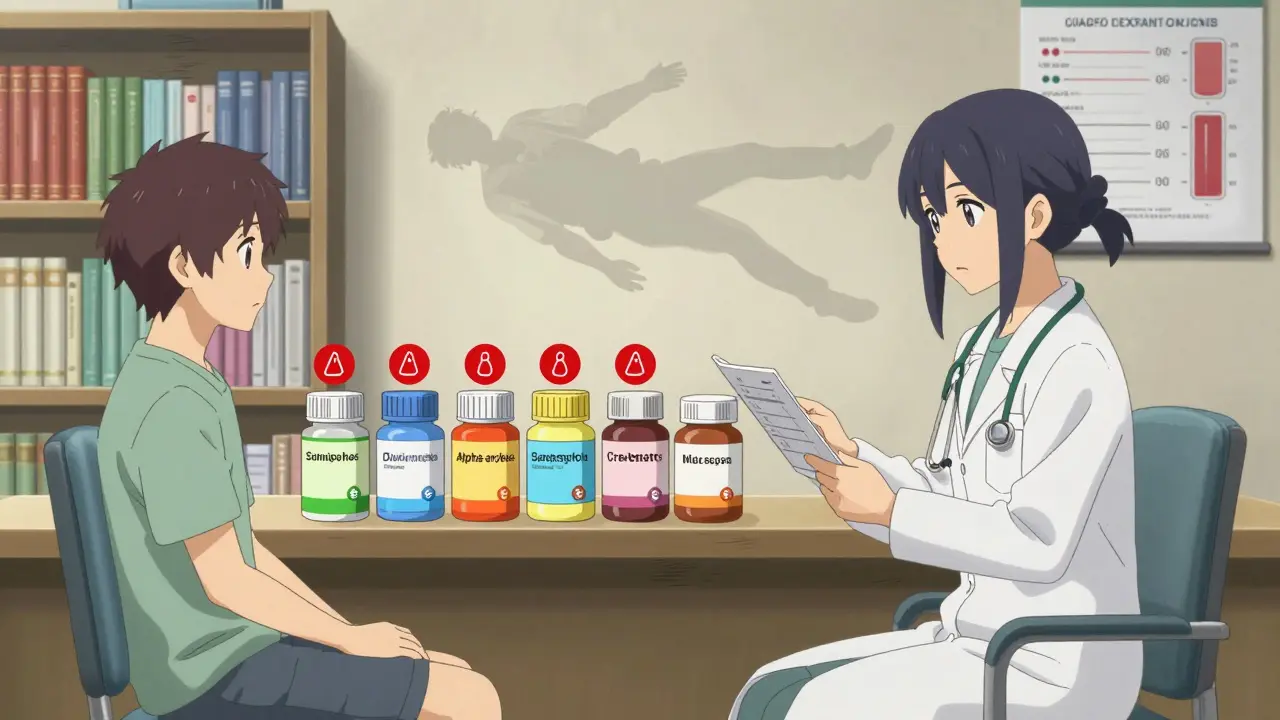
Not all drugs cause this, but some are notorious. The biggest culprits fall into a few categories:- Antihypertensives: Blood pressure pills like diuretics (hydrochlorothiazide), ACE inhibitors (lisinopril), and calcium channel blockers are meant to lower blood pressure-but sometimes they lower it too much when you stand.
- Alpha-blockers: Used for prostate issues or high blood pressure, drugs like doxazosin and terazosin relax blood vessels. That’s helpful for urination, but it makes standing risky. Studies show these increase OH risk by nearly 3 times.
- Tricyclic antidepressants: Medications like amitriptyline and nortriptyline affect brain chemicals but also block nerve signals that help maintain blood pressure. Risk jumps 3.2-fold.
- Antipsychotics: Clozapine, quetiapine, and chlorpromazine are especially problematic. Up to 40% of patients on high doses report dizziness on standing. Even low doses can trigger it in older adults.
- Opioids: Painkillers like oxycodone and morphine slow down the nervous system’s ability to respond to posture changes. Combine them with alcohol or benzodiazepines, and the risk triples.
- Levodopa: For Parkinson’s, this drug helps movement but often crashes blood pressure. Half of patients on levodopa develop orthostatic hypotension.
What’s worse? Most people take multiple medications. If you’re on four or more drugs, your risk of orthostatic hypotension jumps nearly sixfold. It’s not just one pill-it’s the combo.
Why Are Older Adults More at Risk?
Age isn’t just a number here. As we get older, our blood vessels stiffen, our heart rate response slows, and our nervous system doesn’t react as fast to posture changes. Add medications into the mix, and it’s a perfect storm. People over 70 are more than three times as likely to develop this condition than younger adults. And because older adults often take more meds for heart disease, diabetes, depression, or arthritis, the chances of a dangerous interaction go up fast.One patient story from Cleveland Clinic’s forums says it all: a 78-year-old woman on six medications-including hydrochlorothiazide and lisinopril-had repeated falls. Once her doctor removed the diuretic, her dizziness vanished in under 72 hours. She didn’t need a new pill. She just needed fewer.
How Is It Diagnosed?
You can’t guess orthostatic hypotension. You have to measure it. The standard test is simple: lie down for five minutes, then stand up. Blood pressure is taken at 0, 1, 2, and 3 minutes after standing. A drop of 20/10 mm Hg or more? That’s a positive result. Symptoms must match-dizziness, tunnel vision, weakness, or near-fainting. But here’s the catch: up to 40% of people with this drop feel nothing. That’s why doctors should screen older patients, especially those on high-risk meds, even if they don’t complain.Many patients don’t realize their dizziness is drug-related. A Mayo Clinic study found 55% of people had symptoms for over two months before anyone connected them to their medications. If you’ve been feeling off after standing for weeks, ask your doctor to check your blood pressure in both positions.
What Can You Do About It?
The good news? Medication-induced orthostatic hypotension is often reversible. Here’s what works:- Review your meds: Work with your doctor to identify which drug(s) might be causing the problem. Sometimes switching to a lower-risk alternative helps-like replacing quetiapine with ziprasidone, which has far less OH risk.
- Adjust timing: Take blood pressure-lowering meds at night if possible. That way, the peak effect happens while you’re lying down, not when you’re getting up.
- Hydrate: Drink 2 to 2.5 liters of water daily. Dehydration makes OH worse. Coffee and tea count, but avoid alcohol-it’s a double whammy with many of these drugs.
- Move slowly: Don’t jump out of bed. Sit on the edge for a minute. Then stand slowly. Use a cane or hold onto furniture if needed.
- Wear compression stockings: These help push blood back up from your legs, reducing the drop in pressure. They’re not glamorous, but they work.
- Don’t skip meals: Large meals can cause blood to pool in your gut, lowering pressure further. Eat smaller portions more often.
For most people, these steps alone cut symptoms by 65-80%. No new pills needed.
When Medication Adjustment Isn’t Enough
If lifestyle changes don’t help, doctors may turn to medications like midodrine. This drug tightens blood vessels and raises standing blood pressure. It’s taken three times a day, and studies show it reduces dizziness in 65% of patients. But it’s not for everyone-it can cause high blood pressure when lying down, so timing matters. It’s a last resort, not a first one.
Why This Matters More Than You Think
This isn’t just about feeling dizzy. Orthostatic hypotension triples your risk of falling. One in five falls in older adults leads to fractures, head injuries, or hospitalization. And the long-term risk? A 24-32% higher chance of dying over the next decade. That’s not a small number. It’s a silent killer hiding behind a common side effect.Medicare spends $31 billion a year treating falls. Up to 40% of those are tied to medication-induced orthostatic hypotension. That’s billions spent on injuries that could have been prevented by a simple pill review.
What’s Changing in 2025?
Doctors are catching on. The American Geriatrics Society’s Beers Criteria now lists 12 high-risk medications for OH in seniors. Most U.S. primary care practices now screen older patients routinely. The FDA now requires drug labels to warn about OH risk if clinical trials show a 5% or higher incidence. That’s new. And it’s helping.Researchers are also working on smarter drugs. Seven pharmaceutical companies are developing new alpha-1A selective agonists-medications that treat high blood pressure or prostate issues without crashing orthostatic pressure. These could be available in the next few years. Until then, the best tool we have is awareness and careful medication management.
What to Ask Your Doctor
If you’re on any of these meds and feel dizzy when standing, ask:- “Could any of my medications be causing this dizziness?”
- “Can we check my blood pressure lying down and standing up?”
- “Is there a lower-risk alternative to this drug?”
- “Should I stop taking this before my next appointment, or do I need to taper?”
Don’t wait until you fall. Don’t assume it’s just aging. Dizziness on standing is a red flag-and it’s one you can fix.

Comments
Sachin Bhorde
Man, this hit home. I was on lisinopril + hydrochlorothiazide for years and thought my dizziness was just ‘getting old.’ Turns out, my BP dropped 30/15 when I stood. Doc swapped me to losartan-no more blackouts. Also, compression socks? Game changer. Not sexy, but I wear ‘em like armor now. Side note: hydration isn’t optional. I drink 3L water daily now. No caffeine after 2pm. And yeah, I still stand up slow like a goddamn turtle. Worth it.
Salome Perez
Thank you for this meticulously researched and deeply compassionate overview. As a geriatric nurse in rural Texas, I witness this daily-elderly patients dismissed as ‘just unsteady,’ when in truth, their cocktail of meds is silently sabotaging their independence. The Beers Criteria update is a seismic shift. We now screen all patients over 65 on ≥3 meds. Prevention, not reaction. And yes-standing slowly is not weakness. It’s wisdom.
Kent Peterson
This is all nonsense. You're blaming pills for a natural decline in vascular tone. People are just lazy. Stand up faster. Stop whining. My grandpa took 11 meds and never fell-he just died at 92. Coincidence? Maybe. But your ‘lifestyle fixes’ are just liberal band-aids. The real solution? Stop giving seniors so many drugs in the first place. Oh wait-you're the one prescribing them. Hypocrite.
Josh Potter
YOOOOO THIS IS LIFE CHANGING. I was dizzy every morning after my coffee. Thought I was dying. Went to doc, got BP checked standing/sitting-DROPPED 25/12. They cut my quetiapine in half and swapped me to lurasidone. No more blackouts. I’m hiking again. Also-DRINK WATER. Not just ‘drink water’ like a meme-actually drink it. I carry a 1L bottle everywhere. My dog even knows when I’m low. He whines. We’re a team now.
Pawan Chaudhary
This is beautiful. I shared this with my uncle in Delhi-he’s on 5 meds and was too scared to say anything. Now he’s going to his doctor next week. We all think dizziness is normal after 60. But it’s not. Thank you for speaking up. India needs more of this.
Jonathan Morris
Let’s be real. This is Big Pharma’s cover-up. They know these drugs cause OH. They know the falls. They know the $31B in Medicare costs. But they pay doctors to prescribe them anyway. The FDA ‘warning labels’? Token gestures. The real villains? The PBM middlemen who push high-margin generics over safer alternatives. And the ‘lifestyle advice’? Distraction. They don’t want you to know it’s the drugs. They want you to buy socks and water bottles. Wake up.
Linda Caldwell
I had this. Took me 18 months to figure it out. Stopped the hydrochlorothiazide. Started walking barefoot on grass every morning. Drank warm lemon water. No more dizzy spells. My doctor said it was ‘just aging.’ I said ‘nope.’ Turned out my BP was fine. My body just needed to wake up. Sometimes the fix isn’t in a pill. It’s in your feet.
Anna Giakoumakatou
How delightfully pedestrian. You’ve turned a complex neuroautonomic phenomenon into a BuzzFeed listicle titled ‘6 Ways to Not Fall Over (While Your Doctor Gets Paid).’ The real tragedy isn’t orthostatic hypotension-it’s the collective surrender to pharmaceutical band-aid culture. Midodrine? A Band-Aid on a severed artery. The solution lies not in compression stockings, but in rethinking the entire paradigm of geriatric pharmacotherapy. But of course-you’d rather sip your electrolyte water and call it ‘self-care.’
BETH VON KAUFFMANN
Interesting that you list levodopa as a major contributor, yet omit the fact that 70% of Parkinson’s patients on levodopa also have concomitant autonomic neuropathy-which is the actual root cause. You’re conflating correlation with causation. Also, your ‘65-80% symptom reduction’ stat lacks a source. And hydration? Please. The body regulates fluid balance. Overhydration in elderly patients can cause hyponatremia, which also causes dizziness. Your advice is dangerously oversimplified. This isn’t a blog post-it’s a clinical hazard.