FDA-Approved Medications You Can Flush Down the Toilet: What’s on the List and When to Do It
Dec 22 2025

When your body overreacts to a medication, it’s not just a side effect—it’s drug hypersensitivity, an immune system response to a drug that can range from mild to fatal. Also known as drug allergy, this isn’t about being "sensitive" to taste or stomach upset—it’s your immune system treating a harmless drug like a threat. This is why people who think they’re allergic to penicillin often aren’t—many confuse nausea or dizziness with true hypersensitivity. Real drug hypersensitivity shows up as hives, swelling, trouble breathing, or sudden drops in blood pressure, sometimes hours or even days after taking the medicine.
It’s not just antibiotics or painkillers that trigger this. chemotherapy hypersensitivity, a severe immune reaction during cancer treatment can happen with drugs like paclitaxel or cisplatin, often during the first or second infusion. Even common OTC drugs like antihistamines, used to treat allergies but sometimes causing them can be the culprit. The key difference between a drug hypersensitivity reaction and simple side effects? Side effects are predictable and dose-related. Hypersensitivity is unpredictable, immune-driven, and can get worse with each exposure.
And it’s not just about the drug itself. Sometimes it’s the filler, the dye, or how it’s mixed. That’s why people who react to one brand might tolerate the generic—or vice versa. If you’ve ever had a rash after starting a new pill, or felt dizzy and short of breath after an IV, you’re not imagining it. These reactions are real, documented, and often misdiagnosed. Many patients stop taking life-saving meds because they think they’re allergic, when they’re actually experiencing intolerance or a side effect. That’s dangerous.
Knowing the difference between drug intolerance, a non-immune reaction like nausea or headache that doesn’t worsen with repeat use, and true hypersensitivity can save your life. One leads to adjusting the dose. The other demands complete avoidance and an emergency plan. And if you’re on multiple drugs—especially as an older adult—you’re at higher risk. Polypharmacy doesn’t just increase side effects; it increases the chance of a hidden hypersensitivity reaction slipping through the cracks.
What you’ll find here are real stories, clear breakdowns, and practical steps from people who’ve been there. From how to track your reactions before your next doctor visit, to understanding why some chemo patients need pre-medication, to learning how to tell if your rash is an allergy or just a common side effect—you’ll get the facts without the fluff. No guesswork. No marketing. Just what you need to stay safe, speak up, and make smarter choices about your meds.
Nov
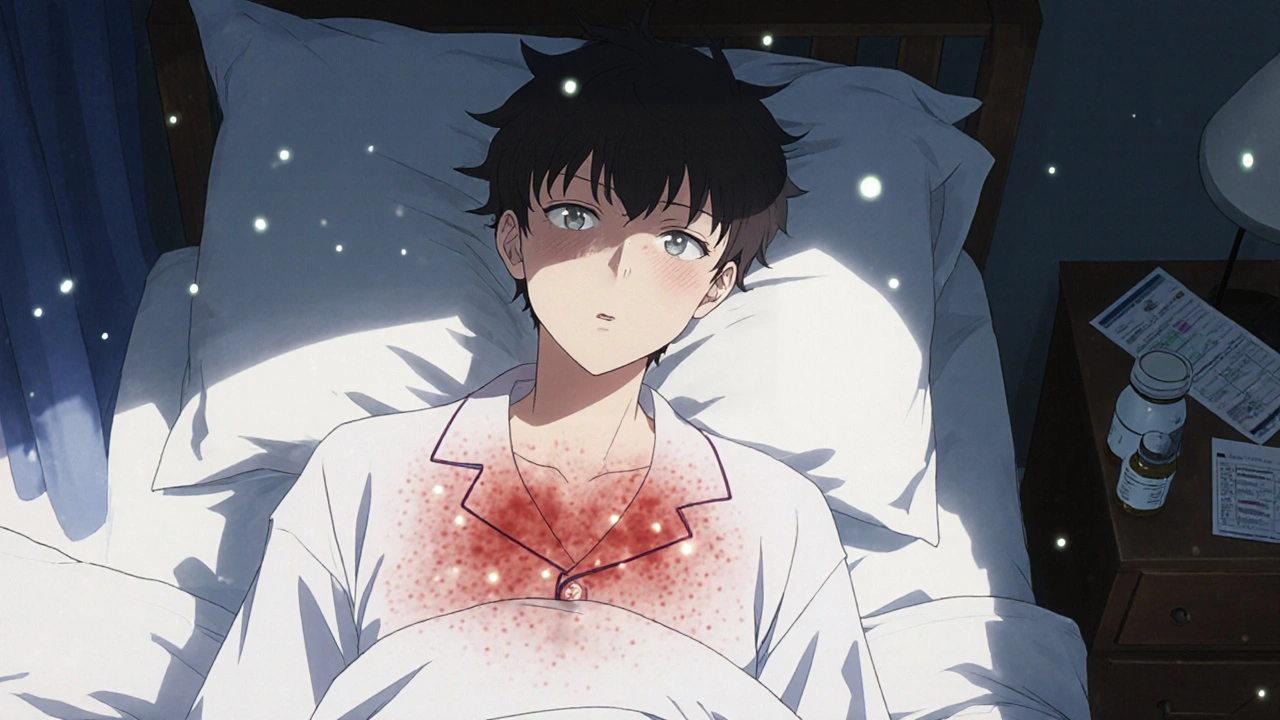
DRESS syndrome is a life-threatening drug reaction that causes fever, rash, organ damage, and high eosinophil levels. Often misdiagnosed, it requires immediate recognition and treatment to prevent death or long-term organ damage.
Dec 22 2025
Nov 18 2025

Mar 15 2025
Sep 29 2025

Mar 4 2025