How to Discuss Cost and Coverage before Filling a Prescription
Mar 1 2026

When a medication triggers a severe, delayed reaction that looks like a virus but isn’t, you might be dealing with DRESS, a life-threatening drug reaction that stands for Drug Reaction with Eosinophilia and Systemic Symptoms. Also known as DRESS syndrome, it’s not a common allergy—it’s a full-body immune overreaction that can damage your liver, kidneys, or even your heart. Unlike a simple rash or stomach upset, DRESS usually shows up 2 to 8 weeks after starting a new drug, which is why many doctors miss it. People often think they’ve caught the flu or a skin infection, but their blood tests show high eosinophils, swollen lymph nodes, and fever—signs that point to something much more serious.
DRESS diagnosis isn’t based on one test. Doctors look at a mix of symptoms, timing, and lab results. Common triggers include anticonvulsants, like carbamazepine, phenytoin, and lamotrigine, antibiotics, especially sulfonamides and minocycline, and even some gout meds like allopurinol. The reaction can turn deadly if not caught early—kidney failure, liver damage, or secondary infections can follow. That’s why if you’ve started a new drug and develop a rash, fever, and swollen glands weeks later, you need to tell your doctor immediately. Many patients who think they’re just having "side effects" are actually in the early stages of DRESS.
What makes DRESS tricky is how it overlaps with other conditions. It can look like mononucleosis, lupus, or even lymphoma. That’s why the diagnostic criteria include specific lab markers: elevated eosinophils, atypical lymphocytes, and organ involvement. Stopping the drug is the first step—but recovery can take weeks or months, and some people need steroids to calm the immune system. If you’ve had DRESS before, you’re at risk of reacting to similar drugs later, so keeping a list of triggers is critical.
The posts below cover real-world cases, how to spot early signs, what drugs are most likely to cause it, and how to avoid dangerous mix-ups with regular side effects or true allergies. You’ll find advice on tracking symptoms, talking to your doctor about hidden risks, and understanding why some reactions aren’t what they seem. Whether you’re managing a chronic condition or just started a new medication, this info could help you catch something serious before it’s too late.
Nov
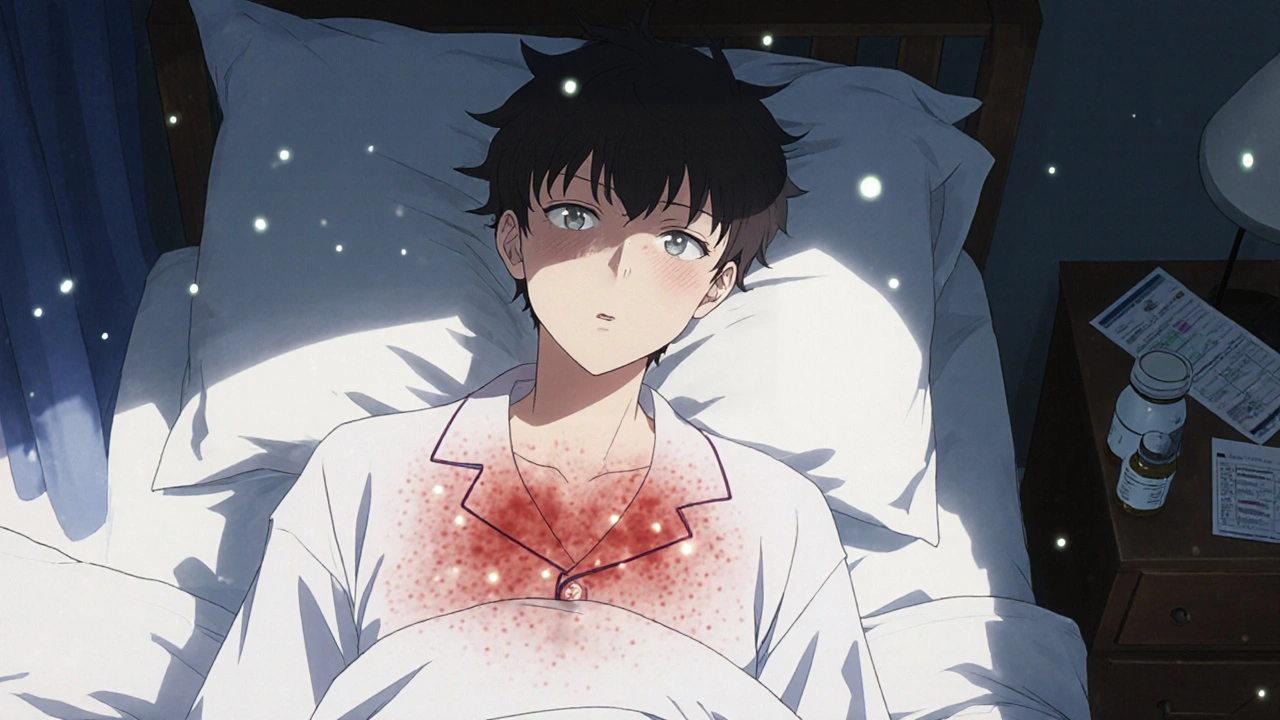
DRESS syndrome is a life-threatening drug reaction that causes fever, rash, organ damage, and high eosinophil levels. Often misdiagnosed, it requires immediate recognition and treatment to prevent death or long-term organ damage.
Mar 1 2026
Mar 11 2026
Oct 26 2025

Mar 4 2025

May 27 2025