

One wrong digit in a dosage or a misplaced decimal point can be the difference between a recovery and a tragedy. In the U.S. alone, medication-related errors contribute to roughly 250,000 deaths every year. It is a staggering number that proves the traditional "Five Rights" of medication administration-right patient, right drug, right dose, right route, and right time-just aren't enough. In fact, research shows that 83% of medication errors happen even when clinicians confirm all five rights. The problem isn't usually a lack of effort; it's a failure of the system.
To fix this, healthcare providers rely on National Patient Safety Goals is a set of annual objectives developed by The Joint Commission to address critical safety gaps in healthcare settings. Also known as NPSGs, these goals provide a framework to move away from blaming individuals and toward building foolproof systems. For pharmacists and technicians, focusing on these goals is the best way to slash dispensing errors and ensure that the pharmacy practice doesn't become a point of failure in a patient's care journey.
The Core Pillars of Medication Safety
Medication safety isn't just about double-checking a label; it's about managing the entire lifecycle of a drug from the moment it's ordered to the moment it enters the patient's system. The Joint Commission identifies several high-risk areas that require strict standardization.
One of the most critical areas is the correct labeling of medications. Under standard NPSG.03.04.01, every container and solution must be clearly labeled, especially in perioperative settings. This isn't just a suggestion-labels must use a minimum 10-point font to ensure they are readable under pressure. When a syringe is unlabeled in an operating room, the risk of administering the wrong drug skyrockets, and unfortunately, nearly 27% of operating rooms still struggle with this basic requirement.
Another major focus is the management of high-alert medications. Some drugs, like anticoagulants, have a narrow therapeutic window where the difference between a healing dose and a toxic one is tiny. To manage this, pharmacies implement standardized protocols for monitoring the International Normalized Ratio (or INR), which measures how long it takes blood to clot. The goal for most facilities is a 95% compliance rate in documenting these therapeutic ranges to prevent internal bleeding or strokes.
Moving Beyond the Five Rights: System-Level Interventions
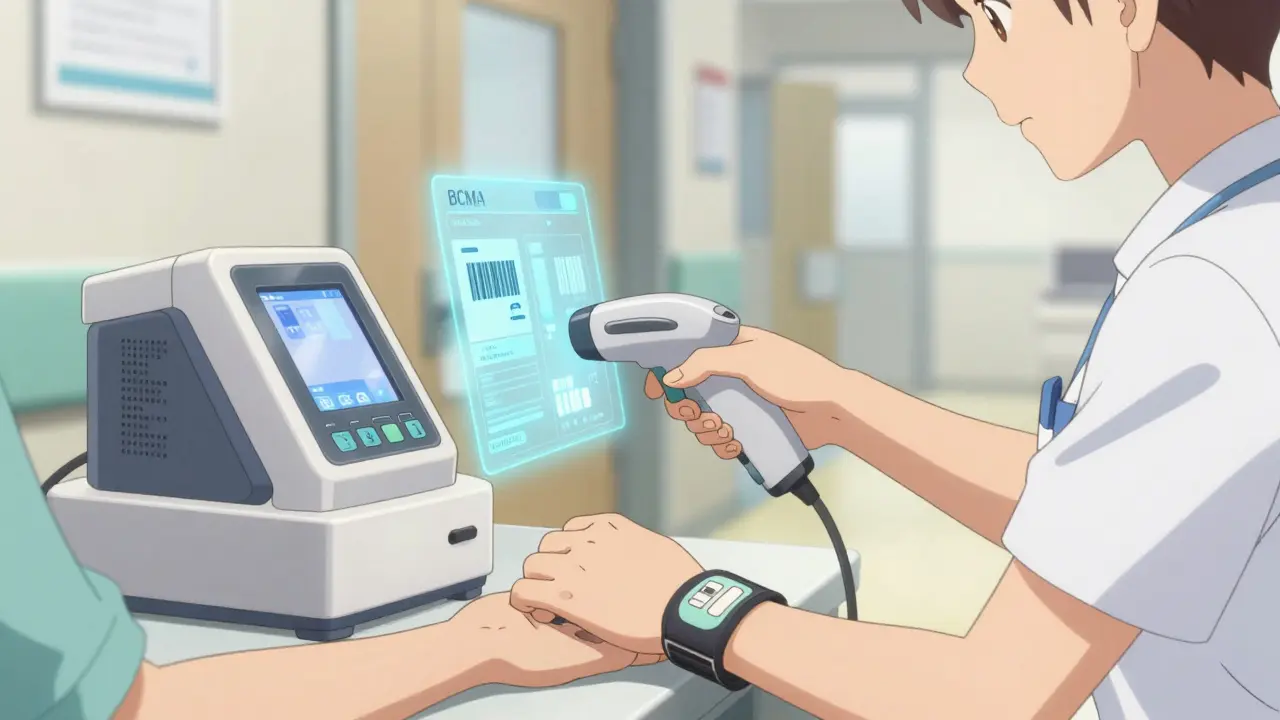
If the "Five Rights" aren't enough, what actually works? The shift is moving toward "hard stops"-technologies that physically prevent an error from happening. This is where Barcode Medication Administration (or BCMA) comes in. By scanning a patient's wristband and the medication barcode, the system can flag a mismatch instantly. Some hospital pharmacy directors have reported that this technology reduced wrong-drug errors by a massive 86%.
However, technology brings its own set of headaches. For example, Automated Dispensing Cabinets (or ADCs) are designed to secure meds and track usage, but pharmacists often have to "override" the system to get a drug quickly during an emergency. When these override rates climb above 5%, the risk of medication errors increases by 3.7 times. It's a classic trade-off: speed versus safety.
| Framework | Approach | Adoption Type | Primary Focus |
|---|---|---|---|
| NPSGs (The Joint Commission) | Standardized minimums | Mandatory (Accredited) | Broad patient safety goals |
| ISMP Best Practices | Consensus-based | Voluntary | High-risk specific scenarios |
| Five Rights | Individual checklist | Traditional | Clinician responsibility |
High-Risk Scenarios and Targeted Interventions
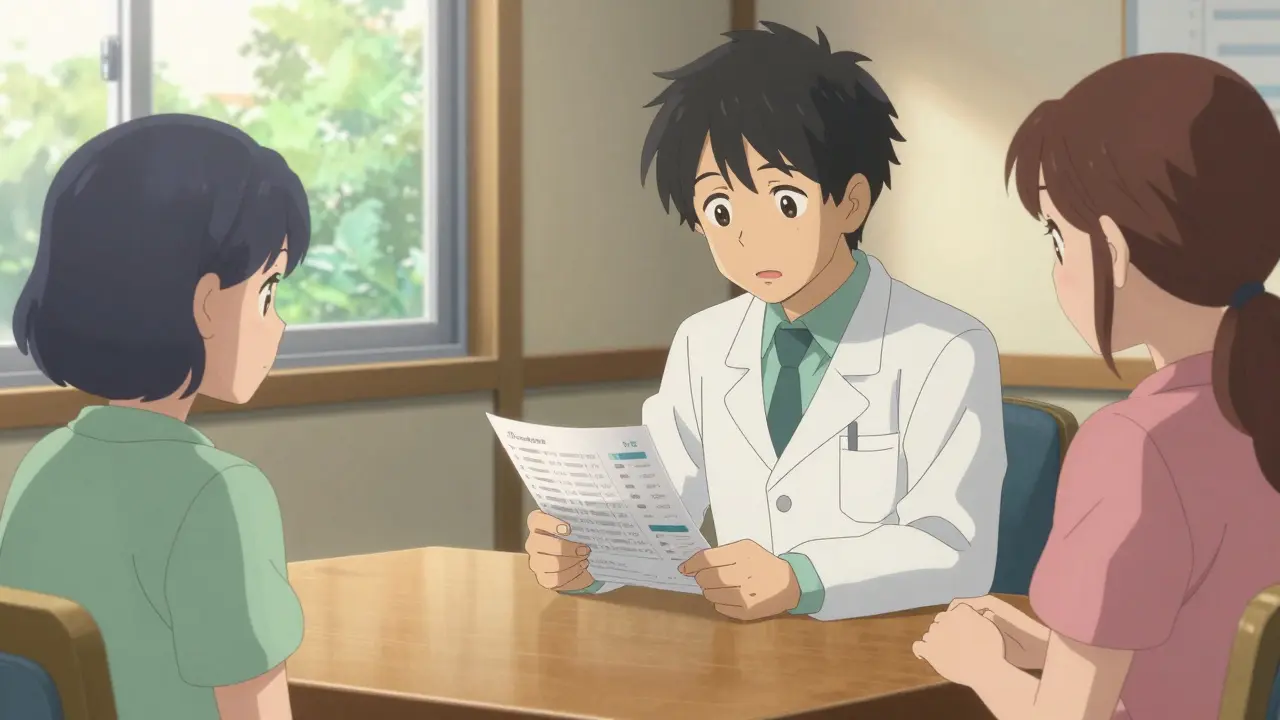
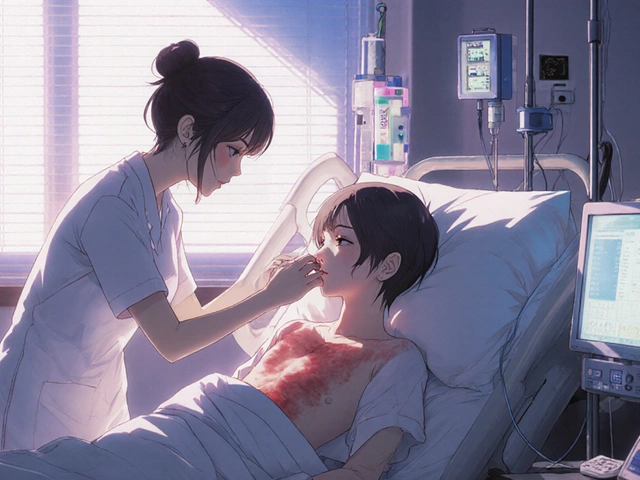
Not all medication errors are created equal. Some cause mild side effects, while others lead to permanent disability. The Institute for Safe Medication Practices (or ISMP) focuses on these high-risk "edge cases." For instance, they've highlighted the dangers of injectable promethazine, which can cause severe tissue injury if not administered perfectly. Between 2006 and 2018, this single drug caused 37 documented amputations.
In pediatric pharmacy, the stakes are even higher. Children aren't just small adults; their dosing is almost always weight-based. The Pediatric Medication Safety Model addresses this by requiring specialized double-checks in neonatal and intensive care units. Because the margin for error is so small, error rates in pediatric units are typically three times higher than in adult units. By implementing weight-based dosing protocols, some children's hospitals have slashed these errors by 91%.
Building a Culture of Safety in the Pharmacy
You can have the best software in the world, but if your staff is afraid to report a "near miss" because they fear being fired, your system is broken. A leadership-driven culture of safety is the foundation of any successful pharmacy practice. This means moving from a culture of blame to a culture of learning.
A robust strategy involves seven key goals: creating a safety-first culture, improving how errors are detected and reported, standardizing high-risk processes, enhancing communication, responding effectively when a mistake happens, involving the patient's community, and establishing a formulary based on safety rather than the lowest cost.
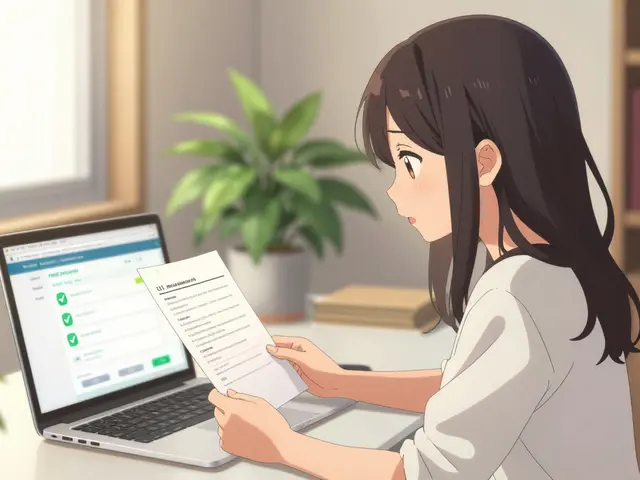
Patient engagement is a surprisingly powerful tool here. When families are involved in the medication reconciliation process-basically double-checking that the list of meds the patient is taking matches what the doctor thinks they are taking-facilities report 42% fewer medication errors. Patients are often the last line of defense; they are the only ones who are present for every single dose they receive.
The Road to Implementation: Pitfalls and Pro Tips
Implementing these goals isn't an overnight task. The Joint Commission suggests a 12-18 month window for full integration. If you try to rush it, you'll likely face "alert fatigue," where staff start ignoring safety warnings because they pop up too often.
- The 5% Rule: Keep your ADC override rates below 5%. If they are higher, analyze which "stat" medications are causing the overrides and adjust your stock levels to reduce the need for overrides.
- The Font Check: Audit your labels. If your concentration and drug name aren't at least 10-point font, you're inviting a readability error.
- Training Gaps: Don't rely on a one-time orientation. About 38% of facilities provide less than 4 hours of annual safety training. Aim for a continuous loop of micro-learning.
- Double-Check high-alerts: For anticoagulants and opioids, implement a mandatory two-person verification before the drug leaves the pharmacy or is administered.
For those leading these changes, getting an ASP Certification is highly recommended. It provides the specific risk assessment and root cause analysis skills needed to figure out why an error happened, rather than just who did it.
The Future: AI and Predictive Safety
We are entering an era where we can stop errors before they even happen. Artificial Intelligence is starting to play a huge role in clinical decision support. Pilot programs at places like the Mayo Clinic have shown a 47% reduction in potential adverse drug events by using AI to predict dangerous drug-drug interactions based on a patient's unique genetic profile and history.
Looking toward 2030, the World Health Organization is pushing for universal adoption of these safety standards. While high-income countries have hit about 63% adoption, the goal is to close the gap in low- and middle-income nations where medication errors often go undocumented. The shift is clear: we are moving from manual checklists to intelligent, integrated systems that protect both the patient and the provider.
What are the National Patient Safety Goals (NPSGs)?
The NPSGs are annual objectives created by The Joint Commission to address the most critical safety issues in healthcare. They cover six main areas: correct patient identification, improved staff communication, safe medication use, infection prevention, identifying safety risks, and preventing surgical mistakes.
Why are the "Five Rights" of medication administration considered insufficient?
While the Five Rights (right patient, drug, dose, route, and time) are a great baseline, they rely entirely on human memory and vigilance. Statistics show that 83% of errors occur even when clinicians follow these steps, proving that system-level safeguards like barcodes and automated checks are necessary to prevent human error.
What is the danger of ADC overrides in pharmacy practice?
An override happens when a clinician bypasses the standard pharmacy review to get a medication quickly from an Automated Dispensing Cabinet. If these overrides happen more than 5% of the time, the risk of medication errors increases by 3.7 times because the critical pharmacist-review step is skipped.
How does the Pediatric Medication Safety Model differ from adult care?
Pediatric care focuses heavily on weight-based dosing, which is much more complex and prone to calculation errors than the standard adult dosing. The model requires specialized training and mandatory double-checks for high-alert medications, especially in neonatal and ICU settings where error rates are three times higher than in adult wards.
How can patient involvement reduce medication errors?
Patients and their families often have the most complete picture of the medications being taken. By involving them in medication reconciliation and encouraging them to question unfamiliar pills or dosages, facilities have reported a 42% decrease in medication errors.


Comments
Maggie Graziano
ai predicting your genes just sounds like a way for them to track us better
Colleen Tankard
The bit about patients being the last line of defense is so true! 🌟 Always double check your meds folks ✨
Michael Lewis
The 5% rule for ADC overrides is a critical metric that every pharmacy manager needs to obsess over. If you are seeing numbers higher than that, you don't have a speed problem, you have a stocking and workflow problem. Stop making excuses for the overrides and start analyzing the data to see which meds are causing the bottleneck. Get your stock levels right or you are just gambling with patient lives. No one should be bypassing safety checks just because the pharmacy is disorganized
Randall Barker
The absolute failure of the 'Five Rights' is a testament to the naive belief that human vigilance can replace systemic integrity. We cling to these checklists as a moral shield to avoid the terrifying reality that our healthcare infrastructure is fundamentally flawed. It is not just a 'failure of the system' but a failure of the intellectual honesty of the administrators who pretend these guidelines are enough. True safety requires a total dismantling of the current hierarchy in favor of a rigid, uncompromising technological hegemony where human error is physically impossible. Anything less is just playing pretend with people's lives
Adele Shaw
Our American hospitals are the only ones actually trying to implement these high-tech barcodes and AI systems while the rest of the world just plays catch up. It is pathetic how some people complain about the US system when we are literally inventing the safety protocols they'll be using in ten years. I'm sick of the constant bashing of our medical infrastructure when we are the ones pushing the envelope on patient safety goals
Cheryl C
yesss preach!! 🇺🇸 we do it best over here 🦅 lol but fr tho those labels gotta be big enough to see without glasses!!
Rock Stone
I think everyone is doing their best here and we should just support each other through these changes. The transition to AI is a bit scary but it could really help the overworked staff get a breather
ira fitriani
OH MY GOD the part about the promethazine amputations is absolutely HORRIFYING! 😱 I cannot even imagine the panic of that happening! We need to scream this from the rooftops so every single nurse knows the risk! 📢 This is literally a life or death situation and we cannot be complacent for one second!! 💥
Autumn Bridwell
Wait, does this happen in the clinics I go to? I need to know exactly which medications they are using for my specific condition and if they are using those barcodes right now! I bet some of these pharmacists are just skipping the scans when they are tired and nobody even notices! It's honestly invasive how much we have to trust these strangers with our veins!
Nathan Berlin
Typical low-tier systems struggling with basic labeling lol 🙄 India is moving way past these basic checklists with our own tech hubs 🇮🇳💅
Theresa Griffin MEP
Standardization is imperative. The adherence to NPSG.03.04.01 must be absolute.