
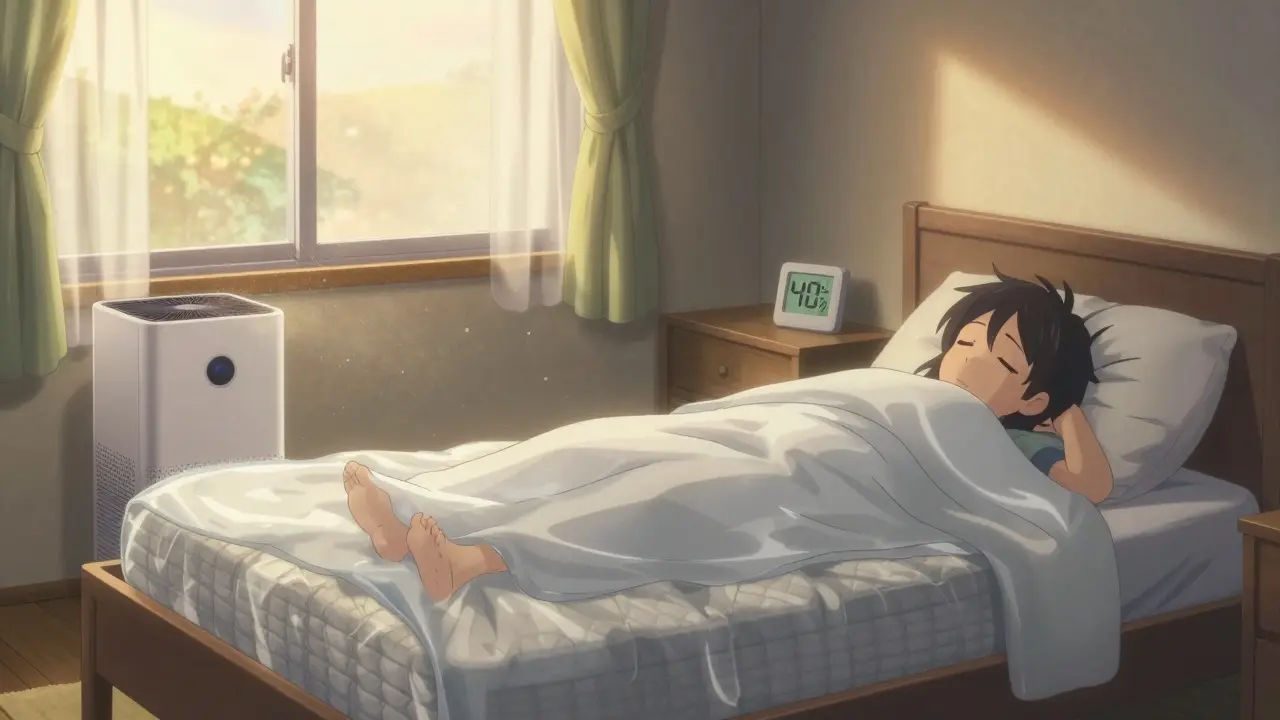
For millions of people, allergies aren’t just sneezes and itchy eyes-they’re sleepless nights, constant congestion, and asthma attacks that make everyday life feel like a battle. The truth is, no pill can fully fix this if your home is full of triggers. Allergen avoidance isn’t optional. It’s the foundation of real relief. And it starts with changing your environment, not just your medicine.
Why Your Home Is the Main Problem
Your house might feel clean, but it’s likely hiding more allergens than you think. Dust mites live in your mattress. Cat dander clings to your couch. Mold grows behind the bathroom tiles. Pollen sticks to your clothes after you come in from outside. These aren’t just annoyances-they’re triggers that set off your immune system every single day.
The biggest culprit? House dust mites. They affect 80% of allergy sufferers in the U.S., and they’re in nearly every home. They don’t bite. They don’t crawl. They just live in your bedding, feed on dead skin flakes, and leave behind waste that makes your nose run and your chest tight. If you’re allergic, your body reacts to their poop like it’s poison.
And it’s not just dust mites. Pet dander, mold spores, cockroach droppings, and pollen all play a role. The problem isn’t one thing-it’s the mix. Most people are allergic to more than one allergen. That’s why single fixes rarely work.
The Only Strategy That Actually Works
Trying to clean your way out of allergies with regular vacuuming and air fresheners? That’s like trying to put out a fire with a water bottle. You need the right tools and the right plan.
Research shows that single interventions-like just buying a HEPA filter or putting on mattress covers-reduce allergens by 40-65%. But they rarely improve your symptoms. Why? Because you’re still breathing in allergens from other sources.
The only approach that delivers real results is a multi-pronged strategy. Combine at least three of these five proven methods:
- Use allergen-proof covers on your mattress, box spring, and pillows. These aren’t regular zippered covers-they’re made of tightly woven fabric that blocks mites and their waste. Look for ones certified by the Asthma and Allergy Foundation of America (AAFA).
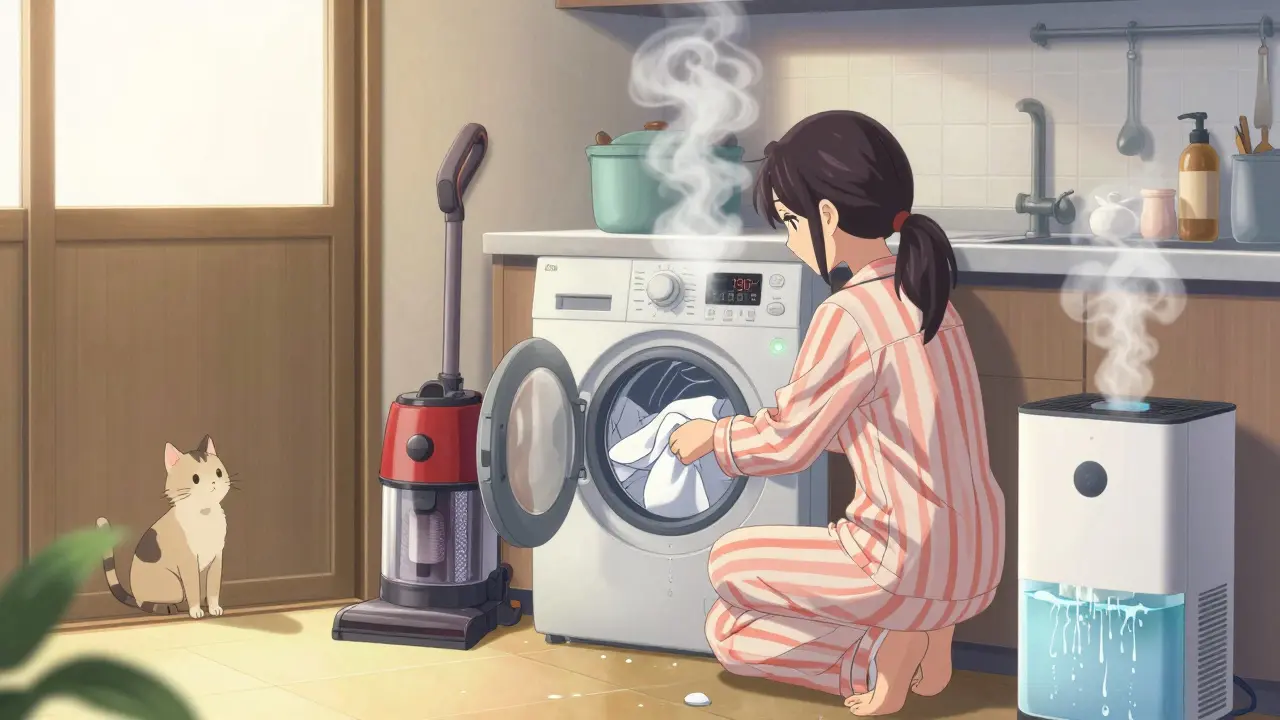
- Wash all bedding weekly in water hotter than 130°F (54.4°C). Cold water won’t kill mites. Hot water does. Dry on high heat too.
- Install a true HEPA air purifier in your bedroom. It must capture 99.97% of particles at 0.3 microns. Make sure it’s sized for your room size and runs on high for 4-6 air changes per hour. Don’t waste money on ionizers or ozone generators-they don’t help and can make things worse.
- Keep indoor humidity between 30% and 50%. Use a hygrometer to check. If it’s above 50%, mold grows. If it’s below 30%, your skin and airways dry out. A dehumidifier in the bedroom cuts mite populations by 70% and mold spores by 85%.
- Keep pets out of the bedroom. If you have a cat, bathe it weekly. This reduces airborne Fel d 1 (the main cat allergen) by 41%. Vacuum daily with a HEPA-filter vacuum. Wash pet bedding weekly. If you’re severely allergic, rehoming the pet is the only way to fully eliminate exposure.
Doing all five? You can reduce allergen levels by 75-90%. And studies show that when you do, symptoms drop-less wheezing, fewer nighttime awakenings, less reliance on inhalers and antihistamines.
What Doesn’t Work (And Why You’re Wasting Money)
There’s a whole industry selling you quick fixes. Most of them don’t work.
Ultrasonic pest repellers? Useless. Air purifiers without HEPA filters? Waste of cash. Essential oil diffusers? They might smell nice, but they don’t remove allergens-some even irritate airways. Spraying air fresheners? That just adds chemicals to your breathing zone.
Even some popular advice is misleading. For example, using a humidifier in winter to fight dry air? Bad idea. If you raise humidity above 50%, you’re feeding mold and dust mites. Instead, use a dehumidifier and keep it at 40%.
And don’t fall for the myth that “hypoallergenic” products are magic. There’s no legal standard for that label. A pillow labeled “hypoallergenic” might still be full of dust mites if it’s not covered in a true allergen barrier.
Cost vs. Benefit: What’s Worth It
You don’t need to spend thousands. Start smart.
- Bedding encasements: $30-$100 per set. Lasts 5+ years. Best ROI of any intervention.
- Small HEPA air purifier (for bedroom): $150-$300. Runs on low power. Pays for itself in fewer doctor visits.
- Dehumidifier: $100-$200. Essential in humid climates like Bristol. Saves money on mold repairs too.
- HEPA vacuum cleaner: $200-$400. Worth it if you have pets or carpets. Avoid non-HEPA models-they blow allergens back into the air.
- Professional pest control: $150-$300 per visit. Only needed if you have cockroaches. Regular cleaning and sealed food containers prevent this.
- Whole-house air filtration: $800-$2,500. Only for severe cases or if you have central HVAC. Not necessary for most people.
Low-income households are 3.7 times less likely to afford these tools. That’s a health equity issue. If cost is a barrier, start with the cheapest, most effective steps: hot water washing and bedding covers. Do those two right, and you’ll see a difference.
How to Stick With It (The Real Challenge)
The hardest part isn’t buying the gear. It’s keeping up with it.
Studies show that after six months, only 35% of people still wash bedding in hot water every week. Only 45% keep using their HEPA purifier consistently. Why? It’s tedious. It feels like a chore.
Here’s how to make it stick:
- Set reminders on your phone: “Wash sheets today.”
- Keep your HEPA purifier plugged in and running 24/7 in your bedroom. Don’t turn it off at night.
- Make cleaning part of your routine: vacuum on Mondays, wipe surfaces on Wednesdays, check humidity every Sunday.
- Track your symptoms in a journal. Note how you feel before and after making changes. Real progress is visible.
- Don’t try to do everything at once. Start with bedding and humidity. After two weeks, add the air purifier. Then pets. Slow progress beats no progress.
People who work with certified asthma educators have an 85% adherence rate. Those who just get a doctor’s advice? Only 45%. Education matters. Ask your clinic for a referral to an allergy educator if they don’t offer one.
When to Call a Pro
Some problems need experts.
- If you smell mold or see black spots on walls, get a professional mold test. Don’t scrub it yourself-disturbing mold spreads spores.
- If you’ve got cockroaches, hire an exterminator who uses baits, not sprays. Sprays scatter allergens. Baits kill the colony.
- If your asthma is getting worse despite all efforts, ask for an allergen test. You might be allergic to something unexpected-like bird dander or stored grain mites.
Children’s hospitals are now using full environmental control in patient rooms. That’s because they know: if you don’t fix the environment, medicine alone won’t help.
What’s Next for Allergy Control
The future is personalized. New tools let you test your home for specific allergens. Some smart air purifiers now sense allergen levels and adjust automatically. Apps can generate custom plans based on your allergies and home layout.
But the core hasn’t changed. The science from 1999 still holds: reduce exposure enough, and your body stops reacting. You don’t need a miracle. You need consistency.
And you don’t need to be perfect. Just better than yesterday. One less allergen. One more clean sheet. One more hour of dry air. That’s how relief builds.
Do I need to get rid of my pet if I’m allergic?
Not always. If you’re mildly allergic, keeping your pet out of the bedroom, bathing them weekly, and using a HEPA vacuum can reduce allergens by 30-55%. But if you have asthma or severe reactions, removing the pet is the only way to fully eliminate exposure. Cat allergens linger for months-even after the pet is gone. If you keep the pet, commit to daily cleaning and never let them on furniture or bedding.
Can air purifiers really help with allergies?
Only if they have true HEPA filters and are sized correctly for the room. A small purifier in a large bedroom won’t help. Look for models that provide 4-6 air changes per hour. Run it continuously, especially at night. Avoid ionizers, UV lights, or ozone generators-they don’t remove allergens and can irritate lungs.
Is it true that dust mites can’t live in low humidity?
Yes. Dust mites need humidity above 50% to survive. Keeping indoor humidity between 30% and 50% with a dehumidifier kills them over time and stops new populations from growing. This is one of the most effective, low-cost steps you can take. Use a hygrometer to monitor levels-don’t guess.
How often should I wash my bedding to control dust mites?
Weekly. Wash sheets, pillowcases, and blankets in water at least 130°F (54.4°C). Cold or warm water won’t kill mites. Dry on high heat. If you can’t wash everything weekly, start with pillowcases and sheets-those are where mites live most. Combine this with allergen-proof covers for best results.
Should I use a humidifier in winter to help my allergies?
No. Humidifiers raise indoor humidity-and if it goes above 50%, you’re feeding mold and dust mites. Instead, use a dehumidifier to keep humidity at 40%. If your air feels dry, use a saline nasal spray or drink more water. Dry air irritates, but damp air fuels allergens. Choose the lesser evil.
Are ‘hypoallergenic’ products really better?
Not necessarily. The term “hypoallergenic” isn’t regulated. A pillow labeled that way might still trap dust mites. Only products with certified allergen-proof covers-made of tightly woven fabric that blocks particles under 10 microns-actually work. Look for AAFA certification or a pore size under 10 microns on the label.
Can I still have a carpet if I have allergies?
Hard floors are better. Carpets trap dust, pet dander, and mites. If you must have carpet, choose low-pile and vacuum daily with a HEPA vacuum. Steam cleaning once a month helps. But for the best results, replace carpet with hardwood, tile, or vinyl-especially in bedrooms.
Environmental control isn’t a one-time fix. It’s a lifestyle shift. But it’s the only one that gives you back control-without relying on pills that only mask symptoms. Start small. Stay consistent. Your lungs will thank you.





Comments
Ryan Riesterer
HEPA filtration efficacy is contingent upon CADR ratings and room volume compliance. Without air exchange rates exceeding 4 ACH, particulate reduction plateaus at ~60%. The AAFA-certified encasements demonstrate 98.7% particle retention at 0.3 microns-critical for mitigating Der p 1 exposure. Humidity control below 50% RH induces desiccation of mite populations, reducing fecal antigen load by 70–85%.
Non-HEPA vacuums redistribute respirable particles via exhaust streams. Ionizers generate ozone, a known Type I irritant. These are not merely ineffective-they’re counterproductive.
Patrick Roth
Oh please. You’re telling me I need to turn my bedroom into a sterile lab just to sleep? I’ve got allergies and I’ve lived fine with a humidifier and a $20 pillow from Walmart. You people act like allergens are nuclear fallout. My cat sleeps on my chest and I’ve never had an asthma attack. This is overmedicalized paranoia.
Lauren Wall
Washing sheets in hot water is non-negotiable. If you’re not doing it, you’re just lying to yourself. No amount of air purifiers fixes laziness.
Tatiana Bandurina
Let’s be honest-this whole ‘allergen avoidance’ movement is just Big Pharma’s way of selling you expensive gear so you stop buying antihistamines. The real cause? Glyphosate in your food, EMF pollution, and mold in your drywall from poor building codes. You’re being manipulated into buying $300 purifiers while the real toxins go unchecked.
And don’t get me started on ‘AAFA-certified’-that’s just a marketing label backed by pharmaceutical grants. You think they care about your health? They care about your subscription revenue.
Philip House
Europeans don’t get this. They live in 150-year-old stone houses with no AC, no HEPA filters, and they’re fine. We’ve turned allergies into a luxury problem. In America, if you can’t afford a $200 dehumidifier, you’re just weak. My grandpa had asthma in the 50s and he didn’t own a single ‘allergen-proof’ thing. He just breathed. Maybe we’ve gotten too soft.
Also, cats are American. Get over it.
Akriti Jain
😂 LOL. You really think this is about dust mites? Nah. The real allergens are in the water supply. Fluoride + chlorine + 5G towers = immune system chaos. They don’t want you to know that. That’s why they sell you ‘HEPA filters’-to distract you from the truth. I use Himalayan salt lamps and garlic in my socks. My allergies vanished in 3 days. 🌱🧄🔮
Mike P
Look, I used to be a skeptic too. Then I got my son’s asthma under control. We started with the mattress covers-$40 on Amazon. Washed sheets every Sunday. Turned the dehumidifier on. Within two weeks, he stopped waking up coughing. No meds. No ER trips.
It’s not magic. It’s math. Dust mites die at 40% humidity. Period. You don’t need to be perfect. Just consistent. And if you’re too lazy to wash your sheets, don’t complain when your kid can’t breathe.
shivani acharya
Oh wow, another one of those ‘science’ posts. Let me guess-you’re one of those people who thinks humidity control is the answer? You know what I found? My allergies got worse after I bought all that gear. Turns out, the dehumidifier made my skin crack, the HEPA filter buzzed like a dying bee, and I started having nightmares about dust mites. I think the real problem is anxiety. We’ve been conditioned to fear our own homes.
And let’s talk about the ‘AAFA certification’-who funds them? Who owns the patents on those covers? Who’s making billions off our fear? I don’t trust any of this. I think it’s a psychological trap. We’re being sold a productized version of trauma. I stopped buying anything. I just sleep. And guess what? I’m breathing better now. Maybe the solution isn’t control… it’s surrender.
Sarvesh CK
It is worth reflecting upon the epistemological foundations of environmental health interventions. The paradigm presented here-reductionist, technocratic, and individualistic-implicitly assumes that biological systems can be isolated from sociopolitical contexts. While the efficacy of HEPA filtration and humidity control is empirically supported, the framing neglects structural determinants: housing inequality, urban design, and access to clean air as a human right.
For the low-income household unable to afford a $200 dehumidifier, the burden of ‘lifestyle change’ becomes punitive. A truly holistic approach must integrate public policy: subsidized air filtration in public housing, municipal humidity regulation, and allergen education in primary care. Science without justice is merely efficiency.
Hilary Miller
I grew up in rural India with dirt floors and cows in the yard. Never had allergies. Moved to Texas-sneezing every spring. It’s not just the allergens. It’s the disconnect from nature. We’ve sanitized ourselves into sickness. Maybe we need less control… and more dirt.
Margaret Khaemba
I tried the hot water wash and mattress covers. It worked-but only because I started tracking my symptoms in a journal. I noticed my worst days always followed days I skipped washing. It’s not about perfection. It’s about noticing patterns. That’s the real power here-not the gear, but the awareness.
Also, I keep a little humidifier in my kitchen. Just enough to make tea feel cozy. No bedroom. No mold. Just balance.
Keith Helm
Per your submission, the assertion that ‘allergen avoidance is foundational’ is substantiated by peer-reviewed literature, including the 2006 Cochrane Review on environmental interventions for allergic rhinitis. However, adherence rates remain suboptimal due to cognitive load and behavioral fatigue. It is therefore recommended that clinicians implement structured behavioral support protocols, including automated reminders and symptom logging, to enhance compliance. Failure to do so constitutes a lapse in standard of care.