
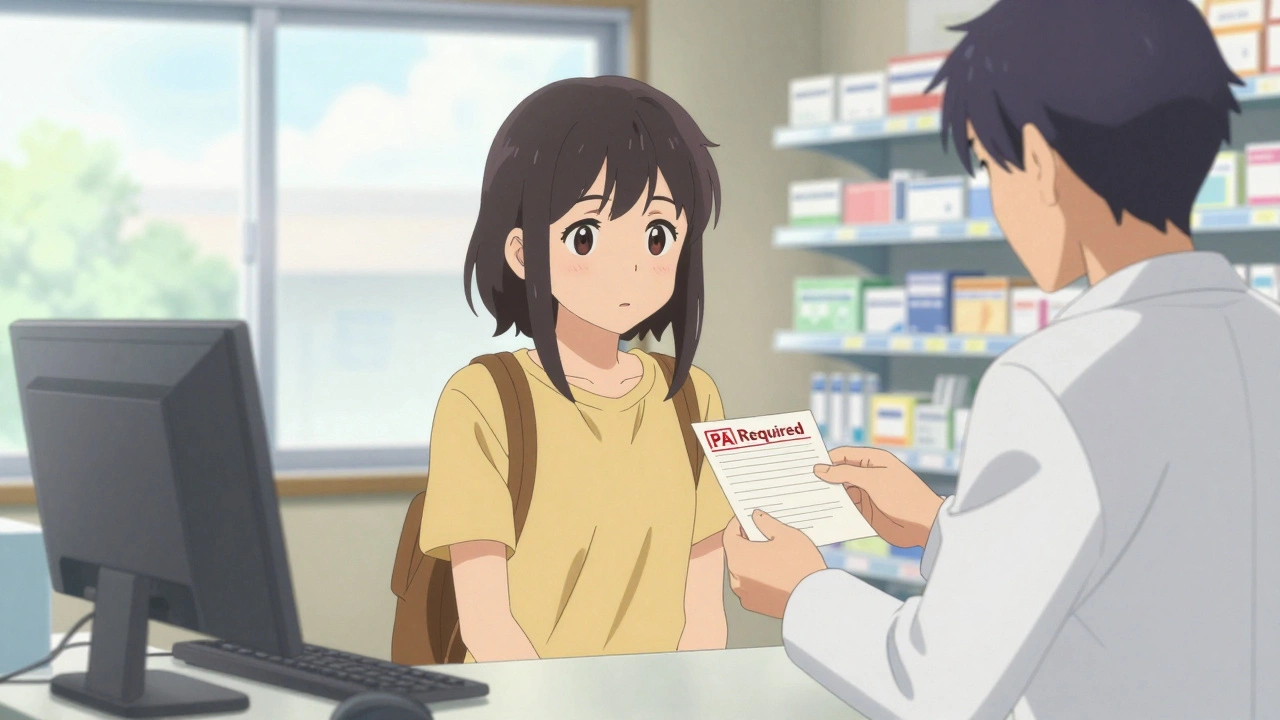
When your doctor prescribes a medication, you might expect to walk out of the office and pick it up at the pharmacy. But if that drug needs prior authorization, you’re in for a delay - and a lot of paperwork. This isn’t a glitch in the system. It’s a standard step in how most health insurance plans control costs and ensure medications are used correctly. If you’ve ever waited days for a prescription to be approved, or been told your drug isn’t covered unless your doctor jumps through hoops, you’ve experienced prior authorization firsthand.
What Is Prior Authorization?
Prior authorization - sometimes called pre-authorization, pre-certification, or a coverage determination - is when your health plan requires approval before they’ll pay for a specific medication. It’s not optional. If the drug on your prescription needs prior auth and you don’t get it, you’ll pay full price out of pocket. This process isn’t about denying care. Insurance companies use it to make sure the drug is truly necessary, safe for you, and the most cost-effective option. For example, if there’s a generic version of your medication that works just as well, the plan will likely require you to try that first. Or if the drug is very expensive or has serious side effects, they’ll want proof it’s the right choice for your condition. Medicare Part D, Medicaid, and private insurers like Cigna, Blue Shield, and UnitedHealthcare all use prior authorization. It’s built into the pharmacy benefit management system that handles drug coverage for over 270 million Americans.Which Medications Usually Need Prior Authorization?
Not every drug requires approval. But certain types are almost always flagged:- Brand-name drugs with generic alternatives - If a cheaper generic exists, your plan will likely require you to try it first.
- High-cost medications - Drugs that cost over $1,000 per month, like those for cancer, MS, or rare diseases, almost always need prior auth.
- Drugs with strict usage rules - Some medications are only approved for certain conditions. For example, a drug used for rheumatoid arthritis might not be covered if your doctor prescribes it for back pain.
- Drugs with safety risks - Opioids, benzodiazepines, and other controlled substances often require prior authorization to prevent misuse.
- Off-label uses - If your doctor prescribes a drug for a condition it’s not FDA-approved to treat, you’ll need extra documentation proving it’s medically necessary.
How Does the Prior Authorization Process Work?
It starts with your doctor. You don’t file the request - your provider does. Here’s the typical flow:- Your doctor writes a prescription for a drug that needs prior authorization.
- They check your insurance plan’s formulary to confirm the drug requires approval.
- They complete a prior auth form - either online, by fax, or through an electronic system - including your diagnosis, medical history, and why this drug is needed.
- The insurance company reviews the request. They may consult a pharmacist or medical reviewer to evaluate clinical guidelines.
- You get a call or letter saying whether it’s approved, denied, or needs more info.
Who Is Responsible for Getting It Done?
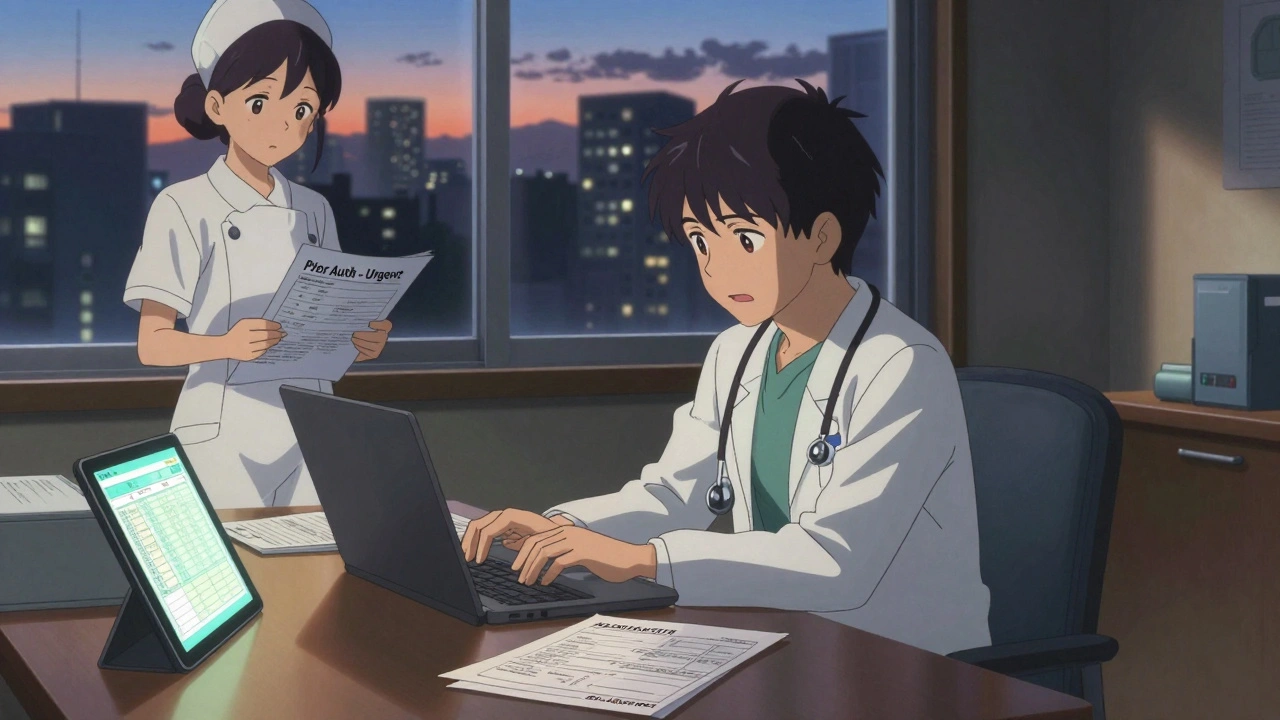
Technically, your doctor or their office staff handles the paperwork. But here’s the catch: you’re the one who suffers if it’s delayed. Many patients don’t realize their medication needs prior authorization until they get to the pharmacy and are told, “We can’t fill this yet.” That’s too late. You can’t control how fast your doctor’s office submits the request. But you can ask. Right after your doctor prescribes a new medication, ask: “Does this need prior authorization?” If they say yes, follow up in a few days. Call your doctor’s office and ask: “Has the prior auth been submitted?” If it hasn’t, they can push it through faster. You can also check your plan’s website. Tools like Blue Shield’s “Price Check My Rx” let you enter a drug name and see if it needs approval, how much it costs with your plan, and what alternatives are covered.What If Your Prior Authorization Is Denied?
Denials happen. Maybe your plan says a cheaper drug should work first. Or they think the evidence isn’t strong enough. Don’t panic. Your doctor can appeal the decision. They’ll submit more clinical notes, test results, or studies showing why the denied drug is necessary. If your condition is serious - like cancer or severe autoimmune disease - appeals are often approved. You can also appeal on your own. Medicare Part D members have the right to request a formal review. Call the number on your insurance card and ask for the appeals process. Some plans even assign a patient advocate to help. In the meantime, if you can’t wait, you can pay out of pocket and submit a claim for reimbursement once approval comes through. Or ask your doctor if there’s a similar drug on your plan’s formulary that doesn’t require prior auth.Why Does This System Exist?
Critics call prior authorization a bureaucratic nightmare. And it can be. But it’s not just about saving money. The Academy of Managed Care Pharmacy says prior authorization helps ensure patients get the right drug - not just the cheapest one. For example, a drug might be safe for adults but dangerous for children. Or it might interact badly with another medication you’re taking. Prior auth lets insurers catch those risks before you take the pill. It also prevents overprescribing. Studies show that when prior auth is used for opioids, prescriptions drop significantly. For expensive biologics used in autoimmune diseases, prior auth helps avoid unnecessary spending that could raise premiums for everyone. The goal isn’t to block access. It’s to make sure care is appropriate, safe, and sustainable. The problem? The system often feels like it’s designed to frustrate, not help.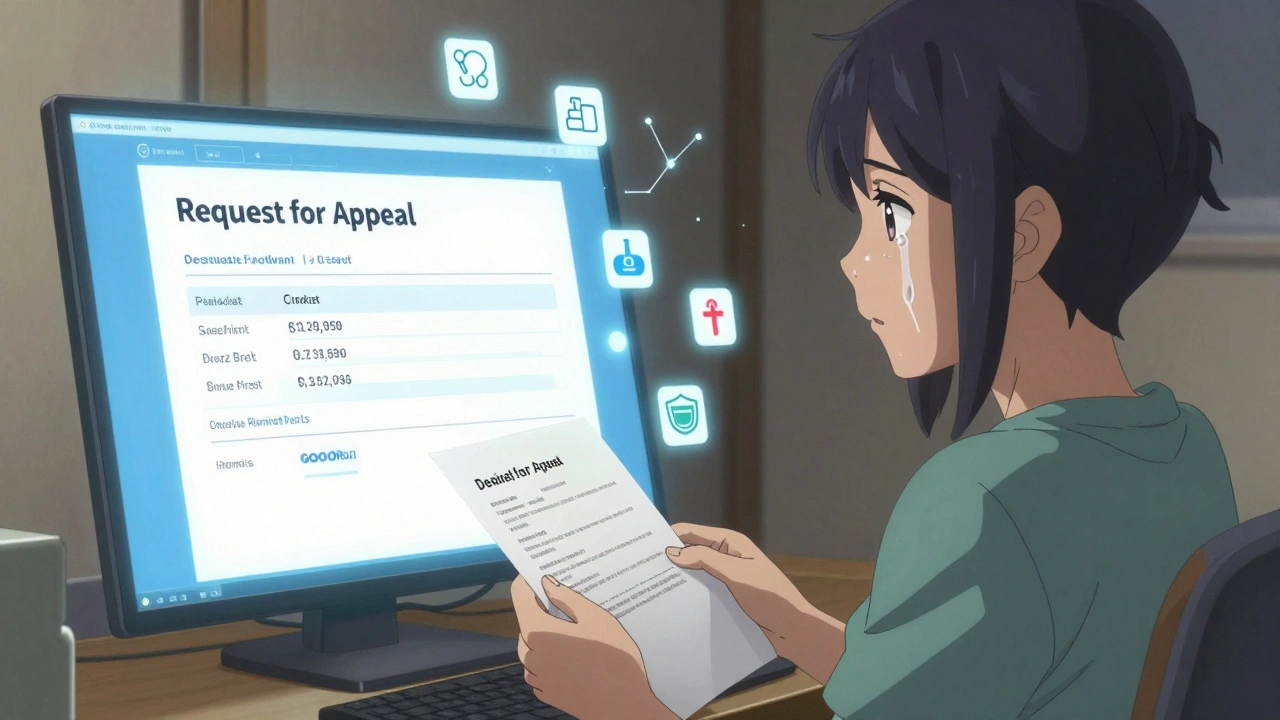
How to Avoid Delays and Save Money
Here are practical steps to make the prior auth process smoother:- Ask about prior auth before leaving the doctor’s office. Don’t assume your prescription is ready.
- Check your plan’s formulary online. Search your drug name on your insurer’s website. Look for “PA Required” or “Step Therapy” notes.
- Ask for generics or preferred alternatives. If your drug needs prior auth, ask your doctor if a covered alternative exists.
- Use tools like GoodRx or SingleCare. These apps show cash prices - sometimes cheaper than your insurance copay after prior auth.
- Keep records. Save copies of all prior auth forms, denial letters, and approval notices. You might need them for appeals.
When Prior Authorization Doesn’t Apply
There are exceptions. You don’t need prior authorization in emergencies. If you’re in the ER and need a life-saving drug, the plan must cover it - even if it normally requires approval. Also, most plans cover a 30-day supply of a new medication without prior auth, just to get you started. But after that, they’ll require approval for refills. And if you’re on Medicaid in some states, prior auth rules are simpler - or sometimes nonexistent - for certain drugs.Final Thoughts
Prior authorization is frustrating. It adds time, stress, and paperwork to something that should be simple: getting the medicine your doctor says you need. But understanding it makes you a better advocate for your own care. You’re not powerless. You can ask questions, follow up, and push back when something doesn’t make sense. Your doctor is your ally - but you’re the one who has to keep the process moving. The system isn’t perfect. But knowing how it works gives you control. And in healthcare, that’s worth more than you think.Does every medication need prior authorization?
No. Most generic medications and common prescriptions like antibiotics, blood pressure pills, or diabetes drugs don’t require prior authorization. It’s usually only needed for high-cost drugs, brand-name medications with cheaper alternatives, or those with safety risks. Check your insurance plan’s formulary to see which drugs are flagged.
How long does prior authorization take?
Approval can take anywhere from 24 hours to two weeks. Non-urgent requests usually take 5-7 business days. If your condition is urgent - like needing a drug for cancer or a severe flare-up - your doctor can request an expedited review, and the plan must respond within 72 hours.
Can I get my medication without prior authorization?
Only if you pay full price out of pocket. If the drug requires prior auth and you don’t get approval, your insurance won’t cover it. You can still fill the prescription, but you’ll pay the full cost. Later, if approval comes through, you may be able to submit a claim for reimbursement.
Who submits the prior authorization request?
Your doctor or their office staff submits the request - not you. They fill out forms, provide medical records, and explain why the drug is necessary. But you should follow up to make sure it was sent. Don’t wait for the pharmacy to tell you it’s pending.
What if my prior authorization is denied?
Your doctor can appeal the decision by submitting more evidence - like test results or clinical guidelines supporting the need for the drug. You can also file your own appeal with your insurance company. Medicare and most private plans have formal appeal processes. Don’t give up - many denials are overturned on appeal.
Can I use GoodRx if my drug needs prior authorization?
Yes. GoodRx shows cash prices for medications, even those requiring prior auth. Sometimes the cash price is lower than your insurance copay after approval. You can pay cash now and later submit a claim for reimbursement once the prior auth is approved. It’s a useful workaround if you can’t wait.





Comments
Richard Eite
This system is a joke. I paid for insurance so I dont have to play nurse to my own prescriptions. My doctor spends more time filling out forms than actually treating me. USA needs to fix this or get single payer already
Katherine Chan
I know it feels frustrating but honestly prior auth has saved me from some dangerous drug combos. My doc caught a bad interaction before I even started the med. Its annoying yes but sometimes its lifesaving
Philippa Barraclough
The structural inefficiencies inherent in the current pharmaceutical benefit management framework are profoundly regressive. The administrative burden placed upon primary care providers disproportionately impacts marginalized populations who lack the temporal or cognitive resources to navigate bureaucratic labyrinths. One must question whether cost containment mechanisms should be prioritized over patient autonomy and timely access to therapeutic interventions.
Tim Tinh
lol i had to beg my drs office for 3 days to submit my prior auth for my eczema cream. they kept forgetting. finally called them myself and they were like oh right sorry. i just want my damn lotion bro
Olivia Portier
Youre not alone. I had to fight for my insulin prior auth for 2 weeks. Called my plan every day. Talked to 5 different reps. Finally got approved. But honestly? If you keep pushing they WILL listen. You got this
Jennifer Blandford
I had a friend die because her cancer med got denied and she waited too long to appeal. This isnt bureaucracy. This is life or death and insurance companies treat it like a spreadsheet. I hate this system
Brianna Black
Prior authorization is a necessary component of evidence-based pharmacoeconomic management. It ensures appropriate utilization of high-cost therapeutics while minimizing adverse outcomes through clinical validation. The process is not inherently flawed; rather its execution is often inefficient due to fragmented IT infrastructure and inconsistent payer protocols.
Shubham Mathur
In India we dont have this nonsense. You go to doctor you get medicine you pay cash. No forms no waiting. Why do Americans make everything so complicated? Its not hard to just give people their meds
Ruth Witte
I just got my migraine med approved after 10 days 😭😭😭 my doctor cried with me. I was so close to paying $1200 out of pocket. Thank god for GoodRx. You guys are not alone!! 💪❤️
Darcie Streeter-Oxland
The entire prior authorization paradigm represents a profound misallocation of human capital. Medical professionals are trained to diagnose and treat, not to serve as clerks for insurance corporations. The opportunity cost of this administrative burden is incalculable and ethically indefensible.
Taya Rtichsheva
So basically if you have money you get your meds fast. If you dont you wait weeks and hope the paperwork doesnt get lost. Cool. Thats just great.
om guru
The system is designed to prevent misuse. Doctors must ensure appropriateness. Patients must understand their role. Collaboration not confrontation yields results. Patience and diligence are virtues in healthcare navigation
Christian Landry
i just used goodrx to pay cash for my asthma inhaler instead of waiting for auth. it was cheaper than my copay. my dr was shocked but happy. sometimes you just gotta hack the system 😅