
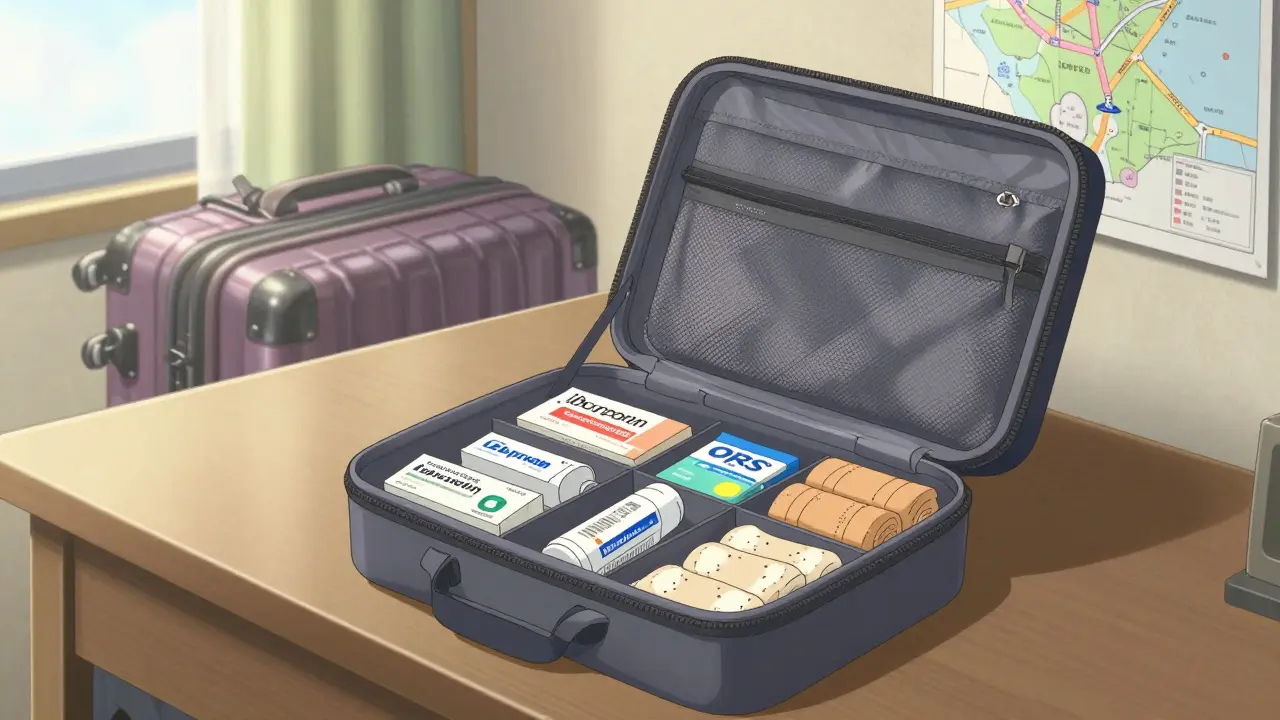
Traveling can be exciting, but one wrong bite, a sudden stomach bug, or a blister from new shoes can turn a dream trip into a nightmare. The good news? You don’t need to panic. With a simple, smartly packed travel medication kit, you can handle most common health issues on the road - without hunting for pharmacies in a foreign language or paying overpriced tourist rates.
Forget the idea of stuffing your suitcase with every pill you’ve ever taken. A travel medication kit isn’t about having everything. It’s about having what you actually need, when you need it. And it’s not just for international trips. Even a weekend camping getaway or a road trip across states can benefit from a well-prepared kit.
What Belongs in a Travel Medication Kit
Start with the basics. These are the items most travelers need, no matter where they’re going. They’re lightweight, non-prescription, and backed by health guidelines from the CDC, Cornell Health, and the Red Cross.
- Pain and fever relief: Ibuprofen (200-400mg tablets) or acetaminophen (500mg tablets). Bring at least 10 tablets of each. You’ll thank yourself if you get a headache after a long flight or sore muscles from hiking.
- Antidiarrheal medicine: Loperamide (Imodium, 2mg tablets). Pack at least 6 tablets. Diarrhea is one of the most common travel illnesses - often from unfamiliar water or food. Having this on hand means you won’t be stuck in a bathroom for hours.
- Antihistamines: Loratadine (10mg) or cetirizine (10mg). Take 7 tablets. These help with allergies, insect bites, and mild rashes. No more scratching through a museum tour.
- Hydrocortisone cream: A 15g tube of 1% cream. Apply it to bug bites, rashes, or irritated skin. It’s small, works fast, and fits in a pocket.
- Wound care: A small pack of adhesive bandages (assorted sizes), 4 gauze pads (4x4 inches), medical tape, antiseptic cleaner (chlorhexidine or povidone-iodine), and antibacterial ointment (bacitracin or neomycin). These are your go-to for cuts, scrapes, or blisters.
- Oral rehydration salts: 5 individual packets of WHO-formulated ORS. Dehydration from diarrhea or heat can hit hard. These packets dissolve in water and restore electrolytes faster than sports drinks.
- Antacids: Calcium carbonate (500mg) or famotidine (10mg). Pack 7 tablets. Travel often means spicy food, alcohol, or irregular meals - and your stomach might not like it.
These items cover the top 80% of travel-related health issues. No need to overpack. Keep it simple.
Prescription Medications: Don’t Guess, Prepare
If you take regular prescriptions - for blood pressure, diabetes, thyroid, or anything else - this is where your kit gets serious.
- Bring at least twice as much as you’ll need for the trip. Delays happen. Flights get canceled. Your bag gets lost. Split your supply between two bags - one in your carry-on, one in checked luggage.
- Keep all medications in their original containers. That’s not just smart - it’s often required by customs. If you must transfer pills, use labeled pill boxes with the drug name, dose, and your name.
- Carry a printed list of all your medications: generic name, dose, frequency, and why you take them. Trade names vary by country. Your doctor might call it “metformin,” but overseas, it’s sold as “Glucophage.”
- Bring copies of your prescriptions written in generic names. If you lose your meds, a pharmacist abroad can refill them if they have the right info.
- If you use needles (like insulin), get a doctor’s letter explaining why you need them. Some countries, like Japan, have strict rules. You don’t want to be turned away at customs because you didn’t bring paperwork.
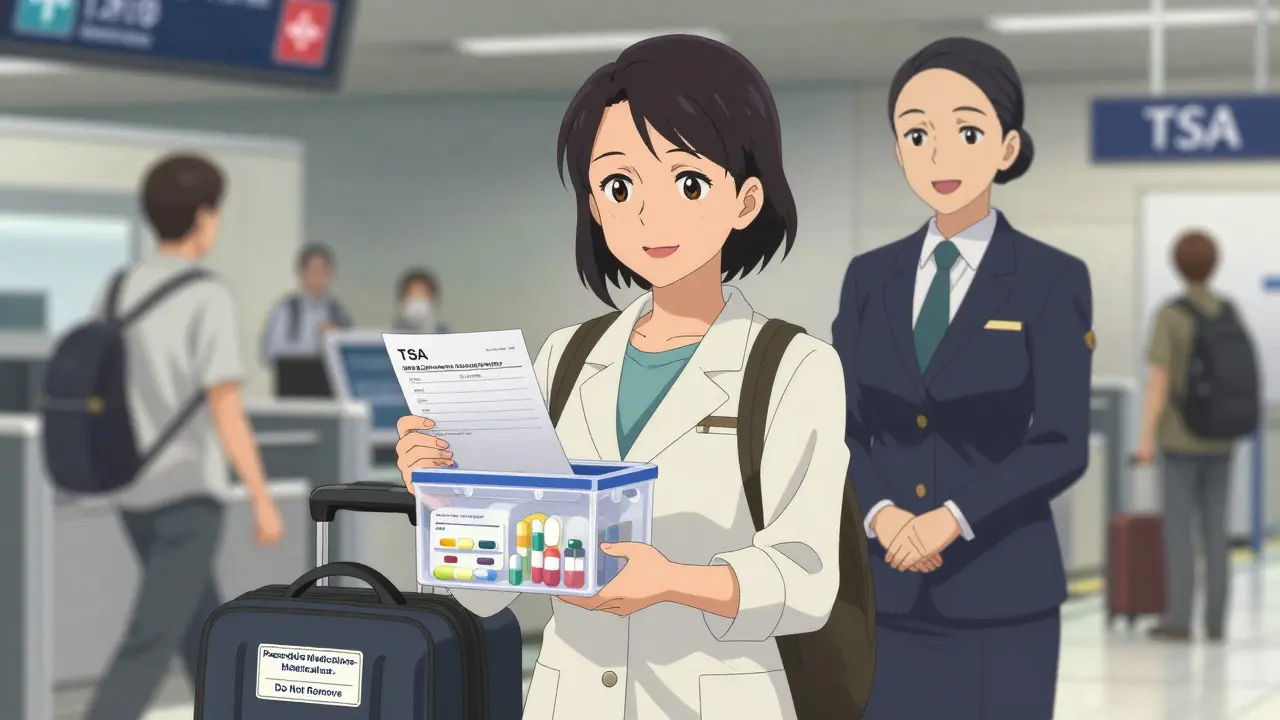
Pro tip: Use a small ziplock bag for pills. Label it clearly: “Prescription Medications - Do Not Remove.”
Destination-Specific Add-Ons
Your kit should change based on where you’re going. A beach vacation isn’t the same as a mountain hike.
- Tropical or developing countries: Add water purification tablets. Even bottled water isn’t always safe. Also, pack a 3-day course of an antibiotic like ciprofloxacin (500mg) or azithromycin (500mg) - but only if your doctor prescribes it. Don’t self-prescribe. These are for bacterial diarrhea, not viral.
- Camping or hiking: Include blister pads (like Compeed), moleskin, and a small pair of tweezers (pack in checked luggage - they’re not allowed in carry-ons). Sunburn relief gel and aloe vera are also smart.
- Hot climates: More ORS packets. Heat exhaustion is real. Electrolytes beat energy drinks every time.
- High altitudes (over 8,000 feet): Ask your doctor about acetazolamide (Diamox). It helps prevent altitude sickness. Take it before you climb, not after you feel dizzy.
- With kids: Never pack adult meds for children. Use pediatric versions only. Pack infant acetaminophen drops, a digital thermometer, and oral rehydration solution made for babies. Talk to your pediatrician before you go.

How to Pack It Right
Packing isn’t just about what you bring - it’s how you bring it.
- Use a clear, waterproof plastic box. It’s easy to find in your luggage, keeps things dry, and doesn’t melt in heat.
- Keep everything cool and out of direct sunlight. Medicines like insulin, epinephrine auto-injectors, and some antibiotics can break down above 86°F (30°C). If you’re heading somewhere hot, slip a small insulated pouch in your bag.
- Label everything. Use sticky notes or a small notebook. Don’t rely on memory.
- Store your kit in your carry-on. Checked bags can disappear. If you’re flying, keep your meds in your personal item - not your suitcase.
- Leave out anything you don’t need. No need for that old cough syrup from last winter. If you didn’t use it at home, you won’t use it abroad.
Legal and Safety Rules You Can’t Ignore
Some medications are banned - or heavily restricted - in other countries.
- Japan bans pseudoephedrine (found in Sudafed) and strong painkillers like codeine.
- Some Middle Eastern countries restrict antihistamines and ADHD meds.
- Australia’s TGA warns travelers to check with their embassy before flying with controlled substances.
Before you go: Visit the embassy website of your destination country. Search for “medication restrictions” or “import rules.” If you’re unsure, call them. It’s better to find out now than be turned away at customs.
Also: Never share your meds. Even if someone asks for a painkiller, don’t give them yours. Dosages vary. Side effects can be dangerous.
What Not to Bring
Here’s what belongs in your home medicine cabinet - not your travel kit:
- Old or expired pills
- Large bottles of liquid (over 100ml in carry-on)
- Sharp objects like scissors, safety pins, or large tweezers (pack these in checked luggage)
- Unlabeled supplements
- Someone else’s prescriptions
And don’t forget: Your kit isn’t a substitute for travel insurance or knowing where the nearest clinic is. Always have a plan B.
Final Checklist Before You Leave
Do this 2 days before departure:
- Check expiration dates on all meds.
- Confirm you have enough for the entire trip + 3 extra days.
- Verify all prescriptions are written in generic names.
- Print your medication list and doctor’s letter.
- Put your kit in a clear, waterproof container.
- Split your meds: half in carry-on, half in checked luggage.
- Update your contact card: emergency numbers, doctor, hotel, embassy.
That’s it. You’re ready.
Travel isn’t about avoiding problems. It’s about handling them without letting them ruin your trip. A smartly packed medication kit does exactly that - quietly, reliably, and without drama. You’ll be the one who’s calm when others are scrambling for a pharmacy.
Can I bring liquid medications on a plane?
Yes. Medications, including liquids, gels, and creams, are exempt from the 3.4-ounce (100ml) limit for carry-on liquids. You don’t need to put them in a ziplock bag, but you must declare them at security. Keep them in their original containers and bring a doctor’s note if you’re carrying large amounts. Always pack extra in checked luggage as backup.
Do I need a doctor’s note for my travel meds?
It’s strongly recommended - especially for controlled substances, insulin, or prescription painkillers. A short letter from your doctor stating the medication name, dosage, and that it’s for personal use can save you from being denied entry at customs. Some countries, like Japan and the UAE, require this. Even if you’re not sure, bring it. It takes 5 minutes to write and could save hours of hassle.
What if I lose my medication while traveling?
If you lose your meds, contact your embassy or consulate immediately. They can help you find a local pharmacy and provide a list of approved providers. If you have a printed list of your medications with generic names, a pharmacist abroad can often refill them. For prescriptions like insulin or antibiotics, having twice your supply split between bags makes this risk nearly zero.
Are over-the-counter meds from home safe to use abroad?
Most are, but not all. Some countries ban common OTC drugs - like pseudoephedrine (in cold medicine) or high-dose ibuprofen. Always check the destination country’s rules. If you’re unsure, stick to basics: acetaminophen, loratadine, and loperamide. These are widely accepted and rarely restricted.
Should I pack antibiotics for traveler’s diarrhea?
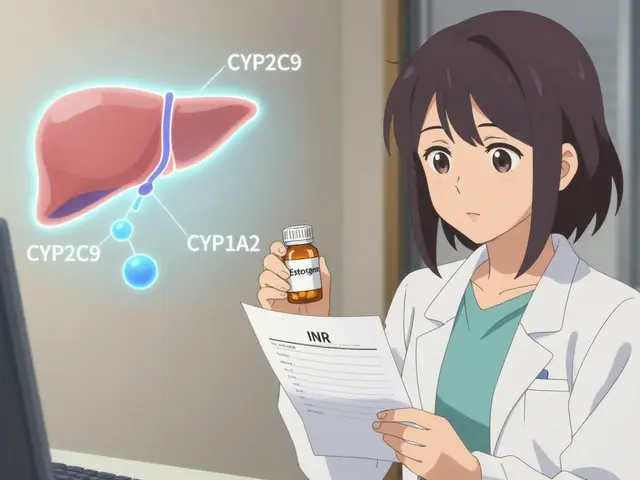
Only if your doctor prescribes them. Antibiotics like ciprofloxacin or azithromycin are effective for bacterial diarrhea, but they’re not for every case. Many cases are viral and won’t respond. Taking them without need can cause side effects or antibiotic resistance. Use loperamide first to slow symptoms, and only use antibiotics if diarrhea lasts more than 48 hours or includes fever or blood.
Can I pack my travel kit in a pill organizer?
Yes - but only for non-prescription items. For prescription meds, keep them in original bottles. Pill organizers are fine for ibuprofen, antihistamines, or antacids, as long as you label each compartment clearly. For prescriptions, the original packaging proves the drug’s identity to customs and pharmacists abroad. Never mix prescription and OTC meds in the same organizer.

Comments
Gwen Vincent
I’ve been using this exact kit for 3 years now. Never had a problem. The ORS packets are a game-changer-especially in Southeast Asia. I keep them in my purse, not my suitcase. Also, loperamide + electrolytes = survival combo. No more emergency bathroom runs during temple tours.
Pro tip: Buy the generic ORS powder in bulk online. Way cheaper than pre-packaged ones.
tia novialiswati
This is so helpful!! 😊 I just got back from Bali and wish I’d read this before I went. I ended up buying overpriced antidiarrheal at the airport because I didn’t bring any. Next time I’m packing like this for sure. Also, the hydrocortisone cream saved my skin from mosquito bites-10/10 recommend!
Christina VanOsdol
Okay, but let’s be real: most people don’t need half of this. You’re over-engineering a 7-day trip into a military ops manual. Do you really need 10 tablets of ibuprofen? Or 5 ORS packets? That’s not preparation-that’s anxiety-driven hoarding. And ‘split meds between bags’? If your luggage gets lost, you’re probably also the type who brings 3 pairs of shoes for a weekend trip.
Alfred Noble
This is legit. I’m a chill guy who hates overpacking, but I started doing this after I got food poisoning in Mexico. Took 3 days to recover. Now I carry loperamide, antacid, and a tiny first aid kit. Also, never thought about the insulin letter thing-my cousin got questioned at Dubai customs last year. So yeah, doctor’s note. Just do it. 😅
Matthew Brooker
You’re not just packing meds-you’re packing peace of mind. That’s the real win here. Travel’s supposed to be fun, not a medical emergency waiting to happen. I’ve taken this list on 5 international trips now. Every time, someone asks me for help because I’ve got the right stuff. Be the person who’s calm when everyone else is panicking. You’ll feel like a hero without trying.
Emily Wolff
This is the kind of content that makes me question why anyone ever leaves home.
Jacob Carthy
I mean if you’re that worried about your stomach then just stay home. We used to just take a couple of Pepto and call it a day. Now it’s like you’re preparing for a zombie apocalypse. Over here in the states we don’t need 5 packets of ORS. Just drink water and tough it out. You’re turning travel into a chore.
Lisandra Lautert
I lost my prescription antibiotics in Lisbon. Had to go to a clinic. They asked for my doctor’s letter. I didn’t have one. Two hours. Two hundred euros. And a lecture on ‘Western medical entitlement.’ This list? Mandatory.