
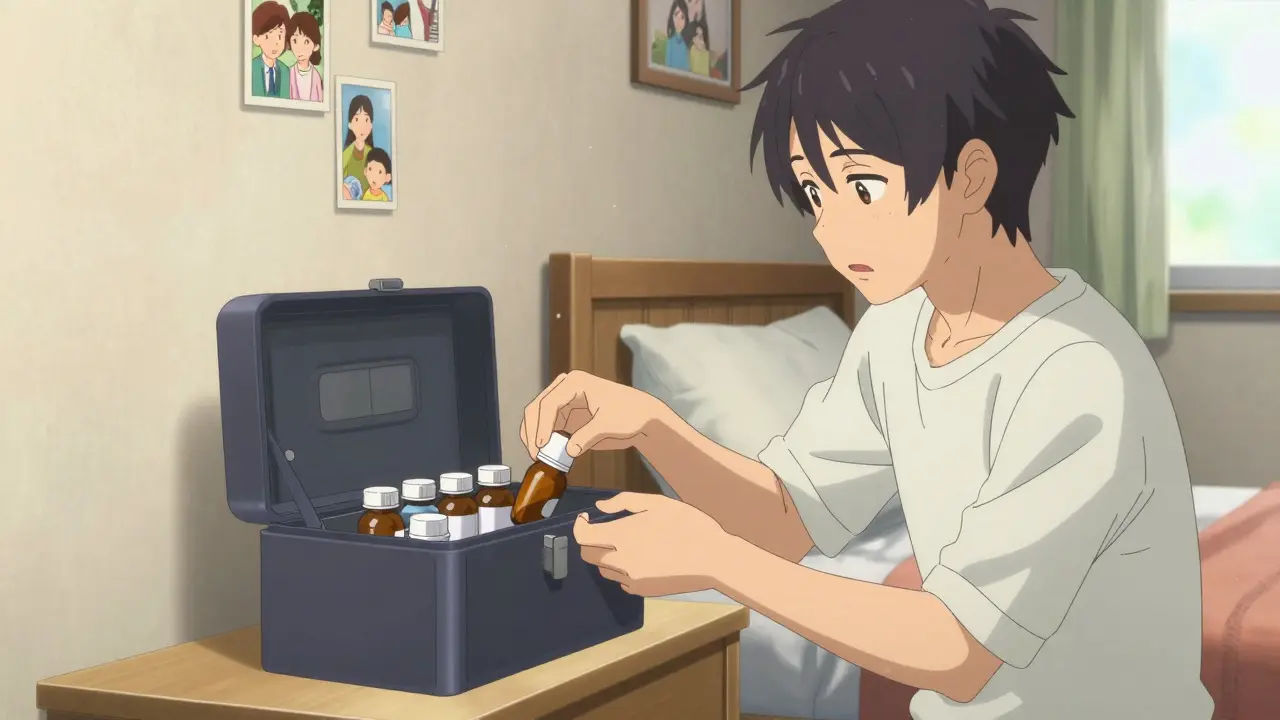
Living with others-whether it’s roommates, family members, or seniors in a care facility-adds a layer of complexity to managing health. You aren’t just storing pills; you are protecting people from accidental ingestion, misuse, and dangerous interactions. The stakes are high. Data shows that in multi-generational households, 67% of families report at least one medication-related incident annually, often because meds were left in accessible bathroom cabinets.
Proper medication storage isn't just about tidiness. It is a critical safety protocol involving temperature control, secure locking mechanisms, and clear labeling. Whether you are running an assisted living home or sharing an apartment with aging parents, getting this right prevents errors that can lead to hospital visits or worse.
The Core Rules of Secure Storage
The first rule of shared living is simple: if it looks like candy, it must be locked away. In professional settings like assisted living facilities, regulations are strict. Studies indicate that 100% of large assisted living homes require medications to be kept under lock and key at all times. This isn't just bureaucratic red tape; it’s a barrier against diversion and accidental access by children or cognitively impaired residents.
In private shared homes, the data is less encouraging. Only 28% of families use locked storage for medications. This gap is dangerous. Here is how to close it:
- Use Dedicated Lockboxes: Do not rely on hidden drawers. Use a small safe or a lockable cabinet specifically for meds. If you live with children, consider a biometric lock or a combination box that only adults know.
- Separate Controlled Substances: Painkillers, anxiety meds, and stimulants need extra security. Regulations often require these to be in a separate locked container within the main storage area. Keep an audit trail-who took what and when-if multiple people manage the supply.
- Avoid Bathroom Cabinets: Bathrooms are humid and warm. They are terrible for drug stability and too easy for curious kids to reach. Move meds to a cool, dry, locked drawer in a bedroom or office.
Temperature Control: Why Your Fridge Matters
You might think putting insulin or liquid antibiotics in the fridge is enough. But where you put them changes everything. Dr. Jane Smith, Director of Pharmacy Services at Johns Hopkins Hospital, notes that temperature excursions can cause up to 30% degradation in certain antibiotics within just 24 hours.
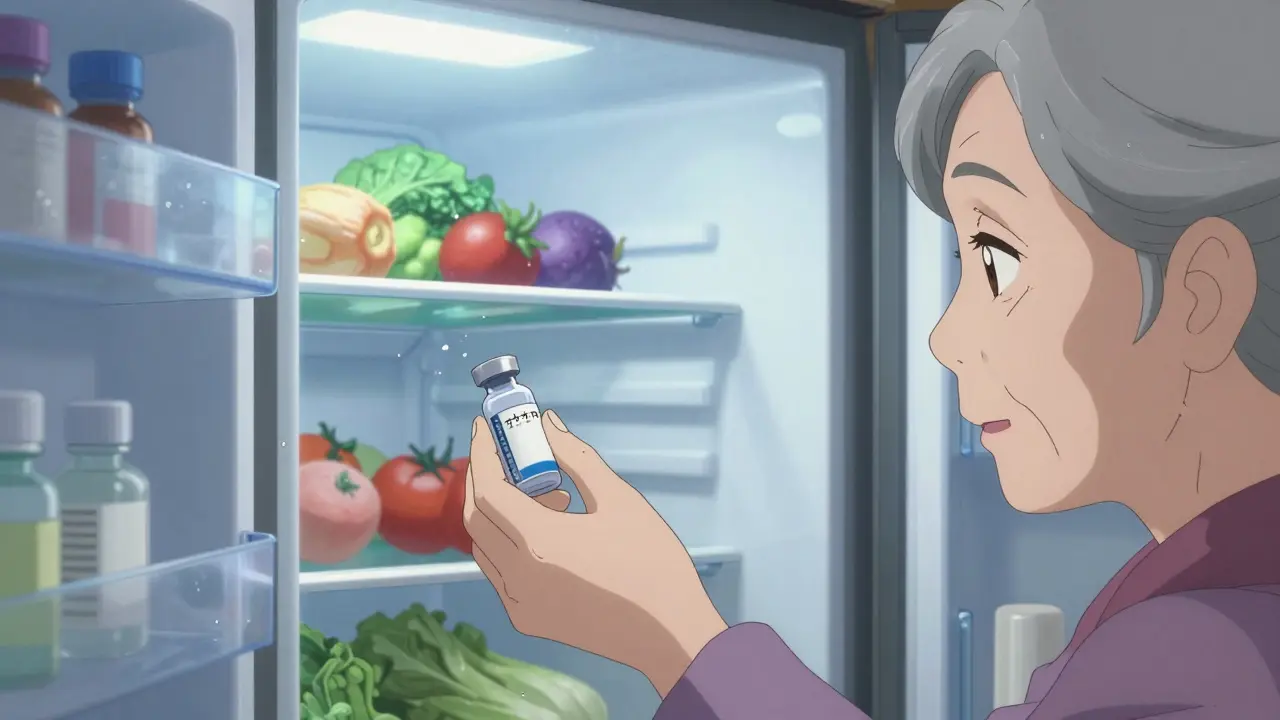
The refrigerator door is a trap. Every time someone opens the fridge for a snack, the temperature fluctuates. For sensitive medications, you need stability. Store liquids and biologics in the center of the refrigerator, where temperatures remain between 36-46 degrees Fahrenheit.
| Storage Type | Ideal Location | Risk Factor |
|---|---|---|
| Refrigerated Meds (Insulin, Biologics) | Center shelf, away from walls | Door shelves fluctuate ±10°F |
| Room Temperature Pills | Cool, dry drawer (below 77°F) | Bathroom humidity degrades coating |
| Controlled Substances | Locked safe, climate-controlled room | Heat melts wax seals; cold cracks glass |
If you share a fridge with food, contamination is a risk. In professional care, dedicated medication fridges are standard. At home, use a separate, clearly labeled bin inside the fridge so no one accidentally throws out a vial thinking it’s spoiled milk.
Labeling and Organization Systems
Confusion kills. When multiple people take different meds, visual clarity is your best defense. The Joint Commission found that 12% of hospitals received citations related to medication labeling issues. You don’t want that happening in your kitchen.
Here is a practical system for shared spaces:
- Keep Original Bottles: Never transfer pills to generic containers unless using a pharmacy-issued blister pack. The original bottle has the pharmacist’s label, expiration date, and lot number.
- Color-Coding: If you have multiple residents, assign a color to each person. Use colored tape or sticky notes on their specific bottles or storage bins. Red for Dad, Blue for Mom, Green for Grandma.
- Blister Packs vs. Bottles: Blister packs (bubble packs) reduce errors because empty slots show exactly what was taken. However, they offer less protection against moisture once opened. If using bottles, ensure caps are tightly sealed after every dose.
Documentation and Tracking
In assisted living, staff spend about 15 minutes per resident daily on Medication Administration Records (MARs). In a home setting, you don’t need a clinical chart, but you do need a log.
Create a simple whiteboard or digital shared calendar. List each person’s name, medication, dosage, and time. Check off doses as they happen. This prevents double-dosing-a common error when two caregivers assume the other has already given the pill. If you use a smart dispenser or app, sync it to all caregivers’ phones to avoid miscommunication.
Safe Disposal Protocols
Storage ends with disposal. Keeping expired meds is a hazard. The Joint Commission cites 10% of facilities for having expired medications on hand. In homes, old pills sitting in drawers are even more risky.
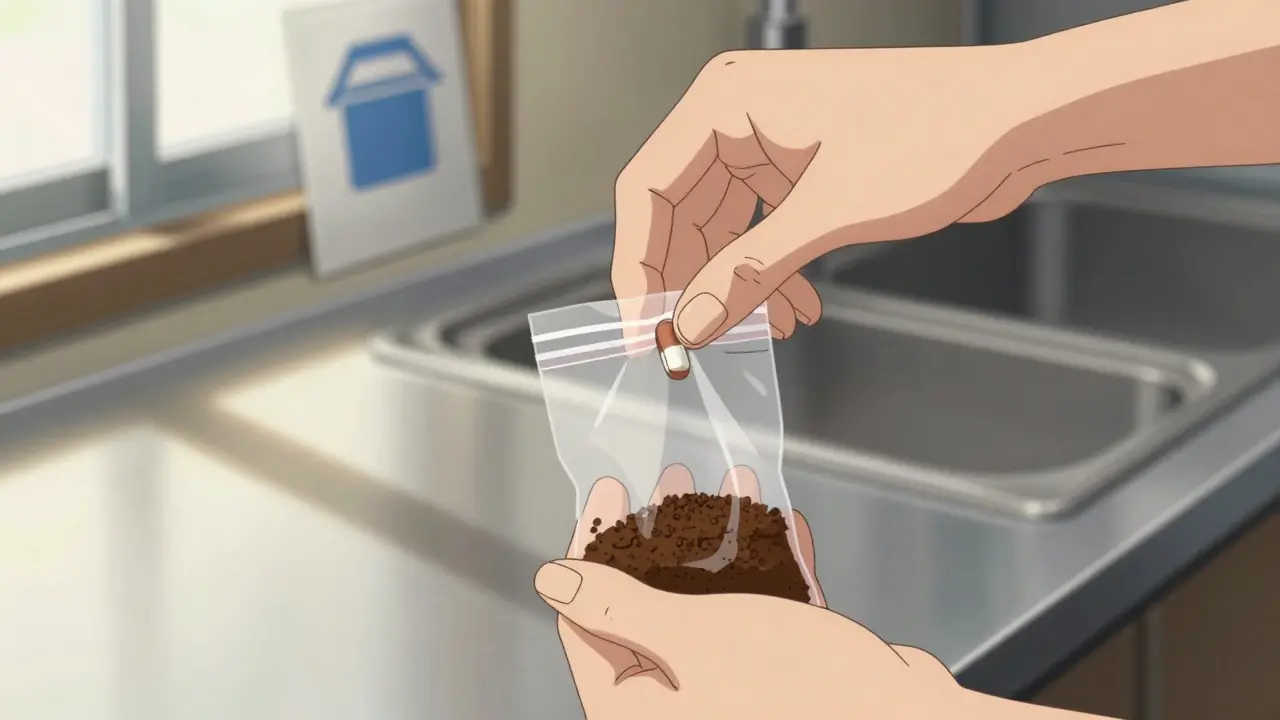
Do not flush medications unless the label explicitly says so (this applies to a very small list of highly addictive drugs). Instead, follow the FDA’s general guidance:
- Mix with Unpleasant Substance: Mix unused pills with dirt, cat litter, or used coffee grounds in a sealable bag.
- Seal and Throw: Place the bag in your household trash.
- Remove Info: Scratch out personal information on the empty bottle before recycling or trashing it.
- Take-Back Programs: Look for local pharmacy drop-off boxes or DEA National Prescription Drug Take Back Day events. These are the safest options for controlled substances.
Troubleshooting Common Challenges
Space is tight. Resistance is real. Here is how to handle the friction of shared living.
Challenge: Family members refuse locks. Many seniors feel infantilized by locked cabinets. Frame it as safety for everyone, especially grandchildren. Compromise by using a lockbox that requires a code rather than a physical key, giving them a sense of independence while maintaining security.
Challenge: No dedicated room. Small homes often lack a "med closet." Create a vertical zone. Install a shallow, lockable wall cabinet in a hallway or bedroom. It takes up zero floor space and keeps meds out of sight.
Challenge: Temperature monitoring. Buying a smart fridge thermometer costs less than $20. Set alerts on your phone if the temp rises above 46°F. This proactive step saves thousands in wasted medication and health crises.
Where is the safest place to store medication in a shared apartment?
The safest place is a locked cabinet or safe in a cool, dry area like a bedroom or office. Avoid bathrooms due to humidity and heat, which degrade medication. Ensure the location is inaccessible to children and pets.
Should I store insulin in the refrigerator door?
No. The refrigerator door experiences significant temperature fluctuations every time it is opened. Store insulin in the center of the fridge, where temperatures remain stable between 36-46°F, to maintain efficacy.
How do I dispose of expired painkillers safely?
Do not flush most painkillers. Mix them with an unappealing substance like coffee grounds or cat litter in a sealed bag, then throw them in the trash. Alternatively, use a pharmacy take-back program for secure disposal of controlled substances.
What is the difference between MARs and home medication logs?
MARs (Medication Administration Records) are formal legal documents used in professional care facilities to track every dose administered by staff. Home logs are simpler tools, like whiteboards or apps, used by families to coordinate dosing among multiple caregivers and prevent errors.
Can I store all my medications together in one lockbox?
You can, but it is better to organize them. Group by person or type. Ensure that controlled substances (like opioids) are in a separate locked compartment if possible. Always keep original labels attached for identification and emergency reference.




Comments
Anna Bartle
Great tips here!! The bit about the fridge door is so true. I used to keep my insulin there and it was a mess. Now I use the center shelf and it stays stable. Also, color coding is a lifesaver for us with multiple people taking meds.
Amrithaa Thayaparan
oh please tell me you arent just going to throw your meds in the trash like some uncivilized peasant. mixing with cat litter? really? that is such a lazy approach to chemical waste management. we need to be more responsible citizens and actually research proper hazardous material disposal protocols instead of following these basic internet guides. its embarrassing how little people care about environmental impact when disposing of pharmaceuticals. stop being so careless.
Lorena Suarez
hey amrithaa chill out lol. most people dont have access to special hazmat facilities. the fda guidelines say coffee grounds or kitty litter is fine for home disposal unless its on that tiny flush list. nobody is gonna die if they do it this way. just trying to keep things simple for regular folks
Chris Munton
The statistical disparity between professional assisted living facilities and private households regarding medication security is not merely an oversight but a profound moral failing of the modern domestic sphere. When we consider that only twenty-eight percent of families utilize locked storage, we are essentially gambling with human lives due to sheer negligence and a lack of structural discipline. This is not just about tidiness; it is about the fundamental ethical obligation we owe to vulnerable members of our shared living spaces, whether they be children or aging parents. The failure to implement basic biosecurity measures in the home reflects a broader societal decay where convenience trumps safety, and individual laziness endangers collective well-being. We must demand higher standards from ourselves and hold each other accountable for these preventable tragedies.
Fred Stone
man i get what chris is saying but its hard when u live in a small apartment. space is tight. i ended up getting one of those shallow wall cabinets for the hallway. works great and doesnt take up floor space. also yeah locks are important but make sure u dont make ur grandparents feel like prisoners. maybe use a code lock so they feel independent but still safe
Sydney Jarrett
Let's analyze the psychosocial dynamics at play here. The resistance to locking mechanisms often stems from a perceived infantilization by caregivers, which triggers defensive autonomy responses in elderly subjects. However, this is a classic case of cognitive dissonance where the subject prioritizes immediate emotional comfort over long-term physiological safety. The solution isn't just hardware; it's reframing the narrative. You're not 'locking them away'; you're creating a 'secure asset management zone.' Use jargon like 'biometric authentication' to make them feel part of a high-tech system rather than a restricted ward. It's all about perception management and leveraging their ego to ensure compliance with safety protocols. Most people fail because they treat it as a medical issue rather than a behavioral psychology problem.
Isis Fleming
I completely agree with Sydney regarding the psychological aspect. In my experience working in care coordination, framing the lockbox as a 'smart safety feature' rather than a restriction significantly reduces pushback. It is crucial to maintain dignity while ensuring adherence to safety protocols. The Joint Commission data supports the idea that clear labeling and organized systems reduce errors, so combining organizational clarity with respectful communication is key. We should always aim for solutions that empower residents while protecting them.
Paul Diamond
One must contemplate the epistemological implications of trusting memory versus externalized systems in shared domestic environments. The reliance on human recall for medication administration is fraught with fallibility, hence the necessity of the Medication Administration Record (MAR) equivalent in the home. By externalizing this knowledge onto a whiteboard or digital calendar, we create an objective truth that transcends individual subjective states. This is not merely administrative; it is a philosophical stance against the chaos of unrecorded time and action. The log becomes the arbiter of reality in the household.
Peter Sverla
I've been thinking about the temperature control section. Does anyone know if those smart fridge thermometers actually send alerts reliably? I tried one last year and it kept giving false positives. Maybe I had bad wifi though. Just curious if anyone has had better luck with specific brands.
Brett Aungst
Yeah Peter, I had issues with the cheap ones too. I switched to a Bluetooth one that pairs directly with the phone without needing constant wifi in the kitchen area. Works much better. Also, don't put it right next to the cooling element or the door seal, you'll get skewed readings. Center shelf is definitely the spot for both the meds and the sensor.
Katie Dixon
This article is a perfect example of why American homes are falling apart. We let strangers into our houses, we share everything, and then we wonder why we have problems. If you can't manage your own house without a government-style audit trail, maybe you shouldn't be sharing space. But hey, keep buying those expensive lockboxes and smart sensors. It's all about consumerism keeping us busy while we lose our privacy. Still, good info for those who insist on living in communes.
Ben Murphy
The moral imperative here is undeniable. To ignore these protocols is to participate in the slow erosion of public health infrastructure within the private sphere. We are seeing a rise in polypharmacy issues that are exacerbated by poor storage and tracking. It is not enough to simply 'try harder'; one must adopt a rigorous, almost clinical approach to domestic medicine management. The passive acceptance of risk is complicity. We must enforce these standards not just for ourselves, but for the community at large, ensuring that no expired opioid ends up in the wrong hands due to our laxity.