

Imagine being able to lower your HbA1c levels just by moving your body. It sounds too good to be true, but science backs it up. For millions of people managing diabetes, physical activity isn't just a lifestyle choice-it's a powerful medical tool. When you move, your muscles burn glucose for energy, which directly lowers the amount of sugar in your blood. More importantly, regular exercise makes your cells more sensitive to insulin, meaning your body needs less of it to keep things balanced.
Whether you have type 1 or type 2 diabetes, getting the right kind of movement into your routine can change the game. But not all workouts are created equal when it comes to blood sugar management. Some activities might spike your glucose temporarily, while others help stabilize it for hours. The key is understanding how different types of exercise affect your unique physiology and planning accordingly.
The Gold Standard: What Experts Recommend
If you look at the guidelines from major health organizations like the American Diabetes Association (ADA) and the ACSM, there is a clear consensus on what works best. The goal isn't necessarily to run marathons; it's about consistency and variety.
For most adults with diabetes, the target is at least 150 minutes of moderate-intensity aerobic activity per week. That breaks down to just 30 minutes a day, five days a week. Moderate intensity means you can talk comfortably but couldn't sing along to your favorite song. Walking briskly, swimming, or cycling usually fit this bill perfectly. If you prefer shorter bursts, 75 minutes of vigorous activity-where talking becomes difficult-is also effective.
However, aerobic exercise alone misses half the picture. You also need resistance training. Aim for two to three sessions per week that target all major muscle groups. This could be weightlifting, using resistance bands, or even bodyweight exercises like squats and push-ups. Why? Muscle tissue is a primary consumer of glucose. The more muscle mass you maintain or build, the better your body becomes at regulating blood sugar over time.
| Activity Type | Frequency | Duration/Intensity | Key Benefit |
|---|---|---|---|
| Aerobic Exercise | 5+ days/week | 30 mins moderate or 15 mins vigorous | Immediate glucose uptake |
| Resistance Training | 2-3 days/week | 2-4 sets, 8-15 reps | Long-term insulin sensitivity |
| Sitting Breaks | Every 30 mins | 3 mins light walking | Reduces post-meal spikes |
Mixing It Up: Aerobic vs. Resistance vs. HIIT
You might wonder if one type of exercise is superior to the rest. Research suggests that combining aerobic and resistance training yields the best results for lowering HbA1c. A meta-analysis found that this combined approach reduced HbA1c by an additional 0.56% compared to aerobic exercise alone. That’s a significant clinical difference.
Then there’s High-Intensity Interval Training (HIIT). HIIT involves short bursts of very intense effort followed by recovery periods. It’s incredibly time-efficient and can improve glycemic control faster than steady-state cardio. However, it comes with caveats. HIIT can cause temporary spikes in blood glucose due to the release of stress hormones like adrenaline. It also carries a higher risk of injury and isn’t suitable for everyone, particularly those with heart conditions or eye complications like retinopathy. If you’re new to exercise, start with moderate activities before considering HIIT.
Don’t underestimate the power of simply standing up. Prolonged sitting is bad news for blood sugar. Breaking up eight hours of sitting with just three minutes of light walking every 30 minutes can reduce post-meal glucose spikes by 24%. It’s a small habit with a massive payoff.
Safety First: Monitoring and Medication Adjustments
Exercise is medicine, but like any medication, it requires careful dosing and monitoring. If you take insulin or certain oral medications like sulfonylureas, your blood sugar can drop dangerously low during or after activity. This is known as hypoglycemia.
Always check your blood glucose 15 to 30 minutes before you start exercising. Here is a simple rule of thumb:
- Below 100 mg/dL: Eat 15-30 grams of fast-acting carbohydrates (like fruit juice or glucose tabs) before starting.
- 100-250 mg/dL: You are generally safe to proceed.
- Above 250 mg/dL: Check for ketones. If ketones are present, do not exercise as this can lead to diabetic ketoacidosis. Wait until levels drop.
If you use an insulin pump, consider reducing your basal rate by 50% one hour before exercise and during the activity. For mealtime insulin, adjustments depend on intensity. Low-intensity activity might require a 10-20% dose reduction, while high-intensity efforts may need a 30-60% cut. These numbers are starting points; you must work with your healthcare provider to fine-tune them.

Practical Tips for Getting Started
Starting an exercise routine when you have diabetes can feel overwhelming. You’re juggling food, meds, and now movement. Keep it simple. Begin with a 10-minute walk after meals. This timing is strategic because it targets the postprandial glucose spike that naturally occurs after eating.
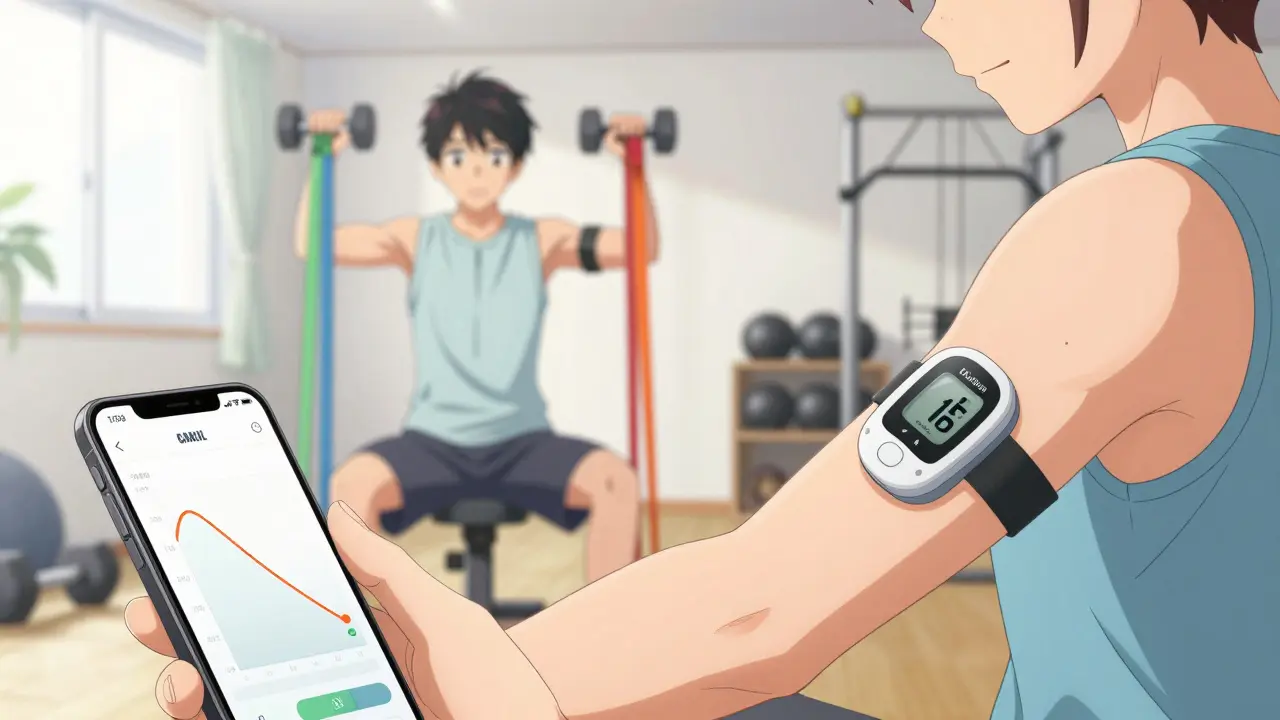
Invest in technology if you can. Continuous Glucose Monitors (CGMs) have revolutionized diabetes management. They show you real-time data on how specific foods and activities affect your glucose levels. Seeing the immediate impact of a walk on your graph can be incredibly motivating. Studies suggest CGMs can reduce the learning curve for exercise adjustments by 40%.
Find an accountability partner. Whether it’s a friend, a family member, or a support group, having someone to move with you increases adherence. The dropout rate for structured exercise programs is high-around 68% within six months-but social support significantly improves longevity in these habits.
Troubleshooting Common Issues
Even with the best plan, things don’t always go smoothly. Here are some common scenarios and how to handle them:
Unexpected Hypoglycemia During Exercise: Always carry fast-acting carbs with you. If you feel shaky, sweaty, or confused, stop and treat immediately. After treating, wait 15 minutes and recheck before resuming activity. Consider adjusting future pre-exercise insulin doses downward.
Post-Exercise Hyperglycemia: If your blood sugar spikes after intense exercise, it’s likely due to adrenaline. Cool down properly with gentle stretching or walking. In some cases, a small correction dose of insulin may be needed, but avoid large boluses as your sensitivity will increase later, potentially causing a delayed crash.
Pain or Injury: Listen to your body. Joint pain or muscle soreness is normal initially, but sharp pain is not. Switch to low-impact activities like swimming or cycling if joint issues arise. Consistency matters more than intensity.
How long does it take for exercise to lower blood sugar?
The effects are immediate. Your muscles begin pulling glucose from your bloodstream as soon as you start moving. This effect can last for up to 24-72 hours after a session, which is why avoiding consecutive days without exercise is crucial for maintaining improved insulin sensitivity.
Can I exercise if my blood sugar is high?
It depends on how high. If your glucose is between 100-250 mg/dL, moderate exercise is usually safe. If it exceeds 250 mg/dL, check for ketones. If ketones are moderate or high, do not exercise as it can worsen hyperglycemia and lead to ketoacidosis. Wait until levels decrease before attempting activity.
What is the best time of day to exercise for diabetes?
There is no single "best" time, but exercising after meals is highly effective for controlling postprandial glucose spikes. A 10-15 minute walk within 30 minutes of finishing dinner can significantly blunt the rise in blood sugar. Consistency in timing helps predict glucose responses better than sporadic workouts.
Does HIIT work for type 2 diabetes?
Yes, HIIT can be very effective for improving insulin sensitivity and lowering HbA1c in less time than traditional cardio. However, it should only be attempted if you have good cardiovascular health and no complications like retinopathy. Start with supervised sessions to ensure safety and proper form.
How much insulin should I reduce before exercise?
This varies by individual and activity intensity. As a general guideline, reduce mealtime insulin by 10-20% for low-intensity activity and 30-60% for high-intensity activity. Always consult your endocrinologist or diabetes educator to create a personalized adjustment protocol based on your history and medication type.