How to Discuss Cost and Coverage before Filling a Prescription
Mar 1 2026

When it comes to your health, public education, the process of giving people clear, accurate information about medications and health risks so they can make smarter choices. Also known as health literacy, it’s not just about reading pamphlets—it’s about knowing how to ask the right questions, spot red flags, and take control before something goes wrong. Most people don’t realize how often they’re given drugs without understanding why, how they work, or what could go wrong. That’s where public education steps in—not as a lecture, but as a tool to turn confusion into clarity.
Think about medication side effects, unwanted reactions that happen when a drug interacts with your body in unexpected ways. They’re not always obvious. One person gets dizzy on a blood pressure pill, another gets a rash from an antibiotic they thought was "safe." And too many people just quit taking their meds because they didn’t know how to tell if it was a normal side effect, an allergy, or just bad timing. drug safety, the practice of using medications in ways that minimize harm while maximizing benefit starts with knowing the difference between a tweakable side effect and a true emergency. Public education teaches you how to track symptoms, recognize warning signs like swelling, breathing trouble, or sudden confusion, and when to call your doctor instead of stopping cold.
It’s not just about pills. patient empowerment, the process of giving people the knowledge and confidence to actively participate in their own care means understanding your prescription, knowing your pharmacy’s labeling system, spotting authorized generics, and knowing when a drug interaction might be hiding in your multivitamin or grapefruit juice. You don’t need a medical degree—you need to know what to look for. That’s why public education covers things like how to read an NDC code, why rifampin can mess with birth control, or why creatine can trick your kidney tests. These aren’t niche topics—they’re everyday risks that millions face because no one ever explained them plainly.
And it’s not just about avoiding harm. Public education helps you stick with treatments that work. If you’re on a long-term medication for high blood pressure, diabetes, or Parkinson’s, missing doses or quitting because of side effects can be more dangerous than the side effects themselves. That’s why so many posts here focus on medication adherence—how to build routines, talk to your care team without feeling judged, and create a plan that fits your life, not the other way around.
What you’ll find below isn’t a list of random articles. It’s a practical toolkit built from real patient experiences and clinical insights. You’ll learn how to handle side effects without quitting your meds, how to tell if you’re truly allergic to a drug, how to save money on prescriptions without risking safety, and how to spot when a government program might be able to help you afford your drugs. Every post answers a question someone actually asked—and got wrong before they found the right info. This isn’t theory. It’s what works when your health is on the line.
Nov
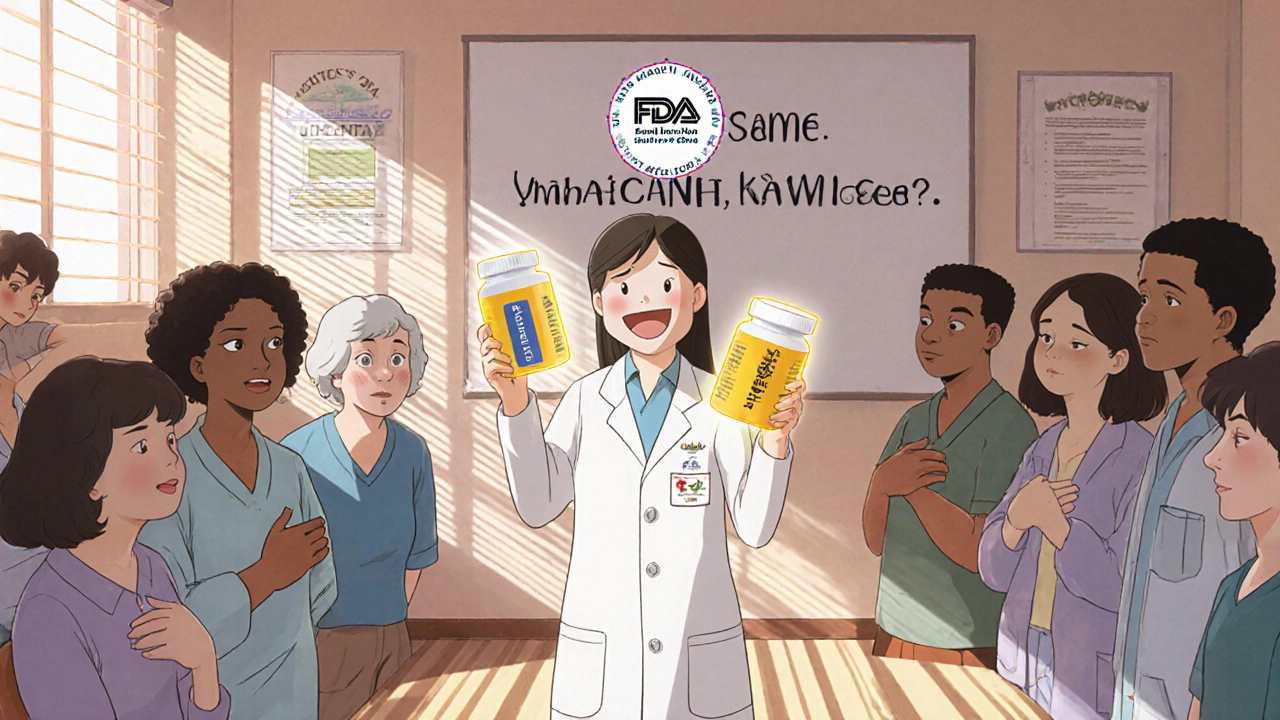
Learn how public education on generic drugs is helping patients save money without sacrificing safety. Discover the facts behind generic medication equivalence and how community health programs are closing the knowledge gap.
Mar 1 2026
Mar 10 2026
Jan 20 2026
Nov 13 2025

Mar 16 2025