How Yogurt Improves Digestion and Immunity: Simple Ways to Add It to Your Diet
Aug 28 2025

When you’re taking polypharmacy, the use of five or more medications at the same time. Also known as multiple medication use, it’s not just common—it’s often unavoidable for people managing chronic conditions like high blood pressure, diabetes, arthritis, or heart disease. But what looks like good care can quickly turn into a ticking time bomb. The more pills you swallow, the higher the chance one will clash with another—sometimes in ways no doctor ever warned you about.
Take drug interactions, when two or more medications change how each other works in your body. For example, rifampin can make birth control fail, and ritonavir can turn common painkillers into liver toxins. These aren’t rare edge cases. They happen every day in clinics and homes. Then there’s medication safety, the practice of reducing harm from drugs through careful planning and monitoring. It’s not just about avoiding overdoses—it’s about spotting silent dangers like confusion from anticholinergics, falls from blood pressure meds, or kidney damage from NSAIDs stacked on top of diuretics.
And it’s not just the drugs themselves. multiple medications, a simple way to describe polypharmacy without the jargon often come with hidden triggers: supplements you didn’t tell your doctor about, OTC painkillers you grab without thinking, or even foods like grapefruit that change how your body absorbs pills. One study found that nearly 40% of older adults on five or more drugs had at least one potentially dangerous interaction. Many didn’t even know they were at risk.
Why does this keep happening? Because medicine is great at treating single problems—but bad at seeing the whole picture. A cardiologist prescribes one thing. A rheumatologist adds another. Your primary care doc tries to tie it all together, but by then, the list is long, the labels are faded, and no one has sat down to ask: Do you really need all of this?
That’s where things change. You don’t need to stop every pill. But you do need a clear plan. A medication action plan—written out, reviewed regularly, and shared with every provider—can cut the clutter. It helps you spot duplicates, spot risks, and say no to drugs that no longer serve you. It’s not about cutting corners. It’s about cutting waste.
What you’ll find here aren’t abstract theories. These are real stories from people who’ve been there: the woman who thought she was allergic to penicillin but was just intolerant, the man whose confusion vanished after stopping a sleep aid he’d taken for 12 years, the senior who saved $800 a month by switching to an authorized generic. You’ll learn how to read labels, spot red flags in your pill bottle, and talk to your doctor without sounding like you’re challenging their judgment. Because the truth? You’re not just a patient—you’re the only one who’s with you 24/7. And you’re the only one who can protect yourself.
Dec
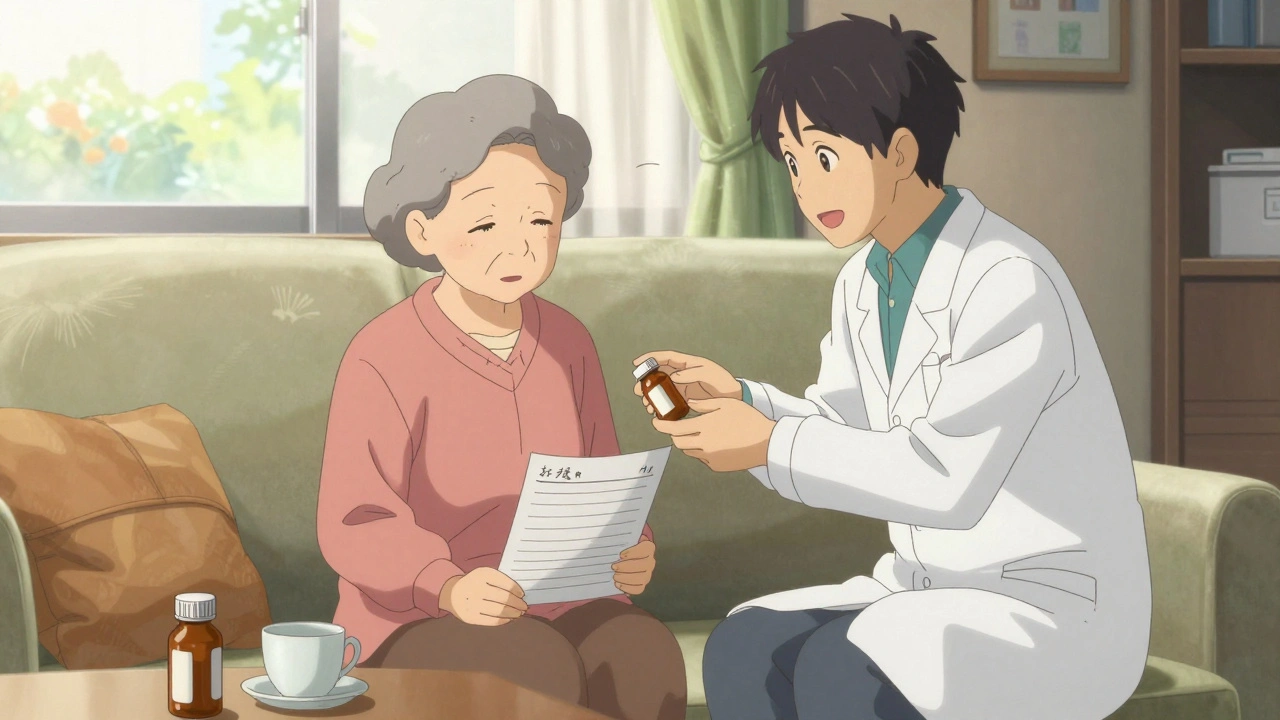
Learn exactly what to bring, what to ask, and how to prepare for a medication review appointment to avoid dangerous drug interactions and ensure your treatment is still right for you.
Nov

Frailty and polypharmacy in older adults create a dangerous cycle of side effects and decline. Learn how to reduce medication burden safely and improve quality of life through deprescribing and targeted care.

Aug 28 2025

Sep 24 2025

Jan 28 2026

Mar 11 2026
Oct 8 2025