
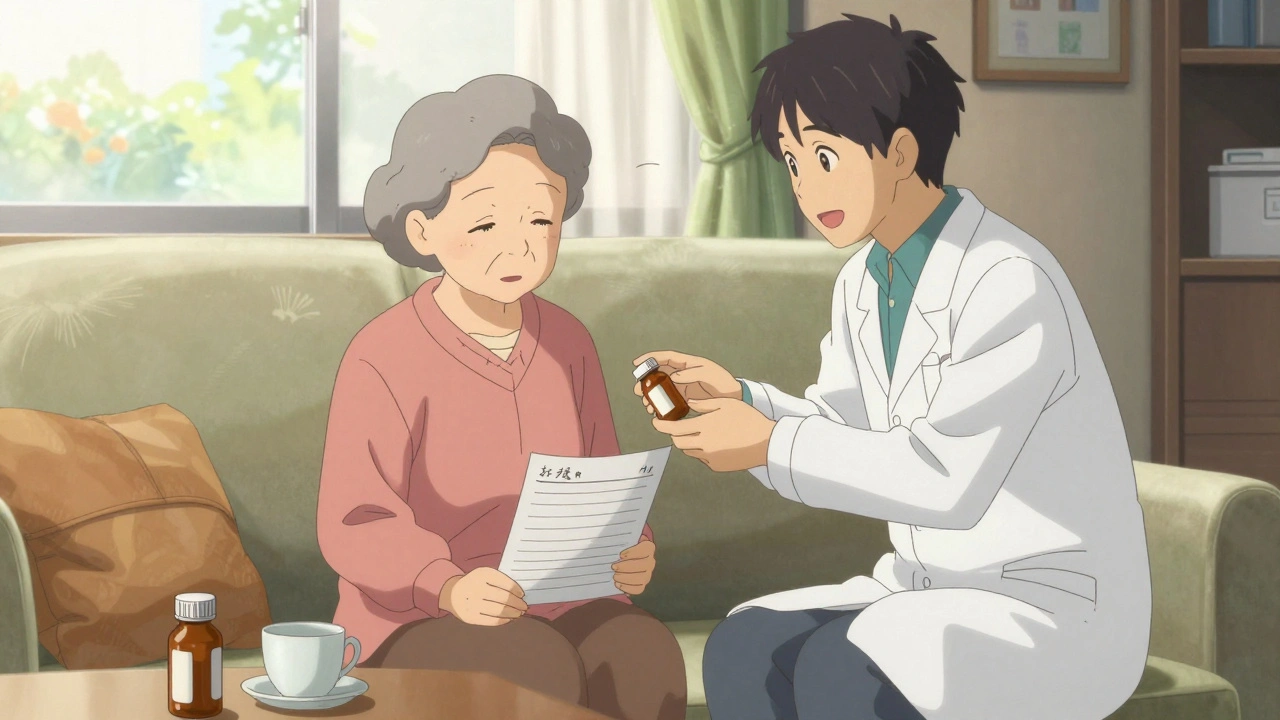
Why a medication review matters
You’re on several medications. Maybe you take pills for blood pressure, diabetes, cholesterol, and joint pain. Maybe you also grab ibuprofen for headaches, a daily vitamin, and a herbal supplement your cousin swore by. It’s easy to lose track. But if you’re taking five or more medicines regularly, a medication review isn’t optional-it’s a safety check you can’t afford to skip.
In the UK, practices like Godiva Group Practice NHS now require these reviews at least once a year. If you don’t show up, they’ll send reminders. Then they’ll limit your prescriptions. Eventually, they’ll stop issuing refills altogether until you’ve had the review. That’s not bureaucracy-it’s because missed reviews lead to dangerous drug interactions, side effects you didn’t know you had, or pills you’re taking that no longer even help.
Medication reviews aren’t about being judged. They’re about making sure every pill you swallow is still doing what it’s meant to. The goal? Fewer side effects, better control of your condition, and less clutter in your medicine cabinet.
What to bring: Your complete medicine list
Don’t rely on memory. Bring everything.
This means all medications: prescriptions, over-the-counter painkillers, vitamins, herbal remedies, creams, inhalers, eye drops-even the ones you only take when you feel bad. If it’s in your bathroom cabinet, your purse, or your kitchen drawer, bring it.
Doctors and pharmacists don’t just want names. They need:
- The exact name of each medicine (e.g., not just "blood pressure pill," but "amlodipine 5mg")
- The dose (how many milligrams or millilitres)
- How often you take it (once a day? after meals? only when needed?)
- Why you’re taking it (e.g., "for high blood pressure," "for heartburn")
- Who prescribed it (your GP, cardiologist, dentist?)
- Any side effects you’ve noticed (dizziness, dry mouth, nausea, sleepiness)
For people with Parkinson’s, timing matters even more. A delay of 30 minutes in taking levodopa can mean hours of stiffness. Write down your exact schedule: "7:00 AM: 100mg levodopa, 10:00 AM: 5mg pramipexole." If you’re doing a video call, having this written out is your lifeline.
Bring the actual medicines
Yes, bring the bottles. Even the empty ones.
Why? Because labels lie. Sometimes the pharmacy mislabels. Sometimes you switched brands and didn’t notice the dose changed. Sometimes you stopped taking one but forgot to throw it out.
When you show up with your pills in a bag, your pharmacist can see:
- Expiration dates (you’d be surprised how many people still take old meds)
- Batch numbers (in case of recalls)
- Whether you’re splitting pills you shouldn’t be
- If you’re using the right inhaler technique
- If you’re taking a cream meant for skin on your tongue
One patient brought a bottle labeled "aspirin 81mg." The pharmacist noticed the cap had been replaced-the actual pills inside were naproxen. That’s the kind of mistake a review catches before it causes harm.
Write down your questions and concerns
It’s easy to walk out of the room thinking, "I forgot to ask something." Don’t let that happen.
Before your appointment, grab a notepad. Write down:
- "I’ve been feeling dizzy since I started this new pill-could it be the cause?"
- "I’m taking four pills for my stomach. Can any be cut?"
- "I read online that this drug causes memory loss. Should I be worried?"
- "I can’t afford this medication anymore. Is there a cheaper option?"
- "What happens if I stop this one?"
These aren’t dumb questions. They’re the ones that lead to real changes. Your pharmacist or GP isn’t there to lecture you-they’re there to help you feel better, safer, and more in control.

Know the difference between types of reviews
Not every medication review is the same. There are three main types:
- Prescription review: Checks if the prescription is written correctly-right drug, right dose, no dangerous interactions.
- Concordance review: Talks about whether you’re actually taking your meds as directed. Are you skipping doses? Running out early? Forgetting? This isn’t about blame-it’s about finding solutions.
- Clinical medication review: Looks at your whole health picture. Are your meds still helping? Are they causing more harm than good? Could you stop one safely?
If you’re on five or more medicines, you’re likely getting a clinical review. That’s the deep dive. It’s where you’ll talk about whether you really need that statin, if your painkiller is masking a bigger problem, or if your antidepressant is making you too sleepy to drive.
Telehealth? Here’s how to prepare
If your review is over Zoom, phone, or another video platform, you need to prep differently.
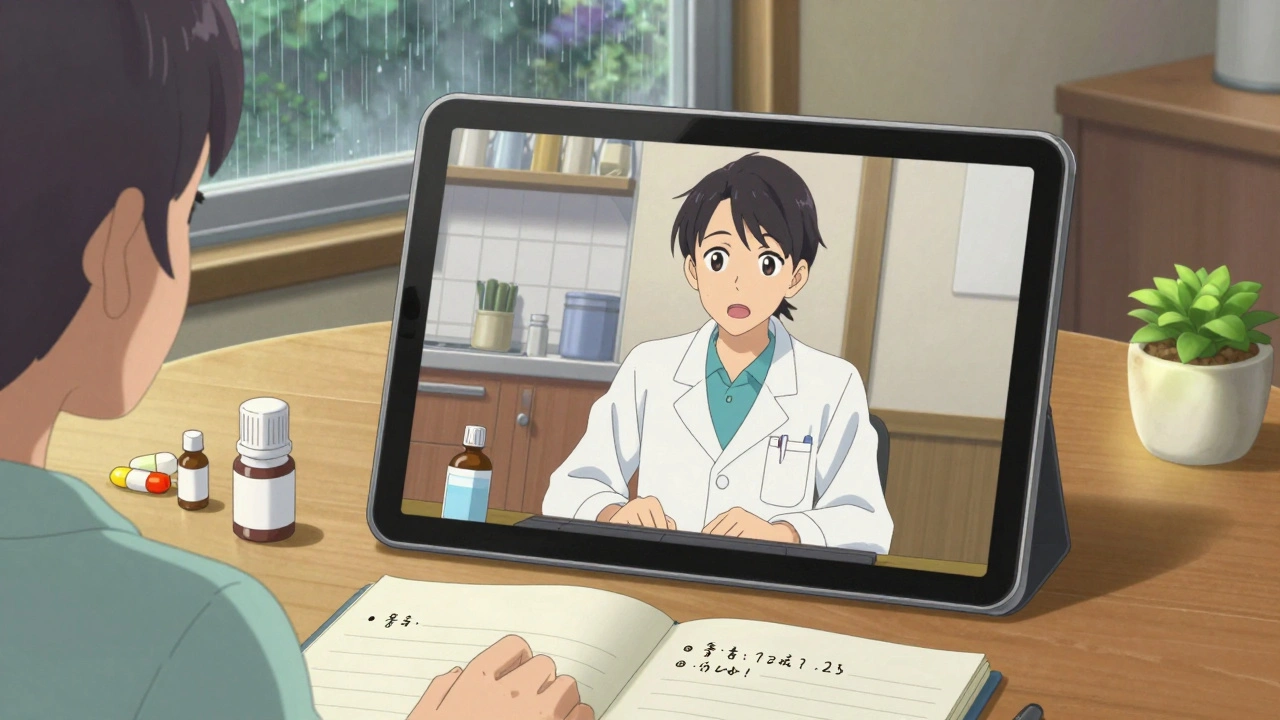
First: Test your tech. Make sure your camera works. Your mic isn’t muted. You know how to join the call. Have your login details ready.
Second: Have your medicines laid out on the table in front of you. When the pharmacist asks, "Can you show me the bottle for your cholesterol pill?"-you don’t want to fumble. Have them all in view.
Third: Have your written list on screen or next to you. Don’t try to read from memory. Say: "Here’s what I wrote down-can we go through it?"
Telehealth reviews are just as effective as in-person ones-if you’re ready. The biggest mistake? Showing up with no meds, no list, and hoping you’ll remember everything.
What happens during the appointment
Expect the review to take 20 to 45 minutes. It’s not a quick check-in.
Your pharmacist or GP will:
- Ask you how you’ve been feeling lately
- Go through your list, one by one
- Check for interactions between your medicines
- Ask if any pills cause side effects you haven’t mentioned
- Look at whether any meds are no longer needed
- Discuss alternatives if something’s too expensive or hard to take
- Explain what to expect if you stop or change a drug
They might say: "This blood pressure medicine you’ve been on for 10 years? We can try lowering the dose. You’re not having side effects, but your numbers are great now. Let’s see how you do on half."
Or: "That herbal tea you take for sleep? It interacts with your heart medication. Let’s find a safer option."
You’re not there to be told what to do. You’re there to decide together what’s best for you.
What to do after the review
At the end, you should walk away with:
- A clear list of what to keep, stop, or change
- Updated instructions for each medicine
- Answers to your questions
- Next steps (e.g., "We’ll call you in two weeks to check your blood pressure" or "Your new prescription will be ready Friday")
Ask for a printed copy or email summary. Don’t trust your memory. If something changes-like a new dose or a medicine you’re stopping-write it down right after the appointment.
Some practices will send a letter to your GP or pharmacy. Keep a copy for yourself. If you see a specialist next month, bring it with you.
What happens if you don’t prepare
Skipping the prep means you’re risking your health.
You might keep taking a pill that’s no longer needed-and it could be harming your kidneys. You might miss a dangerous interaction between your painkiller and your blood thinner. You might not realize your sleepiness is from a medicine you’ve been on for years.
And practically? You might not get your next prescription. Practices like Godiva Group Practice NHS have clear rules: no review, no refills. It’s not punishment. It’s a safety net.
One woman in Bristol missed her review for six months. When she finally went in, she was taking three medicines that had been discontinued years ago. One of them was causing her to fall. That’s preventable.
Who can help if you’re struggling
If you can’t get to the clinic, ask about home visits. Some practices offer them for people with mobility issues.
If you’re overwhelmed by the list, ask a family member or friend to help you make it. You don’t have to do this alone.
Community pharmacies often offer free medication reviews-even if you didn’t get the prescription from them. Walk in, ask, and bring your pills. Many pharmacists will sit with you for 20 minutes, no appointment needed.
Final tip: Make it a habit
Don’t wait until you’re asked. Set a reminder in your phone for your next review. Keep your medicine list updated every time your prescription changes. If you start a new supplement, add it. If you stop a pill, cross it off.
Medication reviews aren’t a one-time event. They’re part of staying healthy. The more you do them, the more control you have over your body-and the less you have to wonder, "Is this still helping?"




Comments
pallavi khushwani
I used to skip these reviews until my mom had a bad reaction to mixing her blood pressure med with that herbal tea she swore helped her sleep. Now I help her make the list every year. Bring the actual bottles. Seriously. I thought I knew what was in her cabinet-turns out, three were expired and one was completely wrong. Don't be that person.
Dan Cole
Let’s be real-this whole system is a corporate-controlled pharmacutical puppet show. The NHS doesn’t care about your health. They care about reducing liability. Every 'review' is just a thinly veiled attempt to get you off expensive meds so Big Pharma can push cheaper generics that don’t work as well. You think they want you to feel better? They want you to stop asking questions. Bring your pills? Sure. But bring your skepticism too.
Jackie Petersen
I don’t trust these reviews. Why should I? Last time I went, they tried to take away my ibuprofen because 'it's not medically necessary.' I have arthritis. I need it. This is just the government controlling what I can take. America would never let this happen.
Annie Gardiner
I love how this guide makes it sound like your doctor is your bestie. Newsflash: they’re overworked, underpaid, and 80% of the time, they’re just reading from a checklist. I brought my whole medicine cabinet once. The pharmacist glanced at it, said 'all good,' and handed me a pamphlet. I left feeling more confused than when I came in.
Andrew Frazier
Why do people even bother with all this? If you can’t remember what pills you’re taking, maybe you shouldn’t be taking them. I’ve been on the same meds for 15 years. I don’t need a review. I need a new brain. Also, why are we letting pharmacists run the show? They’re not doctors. This is just bureaucracy dressed up as care.
Geraldine Trainer-Cooper
Bring your meds to the appointment
Kenny Pakade
This is why America is better. We don’t let bureaucrats decide what we can take. If I want to take 10 pills a day and a bottle of garlic capsules and some magic powder from the internet, that’s my right. This UK stuff is socialist nonsense. You’re not a child. Stop being micromanaged.
Myles White
I’ve been doing medication reviews for my dad since he was diagnosed with Parkinson’s, and honestly, the difference is night and day. He used to miss his levodopa by an hour and be stuck in rigid pain for half the day. Now we have a color-coded chart, alarms on his phone, and a little notebook he carries everywhere. The pharmacist noticed he was crushing his pills-turns out, the extended-release version wasn’t meant to be crushed. He’s had zero falls in 18 months since we fixed that. It’s not glamorous, but it’s life-changing. Just don’t wait until you’re falling to start organizing.
Brooke Evers
I used to think this was a waste of time until my aunt showed up with a bag full of bottles and a handwritten list that had 17 items on it. She was terrified she’d forget something. The pharmacist sat with her for 40 minutes, asked her how she was sleeping, asked if she’d been feeling anxious, and then gently said, 'You’ve been taking this sleep aid for 8 years. It’s not helping anymore. Let’s try something else.' My aunt cried. Not because she was mad-because someone finally listened. This isn’t about rules. It’s about being seen.
Nigel ntini
As someone who’s worked in UK primary care for 20 years, I can tell you this: the system works best when patients come prepared. I’ve seen people who’ve been on the same statin since 2005, never checked their liver enzymes, and now have mild jaundice. A simple review catches that. No drama. No blame. Just a conversation. Bring your pills. Write your questions. Show up. It’s not a test. It’s a team huddle.
Chris Park
This guide is a propaganda tool. The NHS doesn’t want you to have your meds. They want you to be dependent on their approved list. Did you know that in 2019, the UK government quietly removed 47 generic drugs from the formulary after pharmaceutical lobbyists pressured them? The 'review' isn’t for your safety-it’s to force you onto cheaper, less effective alternatives. The fact that they require you to bring your bottles? That’s not for accuracy-it’s to track your consumption patterns for data mining. Don’t be fooled. This is surveillance disguised as healthcare.
Ashish Vazirani
I came here from India... and I was shocked. Here, you don’t just bring your pills-you bring your life story. In Mumbai, you get your prescription, you take it, and you don’t talk about it. But here? You’re expected to explain every pill, every side effect, every doubt like you’re in therapy. It’s exhausting. But... I did it. I brought my list. I brought my bottles. And the pharmacist didn’t just fix my meds-she asked me about my daughter’s wedding. I cried. I didn’t know I needed that. So... maybe this isn’t bureaucracy. Maybe it’s just... care. With extra steps.
Ibrahim Yakubu
I work in a pharmacy. People show up with 14 bottles, no list, and say 'I think I’m on something for my heart?' I’ve seen people take blood thinners with NSAIDs and wonder why they’re bruising. I’ve seen someone take thyroid meds with calcium supplements and wonder why their levels are off. You don’t need to be a genius. You just need to be honest. And bring the damn bottles. It’s not hard. It’s not a test. It’s how you stay alive.