Alcoholic Liver Disease: Understanding the Stages from Fatty Liver to Cirrhosis
Dec 31 2025

When you have GERD, gastroesophageal reflux disease, a chronic condition where stomach acid flows back into the esophagus. Also known as acid reflux, it’s not just occasional heartburn—it’s happening at least twice a week and can lead to serious damage over time. The lining of your esophagus isn’t meant to handle stomach acid, and when it gets exposed too often, it burns, swells, and sometimes even develops ulcers or precancerous changes.
What triggers it? Common culprits include fatty foods, caffeine, alcohol, smoking, large meals, lying down right after eating, and certain medications like NSAIDs or calcium channel blockers. Some people have a weak lower esophageal sphincter—the muscle that keeps acid in the stomach—while others have a hiatal hernia that lets the stomach slip up into the chest. Proton pump inhibitors, medications that shut down acid production at its source like omeprazole or esomeprazole are the go-to for long-term control. H2 blockers, a second-line option that reduces acid but doesn’t block it as completely like famotidine or ranitidine (when available) work faster but wear off sooner. Many people switch between them, or use both, depending on their symptoms and how their body responds.
What you might not realize is that GERD often overlaps with other issues. People on immunosuppressants or those taking multiple medications for heart, mental health, or pain conditions can see their reflux get worse because of drug interactions. Even something as simple as taking a supplement like creatine or acetyl-L-carnitine might affect how your stomach empties or how your body processes acid meds. And if you’ve ever been told you’re "allergic" to a reflux drug but just had side effects—like headaches or diarrhea—that’s not an allergy, it’s intolerance. Mistaking one for the other can keep you from getting the right treatment.
Managing GERD isn’t just about popping pills. It’s about timing meals, adjusting sleep positions, losing weight if needed, and knowing when to ask for an endoscopy. The posts below give you real, practical insights: how to tell if your meds are working, what over-the-counter options actually help, how food and supplements can make it worse, and what to do when standard treatments fail. You’ll find clear comparisons of common drugs, warnings about dangerous interactions, and tips that come straight from people living with this every day. No fluff. Just what you need to take control.
Nov
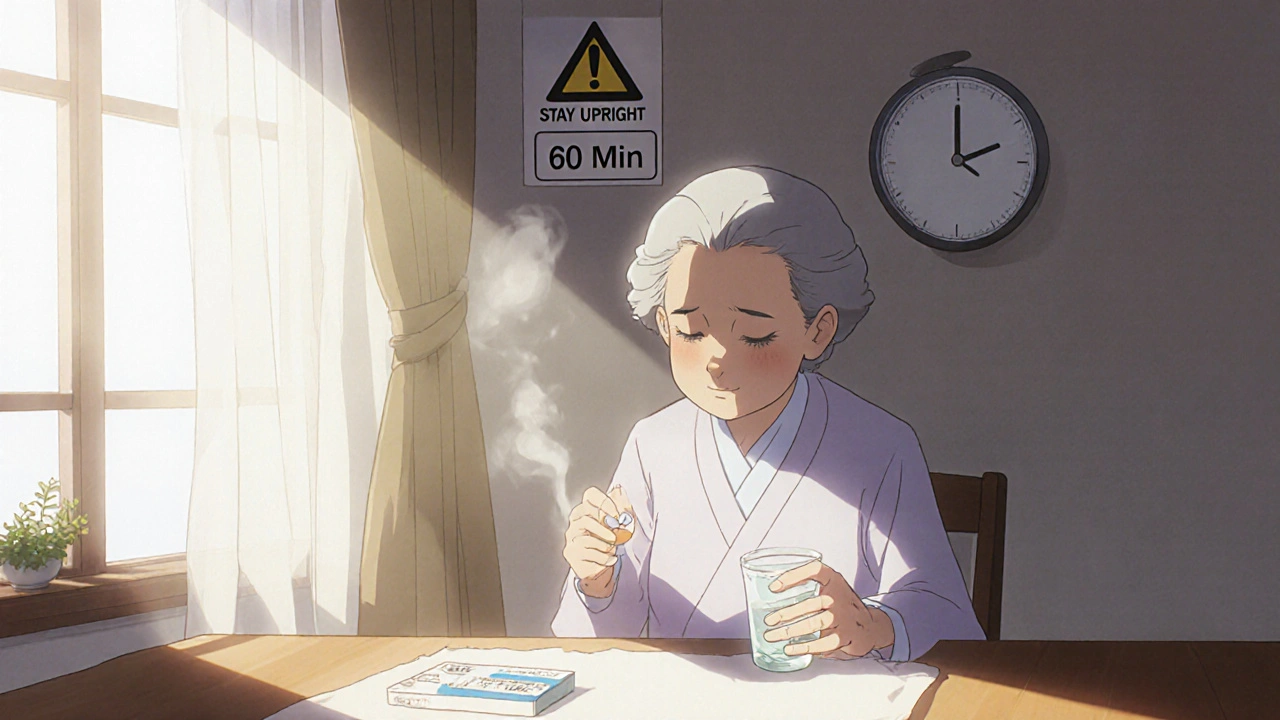
Bisphosphonates help prevent bone fractures but can irritate the esophagus - especially if you have GERD. Learn how to take them safely and what alternatives exist to protect your digestive tract.
Dec 31 2025

Jun 12 2025
Nov 29 2025
Nov 20 2025
Jan 20 2026