How to Ask Your Doctor About Generic Alternatives: Save Money Without Sacrificing Care
Mar 3 2026

When your blood has too many eosinophils, a type of white blood cell that fights parasites and plays a role in allergic responses. Also known as high eosinophil count, it’s not a disease itself—it’s a signal your body is reacting to something. Most people never hear about eosinophils until a blood test shows numbers higher than normal. But when they rise, it’s often tied to real health issues like asthma, eczema, or even parasitic infections.
Eosinophilia doesn’t show up out of nowhere. It usually follows something else: a persistent cough that won’t quit, skin rashes that come and go, or trouble breathing after eating certain foods. It’s common in people with chronic allergies or asthma, and it’s also a red flag for rare conditions like eosinophilic esophagitis—where the lining of the esophagus gets inflamed by these cells. Some medications, like certain antibiotics or seizure drugs, can trigger it too. And if you’ve traveled recently or eaten undercooked meat, a parasitic infection might be the cause. Doctors don’t just see the number—they look at your symptoms, your meds, your history. One number doesn’t tell the whole story.
What’s surprising is how often eosinophilia gets mistaken for something else. People think it’s just a cold or a bad reaction to pollen, but if it sticks around, it can mean something deeper. That’s why it shows up in so many of the posts below—because it connects to drug reactions, immune responses, and long-term medication use. You’ll find guides on how to tell if your symptoms are from an allergy, a side effect, or something more serious. You’ll see how treatments for asthma or parasitic infections can change your eosinophil count. And you’ll learn how to talk to your doctor when your blood work looks odd but you feel fine.
There’s no one-size-fits-all fix for eosinophilia. The goal isn’t to lower the number—it’s to find out why it’s high. That’s what these posts are built around: helping you understand the link between your body’s signals and the drugs or conditions behind them. Whether you’re managing a chronic illness, dealing with unexpected side effects, or just trying to make sense of a lab result, the information here will help you ask the right questions and take control.
Nov
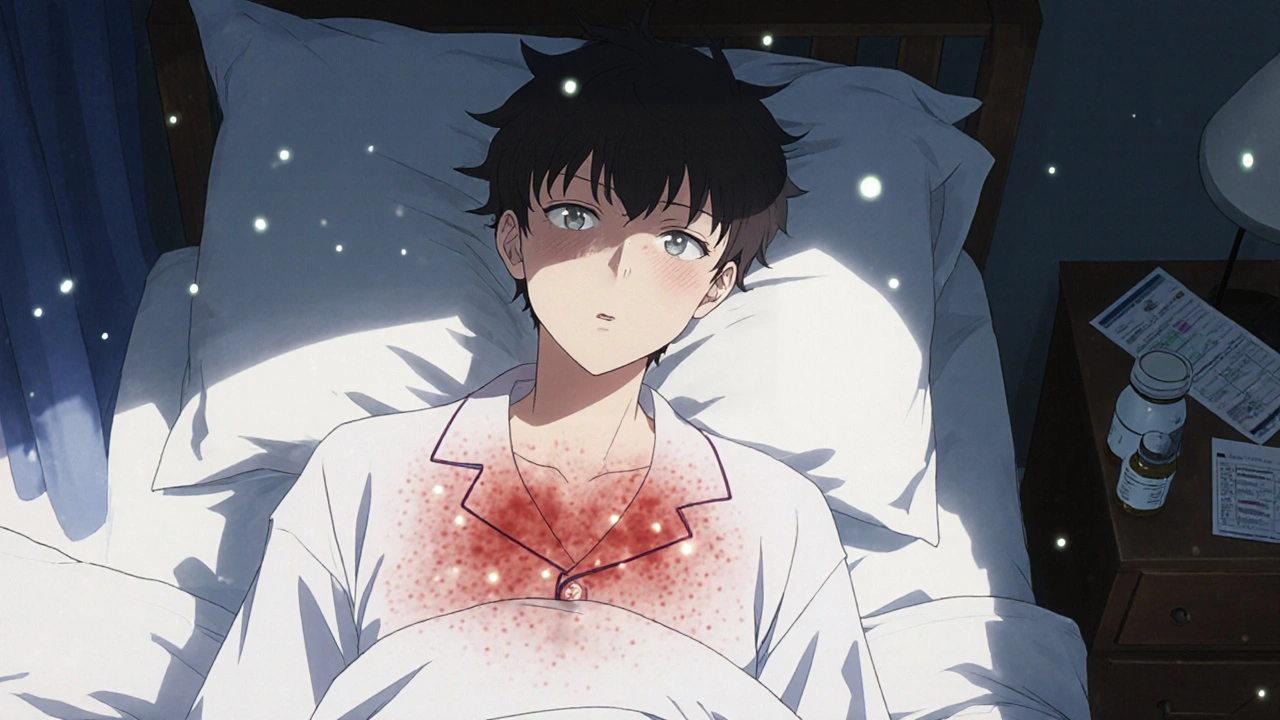
DRESS syndrome is a life-threatening drug reaction that causes fever, rash, organ damage, and high eosinophil levels. Often misdiagnosed, it requires immediate recognition and treatment to prevent death or long-term organ damage.

Mar 3 2026

Nov 7 2025

Sep 27 2025

Sep 21 2025

Aug 15 2025