

When you hear the word biosimilars, you might think they’re just cheap copies of expensive drugs. But that’s not how they work - and it’s not what the science says. Unlike generic pills, which are exact chemical copies of brand-name drugs, biosimilars are complex biological products made from living cells. They’re designed to be nearly identical to a reference biologic - the original, high-cost medicine used to treat serious conditions like rheumatoid arthritis, Crohn’s disease, and certain cancers. So, do they actually work as well? The answer isn’t just yes - it’s backed by over a decade of real-world data from hundreds of thousands of patients.
How Biosimilars Are Different From Generics
Generics are simple. Take a pill like metformin - its chemical structure is exactly the same no matter who makes it. Biosimilars? Not even close. They’re made from living organisms - bacteria, yeast, or mammalian cells - and even tiny changes in the manufacturing process can affect how they behave in the body. That’s why regulators don’t call them "copies." They call them "highly similar."
Think of it like baking two loaves of sourdough from the same recipe. Same ingredients, same oven, same time - but one might rise differently because the yeast was stored in a slightly warmer room. That’s the level of detail regulators look at. Before approval, a biosimilar must pass more than 200 analytical tests comparing its structure, purity, and function to the original. Then comes animal studies, then human trials - usually 50 to 100 patients per group - just to prove there’s no clinically meaningful difference in how the body absorbs or responds to it.
What the Data Shows: Equivalence Across Diseases
The biggest fear patients and doctors have is that switching to a biosimilar might mean worse results. But the numbers don’t support that. In a 2022 meta-analysis of 1,711 patients across six types of cancer, biosimilars for drugs like bevacizumab, trastuzumab, and rituximab showed response rates almost identical to the originals. For example, the overall response rate for the trastuzumab biosimilar was 1.01 times that of the reference drug - meaning no difference. The confidence intervals? All within the range of equivalence.
In rheumatoid arthritis, a study of 3,450 patients across 12 European centers found that after 12 months, 82.3% of those on the adalimumab biosimilar were still taking it - compared to 81.7% on the original. The difference? Statistically meaningless. Same with infliximab in inflammatory bowel disease. A Canadian study tracking 1,200 patients over two years found no difference in how long people stayed on treatment, how their symptoms changed, or how often they had side effects.
And then there’s the NOR-SWITCH trial - a gold-standard, double-blind study of 480 patients with various cancers. Half stayed on the original rituximab; half switched to the biosimilar. At the end, 72.9% of the original group responded to treatment. The biosimilar group? 69.3%. The p-value? 0.42. In plain terms: no difference.
Real-World Evidence: Patients and Providers Speak
Lab results are one thing. Real life is another. In the UK, NHS England switched over 12,000 patients with non-Hodgkin’s lymphoma from the original rituximab to its biosimilar, Rixathon. No spike in adverse events. No drop in effectiveness. Same in the U.S., where Kaiser Permanente rolled out a patient education program to ease fears. Before, 22% of patients refused to switch. After, that number dropped to 5%.
Patients on Reddit’s r/rheumatology forum shared their experiences: one wrote, "Switched from Humira to Hyrimoz 18 months ago - zero difference in my ankylosing spondylitis symptoms." Another said, "My psoriasis flared after switching, but my dermatologist said it was probably coincidence." That’s important. Flares happen. They’re part of chronic disease. But when thousands of patients report no change, and only a handful report issues, it’s not the biosimilar causing it - it’s the disease itself.
Doctors are catching on too. A 2023 survey of 1,500 rheumatologists found that 78% reported identical outcomes with biosimilars. Only 4% thought they were less effective - and even those cases were often tied to patient anxiety or poor communication, not the drug.
Why the Doubt? Perception Over Science
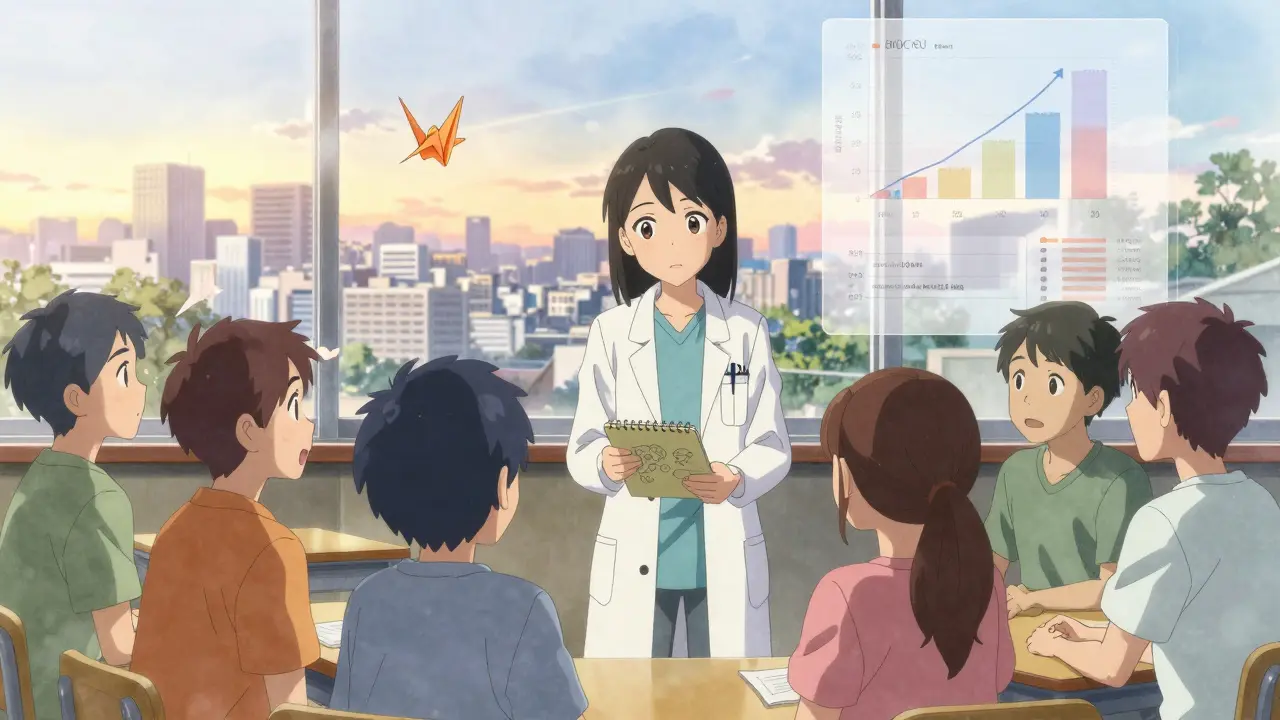
So why do 38% of U.S. physicians still worry about biosimilars? It’s not the data. It’s the name. "Biosimilar" sounds like "similar," not "equal." Many assume it means "almost the same" - which isn’t how regulators define it. The FDA and EMA require proof of no clinically meaningful difference. That’s not a low bar. It’s the highest standard possible for complex medicines.
There’s also misinformation. Some patients hear "biosimilar" and think "generic," then assume it’s low quality. But generics are made in labs. Biosimilars are grown in bioreactors - just like the originals. The manufacturing process is more expensive, more complex, and more tightly controlled.
And then there’s the financial side. Biologic drugs can cost $20,000 to $50,000 a year. Biosimilars? In the U.S., they’re 15-30% cheaper. In Europe, up to 85% cheaper. That’s not just savings for insurers - it’s access for patients who couldn’t afford treatment before.
Switching Safely: How It’s Done
Switching from a reference biologic to a biosimilar isn’t random. It’s planned. Most health systems use a three-step process:
- Provider education - doctors get a 30- to 60-minute training on the science behind biosimilars.
- Patient counseling - clear, simple materials explain why switching is safe and what to expect.
- Monitoring - patients are checked in at 1, 3, and 6 months after the switch.
In the U.S., 87% of health systems that adopted biosimilars used electronic health record alerts to flag when a switch was made. That way, if a patient reports a flare, the provider knows to check if it’s related to the switch - or if it’s just disease progression.
Some biosimilars are even approved as "interchangeable" - meaning a pharmacist can swap them for the original without asking the doctor. As of January 2024, 48 U.S. states have laws allowing this. It’s not automatic - but it’s legal, safe, and backed by data.

Cost, Access, and the Bigger Picture
Since 2015, biosimilars have saved Medicare Part B over $1.3 billion a year. The Congressional Budget Office predicts they’ll save the U.S. healthcare system $169 billion over the next decade. That’s not just money. That’s thousands of patients getting treatment they otherwise couldn’t afford.
Global adoption is accelerating. In Europe, over 80% of filgrastim (a drug used to boost white blood cells after chemotherapy) is now biosimilar. In the U.S., 52% of filgrastim prescriptions are for biosimilars. Even in oncology - where doctors used to be hesitant - adoption is climbing.
And it’s not slowing down. There are 127 biosimilar candidates in development worldwide. The next wave includes biosimilars for blockbuster drugs like Humira, which could cut its price by more than half. That’s huge - Humira alone cost U.S. payers $18 billion in 2022.
What’s Still Unknown? Long-Term Immunogenicity
No one’s pretending this is perfect. The biggest open question is long-term immune response. Could switching between biosimilars - or from reference to biosimilar - trigger antibodies that make the drug less effective? So far, no. A 2023 study in Clinical Rheumatology looked at patients who switched between different adalimumab biosimilars. After a year, their drug retention rate was almost the same as those who stayed on one product.
But experts agree: we need more data beyond five years. That’s why pharmacovigilance systems are in place. Every adverse event is tracked. Every flare is recorded. And so far, the signal is clear: no increased risk.
As Dr. G. Caleb Alexander from Johns Hopkins put it: "The totality of evidence from over 100 biosimilars approved globally demonstrates no clinically meaningful differences in safety or efficacy."
Bottom Line: They Work. Here’s Why You Can Trust Them
Biosimilars aren’t a gamble. They’re a scientifically validated alternative. They go through more testing than most original biologics ever did. They’re used by tens of thousands of patients every day. And the outcomes? Identical.
If you’re on a biologic and your doctor suggests switching to a biosimilar, it’s not because they’re cutting corners. It’s because they care - about your health, and your wallet. The data doesn’t lie. The patients aren’t lying. The doctors aren’t guessing. This isn’t theory. It’s practice.
And if you’re still unsure? Ask for the studies. Ask for the data. Ask for your records. You’ll find the same numbers - over and over.
Are biosimilars the same as generics?
No. Generics are exact chemical copies of small-molecule drugs, like aspirin or metformin. Biosimilars are complex proteins made from living cells, designed to be highly similar - but not identical - to a reference biologic. They require far more testing to prove similarity, including analytical, preclinical, and clinical studies.
Do biosimilars cause more side effects?
No. Multiple studies, including real-world data from over 500,000 patients, show biosimilars have the same safety profile as their reference biologics. Rates of infection, infusion reactions, and autoimmune responses are statistically identical. Any reported increase in side effects is typically due to patient anxiety or coincidental disease flares, not the drug itself.
Can I switch from a biologic to a biosimilar safely?
Yes. Switching is safe and supported by clinical guidelines. Studies show no loss of effectiveness or increase in adverse events when patients switch from a reference biologic to a biosimilar. Most health systems use a structured approach: provider education, patient counseling, and follow-up monitoring for the first 3-6 months.
Are biosimilars cheaper, and how much do they save?
Yes. In the U.S., biosimilars are typically 15-30% cheaper than the original biologic. In Europe, savings can reach 25-85%. Medicare Part B saved $1.3 billion in 2023 alone because of biosimilar use. Over the next decade, U.S. healthcare could save $169 billion - money that translates to more patients getting treatment.
Why do some doctors still hesitate to prescribe biosimilars?
Mainly due to misinformation and lack of familiarity. Some confuse biosimilars with generics, or assume "similar" means "less effective." A 2021 survey found 38% of U.S. physicians had concerns - despite overwhelming evidence. Education and direct patient experiences have significantly reduced this hesitation over time.
Is it safe to switch between different biosimilars?
Yes. A 2023 study in Clinical Rheumatology followed patients who switched between multiple adalimumab biosimilars. After 12 months, their drug retention rate was nearly identical to those who stayed on a single biosimilar. No increase in immune reactions or loss of effectiveness was found.
How do I know if my biosimilar is approved and safe?
Check the FDA’s Purple Book, which lists all approved biosimilars and their reference products. In the U.S., only biosimilars approved by the FDA or EMA in Europe are considered safe and effective. Look for the product name and manufacturer - if it’s listed, it’s been rigorously tested. Avoid unapproved or imported versions.
Will my insurance cover a biosimilar?
Most do - often with lower copays than the original biologic. Many insurers and pharmacy benefit managers now require patients to try a biosimilar first. In some states, pharmacists can automatically substitute an interchangeable biosimilar unless the doctor specifies otherwise.




Comments
Babe Addict
Let’s be real - biosimilars are just Big Pharma’s way of extending their monopoly under a fancy new name. If they were truly identical, why the hell do we need 200+ analytical tests? Sounds like they’re covering up inconsistencies. Also, who approved this nonsense? The FDA? Please. They’re basically regulatory puppets.
Liz MENDOZA
I’ve seen patients panic when they hear ‘biosimilar’ - like it’s some cheap knockoff. But the truth? My cousin switched from Humira to Hyrimoz and hasn’t had a flare in 2 years. She’s back to hiking, playing with her kids, no drama. The data’s solid. It’s the fear that’s the real enemy here.
Alex Lopez
While I appreciate the enthusiasm for cost containment, one must acknowledge that the regulatory framework for biosimilars, while ostensibly rigorous, relies heavily on surrogate endpoints and extrapolation across indications - a methodological shortcut that, while statistically defensible, lacks the longitudinal granularity of original biologics’ pre-marketing trials. One might argue that the burden of proof has been subtly redefined, not elevated.
Gerald Tardif
Man, I used to be skeptical too - until my buddy’s kid got on the infliximab biosimilar after the original got too pricey. Kid went from wheelchair to soccer in six months. No weird side effects. No drama. Just… better life. Sometimes the science doesn’t need to be complicated to be right.
Monika Naumann
It is deeply troubling that Western nations prioritize profit-driven pharmaceutical convenience over the sanctity of medical integrity. In India, we understand that medicine must be pure, not compromised by corporate cost-cutting measures disguised as innovation. Biosimilars are a Western illusion - a distraction from true healthcare reform.
Raushan Richardson
Y’all are overthinking this. My rheumatologist said switch, I said ‘okay,’ and now I’m not broke AND my joints don’t scream at me. Biosimilars aren’t magic - they’re just smart. And if your insurance pushes you to try one? Let ‘em. Worst case? You stay on it. Best case? You live better.
Robyn Hays
I love how people treat biosimilars like they’re some kind of medical roulette. But think about it - we don’t question generic insulin or metformin. Why is this different? It’s the same science, just… fancier. And honestly? If my kid needs this drug to survive, I don’t care if it’s made in a bioreactor in Germany or Texas - as long as it works.
Liz Tanner
There’s a lot of noise around biosimilars, but the data is clear: no clinically meaningful difference in safety or efficacy across dozens of studies involving hundreds of thousands of patients. The fear is emotional, not scientific. And emotional fear shouldn’t dictate medical policy - evidence should.
Satyakki Bhattacharjee
Science is a religion now. They say biosimilars are equal, so we must believe. But who made them gods? The lab coats? The corporations? The truth is hidden behind big words. Real medicine is simple: heal the sick. Not sell them a label.
Kylie Robson
Let’s not confuse biosimilar with interchangeable. The FDA’s definition of ‘no clinically meaningful difference’ is based on non-inferiority margins that are statistically engineered to pass - not biologically proven. The real question isn’t whether they work - it’s whether we’ve sacrificed long-term immunogenicity monitoring for speed-to-market. And yes, I’ve read the NOR-SWITCH trial. It’s underpowered for rare events.