
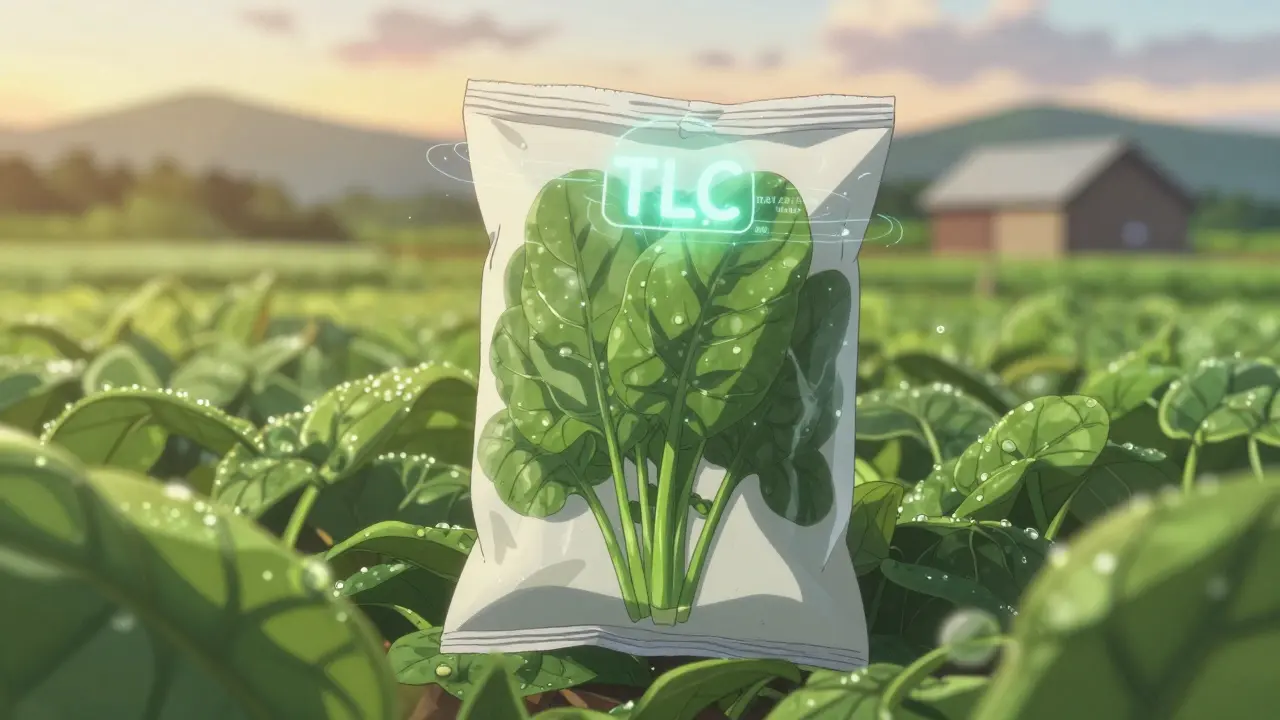
When a batch of spinach causes a nationwide outbreak of E. coli, how does the FDA find the source in time to stop more people from getting sick? It’s not magic. It’s lot number tracking.
Since 2022, the U.S. Food and Drug Administration has been enforcing a new rule called the Food Traceability Rule under the Food Safety Modernization Act (FSMA). This rule doesn’t just ask companies to keep better records-it requires them to use a specific kind of lot number called a Traceability Lot Code (TLC). And that small code on the package? It’s the key that unlocks the entire supply chain when something goes wrong.
What Is a Traceability Lot Code (TLC)?
A Traceability Lot Code isn’t just any batch number. It’s a unique, alphanumeric identifier assigned to a specific group of food products at key points in the supply chain. Unlike old-style lot codes that companies used internally for quality control, a TLC must be passed along unchanged from farm to warehouse to retailer. It’s the only piece of data that stays constant across every handoff.
The FDA defines it clearly: a TLC is a descriptor used to uniquely identify a traceability lot within a company’s records. That means if a retailer gets a shipment of chopped romaine lettuce, the TLC on that box must match the one assigned when the lettuce was first packed at the farm. If the same lettuce is later mixed with other batches during processing, a new TLC is created-but the old one must still be recorded and linked.
This system was designed because, before 2022, tracing contaminated food could take weeks. Investigators had to call dozens of suppliers, dig through paper files, and guess which shipments overlapped. Now, if the FDA gets a report of illness, they can request all TLC records electronically-and get them within 24 hours.
Which Foods Are Covered?
The rule doesn’t apply to everything. It targets high-risk foods that have caused the most outbreaks in the past decade. This list, called the Food Traceability List (FTL), includes:
- Leafy greens (like lettuce and spinach)
- Tomatoes
- Onions
- Fresh-cut fruits and vegetables
- Cheeses (especially soft cheeses like brie)
- Eggs
- Nut butters (peanut butter, almond butter)
- Specific seafood products (like shrimp and crab)
These foods make up about 15% of the U.S. food supply by volume-but they’re responsible for nearly half of all foodborne illness outbreaks linked to produce and dairy. The FDA picked them not because they’re the most popular, but because they’re the most dangerous when contaminated.
There’s a reason melons aren’t on the list yet. Critics argue that’s a gap. In 2022, a listeria outbreak tied to whole cantaloupes sickened over 100 people and killed 13. The FDA is reviewing whether to add melons and ready-to-eat foods in future updates.
Where and When Is the TLC Assigned?
You can’t just slap a TLC on any box at any time. The rule says it must be assigned at exactly three points:
- When raw agricultural commodities (like lettuce or onions) are first packed-except for seafood from fishing vessels.
- When seafood from fishing vessels is first received on land.
- When food is transformed-like when tomatoes are turned into salsa, or spinach is chopped and bagged.
That’s a big change. Before, companies might assign a lot code every time they repackaged something. Now, they can’t. If a distributor repackages a pallet of onions into smaller bags, they don’t get to create a new TLC. They must keep the original one. Only when the food changes form-like being cooked, blended, or mixed with other ingredients-can a new TLC be created.
This forces companies to think about traceability from the very start. A farmer who packs lettuce in the field now has to assign a TLC before it even leaves the farm. That’s a shift from tradition. Many farms used to rely on harvest dates or field numbers. Now, those aren’t enough unless they meet the TLC format and are passed along.
The Seven Key Data Elements
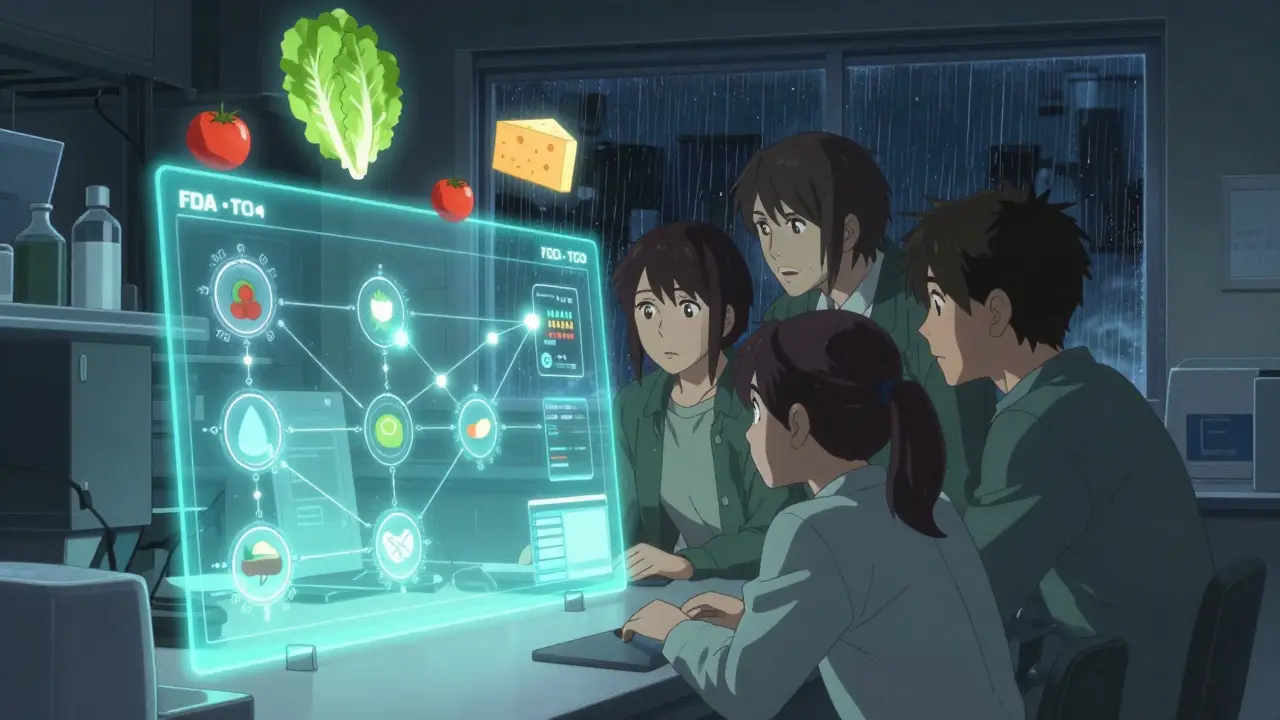
A TLC alone isn’t enough. To make traceability work, each TLC must be linked to seven other pieces of information, called Key Data Elements (KDEs). These include:
- The TLC itself
- The TLC Source (where and when it was assigned)
- Product description (e.g., “organic baby spinach”)
- Quantity and unit of measure (e.g., 500 lbs)
- Location of the facility
- Transaction type (e.g., received, shipped, transformed)
- Date and time of the event
These KDEs create a digital trail. If a hospital reports five cases of salmonella linked to pre-packaged salad, the FDA can pull up every TLC associated with that product, then trace backward to the farm, the distributor, and the processor-all within hours.
Records can be kept on paper, but the FDA strongly prefers electronic formats. If you use digital records, they must be sortable and exportable in common formats like CSV or Excel. No locked proprietary systems. No PDFs that can’t be searched.
How It’s Different From Old Systems
Before FSMA 204, companies followed voluntary standards like the Produce Traceability Initiative (PTI). PTI encouraged case-level tracking using GS1 barcodes, but it wasn’t mandatory. Many companies used it, but not all. And it didn’t require linking to the seven KDEs.
The TLC system is different because it’s enforced. Companies that don’t comply can face warnings, import alerts, or even forced recalls. The FDA can also publicly name non-compliant firms.
It’s also not like drug traceability. The Drug Supply Chain Security Act (DSCSA) tracks every single pill or vial with a unique serial number. That’s overkill for food. The FDA chose lot-level tracking because it’s practical. A single lot of shredded cheese might contain 10,000 packages. Tracking each one isn’t feasible-but tracking the batch is.
Industry Pushback and Real-World Challenges
Not everyone is happy. Small farms and processors say the cost is too high. A 2023 survey by the United Fresh Produce Association found that 78% of companies had already changed their systems-but the average cost was $42,500 per company. For a small family farm, that’s more than their annual profit.
Another issue? “Tandem coding.” Many companies already had their own lot numbering systems for internal quality control. Now they’re being asked to add TLCs on top of them. Some feared they’d need two codes for the same product. The FDA clarified in its final rule: you can use your existing code as the TLC-if it meets the requirements. No need for double work.
Still, integration is hard. A 2023 Food Safety Tech survey found that 65% of companies struggled to connect their TLC systems with old ERP software. Another 71% said it was hard to get suppliers to use TLCs consistently.
And then there’s the global gap. The European Union is rolling out its own Digital Product Passport system, which uses different standards. A shipment of tomatoes from Spain to the U.S. might carry two different codes. The FDA is holding talks with international regulators to align systems, but it’s slow going.
What Happens When an Outbreak Happens?
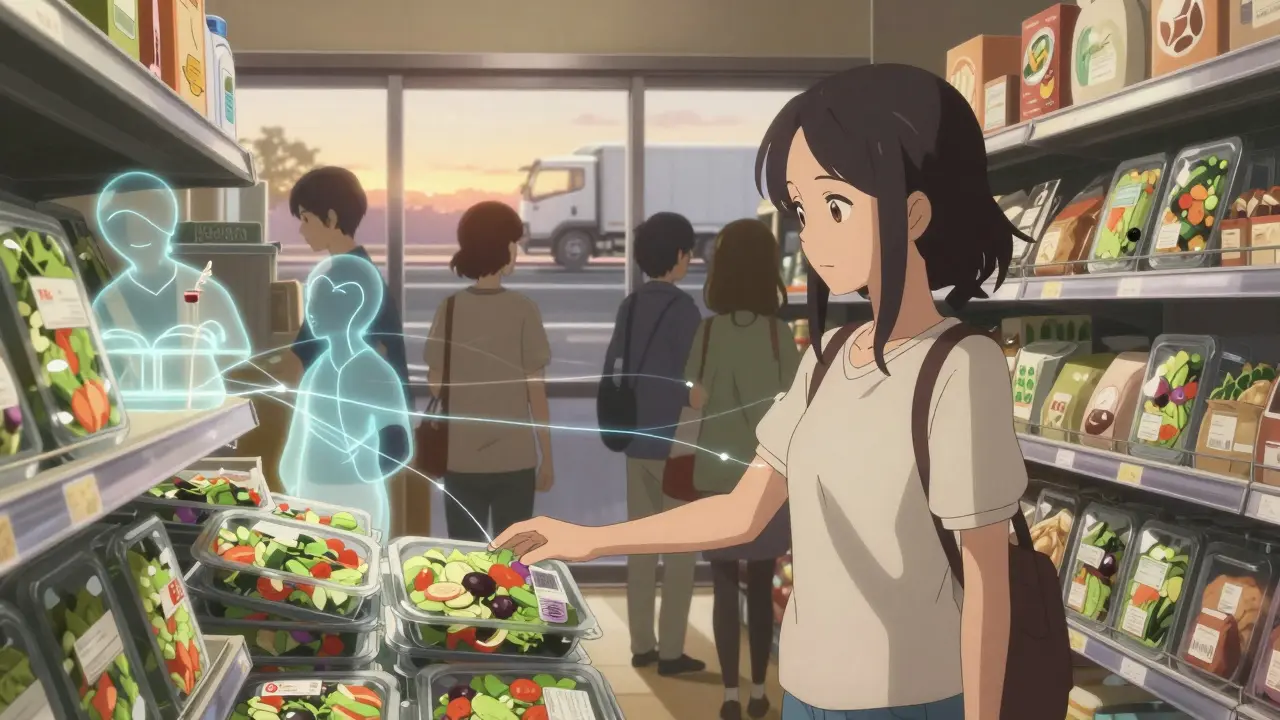
Imagine this: 20 people in three states get sick after eating pre-packaged salad. The CDC connects the dots and alerts the FDA. The FDA doesn’t start calling farms. They open their digital system, search for the TLC on the salad packaging, and pull up every transaction linked to that code.
Within hours, they know:
- Which farm grew the lettuce
- Which packing facility processed it
- Which distributor shipped it
- Which retailers sold it
They can then issue a targeted recall-only for the affected batches. No need to pull every bag of spinach from every store. That saves money, reduces waste, and protects consumers.
Before this system, recalls often took 10-14 days. Now, the FDA aims to do it in under 48 hours. Pilot programs between 2019 and 2021 showed this could cut foodborne illness outbreaks by 20-30%.
Compliance Timeline and Support
The rule became effective on December 13, 2022. But the deadline for full compliance was originally January 20, 2026. In September 2023, the FDA proposed pushing that deadline back by 30 months-to July 20, 2028. Why? Because most companies, especially small ones, needed more time.
The FDA is offering help. Their Traceability Assistance Program gives small farms and businesses free technical support. There are 12 free training modules on their website, and industry groups like FMI offer workshops. The 2023 Farm Bill also set aside $25 million to help small farms comply.
Companies have three main options for implementation:
- Modify existing ERP systems (used by 72% of large companies)
- Buy specialized traceability software (21%)
- Use manual spreadsheets (7%, mostly small businesses)
But no matter the method, the rule is clear: you must be able to produce the TLC and its seven KDEs within 24 hours of an FDA request. No excuses.
What’s Next?
The FDA is already looking ahead. Draft standards for electronic KDE formats are expected in mid-2024. They’re testing blockchain and IoT sensors to automate data capture. Walmart and Kroger already use blockchain for leafy greens-going beyond the TLC rule. That’s not required, but it shows where the industry is headed.
Long-term, the goal isn’t just to respond to outbreaks faster. It’s to prevent them. By knowing exactly where food comes from and how it moves, the FDA can spot patterns-like a specific irrigation well that keeps testing positive for E. coli. That’s how you stop the next outbreak before it starts.
The TLC system isn’t perfect. It’s complex. It’s expensive. But it’s the most significant food safety upgrade since the Bioterrorism Act of 2002. And for the first time, when a child gets sick from contaminated food, the government doesn’t have to guess where it came from. They have the code. And with that code, they can act-fast.
What is a Traceability Lot Code (TLC)?
A Traceability Lot Code (TLC) is a unique alphanumeric identifier assigned to a specific batch of food on the FDA’s Food Traceability List. It must be assigned at three key points in the supply chain and remain unchanged unless the food is transformed. The TLC links to seven Key Data Elements and must be shared with the FDA within 24 hours during an investigation.
Which foods require a TLC under FDA rules?
The FDA’s Food Traceability List (FTL) includes high-risk foods like leafy greens, tomatoes, onions, fresh-cut fruits and vegetables, cheeses, eggs, nut butters, and certain seafood. These account for about 15% of the U.S. food supply by volume and have been linked to the majority of foodborne illness outbreaks.
When does the FDA’s lot tracking rule take effect?
The rule became effective on December 13, 2022. The original compliance deadline was January 20, 2026, but the FDA proposed extending it to July 20, 2028, due to industry feedback. The extension is pending final approval.
Can I use my existing lot code as the TLC?
Yes. The FDA explicitly states that any existing lot code you use internally can serve as the TLC, as long as it’s passed along the supply chain and meets the required format. You don’t need to create a second code unless your current one doesn’t meet the rules.
What happens if I don’t comply with the TLC rule?
Non-compliance can lead to FDA warnings, import alerts, refusal of entry for shipments, or mandatory recalls. The FDA can also publicly name non-compliant companies. While enforcement has been gradual, penalties will increase as compliance deadlines approach.
How does TLC tracking help prevent outbreaks?
By reducing the time to trace contaminated food from weeks to under 48 hours, the TLC system allows for faster, targeted recalls. This limits exposure, reduces illness, and prevents widespread panic. Pilot programs showed a potential 20-30% reduction in foodborne illness outbreaks.
Lot number tracking isn’t just a paperwork requirement. It’s a lifeline. When a family gets sick from food they bought at the grocery store, this system is what gives investigators the power to act-before more people are hurt.



Comments
bhushan telavane
Man, this is wild. In India, we still rely on handwritten labels and gut feelings to track produce. If something goes bad, it’s a mess. This FDA system? Pure genius. Wish we had this back home.
Connie Zehner
OMG I JUST REALIZED MY SPINACH HAS A TLC!! 😱 I checked the bag last night and there it was: ‘TLC-2024-SPIN-087’-I swear I thought it was a barcode for my fridge app. This is so invasive. Who authorized this?? 🤯
holly Sinclair
It’s fascinating how this system essentially turns food into a living data stream-each lot becomes a node in a decentralized network of accountability. The philosophical implication is profound: we’re no longer just consumers of food, we’re participants in a transactional ecology where traceability equals moral responsibility. The fact that the FDA mandates seven KDEs suggests an epistemological shift-from trusting institutions to demanding verifiable, granular evidence of provenance. And yet, we still don’t ask who owns that data, or whether it can be weaponized. Is this transparency, or surveillance dressed as safety?
mark shortus
THIS IS A DISASTER. I just got a recall notice because my almond butter had a TLC that didn’t match the ERP system-AND I DIDN’T EVEN EAT IT. I’m crying. My dog is crying. My neighbor’s cat is crying. This system is broken. The FDA doesn’t even know what ‘transformed’ means. I chopped my own almonds into butter and now I’m a criminal. #TLCterror #FoodPolice
Emily P
Do you think the FDA tests the software that reads these TLCs? I mean, what if the CSV export crashes? Or the timestamp is off by one second? I just want to know if it’s actually reliable.
Vicki Belcher
This is SO COOL!!! 🌟 Finally, someone’s doing something right for food safety!! 🙌 I’ve been saying for years that we need better tracking-my cousin got sick from bagged salad in 2020 and no one could find the source. This gives me hope!! 💖 Let’s make sure small farms get the help they need!! 🍃🍎 #FoodSafetyWins
Jedidiah Massey
Let’s be clear: this isn’t traceability-it’s supply chain surveillance capitalism masquerading as regulatory reform. The TLC is merely a tokenized proxy for corporate compliance, optimized for auditability over resilience. The KDEs? A bureaucratic ontology designed to extract operational metadata for centralized control. And don’t get me started on the CSV fetish-proprietary systems are far more secure. This is the FDA’s attempt to look proactive while outsourcing risk to SMEs who can’t afford the middleware.
Lynsey Tyson
I get that this is important, but I also feel bad for the small farmers. They’re not trying to hide anything-they just don’t have IT departments. Maybe the real win here isn’t the tech, but the FDA offering free training. That’s actually kind of beautiful.
Sarah McQuillan
Why are we following some US rule? Canada’s system is way better-we use QR codes that link to real-time farm videos. Also, why are we only tracking 15% of food? What about bread? Or canned soup? This feels like selective enforcement. Also, I heard the FDA’s database is hosted on a server in Nebraska. That’s not secure. 🇨🇦
Kitt Eliz
Okay, let’s level up. The TLC system is just Phase 1. The real future is IoT-enabled pallets with embedded sensors that auto-log temp, humidity, and location via blockchain. Walmart’s already doing it. The FDA’s playing catch-up. Small farms? They need subsidized IoT kits-$25M won’t cut it. We need a national food traceability API, open-source, interoperable, with real-time alerts. This isn’t about compliance-it’s about building a resilient food web. Let’s stop treating food like a commodity and start treating it like infrastructure. 🚀🧬 #FoodTechRevolution