How Yogurt Improves Digestion and Immunity: Simple Ways to Add It to Your Diet
Aug 28 2025

When your body overreacts to a medication, it doesn’t always mean a simple rash or upset stomach. DRESS syndrome, a life-threatening drug hypersensitivity reaction that affects multiple organs and can cause fever, rash, and organ failure. Also known as drug reaction with eosinophilia and systemic symptoms, it’s rare but dangerous—often mistaken for an infection or allergy that’s just getting worse. Unlike a typical side effect, DRESS doesn’t show up right away. It usually hits 2 to 8 weeks after you start a new drug, which is why many people don’t connect it to their medication. By then, it’s already spreading—skin peeling, lymph nodes swelling, liver or kidneys failing. The key? Recognizing the pattern before it’s too late.
Some drugs are far more likely to trigger this than others. Anticonvulsants, like carbamazepine, phenytoin, and lamotrigine are top culprits. So are allopurinol, used for gout, and certain antibiotics, especially sulfonamides. Even some HIV meds and NSAIDs have been linked. If you’ve been on one of these for a few weeks and suddenly feel awful—fever, swollen glands, a widespread red rash, maybe even yellow eyes or dark urine—don’t wait. This isn’t just a bad reaction. It’s DRESS syndrome, and it needs immediate medical attention.
What makes DRESS so tricky is how it mimics other illnesses. Doctors might think you have mononucleosis, hepatitis, or even a viral rash. But if you’re taking one of those high-risk drugs and your symptoms don’t improve with antibiotics or antivirals, that’s a red flag. Blood tests often show high eosinophils, abnormal liver enzymes, or even kidney stress. The only cure? Stopping the drug—fast—and sometimes using steroids to calm the immune system’s overreaction. Left untreated, DRESS can lead to permanent organ damage or death.
The posts below dive into the real-world side of this. You’ll find guides on how to tell the difference between a simple rash and a dangerous drug reaction, how to talk to your doctor when something feels off, and what medications are most likely to cause these hidden dangers. Whether you’re managing a chronic condition or just started a new pill, knowing the signs of DRESS syndrome could save your life. These aren’t theoretical stories—they’re real experiences, backed by clinical data, and written for people who need to act fast.
Nov
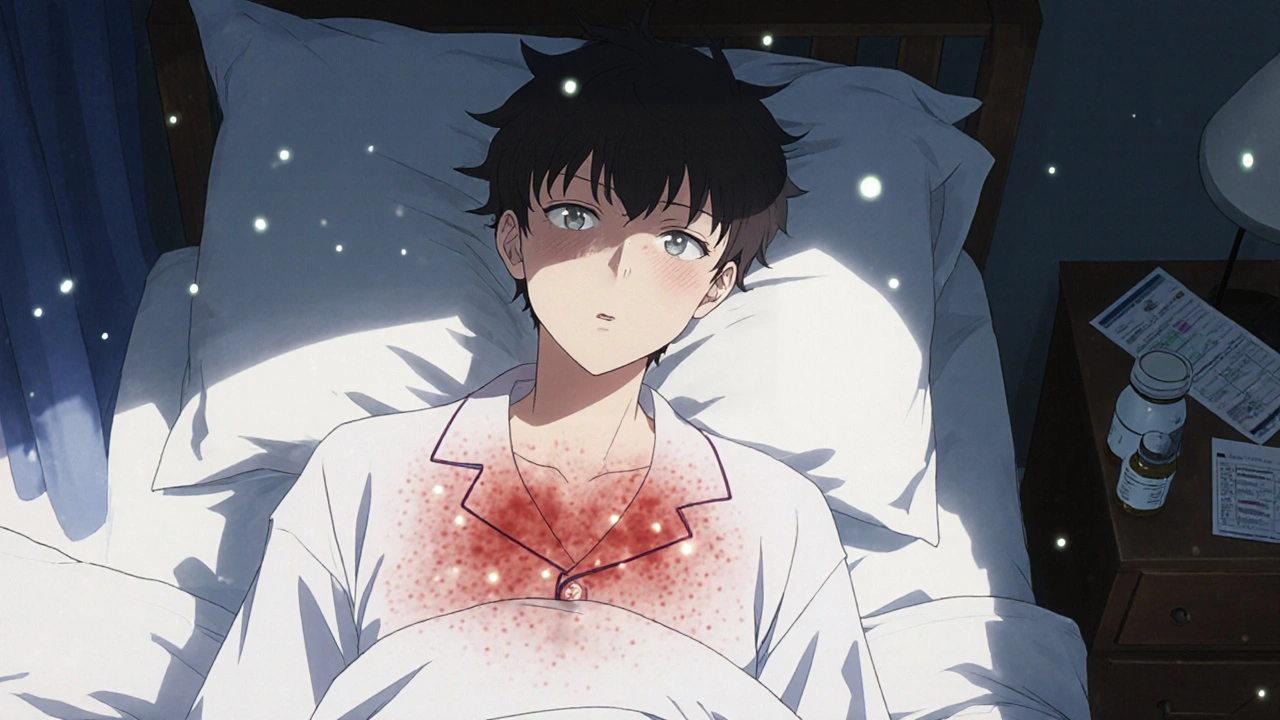
DRESS syndrome is a life-threatening drug reaction that causes fever, rash, organ damage, and high eosinophil levels. Often misdiagnosed, it requires immediate recognition and treatment to prevent death or long-term organ damage.

Aug 28 2025

May 8 2025

Mar 15 2025

Nov 25 2025
Nov 19 2025