Antihistamines for Hives: What Works, What Doesn’t, and What Comes Next
Feb 15 2026

When you take too many drugs at once, it’s not always helping—it might be hurting you. Deprescribing, the planned process of reducing or stopping medications that are no longer needed or may be doing more harm than good. Also known as medication tapering, it’s not about quitting drugs cold turkey—it’s about making smart, safe choices with your care team. Many older adults, especially those with multiple chronic conditions, end up on a long list of pills. Some were prescribed years ago. Some were meant for short-term use. Some interact badly with others. And many? They’re just sitting there, doing nothing but adding risk.
Polypharmacy, the use of five or more medications at the same time is a big reason why deprescribing is needed. It’s common in people over 65, but it’s not just an older person’s problem. Anyone on long-term pain meds, antidepressants, or heart drugs might be carrying extra weight in pills they don’t truly need. The side effects pile up: dizziness, confusion, falls, kidney stress, even stomach bleeds. And here’s the thing—medication withdrawal, the process of slowly stopping a drug under medical supervision isn’t the same as quitting. It’s controlled. It’s monitored. It’s done step by step, with checks along the way.
Deprescribing doesn’t mean giving up on treatment. It means getting smarter about it. Think of it like cleaning out your medicine cabinet. If you haven’t used a bottle in two years, why keep it? The same goes for pills. Maybe your blood pressure is stable now. Maybe your acid reflux cleared up after diet changes. Maybe that sleeping pill is making you groggy all day. These are all chances to reduce. And yes, it’s safe—if you do it right. You don’t just stop. You talk to your doctor. You track how you feel. You adjust slowly. Some meds need weeks to come down. Others need blood tests. The posts below show real cases: how people cut back on steroids without triggering rebound symptoms, how patients stopped antipsychotics safely, how GERD sufferers reduced acid meds after lifestyle changes, and how older adults avoided dangerous interactions by dropping one pill at a time.
Every one of these stories starts with the same question: Do I still need this? That’s the heart of deprescribing. It’s not about cutting corners. It’s about cutting clutter. And the more you understand about your own meds—their purpose, their risks, their alternatives—the better your choices will be. Below, you’ll find practical guides on how to recognize when a drug is no longer serving you, how to prepare for a reduction, and how to spot warning signs when things go wrong. This isn’t theory. It’s what real people are doing to feel better, not just take fewer pills.
Nov
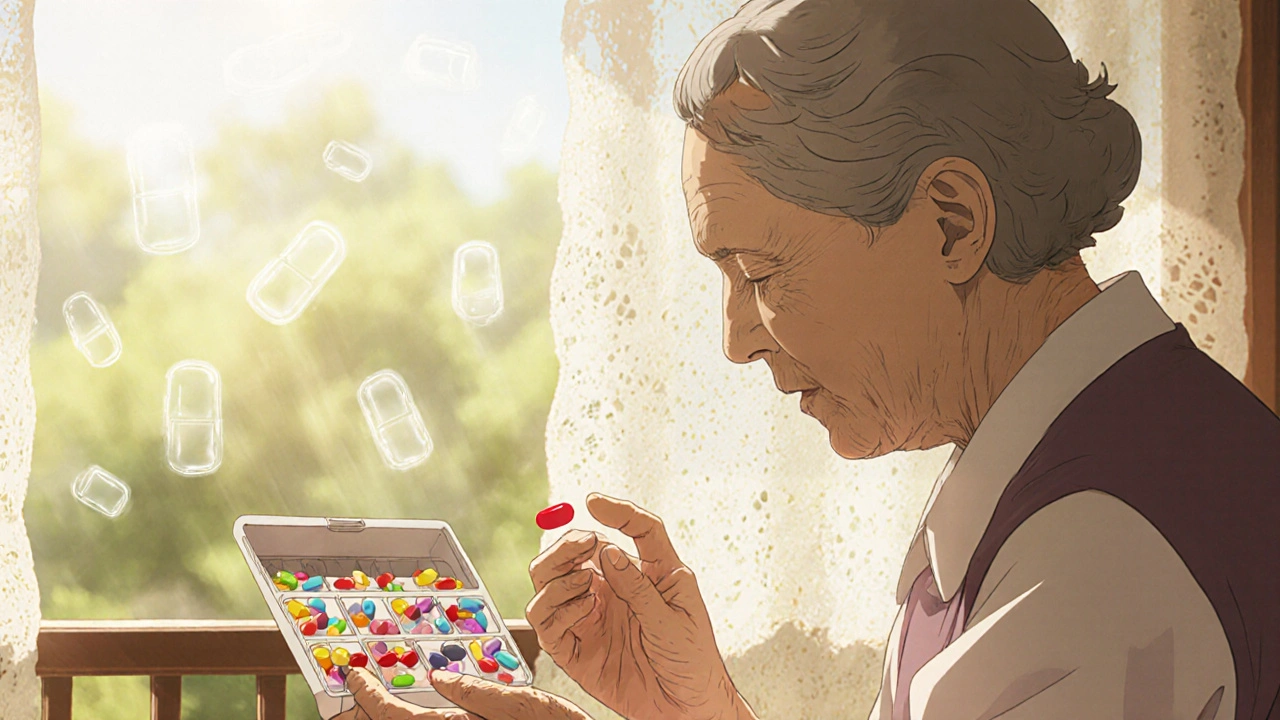
Frailty and polypharmacy in older adults create a dangerous cycle of side effects and decline. Learn how to reduce medication burden safely and improve quality of life through deprescribing and targeted care.
Feb 15 2026

Feb 2 2026
Jan 21 2026

Feb 17 2026
Nov 23 2025