What Happens When You Don't Take Your Medications as Prescribed
Dec 1 2025

When your bones start losing density, bisphosphonates, a class of drugs that slow bone breakdown by targeting cells that dissolve bone tissue. Also known as bone resorption inhibitors, they’re among the most prescribed treatments for osteoporosis and other conditions that weaken bones. These aren’t miracle cures—they’re tools. And like any tool, they work best when you understand how they fit into your body’s bigger picture.
Bisphosphonates don’t build new bone. They stop the cells that tear it down. That’s why they’re used for osteoporosis, Paget’s disease, and even some cancers that spread to bone. But they’re not harmless. Long-term use can lead to rare but serious issues like jawbone damage or unusual thigh fractures. You won’t hear about these often, but if you’re on them for five years or more, you need to know the signs. And if you’ve been told you’re allergic to them, you probably aren’t—it’s more likely intolerance or a side effect. Many people stop taking them unnecessarily because they mix up side effects with true allergies.
These drugs don’t work alone. They rely on your body’s ability to absorb calcium and vitamin D. If you’re on bisphosphonates but not getting enough sun or eating dairy, you’re fighting an uphill battle. That’s why doctors often pair them with supplements. And if you’ve got kidney problems? That changes everything. These drugs are cleared by the kidneys, so dose adjustments aren’t optional—they’re life-saving.
There are different types: some you take by mouth, others by IV. Oral ones need strict rules—take them on an empty stomach, stay upright for 30 minutes, don’t lie down. Skip those steps, and you risk serious stomach irritation. IV versions avoid that problem but come with their own risks: flu-like symptoms after infusion, low calcium levels, or even heart rhythm issues in rare cases.
What’s interesting is how these drugs connect to others you might be taking. If you’re on acid reflux meds like proton pump inhibitors, they can interfere with bisphosphonate absorption. If you’re also on steroids for arthritis or asthma, your bone loss might be worse—and you’ll need stronger protection. Even some cancer treatments can make bisphosphonates more necessary, or more dangerous. It’s not just about one drug. It’s about the whole system.
And then there’s the cost. Generic bisphosphonates like alendronate are cheap. But if your insurance won’t cover them or you’re on Medicare, you might not even know about state assistance programs that can slash your out-of-pocket costs. Some people stop taking them not because they don’t work, but because they can’t afford them.
Below, you’ll find real patient stories and expert breakdowns on how bisphosphonates interact with other medications, what side effects are actually dangerous, how to tell if they’re working, and when it’s time to switch. You’ll also see how they compare to newer treatments like denosumab or teriparatide—and why some people skip bisphosphonates entirely. Whether you’re just starting out or have been on them for years, this collection gives you the facts you need to make smarter choices—not just follow a script.
Nov
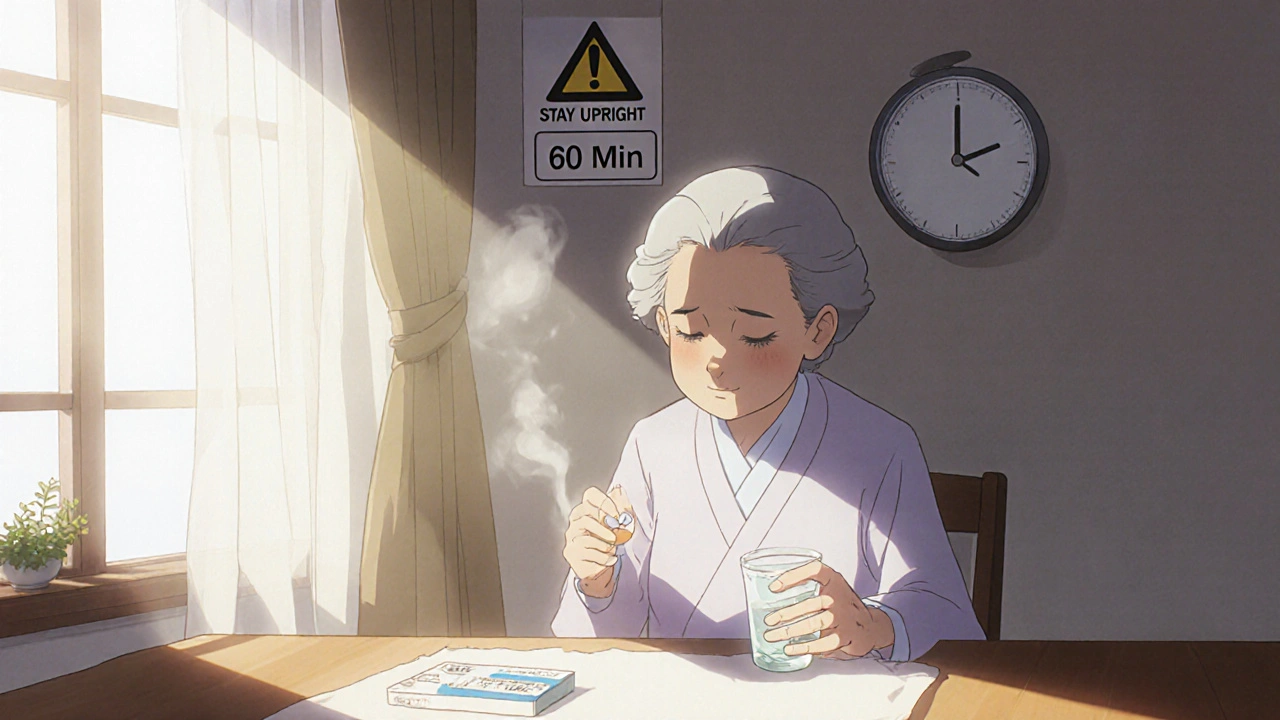
Bisphosphonates help prevent bone fractures but can irritate the esophagus - especially if you have GERD. Learn how to take them safely and what alternatives exist to protect your digestive tract.
Dec 1 2025
Nov 18 2025

Jun 12 2025

Oct 3 2025
Jan 26 2026