
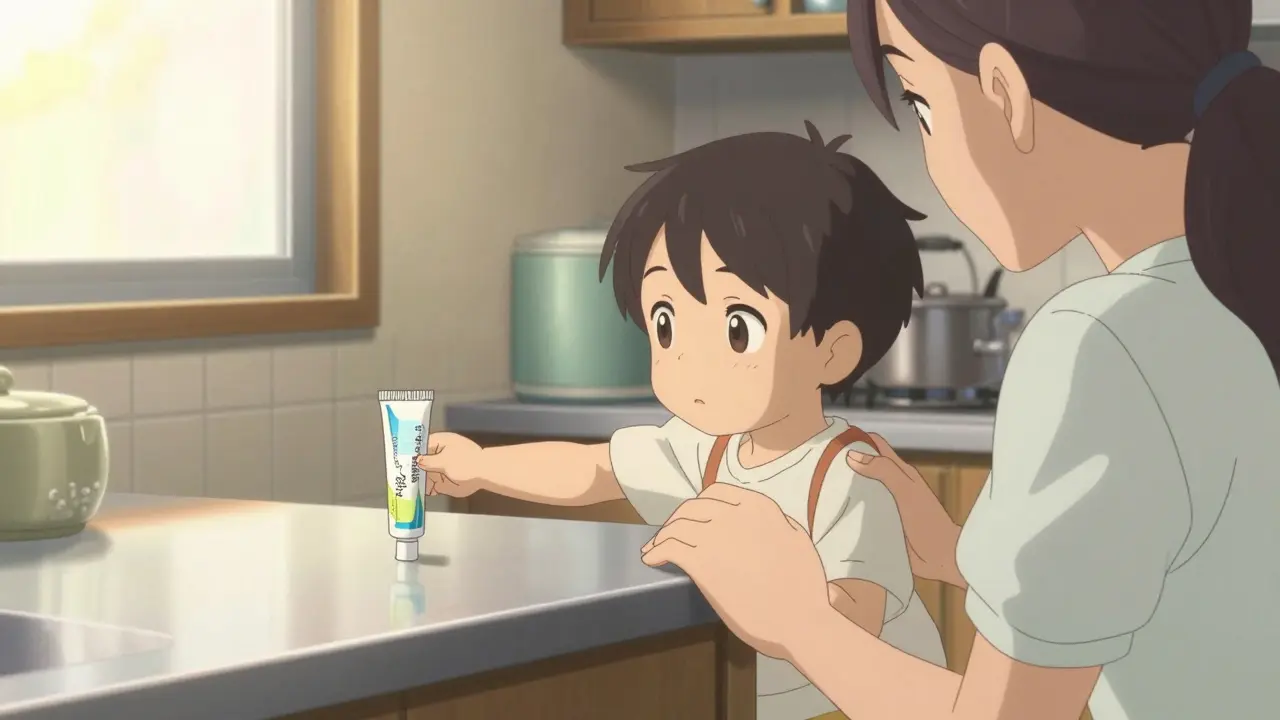
Every year, over 6,500 children under 5 end up in emergency rooms because of mistakes with topical medications. Topical medications are medicines applied directly to the skin or mucous membranes for local or systemic effects. The U.S. Consumer Product Safety Commission reports that 78% of accidental exposures happen when products are left within a child's reach after use.
Why Children's Skin Needs Special Care
Children's skin isn't just smaller-it's fundamentally different. Infants have a thinner outer layer (stratum corneum) and higher surface-area-to-body-weight ratio. This makes them 3-5 times more likely to absorb topical medications into their bloodstream compared to adults. For babies under 1 year, absorption rates can be even higher due to immature skin barriers. This increased absorption is why even small amounts of certain medications can cause serious side effects. For example, a thick layer of hydrocortisone cream on 20% of an infant's body can suppress the adrenal system as effectively as oral prednisone at 2mg/kg/day.
Common Mistakes and Their Dangers
One dangerous mistake is using benzocaine-based teething gels. The FDA banned these for children under 2 years after 400+ cases of methemoglobinemia-a condition where blood can't carry oxygen properly. Symptoms like bluish skin or lips can appear within minutes. Another common error is overusing topical corticosteroids. A systematic review of 47 studies found very potent steroids cause HPA axis suppression in 15.8% of children versus just 2.3% for low-potency options. Parents often apply too much cream, thinking "more is better," but this can lead to systemic toxicity.
Using lidocaine for routine procedures like vaccinations is also risky. While some hospitals use it for minor procedures, the World Health Organization advises against routine use in infants under 12 months due to seizure risks at plasma levels above 5μg/mL. Occlusion (covering with plastic wrap) increases absorption by 300-500%, making mistakes even more dangerous.

How to Measure Correctly
Instead of guessing "a pea-sized amount," doctors recommend the fingertip unit (FTU) method. Squeeze a 5mm-wide strip of cream from the tube onto your fingertip. One FTU covers about two adult palm sizes. For a 10kg child, no more than 2g (about 4 FTUs) of steroid cream should be used daily, and only on small areas like the face or hands. This precise measurement prevents accidental overdose. Always follow the prescribed amount-even if the cream seems to disappear quickly, using more won't help and could harm your child.
Safe Alternatives to Traditional Medications
For eczema, topical calcineurin inhibitors like tacrolimus (0.03%) or pimecrolimus are often safer than steroids for long-term use. These have 72% lower systemic absorption and avoid adrenal suppression. However, they're not for infants under 3 months. For teething pain, chilled rubber teethers or cold washcloths work better than medicated gels-no risk of methemoglobinemia, and studies show they're just as effective at soothing gums. Always check the product label for age-specific warnings before use.

Storing Medications Safely
Always store topical medications in child-resistant packaging, even if you think you'll use it again soon. The American Association of Poison Control Centers found 63% of ingestions happen when parents leave products out during application. Keep them locked away, not just on the bathroom shelf. If you have unused medication, check with your pharmacist about safe disposal-never throw them in the trash where kids might find them. Remember: child-resistant packaging isn't child-proof. If a child can open it, it's not safe.
When to Call for Help
If your child shows drowsiness, trouble breathing, or blue-tinged skin after using a topical medication, call 911 immediately. For benzocaine poisoning, methylene blue is the specific treatment. Keep poison control's number (1-800-222-1222) saved in your phone. It's also wise to keep a list of all medications in your home, including topical ones, so you can quickly share details with medical staff in an emergency. Early action saves lives-don't wait to see if symptoms get worse.
Can I use benzocaine for my teething baby?
No. The FDA prohibits benzocaine-containing products for children under 2 years due to the risk of methemoglobinemia. Since 2006, over 400 cases of this serious condition have been linked to benzocaine teething gels. Safe alternatives include chilled rubber teethers or cold washcloths.
How much hydrocortisone cream is safe for my child?
For a 10kg child, no more than 2g (about 4 fingertip units) of low-potency hydrocortisone cream should be used daily. Always apply only to affected areas, not the entire body. Never use on broken skin or for more than 7 days without consulting a doctor.
What should I do if my child ingests a topical medication?
Call poison control immediately at 1-800-222-1222. Do not induce vomiting unless instructed. Keep the product container handy to share details with medical staff. For benzocaine ingestion, symptoms can appear within 15-30 minutes-act fast.
Are non-medicated alternatives effective for eczema?
Yes. For mild eczema, fragrance-free moisturizers applied 2-3 times daily often work better than steroids. The American Academy of Pediatrics recommends these as first-line treatment for children over 3 months. For severe cases, topical calcineurin inhibitors are safer long-term options with fewer side effects.
Can I use the same cream for my child that I use for myself?
Never. Adult medications often contain higher potency steroids or ingredients unsafe for children. For example, a cream labeled "for adults only" might have 2.5% hydrocortisone, while pediatric versions max out at 1%. Always check the label for age restrictions before applying.



Comments
Brendan Ferguson
As a pediatric nurse with over a decade of experience, I've seen countless cases where parents unintentionally harm their children with topical medications. The key takeaway here is that children's skin is fundamentally different - infants absorb medications 3-5 times more readily than adults due to thinner skin barriers.
For instance, applying hydrocortisone cream over a large area can suppress the adrenal system as effectively as oral prednisone. Benzocaine teething gels are a major no-no for kids under 2; the FDA banned them after over 400 cases of methemoglobinemia.
Always measure topical creams using the fingertip unit method: one FTU covers two adult palms. For a 10kg child, never exceed 4 FTUs daily on small areas.
Using adult-strength medications on kids is dangerous - pediatric versions have lower potency. Topical calcineurin inhibitors like tacrolimus are safer for long-term eczema treatment but aren't for infants under 3 months.
For teething pain, chilled rubber teethers work just as well as medicated gels without the risks. Store all medications in child-resistant containers, even if you think you'll use them again soon.
The American Association of Poison Control reports 63% of ingestions happen when products are left out during application. If your child shows blue skin or trouble breathing, call 911 immediately.
Always keep poison control's number (1-800-222-1222) saved in your phone. Trust me, taking these precautions can prevent serious harm.
jan civil
Chilled washcloths are the safest way to soothe teething pain - no meds needed.
Jennifer Aronson
As a healthcare professional, I emphasize that accurate measurement of topical medications is critical for child safety. The fingertip unit method is a simple yet effective way to prevent overdosing. Always follow age-specific guidelines and store medications securely to avoid accidental exposure.
Kate Gile
Yes! I've used chilled washcloths for my toddler and they work like magic. No side effects, just relief. It's such an easy fix - why would anyone risk medicated gels when there's a safer alternative?
Gregory Rodriguez
Oh sure, because nothing says "I'm a responsible parent" like measuring cream with a ruler. Let's all become fingertip unit experts and forget that kids are just going to lick everything anyway. /s
Johanna Pan
I agree that the fintip method is imporant. But sometimes parents make mistakes. Ive seen cases where even small amounts of steroid cream caused issues. Always check the label for age restrictions.
Jenna Elliott
US kids are safest with our regulations. Other countries need to follow our lead. No excuses for bad parenting
Elliot Alejo
It's not about nationality but proper education. Parents everywhere need to know the risks. Storing meds safely is a basic step everyone can take.
lance black
Chilled teether > medicated gel. Always.
anjar maike
Yes! 😍 Cold teether works so much better. No meds needed. Simple and safe. 😌
Bella Cullen
This guide is too much. Just keep it away from kids. Done.
Sam Salameh
It's not that simple. Many parents don't know the risks. This info is crucial for safety. We need more awareness.
Cullen Bausman
Exactly People need to take responsibility Ignorance isnt an excuse This guide is necessary because some parents are reckless