
Naloxone Co-Prescribing Risk Calculator
Assess Your Opioid Safety Risk
This tool helps determine if you should ask your doctor about naloxone co-prescribing based on CDC guidelines and your personal risk factors.
Your Risk Assessment
Risk Level:
...
What Naloxone Co-Prescribing Actually Means for Opioid Patients
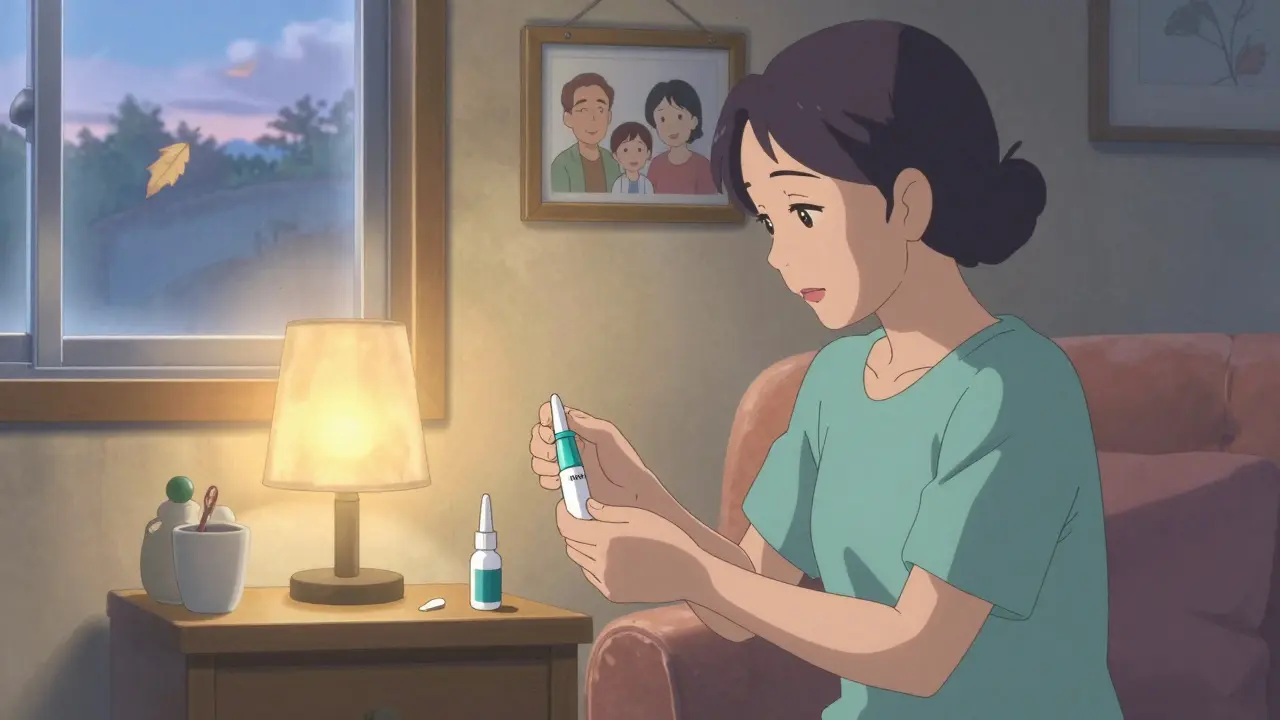
When a doctor prescribes an opioid for chronic pain, they’re not just giving you a pill to manage discomfort. They’re also handing you a potential lifeline - naloxone. This isn’t a second medication you need to take every day. It’s a safety net. A tool kept in your medicine cabinet, your car, or your partner’s purse - just in case.
Naloxone, often sold as Narcan® nasal spray or generic nasal kits, is a drug that can reverse an opioid overdose in minutes. It works by kicking opioids off the brain’s receptors, waking someone up from breathing failure. But here’s the catch: it only helps if it’s there when needed. That’s why co-prescribing - giving naloxone at the same time as your opioid prescription - matters.
It’s not about assuming you’ll overdose. It’s about preparing for the unexpected. Maybe you forget to take your dose and accidentally take too much later. Maybe a family member finds your pills and takes them by mistake. Maybe your pain worsens and your dose gets increased without realizing how much risk you’re carrying. These aren’t rare scenarios. They happen every day.
Who Really Needs Naloxone With Their Opioids?
The CDC says if you’re on 50 morphine milligram equivalents (MME) or more per day, you’re at higher risk. But that’s just the starting point. Many people who overdose aren’t even on high doses. They’re on lower amounts but have other risk factors.
- You’re taking benzodiazepines like Xanax or Valium at the same time as opioids
- You have sleep apnea, COPD, or another breathing condition
- You’ve had a past overdose - even if it wasn’t fatal
- You use alcohol regularly or have a history of substance use disorder
- You’ve recently been released from jail or prison
- You live alone or don’t have someone nearby who could help in an emergency
One study found that people on opioids with a history of overdose were over 10 times more likely to have another one. That’s not a small risk. That’s a red flag.
And here’s something most people don’t know: fentanyl contamination makes even low-dose opioids dangerous. Someone prescribed hydrocodone for back pain might end up with a pill laced with fentanyl. Naloxone works on fentanyl too - faster, even. So if you’re on any opioid, and you’re not sure what’s in the pill, naloxone is a smart backup.
How Naloxone Works - And Why It’s Not a Cure
Naloxone doesn’t treat addiction. It doesn’t ease withdrawal. It doesn’t make pain go away. All it does is reverse the deadly part of an overdose: stopped breathing.
When someone overdoses, opioids flood the brain’s breathing center. They slow or stop breathing until the body shuts down. Naloxone rushes in and pushes the opioids out of the receptors. Within 2 to 5 minutes, breathing starts again. The person wakes up.
But here’s the catch: naloxone only lasts 30 to 90 minutes. Opioids like fentanyl can last hours. That means someone can wake up, feel fine, and then slip back into overdose when the naloxone wears off. That’s why emergency services must always be called - even if the person seems okay.
And yes, naloxone can cause withdrawal symptoms: nausea, sweating, agitation. But those are far less dangerous than dying. Doctors tell patients: “It’s better to be upset than dead.”
What the Guidelines Say - And What They Don’t
The CDC first recommended naloxone co-prescribing in 2016. Since then, 24 states have made it mandatory in some form. New York requires it for every opioid prescription. California only requires it for doses over 90 MME. In some places, doctors just “offer” it. In others, they’re legally required to give it.
But guidelines don’t always translate to action. A 2023 study found that only 38% of high-risk patients actually received naloxone, even when they met all the criteria. Why? Some doctors feel awkward bringing it up. Some patients feel judged. Some pharmacies don’t stock it.
Here’s what the data shows: when naloxone is co-prescribed, emergency room visits for opioid overdoses drop by 47%. Hospitalizations drop by 63%. That’s not a small improvement. That’s life-saving.
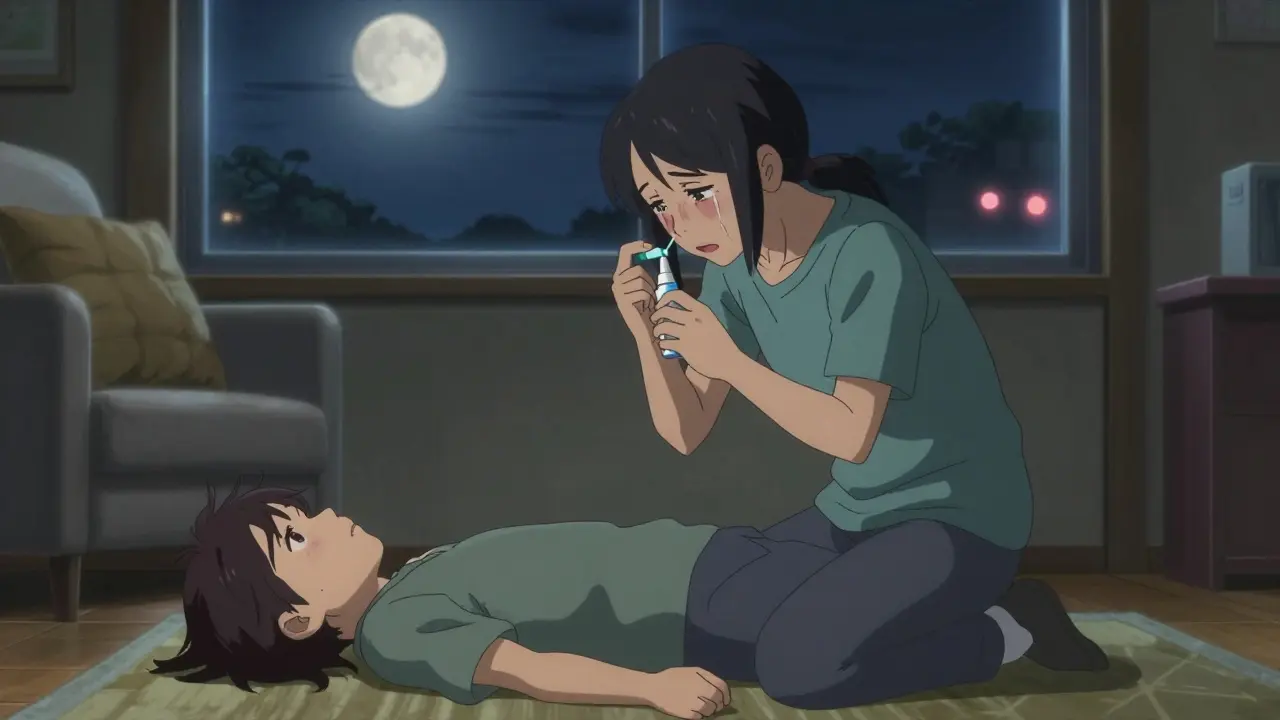
And it’s not just for the patient. Family members, friends, even strangers can use it. One woman in Ohio said her son took her oxycodone by accident. She used the naloxone nasal spray the doctor gave her. He woke up in 90 seconds. She didn’t have to call 911 - but she did anyway. He’s alive because she had the kit.
Types of Naloxone - And Which One You’ll Get
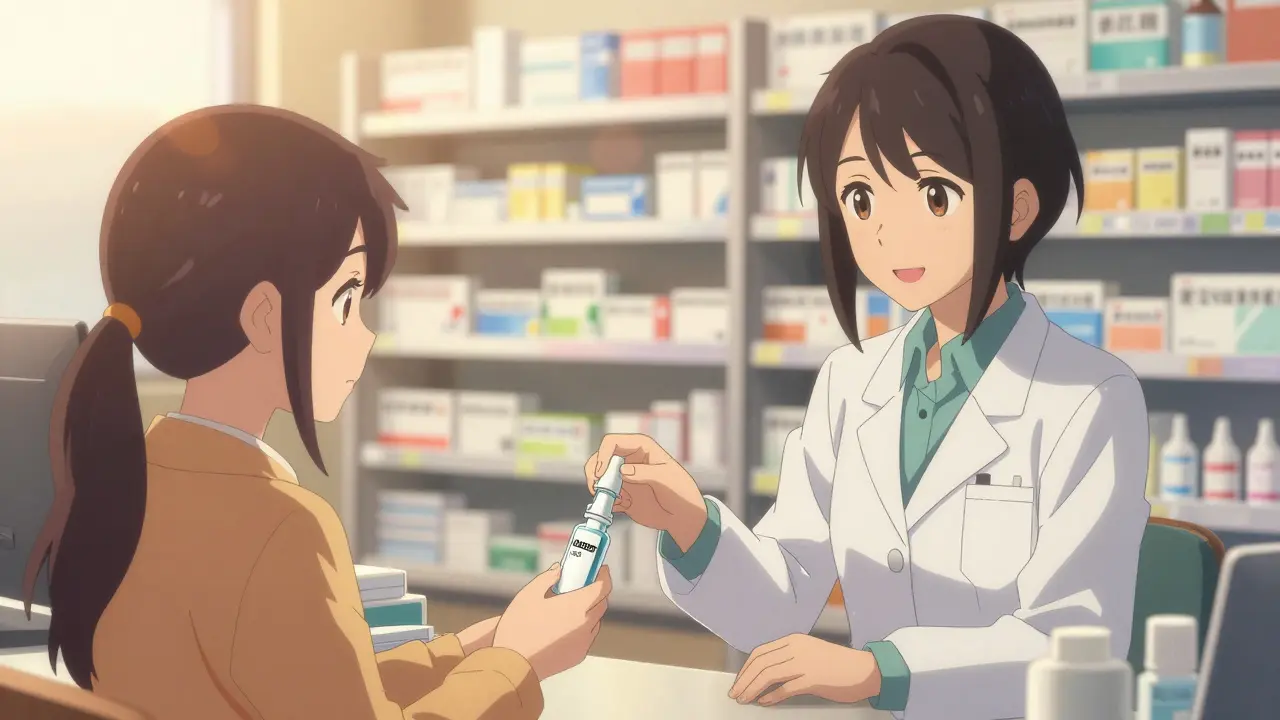
You’re most likely to get the nasal spray. It’s easy. No needles. No training needed. Just insert the nozzle into one nostril and press the plunger. That’s it.
There are two main brands: Narcan® and Kloxxado™. Narcan® delivers 4 mg of naloxone. Kloxxado™ delivers 8 mg - for stronger opioids like fentanyl. Most clinics now use the 4 mg version unless the patient is on very high doses.
Generic versions are now widely available and cost between $25 and $50 without insurance. Brand-name Narcan® used to cost $130, but now it’s closer to $50 at most pharmacies. Medicare, Medicaid, and most private insurers cover it with no copay thanks to the SUPPORT Act of 2018.
Injectable naloxone still exists, but it’s rare in outpatient settings. It requires training. The nasal spray is the standard now because it’s fast, simple, and doesn’t scare people.
How to Use It - Step by Step
If you’re given naloxone, you need to know how to use it. Here’s what to do:
- Check for signs: Is the person unresponsive? Are their lips blue? Are they breathing shallowly or not at all? Pinpoint pupils? These are signs of opioid overdose.
- Call 911: Always. Even if you give naloxone, they still need medical help.
- Give the spray: Tilt the head back. Insert the nozzle into one nostril. Press the plunger firmly. That’s one dose.
- Wait: If they don’t wake up in 2 to 3 minutes, give a second dose in the other nostril.
- Stay with them: Keep them on their side. Watch their breathing. Don’t leave them alone.
Practice with a trainer kit. Some pharmacies give them for free. You don’t need to be a doctor to save a life. You just need to know the steps.
Why People Say No - And How to Push Past It
Some patients refuse naloxone because they think it means their doctor doesn’t trust them. Others say, “I’m not an addict. I won’t overdose.” But overdose isn’t about addiction. It’s about dosage, mixing drugs, or accidental use.
One doctor in Kentucky said his patients used to say, “I don’t need this.” After a few overdoses in his community, he changed his approach. He started saying: “This isn’t about you. It’s about your kids, your partner, your neighbor who might find your pills.” That shifted the conversation.
Another tactic: “This is like a fire extinguisher. You don’t hope you’ll need it. You make sure it’s there.”
And yes, stigma exists. But the data is clear: patients who receive naloxone feel safer. A 2022 survey found 78% of family members felt more secure knowing it was available.
What’s Changing in 2025
The FDA approved the first generic naloxone nasal spray in 2023. Prices dropped 40%. More pharmacies are stocking it. The Biden administration’s 2024 budget includes $500 million just for naloxone distribution.
Now, the CDC recommends naloxone for anyone who’s had a non-fatal overdose in the past year - even if they’re on low-dose opioids. That’s a big shift. It’s no longer just about dose. It’s about history.
And in 2025, a long-acting naloxone formulation is expected to enter trials. It could last 24 hours, meaning one dose could protect someone through the night. That’s not here yet - but it’s coming.
Final Thought: It’s Not About Fear. It’s About Responsibility.
Naloxone co-prescribing isn’t a punishment. It’s not a sign you’re failing. It’s a sign your doctor cares enough to prepare for the worst - so you don’t have to die from a mistake.
If you’re on opioids, ask for naloxone. If you’re a caregiver, make sure you know where it is. If you’re a doctor, don’t wait for the patient to ask. Offer it. It’s not optional anymore. It’s part of standard care.
Because in the end, saving a life doesn’t require a miracle. It just requires a spray bottle, a little knowledge, and the courage to say, “Here - just in case.”
Comments
Charles Barry
Let me guess - this is just another government ploy to make doctors look like babysitters while they quietly push us all toward mandatory drug monitoring. Naloxone? Sure, it ‘works’ - but only because Big Pharma wants you dependent on their $50 spray while the real opioids keep getting stronger. They don’t want to fix the system. They want you to fear your own medicine cabinet. And don’t get me started on how the FDA ‘approved’ generics only after the price hit $130. This isn’t safety. It’s profit in a nasal spray.
Joe Jeter
People act like naloxone is some kind of moral obligation, but if you’re prescribing opioids to someone with a history of substance use, you’re already enabling. Why not just cut the script and send them to rehab instead of handing out emergency antidotes like candy? This isn’t harm reduction - it’s harm normalization. And now we’re supposed to applaud doctors for playing nurse while ignoring the root problem?
Sidra Khan
I’m not saying naloxone is bad, but the way this post frames it like a miracle cure is kinda ridiculous. I’ve seen people wake up after a spray, then immediately ask for more pills because ‘it felt so good.’ Naloxone doesn’t solve addiction. It just gives people a second chance to mess up again. And honestly? Most people who need it don’t even keep it around. It sits in a drawer until it expires. 🤷♀️
Lu Jelonek
As someone who works in rural primary care, I can confirm: most patients don’t know how to use naloxone until they’re handed a demo kit. And even then, many are too embarrassed to take it. The real barrier isn’t cost or policy - it’s shame. We need to stop treating naloxone like a last-resort tool and start treating it like a seatbelt. No one feels judged for wearing one. Why should this be any different?
siddharth tiwari
lol i was on oxy for 3 months and my doc gave me narcan but i never used it. then my cousin took my pills and died. i was like wtf. turns out he got a fake pill with fentanyl. now i keep 2 sprays in my car. dont be dumb. its not about being an addict. its about pills being laced now. 🤕
Andrea Di Candia
There’s something deeply human about preparing for the worst-case scenario without assuming it’ll happen. Naloxone isn’t a judgment - it’s an act of love. It says: ‘I care enough to imagine you might slip, and I want you to survive it.’ That’s not medical policy. That’s compassion dressed in a plastic spray bottle. Maybe if we stopped seeing this as ‘enabling’ and started seeing it as ‘holding space,’ we’d save more lives - and more dignity.
bharath vinay
They say fentanyl is in everything now but who really controls the supply chain? I’ve heard the DEA knows about the labs but they let it flow to keep the panic high so they can justify more funding. Naloxone is a distraction. The real fix? Shut down the cartels. Not hand out sprays like band-aids on a bullet wound. And why do they only push this in poor areas? Coincidence? I think not.
Dan Gaytan
My dad was on opioids after his back surgery. He refused naloxone at first - said he wasn’t an addict. But after his neighbor overdosed in the next apartment and they had to break the door down… he asked for it the next week. He keeps it next to his coffee maker now. Says it’s like a smoke detector for his brain. I cried when he told me that. This isn’t about drugs. It’s about families.
Usha Sundar
My ex took my pain meds. I used the spray. He woke up screaming. Then he yelled at me for ‘trying to kill him.’ So I kept the second one. Just in case.
Wilton Holliday
If you’ve ever held someone’s hand while they stopped breathing, you’d understand why this isn’t optional. I’ve trained 37 people in my neighborhood - moms, teens, grandpas - to use naloxone. Not one of them thought they’d need it. All of them are glad they did. You don’t need a medical degree. You just need to care enough to learn. And if your doctor doesn’t offer it? Ask. Twice. Then ask again. This isn’t politics. It’s physics: when the body shuts down, time is the only thing that can’t be bought.