You stare at the pharmacy receipt. The total makes you wince. You need this medication to stay healthy, but paying hundreds of pounds for a month’s supply feels like a penalty for existing. This is where generic medications are pharmaceutical products containing the same active ingredients as brand-name counterparts, approved by regulatory agencies to ensure safety and efficacy step in. They offer a lifeline, often costing 80-85% less than their branded rivals. But a nagging question remains: if it’s so much cheaper, are you getting a inferior product? Are you risking your health to save money?
The short answer is no. For the vast majority of patients, generics are just as safe and effective as brand-name drugs. However, there are nuances. Understanding how these drugs work, why they cost less, and when you might need to pay extra attention can help you navigate your prescriptions with confidence. Let’s break down exactly what you’re buying and how to protect your health while protecting your wallet.
What Makes a Generic Drug "Generic"?
To understand why generics are cheaper, you first have to understand what they are. A generic drug isn’t a "copycat" in the sense of a knock-off pair of shoes. It is a pharmaceutical equivalent. By law, specifically under frameworks like the U.S. Food and Drug Administration (FDA) regulations established by the Hatch-Waxman Act, a generic must contain the exact same active ingredient, strength, dosage form, and route of administration as the brand-name drug.
If you take a pill for high blood pressure, the chemical compound that lowers your blood pressure is identical in both the brand and the generic version. The differences lie only in inactive ingredients-things like colors, flavors, fillers, and preservatives. These don’t affect how the drug works in your body; they just make the pill look or taste different.
So, why the massive price drop? Brand-name companies spend billions on research, development, and clinical trials before a drug hits the market. They hold patents that give them exclusive rights to sell the drug for about 14.5 years. Once that patent expires, other manufacturers can produce the same drug without repeating those expensive trials. They just have to prove their version works the same way. This competition drives prices down dramatically.
The Science Behind Safety: Bioequivalence
You might wonder, "If the inactive ingredients are different, does that change how my body absorbs the drug?" This is where bioequivalence is a regulatory standard requiring generic drugs to demonstrate absorption rates and extent within 80-125% of the brand-name drug's pharmacokinetic profile comes into play.
Regulatory bodies require rigorous testing. Manufacturers must show that the generic drug enters your bloodstream at a similar rate and to a similar extent as the brand-name version. In most cases, the allowed range is 80% to 125%. This might sound like a wide gap, but in pharmacological terms, it is clinically insignificant. Your body doesn’t care if the absorption is 90% or 110%; it cares that the drug reaches therapeutic levels consistently.
Manufacturing facilities for generics must also comply with Current Good Manufacturing Practices (cGMP). These are the same strict quality controls used for brand-name drugs. Inspections happen regularly, ensuring that every pill meets standards for purity, stability, and safety. When you buy a generic, you aren’t buying a gamble; you’re buying a scientifically validated equivalent.
| Feature | Brand-Name Drug | Generic Drug |
|---|---|---|
| Active Ingredient | Original formulation | Identical to brand-name |
| Inactive Ingredients | Specific to manufacturer | May differ (colors, fillers) |
| Price | High (covers R&D costs) | Low (80-85% cheaper) |
| Safety Standards | cGMP compliance required | cGMP compliance required |
| Approval Process | Full New Drug Application | Abbreviated New Drug Application (ANDA) |

When Caution Is Warranted: Narrow Therapeutic Index Drugs
While generics are generally safe, there is a specific category of drugs where extra caution is advised. These are called Narrow Therapeutic Index (NTI) drugs are medications where small changes in dose or concentration can lead to serious side effects or loss of efficacy. Examples include warfarin (blood thinner), levothyroxine (thyroid hormone), and phenytoin (seizure control).
For NTI drugs, the acceptable bioequivalence range is tighter-often 90% to 111%. Why? Because even a slight variation in how much drug gets into your blood can be dangerous. Too little, and your condition isn’t controlled. Too much, and you risk toxicity.
Studies have shown mixed results here. Some research indicates that switching between different generic manufacturers of NTI drugs can cause instability. For instance, a study in *JAMA Internal Medicine* found that multiple switches in warfarin manufacturers increased INR instability by 18%. If you are on an NTI drug, talk to your doctor. They may recommend sticking with one specific manufacturer or staying on the brand-name version if your insurance covers it. Consistency is key.
Real-World Savings and Health Outcomes
Let’s talk numbers. The savings are not just theoretical; they are life-changing. According to data from the Association for Accessible Medicines, generic drugs represent approximately $370 billion in annual healthcare savings in the United States alone. A 30-day supply of brand-name atorvastatin (Lipitor) can cost over $450, while the generic version might cost less than $1. That’s a difference you can feel in your bank account.
But do these savings come at the cost of health? Large-scale studies suggest otherwise. A landmark 2020 study published in *Nature Communications* analyzed 17 cardiovascular drugs and found that generic formulations were associated with fewer deaths and fewer major adverse cardiovascular events in many cases. The American Heart Association concludes that generics can safely substitute for branded drugs in most cardiovascular conditions.
User experiences largely support this. Surveys show that 86% of patients are satisfied with generic effectiveness. However, individual responses vary. Some people report minor side effect differences, often related to inactive ingredients like dyes or gluten. If you notice a change after switching to a generic, don’t panic. It might be your body adjusting, or it might be an allergy to a filler. Talk to your pharmacist.
How to Navigate Generic Prescriptions Smartly
You don’t have to be a pharmacist to manage your meds wisely. Here are practical steps to ensure you get the best value without compromising safety:
- Ask About Substitution: Most states allow pharmacists to automatically substitute generics unless your doctor writes "Dispense as Written." Check your prescription label. If you want the brand, ask your doctor for a medical reason.
- Verify the Manufacturer: If you are on an NTI drug, check who made your generic. You can look up the imprint code on the FDA’s Orange Book database. If you switch manufacturers, monitor your symptoms closely.
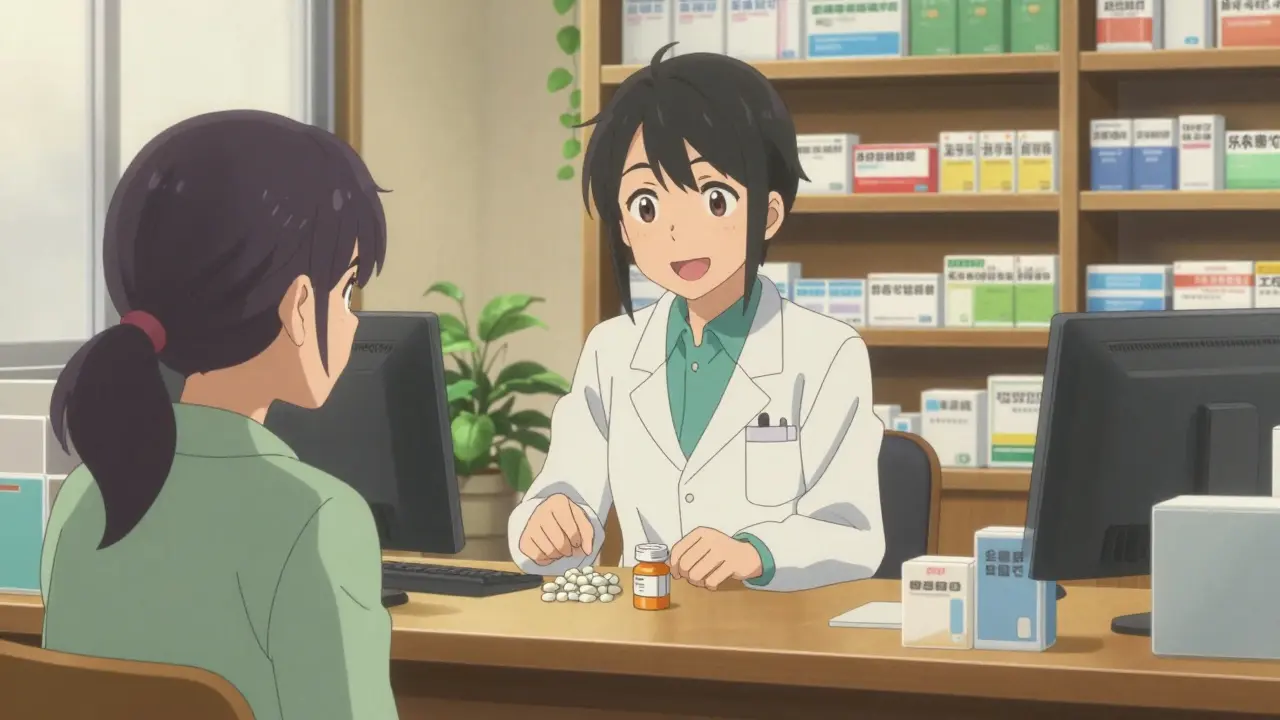
- Talk to Your Pharmacist: Pharmacists are experts in drug interactions and formulations. Ask them if a generic is appropriate for your specific condition. A structured counseling session can improve adherence by 32%, according to a University of Michigan study.
- Monitor for Changes: Pay attention to how you feel. If you experience new side effects or reduced efficacy after switching, document it. Bring this up with your doctor. They may adjust your dose or switch you back to the brand.
- Use Price Comparison Tools: Apps like GoodRx can show you the cheapest place to buy your generic. Prices can vary significantly between pharmacies, even for the same drug.
The Future of Generics and Biosimilars
The landscape of affordable medicine is expanding. Beyond traditional small-molecule generics, we are seeing the rise of biosimilars are biologic medical products highly similar to already approved biologic medicines, offering lower-cost alternatives for complex treatments. These are versions of complex drugs used for cancer, autoimmune disorders, and more. As patents expire for blockbuster biologics, biosimilars will drive further savings, potentially generating $300 billion in savings by 2030.
Regulatory bodies are also tightening oversight to ensure supply chain resilience. After shortages of drugs like amoxicillin and Adderall, the FDA launched task forces to strengthen manufacturing. This means that while generics remain cheap, the infrastructure supporting them is becoming more robust.
Remember, saving money on medication shouldn’t mean guessing about its quality. With proper knowledge and communication with your healthcare providers, you can confidently choose generics. They are a cornerstone of modern healthcare, providing essential treatments to millions without breaking the bank. Stay informed, stay consistent, and keep your health-and your finances-in balance.
Are generic drugs really just as effective as brand-name drugs?
Yes, for the vast majority of medications, generics are equally effective. Regulatory agencies require them to contain the same active ingredients and demonstrate bioequivalence, meaning they work in the body in the same way as brand-name drugs. Studies confirm similar health outcomes for most conditions.
Why are generic drugs so much cheaper?
Brand-name companies invest heavily in research and development, which they recoup through high prices during the patent period. Once the patent expires, other manufacturers can produce the drug without repeating those costly trials, leading to competition and lower prices.
What are Narrow Therapeutic Index (NTI) drugs?
NTI drugs are medications where small changes in dose or blood concentration can lead to serious side effects or treatment failure. Examples include warfarin and levothyroxine. Patients on these drugs should consult their doctor before switching brands or manufacturers.
Can I switch between different generic manufacturers?
For most drugs, yes. However, for NTI drugs, frequent switching between manufacturers can cause instability in blood levels. It is best to stick with one manufacturer if possible, or discuss consistency with your healthcare provider.
What should I do if I experience side effects from a generic?
Contact your doctor or pharmacist. Side effects may be due to inactive ingredients like dyes or fillers. Your provider can determine if you need to switch to a different generic manufacturer or return to the brand-name drug.