
Autoimmune Medication Safety & Risk Checker
Select your current medication type below to understand its specific risk profile, duration of immunosuppression, and critical safety actions.
Medication Selector
Select a medication to view detailed safety guidelines, infection risks, and vaccination timing recommendations.
Living with an autoimmune disorder often feels like walking a tightrope. On one side, you have the relentless inflammation destroying your joints, gut, or skin. On the other, you have the powerful medications designed to stop that damage but which come with their own set of serious risks. The biggest trade-off? Immunosuppression. These drugs work by dialing down your immune system’s aggression, but in doing so, they leave you more vulnerable to infections, certain cancers, and other complications.
You aren’t just taking a pill; you’re managing a complex biological balance. According to the Centers for Disease Control and Prevention (CDC), about 5 million people in the U.S. are on immunosuppressive therapy, a number that has jumped 12% annually since 2015. This surge isn't just about new diagnoses-it's about newer, stronger biologics and targeted therapies entering the market. But with greater efficacy comes greater responsibility. Understanding exactly how your specific medication affects your immune defenses is the single most important step you can take to stay safe.
Not All Immunosuppressants Are Created Equal
A common mistake patients make is treating "immunosuppression" as a single, uniform state. It isn’t. Different drug classes attack the immune system in different ways, leading to distinct complication profiles. Knowing which category your medication falls into helps you understand what to watch out for.
Corticosteroids, such as prednisone or prednisolone, are the oldest players here, introduced in the 1950s. They cause broad, dose-dependent suppression. If you are taking more than 20 mg of prednisone daily for over two weeks, you are considered severely immunocompromised. The good news? This effect wears off relatively quickly-usually within four weeks of stopping the drug. However, while you are on them, your risk for opportunistic infections spikes significantly compared to those on biologics.
Then there are the Biologics, like adalimumab (Humira) or rituximab (Rituxan). These are precision-guided missiles. Rituximab, for instance, targets B-cells specifically. It causes severe immunocompromise for up to six months after treatment because it wipes out these cells entirely. This creates a unique window of vulnerability where your body cannot produce antibodies effectively, raising the risk of hepatitis B reactivation and rare but serious brain infections like progressive multifocal leukoencephalopathy (PML).
JAK Inhibitors, including tofacitinib (Xeljanz) and baricitinib (Olumiant), represent a newer class. While they offer oral convenience, they carry specific warnings. Clinical trials show they have higher rates of herpes zoster (shingles) reactivation compared to TNF inhibitors. More critically, the FDA has flagged increased risks of blood clots and major cardiovascular events, particularly in older adults with existing heart disease risk factors.
| Drug Class | Primary Mechanism | Key Complication Risk | Duration of High Risk |
|---|---|---|---|
| Corticosteroids | Broad anti-inflammatory | Opportunistic infections, bone loss | <4 weeks after stopping |
| JAK Inhibitors | Blocks intracellular signaling | Shingles, blood clots, malignancy | While active + short washout |
| B-Cell Depleters (Rituximab) | Destroys B-cells | Hepatitis B reactivation, PML | Up to 6-12 months post-dose |
| Methotrexate | Antimetabolite | Liver toxicity, mild infection risk | Days after last dose |
The Infection Threat: What You Need to Monitor
Infections are the most immediate and common complication of immunosuppression. The American College of Rheumatology (ACR) notes that 72% of serious complications stem from inadequate monitoring rather than the drugs themselves. This means you have significant control over your safety through proactive management.
Your risk depends on the depth of your immunosuppression. For example, patients on TNF inhibitors experience about 15.2 infections per 100 patient-years, whereas JAK inhibitor users see slightly higher rates at 18.7. But numbers alone don’t tell the whole story. The type of infection matters. JAK inhibitors are linked to a higher incidence of shingles, with 3-5 cases per 100 patient-years compared to 1-2 for TNF blockers. Meanwhile, corticosteroids open the door to fungal infections and tuberculosis reactivation.
Dr. Joan Merrill from the Oklahoma Medical Research Foundation emphasizes that clinicians often fail to stratify risk properly. She argues against treating all immunosuppression as equal. If you are on a B-cell depleting agent like rituximab, your body’s ability to fight off encapsulated bacteria is compromised for months. You need quantitative immunoglobulin levels checked every three months. If you are on a JAK inhibitor, annual varicella-zoster virus antibody testing is crucial to ensure your vaccine protection hasn’t waned.

Vaccination Timing: The Critical Window
If you only take one action to protect yourself, let it be this: manage your vaccination schedule meticulously. Live vaccines are generally contraindicated while you are heavily immunosuppressed because your body can’t control the weakened virus, potentially causing the actual disease.
The CDC’s 2023 guidelines are clear. If you are starting a B-cell depleting therapy like rituximab, you must complete all recommended vaccines at least four weeks before your first infusion. Why four weeks? That’s the time your body needs to generate a robust antibody response. After that window closes, your vaccine efficacy drops precipitously. Studies show that up to 68% of serious infections in immunosuppressed patients could be prevented with proper timing.
For those already on treatment, the strategy shifts. You should avoid live vaccines (like MMR or Varicella) unless cleared by your specialist. Instead, focus on high-dose or adjuvanted inactivated vaccines, such as the flu shot or pneumococcal vaccine, which may still elicit a partial protective response. Always check your antibody titers 4-8 weeks after vaccination to confirm you actually developed immunity. Without that confirmation, you might assume you’re protected when you’re not.
Beyond Infections: Cancer and Organ Toxicity
While infections grab the headlines, long-term immunosuppression carries other silent threats. The European Medicines Agency issued warnings in early 2023 regarding JAK inhibitors, highlighting a 1.44-fold increased risk of lymphoma and a 1.34-fold increase in lung cancer, particularly in patients over 65 who smoke. This data underscores why age and lifestyle factors are critical in decision-making.
Other drug classes target different organs. Calcineurin inhibitors like cyclosporine and tacrolimus are notorious for nephrotoxicity. Between 25% and 40% of patients develop renal impairment within two years. mTOR inhibitors, such as sirolimus, wreak havoc on lipid metabolism, causing hyperlipidemia in 65-80% of users, and significantly impair wound healing, leading to surgical complications in nearly a quarter of transplant patients.
Even "safer" options like methotrexate require vigilance. While its infection risk is only 1.2 times higher than the general population, it demands monthly complete blood counts and regular liver enzyme monitoring. Bone marrow suppression occurs in 15-20% of patients, meaning your white blood cell count can drop dangerously low without warning if not tracked.
Practical Steps for Safer Management
Navigating these risks doesn’t mean you have to live in fear. It means living with a plan. Here is a practical checklist derived from expert guidelines and patient experiences:
- Know Your Tier: Ask your rheumatologist or gastroenterologist to classify your current regimen into low, moderate, or high immunosuppression risk. This determines how urgently you need to seek care for a fever.
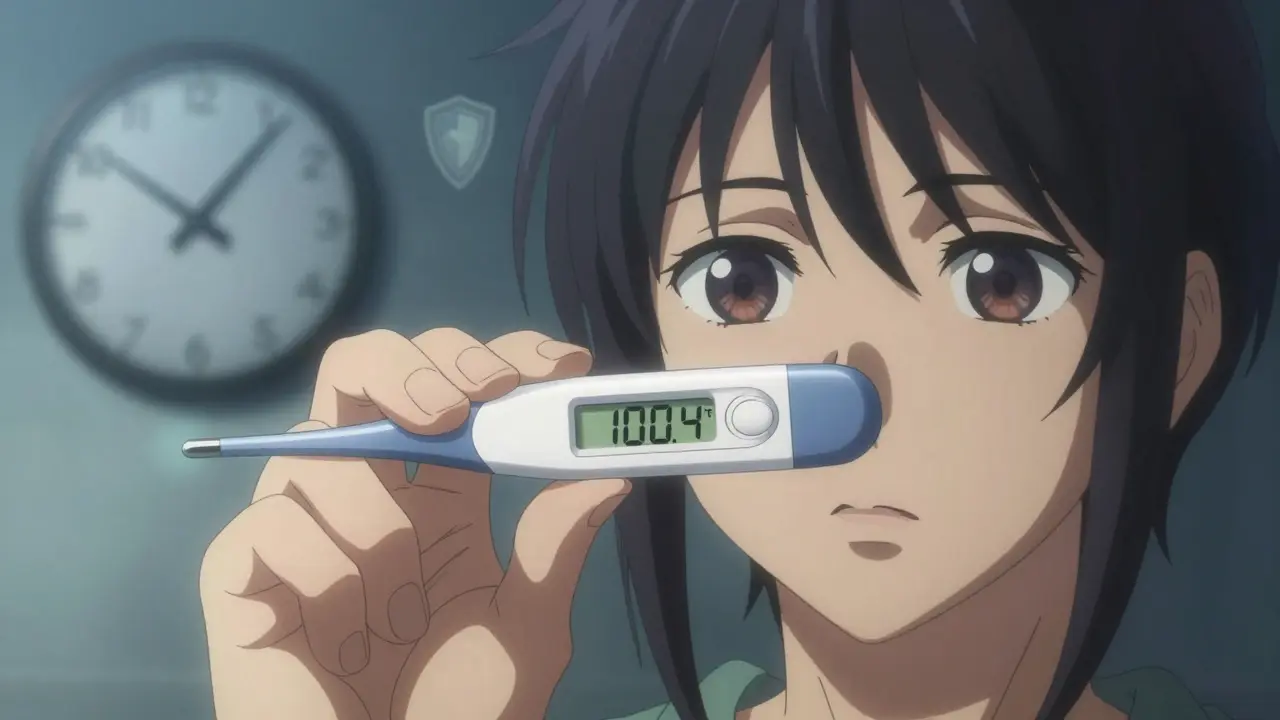
- Fever Protocol: Do not wait. If you run a temperature above 100.4°F (38°C), contact your doctor immediately. In immunosuppressed patients, a minor infection can escalate to sepsis within hours. Early antibiotic intervention is life-saving.
- Dental Hygiene: Poor oral health is a gateway for systemic infection. Maintain rigorous dental care and inform your dentist about your medications before any invasive procedures, as prophylactic antibiotics may be required.
- Travel Precautions: Avoid areas with high malaria or typhoid risk if you are on strong immunosuppressants. Consult a travel medicine specialist well in advance to assess vaccine compatibility.
- Medication Reconciliation: Ensure every healthcare provider you see knows exactly what you are taking. Interactions between immunosuppressants and common over-the-counter drugs can amplify toxicity or reduce efficacy.
Patient stories reinforce these points. One user on MyRheumaticLife.org shared that despite antiviral prophylaxis, they contracted shingles lasting four months after a rituximab infusion because they weren’t warned about the six-month high-risk window. Another nurse with rheumatoid arthritis noted that colleagues on JAK inhibitors suffered recurrent shingles despite prior vaccination, prompting her to monitor her VZV titers every six months. These real-world examples highlight the gap between theoretical risk and lived experience.
The Future of Precision Immunosuppression
The landscape is shifting toward smarter, safer therapies. The global immunosuppressant market, valued at $35.7 billion in 2022, is seeing a pivot away from broad suppression toward targeted pathways. As of mid-2023, 68% of new drug candidates in late-stage trials aim for specific immune mechanisms rather than blanket suppression. This trend is driven by the unsustainable burden of complications; immunosuppression-related infections cost the U.S. healthcare system $4.2 billion annually.
Innovations like AI-driven risk algorithms are emerging. A prototype from Mayo Clinic showed a 22% reduction in serious infections by analyzing electronic health records to predict individual susceptibility. Additionally, the NIH’s Immunosuppression Safety Consortium is developing biomarkers, such as CD4+ T-cell subset analysis, to personalize monitoring intensity. Instead of one-size-fits-all labs, future care may involve dynamic adjustments based on real-time immune status.
Until then, the best defense remains informed partnership with your care team. Insurance companies like Medicare now require prior authorization for biologics and JAK inhibitors, ensuring that infection prevention measures are documented before approval. Use this regulatory pressure to your advantage. Demand clarity on your risk profile, insist on appropriate monitoring schedules, and never hesitate to ask, "What is the specific complication I should watch for with this exact drug?" Your health depends on the details.
How long does immunosuppression last after stopping medication?
The duration varies significantly by drug class. Corticosteroids typically lose their immunosuppressive effect within four weeks of discontinuation. Methotrexate clears from the body in days. However, B-cell depleting agents like rituximab can cause profound immunosuppression for up to six to twelve months after the last dose, as it takes time for B-cell populations to regenerate and antibody production to normalize.
Can I get the shingles vaccine if I am on immunosuppressants?
It depends on the severity of your immunosuppression. The recombinant zoster vaccine (Shingrix) is non-live and generally recommended for immunocompromised adults. However, timing is critical. Ideally, it should be administered at least four weeks before starting potent immunosuppressive therapy like rituximab to ensure an adequate immune response. If you are currently on moderate-to-high dose steroids or biologics, consult your rheumatologist to determine the safest window for vaccination.
What are the signs of a serious infection in immunosuppressed patients?
Classic signs like high fever may be muted in immunosuppressed individuals. Watch for subtle changes: unexplained fatigue, chills, confusion, rapid heart rate, or localized pain that worsens quickly. Any fever above 100.4°F (38°C) requires immediate medical attention. Do not wait for other symptoms to appear, as infections can progress to sepsis rapidly when the immune system is suppressed.
Do JAK inhibitors really increase cancer risk?
Yes, regulatory agencies have identified increased risks. The European Medicines Agency and FDA have noted higher rates of lymphoma and lung cancer, particularly in patients over 65 with a history of smoking. The absolute risk remains low for younger, healthy patients, but it is a significant factor in the risk-benefit analysis for older adults or those with existing cardiovascular issues. Regular screening and smoking cessation are vital mitigation strategies.
Which autoimmune medication is the safest regarding infection risk?
Hydroxychloroquine is widely considered the safest option, showing minimal immunosuppression and no significant increase in serious infections. Methotrexate, at standard doses (25 mg/week or less), also carries a relatively low infection risk, only 1.2 times higher than the general population. These are often preferred for mild-to-moderate disease or as anchor drugs in combination therapies to minimize overall immunosuppressive burden.