
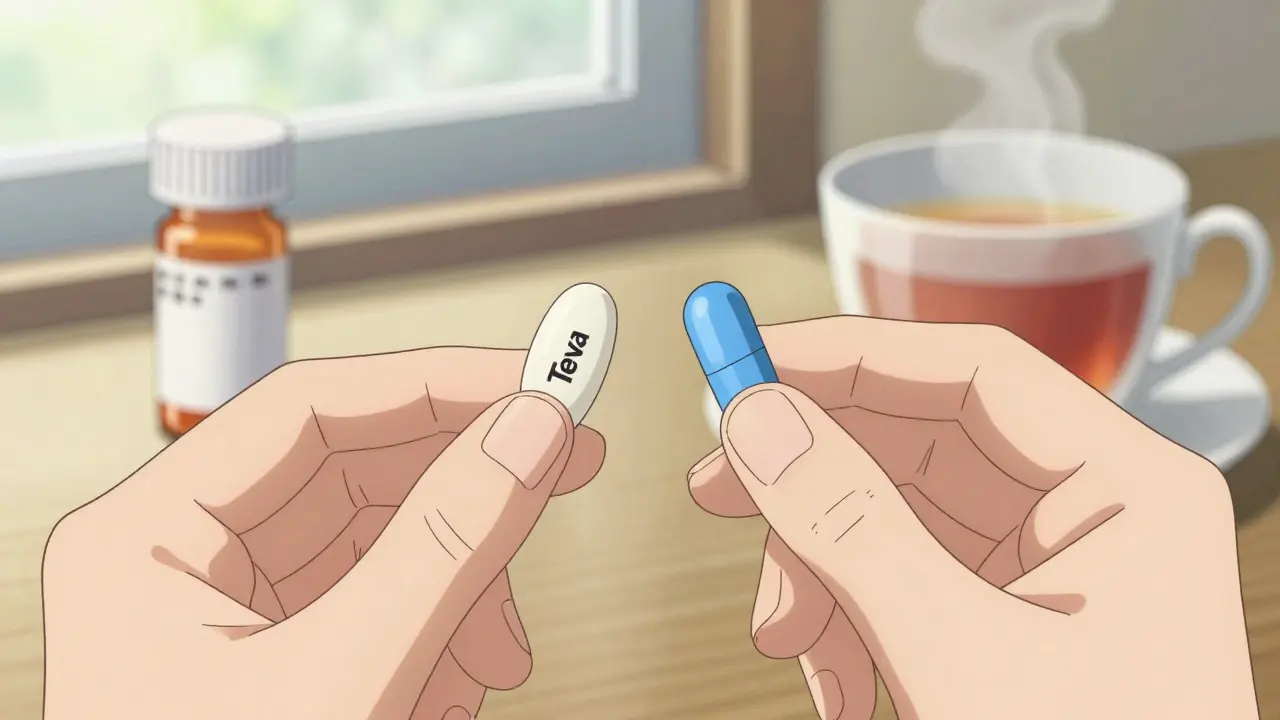
Every time you pick up your prescription, you might be getting a different pill - same active ingredient, but a different color, shape, or brand name on the bottle. That’s because your pharmacy is switching between generic manufacturers. It’s legal, it’s common, and for most people, it’s harmless. But for some, it can mean serious problems - seizures, unstable thyroid levels, or dangerous blood clotting. And most patients don’t even know it’s happening.
Why Do Generic Medications Keep Changing?
Generic drugs are cheaper versions of brand-name medicines. Once a patent expires, multiple companies can make the same drug using the same active ingredient. In the U.S., over 90% of prescriptions are filled with generics. That’s not because doctors prefer them - it’s because insurance companies and pharmacies push the lowest-cost option. If one generic costs $5 and another costs $3, your pharmacy will switch without telling you. It’s not personal. It’s business.Manufacturers compete on price, so the cheapest one wins - until someone else undercuts them. This happens every few months. You might get Teva one month, Mylan the next, then Sandoz. The pill looks different. The name on the bottle changes. But your prescription says the same thing: “levothyroxine 50 mcg” or “warfarin 5 mg.”
Not All Generics Are Created Equal
The FDA says generics must be “bioequivalent” to the brand-name drug. That means they deliver between 80% and 125% of the active ingredient compared to the original. Sounds fine, right? But here’s the catch: two different generics could be at opposite ends of that range. One might deliver 82% of the drug. Another might deliver 123%. That’s a 41% difference in how much medicine your body actually gets.For most drugs - like statins, antibiotics, or blood pressure meds - that variation doesn’t matter. Your body adjusts. But for drugs with a narrow therapeutic index (NTI), even tiny changes can be dangerous. These are medicines where the difference between a safe dose and a toxic one is very small.
NTI drugs include:
- Levothyroxine (for hypothyroidism)
- Warfarin (a blood thinner)
- Tacrolimus (for transplant patients)
- Phenytoin and carbamazepine (for seizures)
If you take one of these, switching manufacturers can throw your levels off. A 2024 Medsafe report says levothyroxine is especially sensitive. Even small changes in absorption can make your TSH levels swing wildly. Patients report feeling exhausted, gaining weight, or having heart palpitations - all because their thyroid medication changed hands.
What Happens When You Switch?
Most people won’t notice a thing. A 2023 study of over 1,200 patients found that 68% saw no difference after switching generics. But for others, it’s a different story.One Reddit user, u/PharmaPatient, wrote: “My seizure medication switched from Mylan to Teva. Two weeks later, I had two breakthrough seizures. My neurologist checked my blood levels - they’d dropped 30%.”
Another patient on Drugs.com said: “Every time my levothyroxine maker changes, I feel awful for weeks. My TSH goes out of range. I have to get a blood test, wait for the doctor to adjust my dose, and then wait again. It’s exhausting.”
These aren’t rare cases. For antiepileptic drugs, up to 44% of patients switch back to their original generic - or even the brand - because of side effects or loss of control. For thyroid meds, about 33% report problems. For blood pressure pills? Only 8%.
Why Doctors Don’t Always Know
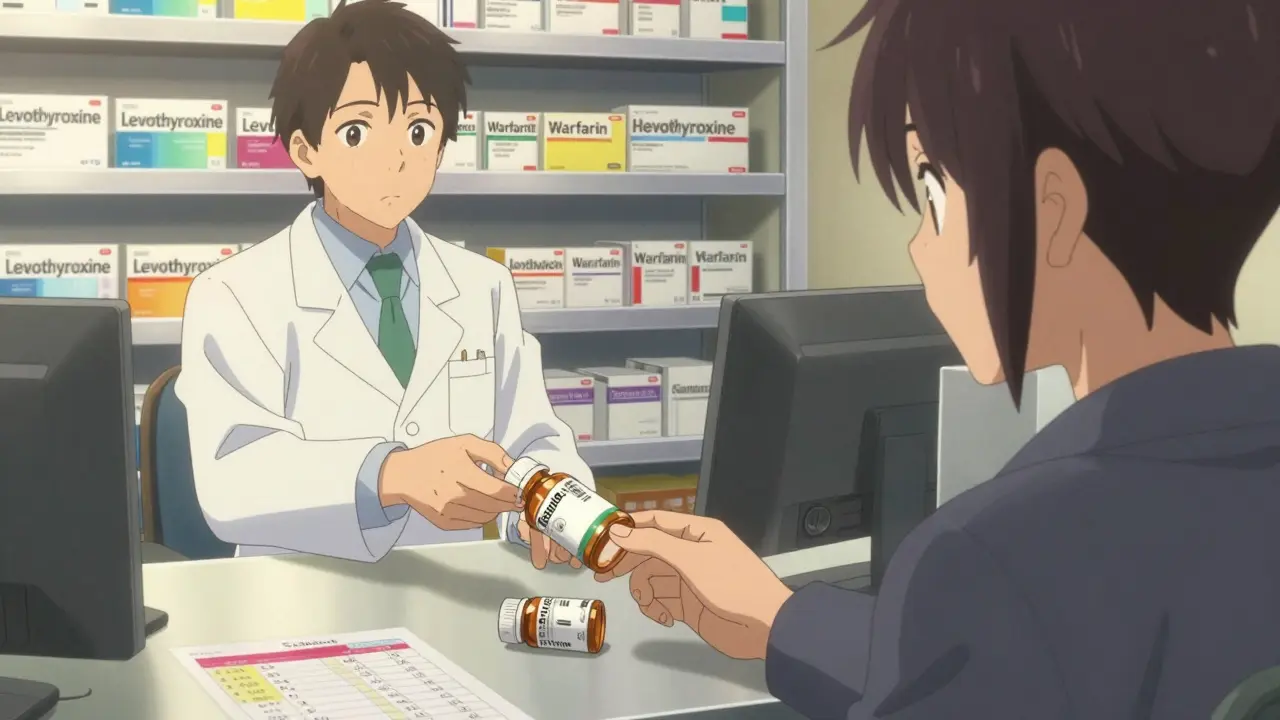
Here’s the scary part: your doctor probably doesn’t know when you’ve switched. Pharmacies don’t notify prescribers. Insurance companies don’t care - as long as the cost drops. A 2023 American Medical Association survey found that 62% of doctors only found out about a switch when a patient came in with symptoms.“I had a patient with a transplant on tacrolimus,” said a pharmacist in Chicago. “She came in with high creatinine and confusion. Turned out her pharmacy switched her from one generic to another without telling her or her doctor. Her blood levels had dropped 40%. She almost lost the organ.”
Doctors rely on patients to speak up. But most people don’t think to mention it. They assume the pill is the same. They don’t know to check the name on the bottle.
How to Protect Yourself
If you take a high-risk medication, here’s what you need to do:- Check the pill every time you fill your prescription. Note the shape, color, and manufacturer name. Take a photo if you need to.
- Ask your pharmacist if the manufacturer changed. Don’t assume they’ll tell you.
- Ask your doctor if your drug has a narrow therapeutic index. If yes, request a “lock-in” - a prescription that specifies the manufacturer.
- Get blood tests after any switch. For warfarin, check INR within 5-7 days. For levothyroxine, check TSH in 4-6 weeks.
- Report changes to your doctor immediately if you feel off - fatigue, dizziness, irregular heartbeat, mood swings, or seizures.
Some health systems now offer “lock-in” programs for NTI drugs. That means your pharmacy is required to stick with one manufacturer unless your doctor approves a change. Ask if yours does.

What’s Being Done?
The FDA is starting to pay attention. In 2023, they launched a pilot program requiring generic manufacturers to report major formulation changes. In 2024, Medsafe updated guidelines to recommend avoiding levothyroxine switches unless absolutely necessary. The Generic Pharmaceutical Association is working on standardized pill designs to reduce patient confusion.But change is slow. Right now, the system still prioritizes cost over consistency. And for patients on critical meds, that’s not enough.
When Switching Is Fine
Don’t panic if you take statins, metformin, or amoxicillin. For these drugs, switching generics is safe. Your body handles the small variations without issue. Many patients have taken generic lisinopril for years, with five different manufacturers, and never noticed a difference.One GoodRx user wrote: “I’ve been on generic lisinopril for five years. I’ve had at least four different makers. My blood pressure is perfect. No issues.”
That’s the reality. For most people, generics are safe, effective, and save money. The problem isn’t generics - it’s unmonitored switching for drugs where precision matters.
The Bottom Line
Generic drugs are a win for the healthcare system. They’ve saved Americans over $8 billion a year. But that savings shouldn’t come at the cost of your health.If you take a medication with a narrow therapeutic index - thyroid, blood thinners, seizure drugs, or immunosuppressants - treat your generic like a brand. Know who made it. Track changes. Ask questions. Demand consistency.
For everything else? Keep switching. It’s fine. But for the high-risk ones? Don’t let a pharmacy’s cost-saving decision become your health crisis.




Comments
Jonathan Larson
The systemic erosion of pharmaceutical consistency is not merely a logistical oversight-it is a profound failure of patient-centered care. When the state permits cost-driven substitution without disclosure or monitoring for narrow therapeutic index drugs, it prioritizes balance sheets over biological integrity. The FDA’s bioequivalence range of 80–125% is not a scientific consensus; it is a political compromise. For levothyroxine, warfarin, or tacrolimus, this margin is not merely acceptable-it is lethal in practice. We must demand mandatory manufacturer labeling, real-time pharmacy notification systems, and physician-level alerts. This is not radical. It is basic medical ethics.
Aparna karwande
How can Americans sleep at night while their pharmacists play Russian roulette with life-saving drugs? In India, we have strict regulations-generic manufacturers must submit batch-specific bioavailability data, and switches require explicit doctor authorization. Here, it’s a free-for-all. The FDA is a corporate puppet. Insurance companies are the real villains. And patients? They’re just data points in a profit algorithm. Shameful. Absolutely shameful. Someone needs to sue these pharmacy benefit managers into oblivion.
Ayodeji Williams
bro i switched from teva to mylan levothyroxine and i swear i turned into a zombie for 3 weeks 😭 my cat even noticed i was weird. now i take a pic of the pill every time. also my pharmacist just shrugged when i asked. wtf.
Emma Addison Thomas
It’s a quiet crisis, isn’t it? One that unfolds in the space between a prescription refill and a doctor’s appointment. I’ve seen patients with transplant rejection who didn’t realize their tacrolimus had changed. No malice. No conspiracy. Just a system optimized for efficiency, not human complexity. Perhaps the answer lies not in regulation alone, but in cultivating a culture of patient vigilance-where checking the pill becomes as routine as checking the expiration date.
Christine Joy Chicano
Interestingly, a 2022 JAMA study found that 89% of patients could not identify their generic manufacturer even after being shown the bottle. This isn’t just a policy failure-it’s an education failure. If we taught patients to read pill imprints (e.g., 54 543) and manufacturer codes as part of basic health literacy, we could mitigate this. The FDA’s pill identifier tool is underutilized. Pharmacists should be required to hand out a one-page fact sheet with every NTI prescription. Simple. Cost-neutral. Life-saving.
Adam Gainski
I’m a pharmacist in Ohio, and I’ve seen this firsthand. We’re pressured to switch based on the lowest bid-sometimes daily. I’ve had patients cry because their seizure control vanished after a switch. I started manually flagging NTI prescriptions in our system and calling doctors when a change occurs. It’s extra work, but I don’t care. My license is on the line if someone gets hurt. If your doctor doesn’t know about your switch, they can’t help you. Speak up. Even if it’s awkward. You’re not being difficult-you’re being smart.
Anastasia Novak
Oh my god, I’ve been on generic warfarin for 7 years and I’ve had 6 different manufacturers. I’ve had INR levels that looked like a rollercoaster chart from a horror movie. And the worst part? No one cares. My doctor just says, ‘Oh, we’ll adjust.’ Adjust? Adjust my life? I’m not a lab rat. I’m not a variable in your cost-cutting spreadsheet. I’m a person who doesn’t want to bleed out because some corporate bean counter found a 20-cent savings. This system is a joke. And you know what? I’m done being polite about it.
Elen Pihlap
i just switched to a different generic and now i feel like i’m underwater all day. my doctor said it’s ‘probably not the pill’ but i know better. why won’t anyone listen to me??