

Ever feel like you're cleaning your house only to end up in a sneezing fit? It sounds backwards, but for millions of people, the act of cleaning actually makes their allergies worse. Many of us reach for the strongest-smelling spray, thinking that "clean" smells like bleach or artificial lemons. In reality, those harsh scents are often Volatile Organic Compounds is a group of chemicals that vaporize at room temperature and can irritate the respiratory tract (VOCs), which can trigger asthma attacks or skin rashes. If you've noticed your chest tightening after a deep clean, you're not alone. Research shows that frequent use of conventional cleaning sprays can actually increase the risk of developing adult-onset asthma by over 50%.
The goal isn't just to make the house look tidy, but to actually remove the invisible triggers that keep you sick. Standard dry dusting often just pushes pet dander and pollen around the room, leaving 87% of food residues-like peanut or egg proteins-stuck to your counters. To truly clear the air, you need a combination of a allergy-friendly cleaning strategy and products that don't trade off health for hygiene.
Quick Guide to Allergy-Safe Cleaning
- Look for Certification: Prioritize the "Asthma & Allergy Friendly®" seal over generic "natural" labels.
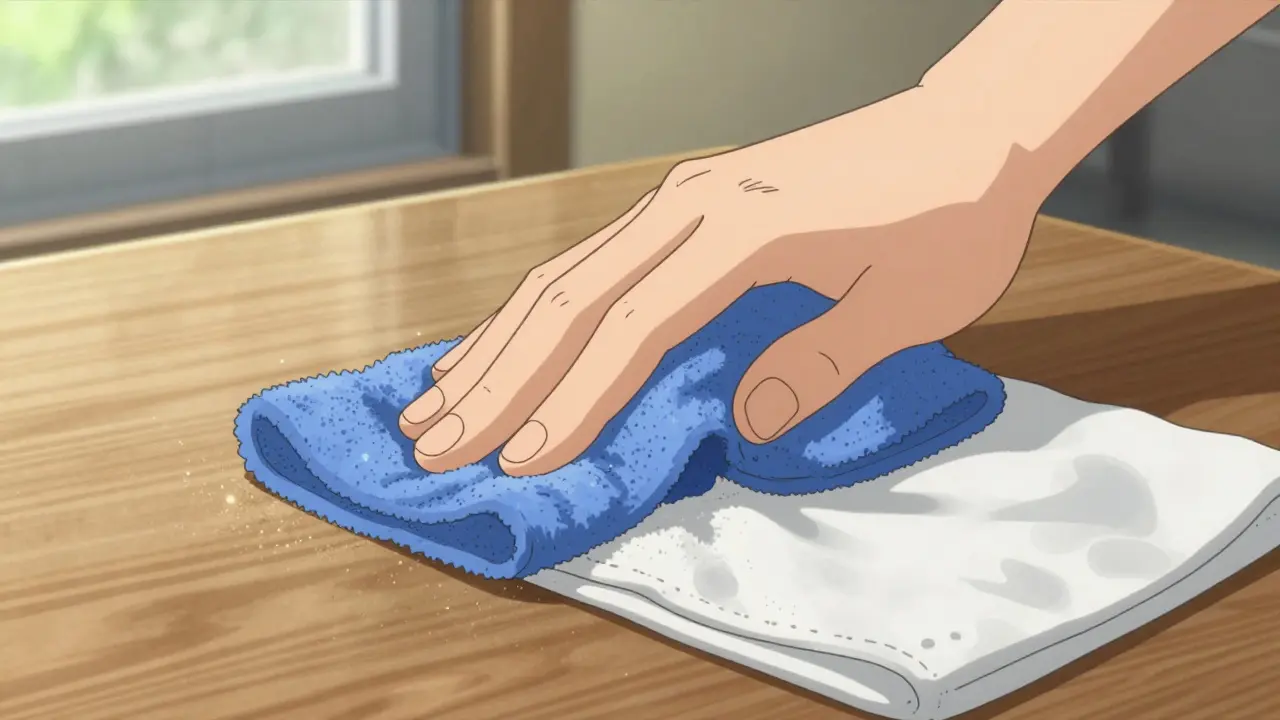
- Ditch the Dry Rag: Always use damp microfiber cloths to trap particles instead of launching them into the air.
- Check the VOCs: Choose products with VOC emissions below 0.5 parts per million to keep your lungs happy.
- Avoid "Unscented": Be wary of "unscented" labels; they often contain masking agents that can still trigger reactions.
How to Spot Truly Hypoallergenic Products
Walking down the cleaning aisle is overwhelming. You'll see words like "green," "natural," and "pure" everywhere. Unfortunately, this is often just "greenwashing." A huge problem is that many products marketed as hypoallergenic don't actually meet clinical standards. In fact, only about 37% of these products actually reduce allergen exposure in a meaningful way.
To find the real deal, look for the Asthma & Allergy Friendly® certification. This isn't just a marketing sticker; it's a rigorous standard. To earn this, a product must prove it can remove over 85% of common allergens, including Dust Mite Debris and pet dander, from hard surfaces. If you're looking at ingredients, you want to see things like Potassium Cocoate (a coconut-derived surfactant) or Hydrogen Peroxide at low concentrations (3-5%) instead of harsh bleach or ammonia.
| Feature | Conventional Cleaners | Generic "Natural" | Certified Allergy-Friendly |
|---|---|---|---|
| Common Triggers | Bleach, Ammonia, Synthetic Fragrance | Essential Oils, Undisclosed Fragrances | Minimal to None |
| Allergen Removal Rate | Variable (often redistributes) | Approx. 76% | Over 85-92% |
| Respiratory Risk | High (increases asthma risk 30-50%) | Moderate (fragrance sensitivities) | Low (reduced symptom frequency) |
| Average Price (32oz) | Low ($2.00 - $3.00) | Mid ($3.25) | Higher ($5.75) |
The Best Tools for the Job
The product you use matters, but how you use it is just as important. If you spray a cleaner and then wipe with a dry paper towel, you're basically just rearranging the dust. The gold standard for allergy management is the "two-cloth method." First, use a damp microfiber cloth with your cleaning solution to break down and lift the allergens. Then, follow up with a second damp cloth using only water. This simple switch can reduce the amount of allergens floating back into your air by 63%.
For laundry, look for "Free & Clear" options. For example, Seventh Generation and Renegade Brands offer detergents that remove a massive percentage of allergens without adding new irritants. Real-world users have reported significant drops in eczema flare-ups and sneezing after making this switch. If you have a heavy-duty cleaning need, consider Electrostatic Sprayers . These are becoming more common and are calibrated to capture allergens more efficiently while using 65% less product.
Vinegar vs. Certified Products: The Great Debate
You've probably heard that a 1:1 mix of white vinegar and water can clean almost anything. While this is a great, cheap alternative for general grime, it's not a complete solution for severe allergies. The Food Standards Agency has pointed out a critical gap: homemade vinegar solutions are significantly less effective at removing food-based allergens. While a certified product might remove 89% of peanut residue, a vinegar mix only hits about 67%. If you're cleaning for someone with a life-threatening food allergy, the extra few dollars for a certified cleaner is a necessary safety investment.
Setting Up Your Allergy-Safe Routine
Transitioning your home doesn't have to happen overnight. It usually takes about two to three weeks to fully adapt your routine. Start by swapping your most-used sprays and your laundry detergent. Budget around $75 to $150 for a full home transition, depending on how many rooms you have.
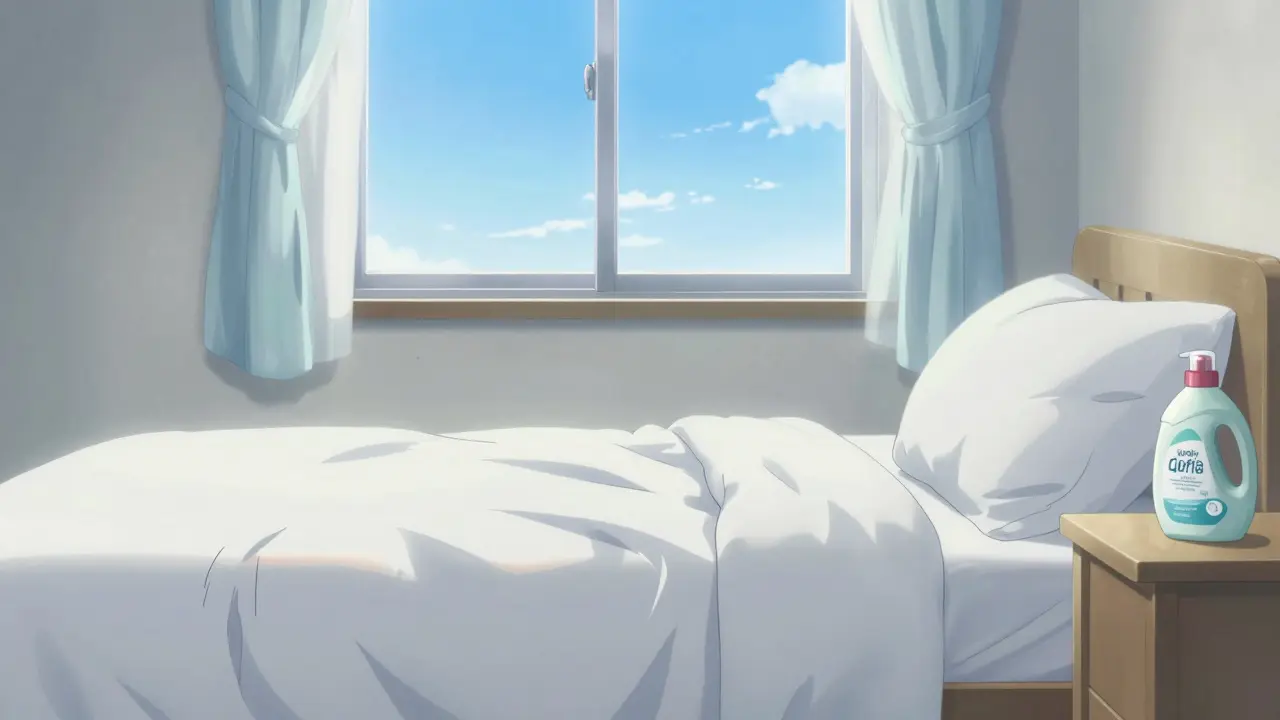
Focus your energy on high-impact areas first. Bedding should be washed weekly in hot water with a fragrance-free detergent. Hard floors should be wet-mopped bi-weekly-never dry-sweep or dust, as this just kicks pollutants back into your breathing zone. If you're on a budget, prioritize the bedroom and living room, as these are where you spend the most time and where dust mites thrive.
Are "fragrance-free" products actually safe?
Not always. Many products labeled as "unscented" or "fragrance-free" use masking agents to hide the chemical smell of the ingredients. These agents can still trigger reactions in sensitive individuals. The safest bet is to look for third-party certifications like the Asthma & Allergy Friendly® seal, which tests for specific fragrance allergens.
Why are certified allergy cleaners more expensive?
The higher price reflects the cost of clinical testing and higher-quality ingredients. Certified products must undergo rigorous trials to prove they remove over 85% of allergens and maintain ultra-low VOC emissions. They also use safer surfactants like potassium cocoate instead of cheaper, harsher chemicals like ammonia.
Can I just use a vacuum cleaner instead of wet cleaning?
Vacuums are great, but only if they have a HEPA filter. Standard vacuums often suck up dust and blow the smallest, most irritating particles right back out the exhaust. For hard surfaces, wet cleaning with microfiber is still the most effective way to physically remove allergens from the home.
Does bleach actually kill allergens?
Bleach is a powerful disinfectant for killing bacteria and viruses, but it doesn't "neutralize" allergens like pollen or pet dander. Worse, the fumes from bleach can irritate your airways, making you more susceptible to an allergy attack. For allergen removal, a damp cloth and a certified surfactant are much more effective.
How do I know if my cleaning products are causing my asthma?
Pay attention to the timing of your symptoms. If you experience increased coughing, wheezing, or shortness of breath immediately after using a spray or while cleaning a specific room, it's a strong signal. Try switching to a certified fragrance-free, low-VOC product for two weeks and track if your symptom frequency drops.
Next Steps for a Healthier Home
If you're just starting, don't throw everything away at once. Start with your bedroom-the place where you spend 8 hours a day. Switch your laundry detergent to a "Free & Clear" version and start using the two-cloth method on your nightstands and dressers. Once you notice the difference in your morning congestion or skin irritation, you can expand the process to the kitchen and bathrooms. For those with severe sensitivities, consider auditing your cleaning cabinet using the Environmental Working Group's guide to identify the highest-risk chemicals currently in your home.




Comments
Sue Stoller
Omg this is such a game changer! 🌟 I had no idea about the two-cloth method and I'm totally going to try it this weekend! Let's all make our homes safer and breathier! ✨💖
Caroline Duvoe
everyone knows those certifications are just marketing scams 🙄’s just a way to charge 6 bucks for soap
Anastasios Kyriacou
vinegar works fine for me mate.. dont believe everythin you read online
Mayur Pankhi Saikia
The sheer audacity to suggest that a "two-cloth method" is a revolutionary discovery!!! I have employed far more sophisticated filtration systems in my residence for years,,, and the results are vastly superior to these pedestrian suggestions... Simply quaint!!!
Amy Fredericks
It's really interesting to see the breakdown between natural and certified products. I think it's great that there are options for people with severe allergies to feel safe in their own space.
Mike Arrant
Look, most of you are just lazy. If you actually cared about your health, you'd stop buying store-bought chemicals entirely and go back to basic soap and water. You're all just looking for a magic label to save you from your own poor life choices.
Saptatshi Biswas
The systemic failure of Western health standards is absolutely appalling! Why must we rely on these expensive, certified labels when the fundamental chemistry is so basic? It is a disgrace that the healthcare infrastructure in the West forces people to pay a premium for something as simple as air that doesn't cause a respiratory collapse! This is nothing but a calculated profit mechanism designed to exploit the vulnerable!
Dave Edwards
Oh, absolutely! Let's just spend $150 on "certified" soap while the planet burns! 🙄 The irony of "greenwashing" mentioned in the text is the only part that makes sense here. It's all just a corporate shell game to make us feel better about our consumerism! :P
Mel Glick
Actually, the microfiber tip is solid. I've used it for years and it genuinely makes a difference in the air quality. Stop complaining about the price and just do it!
Nicole Antunes
I appreciate the detailed guide. It is quite helpful for those of us who prefer a more methodical approach to home maintenance. :)
vimal purwal
I completely agree with the emphasis on HEPA filters because, in my professional observation, the redistribution of particulate matter is the primary cause of recurring symptoms in domestic environments, and while the cost of certified cleaners is higher, the long-term health benefits far outweigh the initial expenditure if one considers the reduction in medical visits and pharmaceutical costs over a fiscal year.
Emma Cozad
this is just a way for US companys to scam people into buying overpriced water. totaly a joke how they try to tell us what is "safe" while they pollute the whole world anyway