
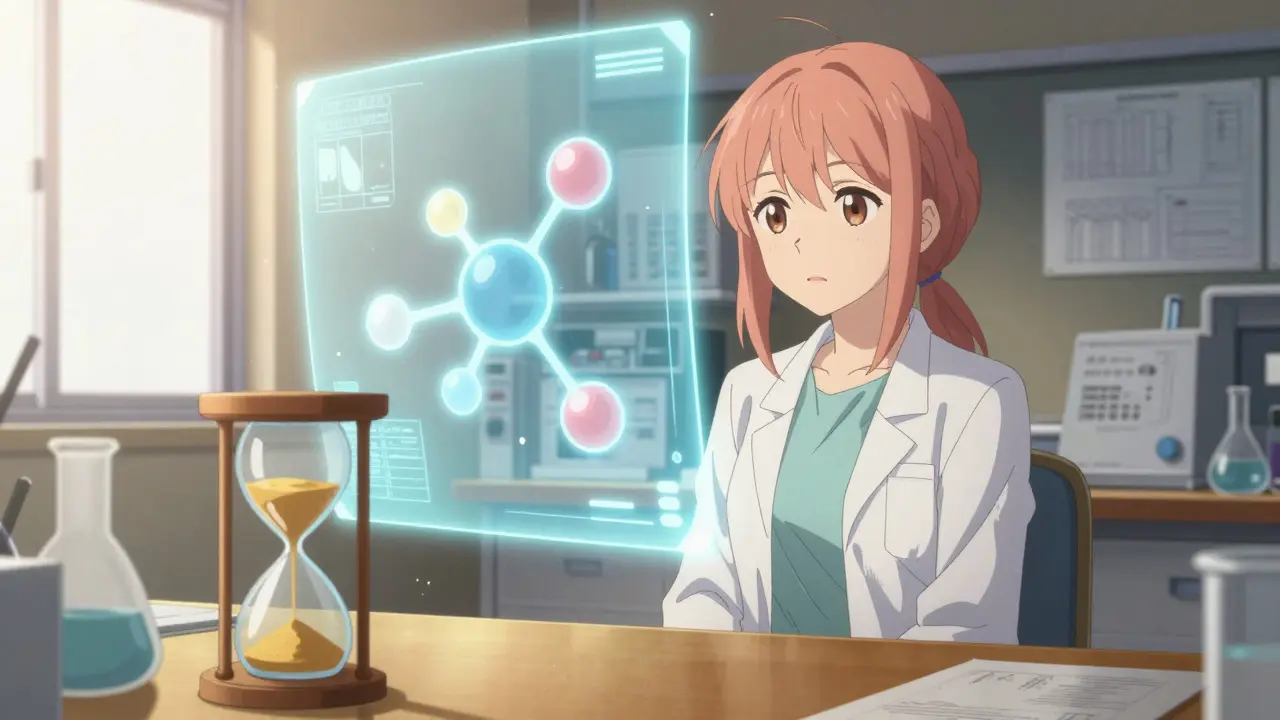
Why Your Medicine Doesn't Get 20 Years of Protection
You've probably heard that a drug patent lasts for 20 years. It's a catchy number, easy to remember, and it sounds like a solid guarantee of exclusivity for the company that invented the medication. But here is the catch: if you count from the day a patient actually buys the drug at a pharmacy, that 20-year clock has already been ticking away in the background. By the time a new medicine hits the market, most of that protection is gone.
This disconnect between the legal definition of a patent term and the reality of selling a product is one of the biggest sources of confusion in healthcare. When do drug patents really expire? And why does a blockbuster drug suddenly face competition just seven or eight years after it was approved?
To understand this, we have to look past the simple "20-year" headline and dig into how the United States Patent and Trademark Office (USPTO) defines time versus how the Food and Drug Administration (FDA) regulates market entry. The gap between these two systems creates the complex timeline that determines when cheaper generic versions can enter the market.
The 20-Year Clock Starts Way Earlier Than You Think
Under current U.S. law, specifically 35 U.S.C. § 154(a)(2), a patent term is calculated as 20 years from the earliest effective filing date. This rule wasn't always the standard; it was established by the Uruguay Round Agreements Act of 1994 to align U.S. laws with international standards under the TRIPS Agreement. Before that, patents lasted 17 years from the date the patent was granted.
Here is where the math gets tricky for pharmaceutical companies. Developing a new drug takes forever. On average, it takes 10 to 15 years to move a compound from the lab bench to the pharmacy shelf. This process includes:
- Pre-clinical testing: Lab studies on cells and animals.
- Clinical trials: Phase I, II, and III studies involving human volunteers.
- Regulatory review: The FDA analyzing all the data before granting approval.
If you file your patent application at the very beginning of this process-when you first discover the molecule-that 20-year timer starts immediately. By the time the FDA approves the drug, maybe 8 or 10 years have already passed. That leaves the innovator company with only 10 to 12 years of actual market exclusivity to recoup their investment. According to analysis by DrugPatentWatch, the practical market exclusivity period typically ranges from 7 to 12 years because the R&D phase consumes such a large chunk of the nominal term.
How Companies Get Extra Time: PTA and PTE
Because losing half your patent life to bureaucracy seems unfair, Congress created mechanisms to give companies back some of that lost time. These aren't automatic; they require specific applications and meet strict criteria.
First, there is Patent Term Adjustment (PTA). This compensates for delays caused by the USPTO itself. If the agency takes too long to issue an initial decision or fails to grant the patent within three years of filing, the patent term is extended. For example, if the USPTO sits on your application for four years instead of three, you get one year added back to your patent. However, if the delay was caused by the applicant (you), that time doesn't count.
Second, and more importantly for drug developers, is Patent Term Extension (PTE). Established by the Hatch-Waxman Act of 1984, PTE allows for up to five additional years of protection to compensate for the time spent waiting for FDA approval. There are hard caps, though: the total market exclusivity cannot exceed 14 years from the date of FDA approval, and no drug can have more than 14 years of post-approval protection regardless of other factors.
Getting PTE is not simple. Patent holders must submit an application within a strict 60-day window after FDA approval. Miss that deadline, and you forfeit the extension entirely. According to Fish & Richardson's analysis, many companies stumble here due to internal coordination failures between legal teams and regulatory affairs departments.
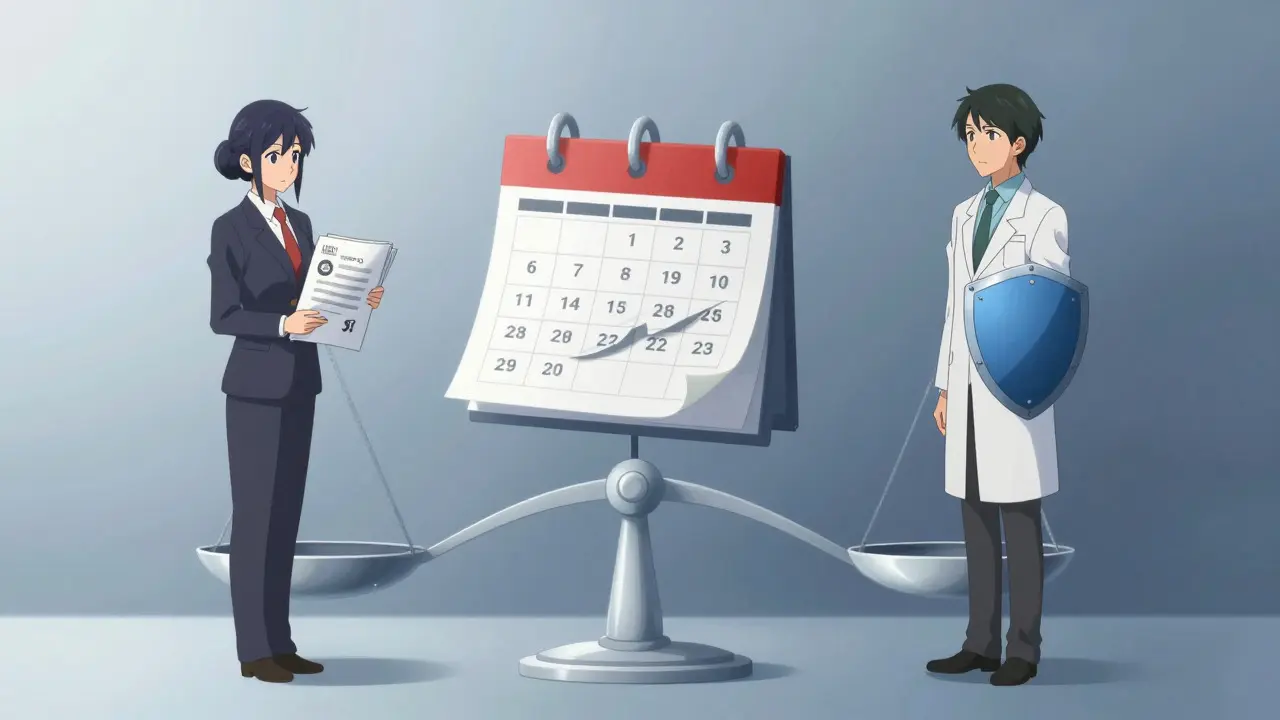
The Patent Cliff: What Happens When Protection Ends
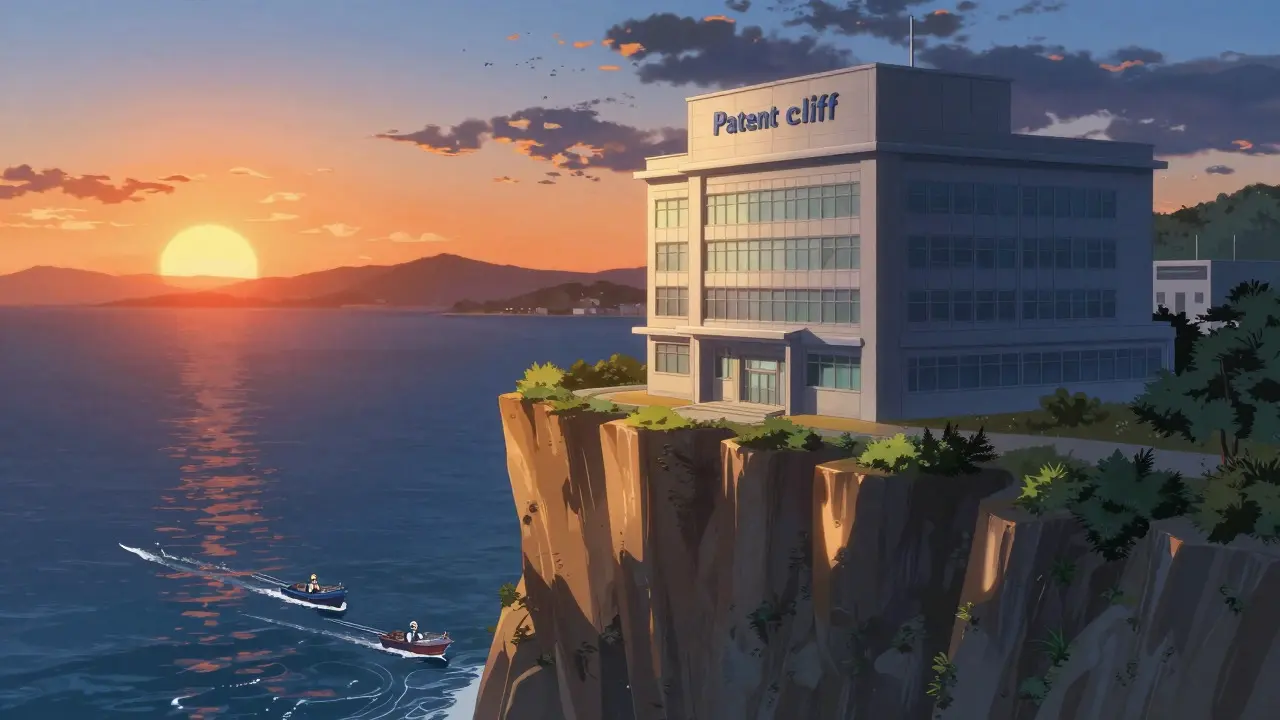
The moment the last enforceable intellectual property right expires is known as the "Patent Cliff." This is the point of maximum commercial jeopardy for pharmaceutical companies. Once the cliff arrives, generic manufacturers can launch identical versions of the drug at a fraction of the cost.
The economic impact is immediate and severe. Data from the National Bureau of Economic Research shows that the average price of physician-administered drugs drops by 38% to 48% following patent expiration. In some cases, prices fall even further once multiple generic competitors enter the market. For instance, after the patent for Eliquis (apixaban) expired in late 2022, generic versions captured 35% of the market share within just six months, driving wholesale prices down by 62% in the first year.
For patients, this transition can be confusing. You might see your insurance switch you from a brand-name drug with a $50 copay to a generic with a higher copay temporarily, or vice versa, depending on how your plan structures tiers during the transition period. Some patients report financial stress during these shifts, especially if pediatric exclusivity extensions delay generic entry by a few extra months.
Beyond the Compound: Layered Patent Strategies
Pharmaceutical companies know the clock is ticking, so they rarely rely on a single patent. Instead, they build a "patent thicket" around a drug. This involves filing multiple patents for different aspects of the medicine:
- Active ingredient patents: Protect the chemical structure of the drug itself.
- Formulation patents: Protect how the drug is made (e.g., tablet vs. capsule, coating technology).
- Method-of-use patents: Protect specific ways the drug is prescribed (e.g., treating condition A vs. condition B).
- Manufacturing process patents: Protect the unique steps used to create the drug efficiently.
Each of these patents has its own 20-year term starting from its respective filing date. This strategy extends the overall protection period. Take Spinraza (nusinersen), for example. While its primary compound patent may have limitations, its broader portfolio maintains protection through 2030 across various formulation and use cases. Critics call this "evergreening," arguing that companies file secondary patents on minor tweaks to delay generic entry by 2-3 years on average, according to the FTC.
Regulatory Exclusivity: A Separate Shield
Even if patents expire, another layer of protection often remains: regulatory exclusivity. This is distinct from patent law and comes directly from the FDA. It prevents the FDA from approving generic applications for a set period, regardless of patent status.
| Type of Exclusivity | Duration | What It Blocks |
|---|---|---|
| New Chemical Entity (NCE) | 5 Years | FDA cannot accept Abbreviated New Drug Applications (ANDAs) |
| Orphan Drug | 7 Years | Approval of same drug for same rare disease indication |
| New Clinical Investigation | 3 Years | ANDAs or 505(b)(2) applications relying on new clinical studies |
| Pediatric Exclusivity | 6 Months | Adds time to existing patent terms and exclusivity periods |
For example, if a drug is designated as an Orphan Drug (treating a rare disease affecting fewer than 200,000 Americans), it gets 7 years of market protection. During this time, no generic competitor can be approved for that specific use, even if the underlying patents have lapsed. This creates a powerful incentive for companies to develop treatments for rare conditions.
Global Differences: It's Not Just About the U.S.
While this article focuses on U.S. regulations, patent terms vary globally. Japan, for instance, uses a different calculation method. They determine the maximum permissible extension based on a "reference date," which is the later of five years after filing or three years after the request for examination. This approach attempts to balance innovation incentives with public access differently than the U.S. system.
Internationally, the World Health Organization has recommended harmonizing pharmaceutical patent terms to 15 years to improve access to medicines. However, industry groups like PhRMA argue that the current 20-year framework with adjustments is essential to recoup the average $2.3 billion R&D investment per approved drug. As of 2026, these debates continue to shape legislative proposals, such as the "Restoring the America Invents Act" bill introduced in early 2024, which aimed to eliminate certain patent term adjustments.
FAQ
Do all drugs get exactly 20 years of patent protection?
No. While the statutory patent term is 20 years from the filing date, the actual period of market exclusivity is usually much shorter. Because drug development takes 10-15 years, companies typically only enjoy 7-12 years of sales protection after FDA approval. Extensions like PTA and PTE can add a few more years, but rarely restore the full 20 years of market monopoly.
What happens to drug prices when a patent expires?
Prices usually drop significantly. Studies show that physician-administered drugs can see price declines of 38% to 48% immediately after patent expiration. For small-molecule drugs, generic competition often captures 80-95% of the market share within two years, driving prices down further. Biosimilars (generic versions of biologics) tend to capture a smaller share, typically 40-60%, due to higher barriers to entry.
Can a company extend a patent indefinitely?
Not indefinitely. The Hatch-Waxman Act limits Patent Term Extension (PTE) to a maximum of 5 years, and the total post-approval exclusivity cannot exceed 14 years. However, companies use "layered" strategies, filing new patents for formulations, delivery methods, or new uses, which can effectively extend protection beyond the original compound patent expiration by several years.
What is the difference between a patent and regulatory exclusivity?
A patent is a legal right granted by the USPTO that prevents others from making, using, or selling the invention. Regulatory exclusivity is a period granted by the FDA during which it will not approve generic applications, regardless of patent status. A drug can lose its patent protection but still remain protected by regulatory exclusivity, or vice versa.
Why do some drugs stay off-patent longer than others?
This depends on the complexity of the drug and the litigation strategy. Biologics often face slower generic (biosimilar) uptake due to interchangeability complexities. Additionally, if a company successfully sues generic challengers under the Hatch-Waxman Act, they can trigger a 30-month stay on FDA approval for generics, delaying competition until the lawsuit is resolved.
Comments
Prashant Shishodia
Simple truth is the clock starts way too early for the company. They spend years in lab and trials before selling anything so they get very little time to make money back.
This explains why prices stay high until the end.
Patrick Meyer
its not rocket science really just basic economics that most people fail to grasp becuse they dont read the fine print on patent law
the system is rigged for big pharma obviously but at least we know how it works now right?
Autumn LW
Oh please, spare us the simplistic take. The reality is far more nuanced than your average layman would care to understand. It's not just about 'rigged systems,' it's about the intricate dance between regulatory bodies and intellectual property rights that keeps our healthcare infrastructure from collapsing into chaos. You're missing the forest for the trees, darling.
The Hatch-Waxman act was a compromise, not a conspiracy. If you think otherwise, you clearly haven't studied the legislative history of pharmaceutical policy in the United States. It requires a certain level of intellectual rigor to appreciate these mechanisms, something this thread seems to lack entirely.
Paul Lyons
Absolutely pathetic how we let foreign entities dictate our domestic health policies through these international treaties like TRIPS. It's an insult to American innovation that we have to play by rules set in Geneva instead of Washington. Our doctors deserve better tools and our patients deserve cheaper meds without waiting for some bureaucratic committee to finish their paperwork.
We need to take back control of our healthcare sovereignty immediately before we lose everything else. This isn't just about patents; it's about national pride and economic independence. Stop apologizing for being American and start demanding what's ours.
Andrew Donovan
It is fascinating to observe how the temporal nature of intellectual property intersects with human necessity. We often view patents as static shields, yet they are fluid entities that shift with regulatory tides. The concept of the 'patent cliff' serves as a stark reminder of impermanence in our commercial landscape.
Consider the philosophical implication: if knowledge belongs to everyone eventually, does the temporary monopoly serve justice or merely greed? Perhaps the true value lies not in the exclusivity itself, but in the race toward accessibility. We must navigate these waters with both eyes open, recognizing that every extension granted is a delay in relief for those suffering. Let us hope the balance tips toward compassion rather than profit in the coming years.
Scott Colter
I've always found the idea of time lost during FDA review to be quite poetic in its tragedy. Imagine spending half your life creating something beautiful only to watch the clock tick away while bureaucrats sip their coffee. It feels like Sisyphus pushing his boulder up the hill, except the boulder is a molecule and the hill is called bureaucracy.
But then again, maybe that struggle gives the medicine meaning? Like pain giving depth to joy. Just a thought to chew on over your morning brew.
Deva Vidya
Great breakdown of the complex timeline here. It really helps to see how PTA and PTE work together to give companies some breathing room after all those years of testing. I feel much more informed now about why generics don't appear immediately.
Let's keep sharing this kind of clear information so everyone can understand their rights when switching medications. Knowledge is power after all!
ANINDA GHOSH
In my culture, we often speak of cycles and seasons, and this patent lifecycle reminds me deeply of the monsoon patterns-long periods of preparation followed by a sudden, overwhelming release. The wait for generic entry is akin to waiting for the rains; the anticipation builds, and when it finally comes, it changes the entire landscape of affordability.
It is a beautiful, albeit frustrating, rhythm of commerce and care. :)
MiMi Stanley
I noticed the section on layered strategies. It makes sense they protect different aspects like formulation.