MaxGun Sublingual Spray vs Other Erectile Dysfunction Options: Detailed Comparison
Oct 7 2025

When you’re over 65, your body processes drugs differently. That’s why older adults, people aged 65 and older who often manage multiple chronic conditions and medications. Also known as seniors, it’s crucial to understand how aging affects how your body handles pills, patches, and injections. More than 80% of older adults take at least one prescription drug, and nearly 40% take five or more. That’s not just common—it’s a red flag for potential problems. Mixing medications isn’t like mixing coffee and sugar. One wrong combo can land you in the hospital.
Drug interactions are the silent threat here. NSAIDs, common pain relievers like ibuprofen and naproxen that can cause stomach bleeding and kidney stress in older adults might seem harmless, but they’re risky when paired with blood thinners or diuretics. Bisphosphonates, bone-strengthening drugs used for osteoporosis can burn your esophagus if you don’t take them with a full glass of water and stay upright for 30 minutes. And don’t forget antihistamines, over-the-counter allergy meds that cause dizziness, confusion, and falls in seniors. These aren’t edge cases—they’re everyday dangers.
It’s not just about what’s in the bottle. Your food, supplements, and even your pharmacy’s system can mess things up. authorized generics, exact copies of brand-name drugs sold under a different label work just as well, but if your pharmacist swaps them without telling you, you might miss a key interaction warning. And if you’re taking creatine for muscle support or acetyl-L-carnitine for brain health, those can skew kidney tests or interact with Parkinson’s meds. You need to know what’s in your medicine cabinet—and why.
Cost is another hidden hurdle. Many older adults skip doses or split pills because they can’t afford their prescriptions. That’s where Medicare Extra Help, a federal program that lowers out-of-pocket costs for prescription drugs and state pharmaceutical assistance programs come in. In 2025, over 15 million Americans rely on these programs just to stay on track. You don’t have to choose between food and your heart meds.
What you’ll find here isn’t theory. It’s real advice from people who’ve been there: how to tell a side effect from a true allergy, how to read your pill bottle like a pro, how to build a medication plan with your doctor that actually works, and how to spot when a drug isn’t right for you anymore. These aren’t generic tips. They’re the kind of details that keep you out of the ER and in control of your health.
Nov
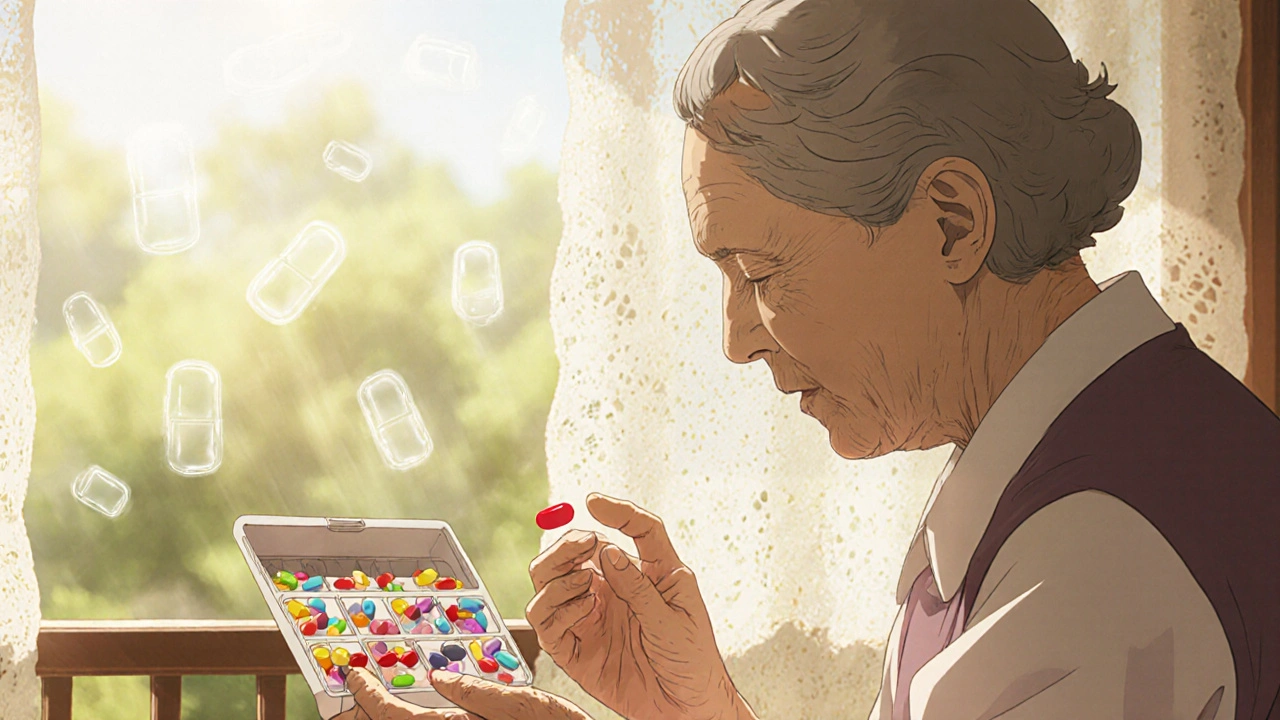
Frailty and polypharmacy in older adults create a dangerous cycle of side effects and decline. Learn how to reduce medication burden safely and improve quality of life through deprescribing and targeted care.

Oct 7 2025
Oct 27 2025

Oct 19 2025
Dec 21 2025
Oct 15 2025