Orthostatic Hypotension from Medications: Why You Feel Dizzy When You Stand Up
Dec 16 2025

When you pick up a prescription, the label has a string of numbers that looks like a barcode—those are NDC codes, National Drug Code numbers that uniquely identify every medication sold in the United States. Also known as drug identification codes, they’re used by pharmacies, insurers, and the FDA to track exactly which drug, strength, and package size you’re getting. Without NDC codes, there’s no reliable way to tell if you’re getting the right pill, the right dose, or even the right brand versus generic.
NDC codes aren’t just random numbers. They follow a strict 10-digit or 11-digit format broken into three parts: the first section is the labeler code (who makes the drug), the second is the product code (what the drug is), and the third is the package code (how it’s packed—like 30 tablets or 100 mL liquid). These codes link directly to the FDA’s database, so if your pharmacist or insurance company sees an NDC, they can instantly pull up the drug’s name, manufacturer, dosage, and even recall info. That’s why you’ll see NDC codes on every prescription bottle, in your electronic health record, and on insurance claims.
They’re not just for pharmacies. If you’re on multiple medications, NDC codes help avoid dangerous interactions—your doctor’s system checks each one against your list. Insurance companies use them to decide what to cover and how much. Even online pharmacies rely on them to prove they’re selling real, legal drugs. If an NDC doesn’t match the FDA’s registry, the drug might be fake or unapproved. That’s why you should always check the NDC on your bottle against the one your doctor ordered.
And it’s not just pills. NDC codes cover everything from insulin pens and inhalers to over-the-counter pain relievers and even some medical supplies like syringes. If it’s sold as a drug in the U.S., it has an NDC. You don’t need to memorize them, but knowing they exist—and where to find them—gives you control. Want to verify your medication? Look at the label. Compare it to your prescription. Check the FDA’s website. It’s a simple step that prevents mistakes.
Below, you’ll find real-world examples of how NDC codes connect to the drugs you use every day—from generic antibiotics to specialty treatments for Parkinson’s, high blood pressure, and beyond. These aren’t just technical details. They’re the invisible system keeping your meds safe, accurate, and traceable.
Nov
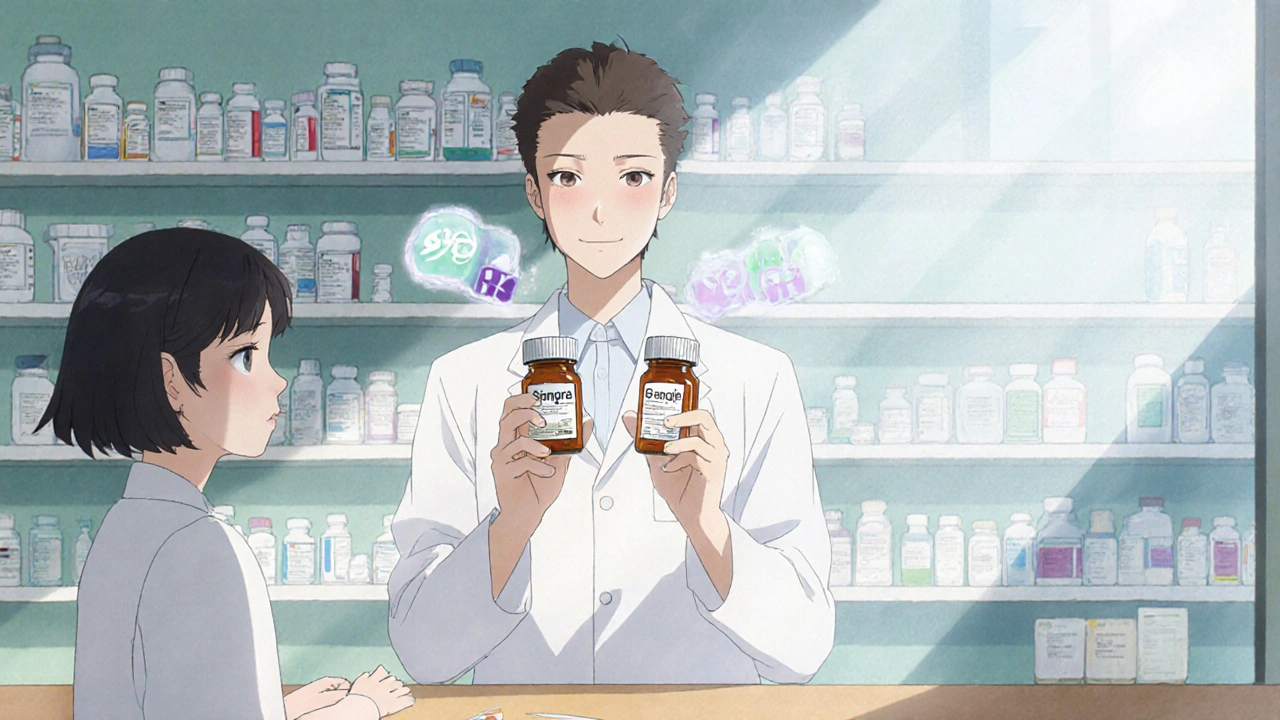
Learn how pharmacy systems correctly identify generic and brand drugs using NDC and TE codes, avoid substitution errors, and improve patient safety with best practices backed by FDA guidelines and real-world pharmacy data.

Dec 16 2025
Oct 5 2025

Dec 23 2025
Nov 19 2025
Oct 20 2025