
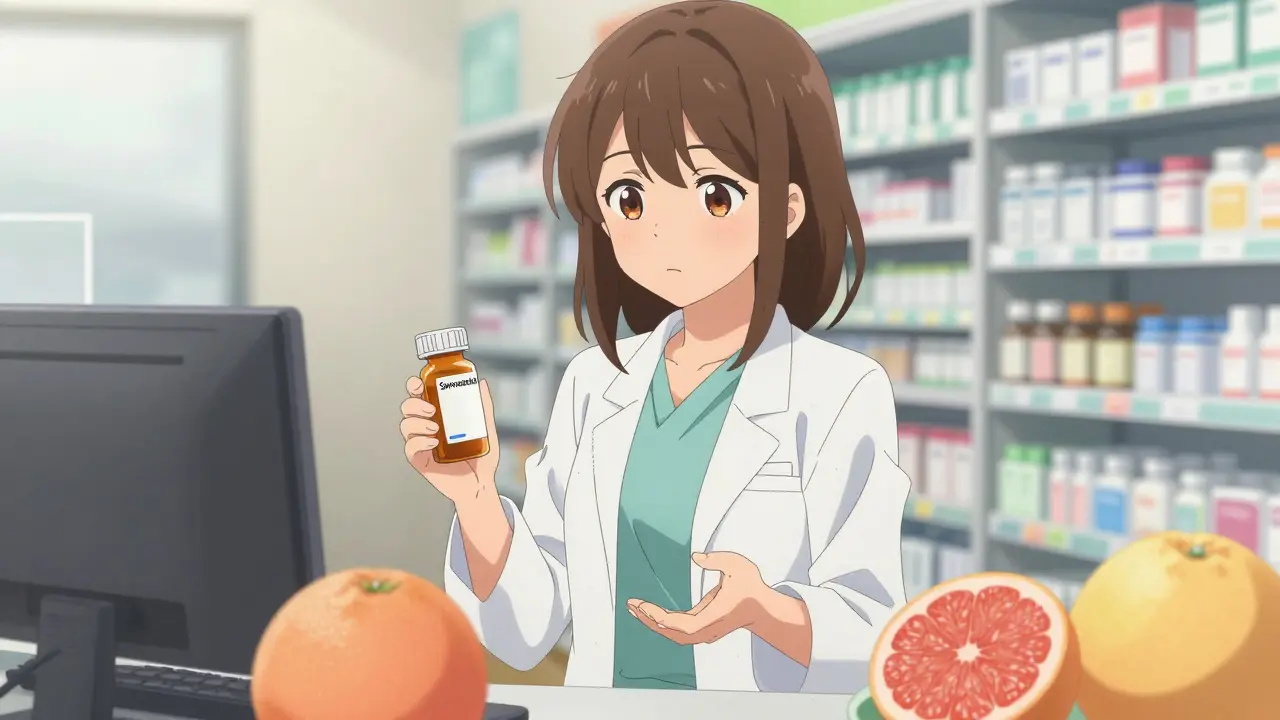
Statin & Grapefruit Interaction Checker
Select Your Medication
Select the statin you are currently taking to see if it interacts with grapefruit.
Select a medication to view safety guidelines regarding grapefruit consumption.
You might think enjoying a glass of fresh grapefruit juice with your morning medication is a healthy start to the day. For millions of people taking cholesterol-lowering drugs, however, this habit can turn dangerous. The combination of statins and grapefruit isn't just a minor dietary note; it is a significant chemical interaction that can spike drug levels in your blood to toxic ranges. This isn't about general wellness advice-it's about pharmacokinetics, specifically how your body breaks down medicine.
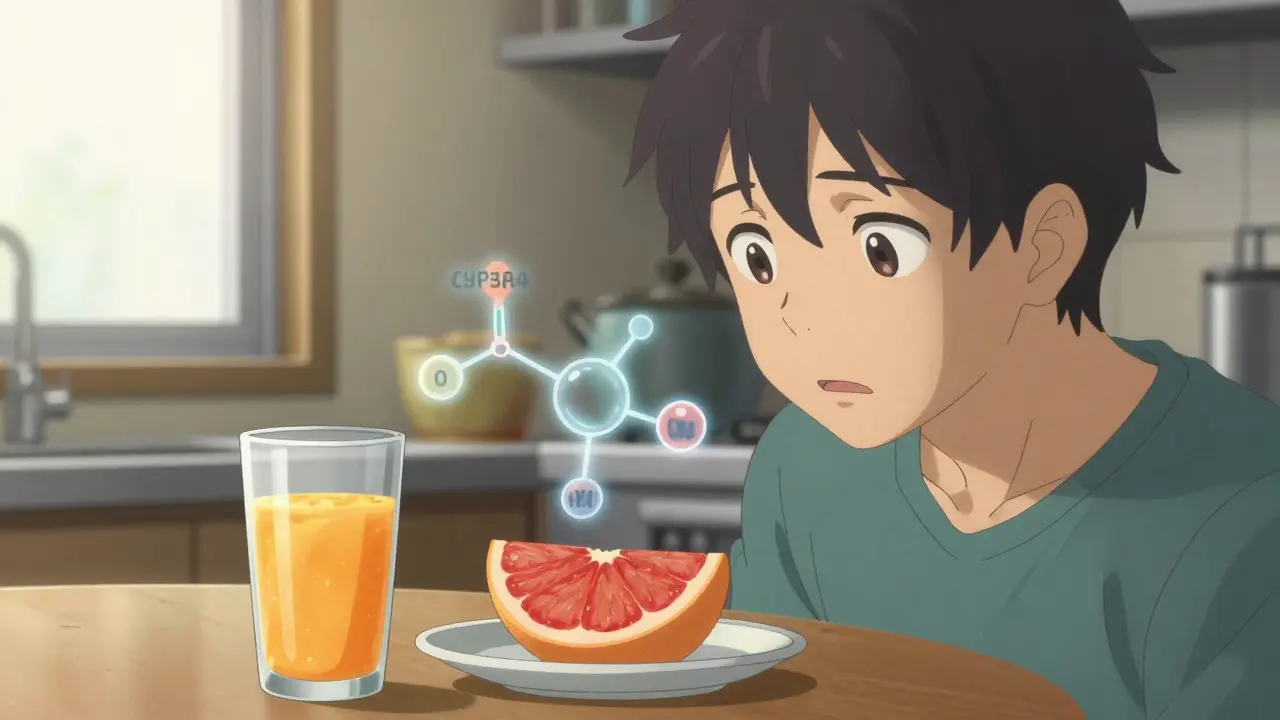
The core issue lies in a specific enzyme system called cytochrome P450 3A4, or CYP3A4. This enzyme acts as a gatekeeper in your intestines and liver, breaking down roughly half of all medications before they enter your bloodstream. When you eat grapefruit, you ingest natural compounds known as furanocoumarins. These compounds don't just block the enzyme temporarily; they disable it irreversibly through a process called mechanism-based inhibition. Because your body takes time to regenerate these enzymes, the effect lasts for up to 72 hours after consumption. This means separating your pill from your fruit by a few hours does not solve the problem.
Which Statins Are Affected?
Not all statins are created equal when it comes to this interaction. The risk depends entirely on which metabolic pathway your specific medication uses. Some statins rely heavily on the CYP3A4 enzyme, while others bypass it completely. Understanding this distinction is crucial for managing your cardiovascular health safely.
| Statin Name (Brand) | Metabolic Pathway | Interaction Risk | Recommended Action |
|---|---|---|---|
| Simvastatin (Zocor) | CYP3A4 | High | Avoid grapefruit entirely |
| Lovastatin (Mevacor) | CYP3A4 | High | Avoid grapefruit entirely |
| Atorvastatin (Lipitor) | CYP3A4 | Moderate | Limit to one small glass (200 mL) daily |
| Rosuvastatin (Crestor) | Minimal CYP metabolism | Low/None | No restriction needed |
| Pravastatin (Pravachol) | Minimal CYP metabolism | Low/None | No restriction needed |
| Fluvastatin (Lescol) | CYP2C9 | Low/None | No restriction needed |
| Pitavastatin (Livalo) | Minimal CYP metabolism | Low/None | No restriction needed |
For high-risk statins like simvastatin and lovastatin, the increase in drug concentration can be dramatic. Research shows that regular grapefruit consumption can increase the amount of simvastatin in your blood by up to 3.6 times. Atorvastatin sees a more moderate but still significant rise of 2 to 3 times. In contrast, rosuvastatin and pravastatin do not use the CYP3A4 pathway significantly, making them safe choices for grapefruit lovers.
The Physical Consequences: From Pain to Kidney Failure
When the CYP3A4 enzyme is inhibited, the statin accumulates in your system. Your body cannot clear the drug at its normal rate, leading to supratherapeutic levels. This excess medication puts undue stress on your muscles and organs. The most common symptom is myalgia, or muscle pain, which affects 5-10% of statin users generally but becomes much more frequent with grapefruit interaction.
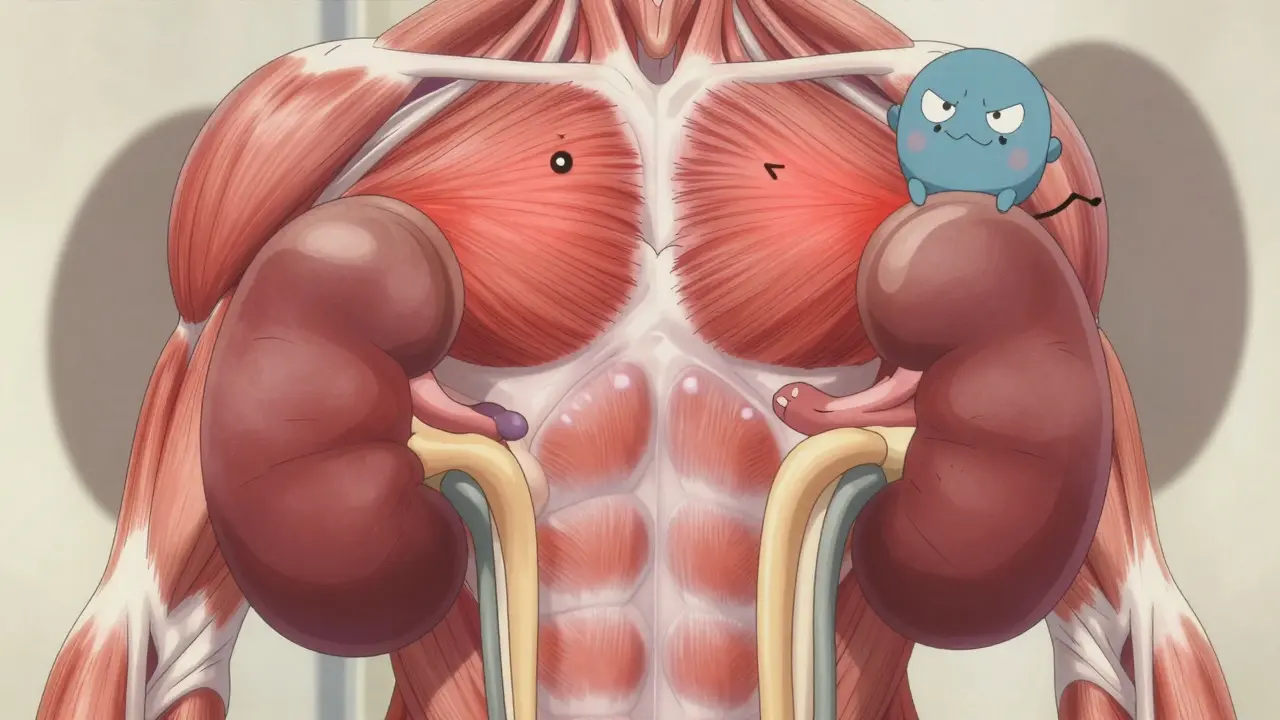
While muscle ache is uncomfortable, the real danger lies in rhabdomyolysis. This is a severe condition where muscle tissue breaks down rapidly, releasing proteins like myoglobin into the bloodstream. Myoglobin is toxic to the kidneys and can cause acute kidney failure. Although rare-occurring in approximately 0.1 to 0.5 cases per 100,000 patient-years-the risk skyrockets when high-dose statins are combined with large amounts of grapefruit juice. Symptoms include severe muscle weakness, intense soreness, and urine that looks like tea or cola. If you experience these signs, seek emergency medical attention immediately.
Why Timing Doesn't Matter
A common misconception is that you can avoid the interaction by taking your pill at night and eating grapefruit in the morning. This strategy fails because the inhibition of CYP3A4 is irreversible. Once the furanocoumarins bind to the enzyme, that enzyme is dead until your body creates new ones. This regeneration process takes between 24 and 72 hours. Therefore, even if you haven't eaten grapefruit today, the effects of yesterday's breakfast may still be blocking your metabolism. Consistency matters less than total avoidance for high-risk statins.
Navigating Medical Advice and Guidelines
Health authorities have updated their guidance to reflect current evidence. The U.S. Food and Drug Administration (FDA) recommends that patients taking simvastatin avoid grapefruit juice entirely. For those on atorvastatin, the limit is set at no more than one small glass (approximately 200 mL) per day. The European Medicines Agency takes a stricter stance, advising complete avoidance for both simvastatin and lovastatin users.
Despite these warnings, awareness remains low. A 2021 survey found that only 38% of statin users knew about this interaction, even though 67% of medication labels carry the warning. Pharmacists play a vital role here, often being the last line of defense before a patient leaves the pharmacy. They should counsel patients on the persistence of the effect and the equivalence of fresh fruit, juice, and supplements in causing the interaction.

Safer Alternatives for Grapefruit Lovers
If you refuse to give up grapefruit, you are not forced to stop cholesterol treatment. Switching to a non-interacting statin is a straightforward solution. Rosuvastatin and pravastatin are highly effective at lowering LDL cholesterol without engaging the CYP3A4 pathway. Discussing a switch with your healthcare provider can eliminate the risk while maintaining cardiovascular protection. Stopping statin therapy abruptly increases the risk of heart attack and stroke, so finding a compatible medication is far safer than discontinuing treatment.
Can I eat grapefruit seeds or peel if I take statins?
Yes, the furanocoumarins that cause the interaction are present throughout the entire grapefruit, including the flesh, juice, peel, and seeds. There is no part of the fruit that is "safe" to consume if you are on a high-risk statin like simvastatin.
Does orange or lemon juice have the same effect?
No. While Seville oranges (used in marmalades) contain similar compounds, standard sweet oranges, lemons, and limes do not inhibit CYP3A4 significantly. You can safely consume these citrus fruits with your statins.
How long does the grapefruit effect last?
The inhibitory effect can last up to 72 hours. Because the enzyme damage is irreversible, your body must synthesize new enzymes to restore normal metabolism, which is why timing your dose relative to the fruit does not help.
Is the interaction worse with concentrated juice?
Yes. Concentrated juices and grapefruit supplements contain higher doses of furanocoumarins than fresh fruit. This leads to greater enzyme inhibition and a higher risk of elevated statin levels in the blood.
What should I do if I accidentally drank grapefruit juice?
Do not skip your next dose unless instructed by your doctor. Monitor yourself closely for symptoms of muscle pain, weakness, or dark urine over the next few days. If symptoms appear, contact your healthcare provider immediately.


Comments
Mark Hogan
honestly this is why i always just ask my pharmacist before mixing anything with my meds. they know their stuff and its better safe than sorry. i had no idea the enzyme thing lasted so long tho, thought spacing it out was enough.
Alexandre Desbiens
The pharmacokinetics described here are quite precise regarding the irreversible inhibition of CYP3A4. It is a common misconception that temporal separation of ingestion mitigates the risk, yet the regeneration of the enzyme pool requires significantly more time than most patients anticipate. For those on simvastatin, the avoidance protocol is indeed the only prudent course of action given the magnitude of bioavailability increase observed in clinical trials.
Hassan Bukhari
Look, if you cant even read the label on your prescription bottle maybe you shouldnt be taking it at all. Its not rocket science, people. The warning is right there in big bold letters. If you have to google basic drug interactions after eating breakfast, thats on you. Stop acting like the pharmaceutical industry is hiding secrets when the info is literally in the insert.
Jay Foreman
I feel for everyone dealing with this because honestly it feels like we are being punished for enjoying natural foods. My doctor put me on Lipitor years ago and I never knew about the grapefruit thing until I started having these weird muscle aches. It’s just frustrating that something as simple as juice can mess up your whole system. I switched to Crestor last year and haven’t looked back since then. At least now I can eat whatever I want without worrying about my kidneys failing. We need better education from doctors instead of just handing us pills and saying take this twice a day. It’s scary how little we actually know about what we put in our bodies every single day.
Cathy N
my mom used to drink grapefruit juice every morning with her simvastatin and she would complain about sore muscles all the time. we finally figured it out after reading this exact article online. she switched to pravastatin and feels much better now. glad someone wrote this down clearly
Adelaide Motata
its amazing how many people ignore medical advice because they think they know better. typical. i see it all the time in my pharmacy queue. people bringing in prescriptions and asking if they can still have their morning smoothie with grapefruit. no. just no. stop trying to outsmart chemistry. it doesnt work that way. you will end up in the ER with rhabdo and then who pays for that? society does. so please just do your part and avoid the fruit if you are on the high risk list.
Mike Crump
This is such a fantastic breakdown of a complex topic! 🍊💊 I love how you explained the enzyme gatekeeper concept because it makes so much sense visually. I’ve always been curious about why timing didn't matter, and the 72-hour window really clarifies things for me. It’s great to know that Rosuvastatin is a safe harbor for us citrus lovers. Thanks for sharing this valuable info, it really helps demystify the process!
Daniel Tremblay
Oh wow, another article telling adults to read instructions. Groundbreaking. I bet Mark Hogan over there is proud of himself for remembering to check his labels. Meanwhile, the rest of us are busy living our lives and trusting our doctors to prescribe meds that don't require a culinary degree to manage. But sure, let's pretend everyone has the time to memorize metabolic pathways. Real mature.
Henri-Paul Soulodre
The tragedy of modern healthcare is laid bare here! We are told to trust the system, yet the system fails to communicate basic survival information to the very people it claims to protect. This silence is deafening. How many hearts have stopped beating because a patient believed a myth about timing? It is a moral failure of epic proportions that we must address immediately before more innocent lives are lost to ignorance and negligence.
Jonathan Paul
think about it deeper. the grapefruit is nature trying to tell you something. maybe your body is rejecting the artificial chemicals. by blocking the enzyme, the fruit is saving you from overdosing on synthetic crap. but you dont listen. you keep taking the pill. you are part of the machine now. wake up people. the seeds hold the truth too. eat the whole fruit and embrace the chaos. freedom is in the toxicity.