
Lithium Thyroid Monitoring Calculator
This calculator helps you determine the optimal thyroid monitoring schedule based on your lithium treatment duration. Regular testing is crucial as thyroid issues can develop gradually and mimic bipolar symptoms.
Next Test:
Risk Level:
Important: TSH can rise slowly. Symptoms often mimic bipolar symptoms (fatigue, weight gain, brain fog).
Never stop lithium without medical supervision - abrupt discontinuation can trigger thyroid storm in rare cases.
- Before starting lithium: TSH, free T4, and thyroid antibodies (TPOAb)
- Every 6 months for first year: TSH and free T4
- After year one: TSH annually
- If TSH > 4.0 mIU/L: Check free T4 and consider levothyroxine
- Selenium (100mcg/day) may reduce hypothyroidism risk by nearly half
Lithium is one of the oldest and most effective treatments for bipolar disorder. For decades, it’s helped people stabilize their moods, prevent manic episodes, and reduce the risk of suicide. But for many, that benefit comes with a hidden cost: thyroid problems. If you’re on lithium, your thyroid isn’t just a background detail-it’s something you need to watch closely, every step of the way.
Why Lithium Messes With Your Thyroid
Lithium doesn’t just affect your brain. It also interferes with how your thyroid gland works. The thyroid makes hormones that control your metabolism, energy, weight, and mood. Lithium disrupts this process in several ways. It blocks the thyroid from releasing stored hormones like T3 and T4. It stops the gland from using iodine properly to make new hormones. It even changes the structure of the proteins inside thyroid cells that hold these hormones together. As a result, your thyroid can’t do its job. That’s why up to 32% of people on long-term lithium develop thyroid issues. About 79% of those cases are hypothyroidism-when your thyroid doesn’t make enough hormones. Another 30-59% develop a goiter, which is a swollen thyroid that can cause neck tightness, trouble swallowing, or just a visible lump. Women under 60 are at higher risk. Studies show they’re more than three times as likely as men to develop hypothyroidism on the same lithium dose. Age also matters. The longer you take lithium, the higher your chances. After 10 years, nearly half of users have thyroid changes.Hypothyroidism: The Most Common Problem
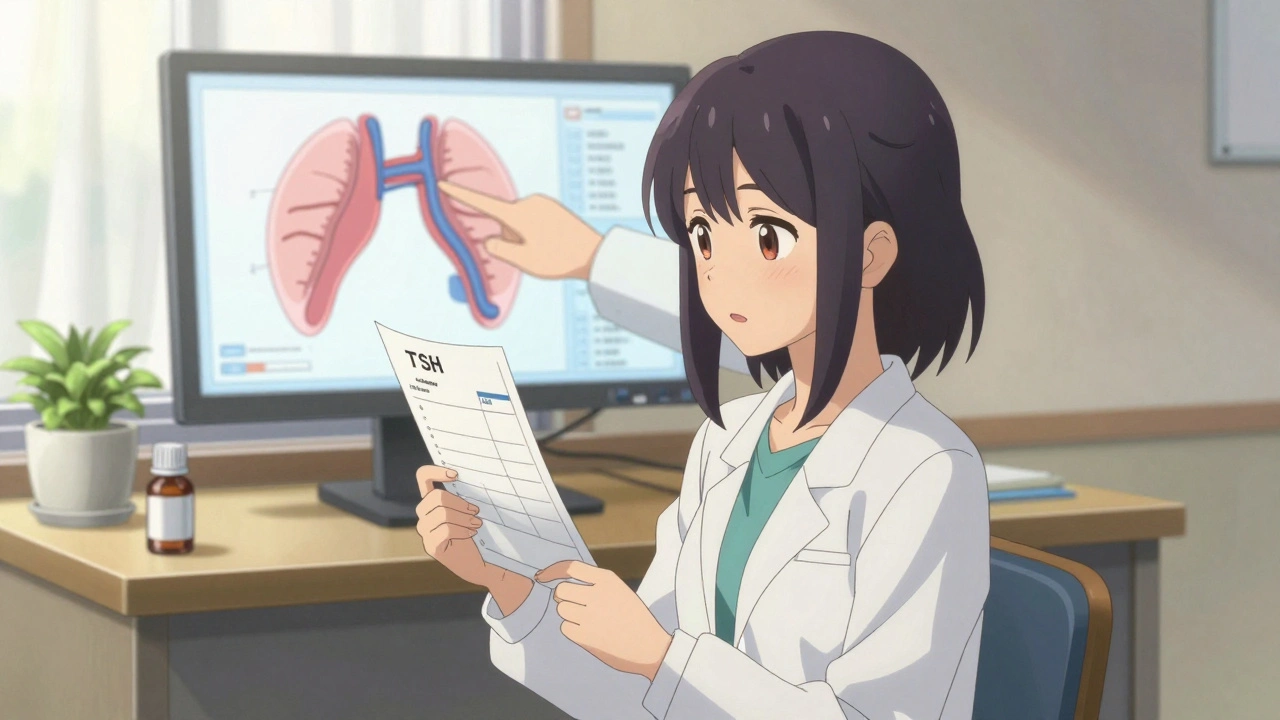
If your TSH (thyroid-stimulating hormone) climbs above 4.0 mIU/L, that’s a red flag. Many people on lithium see their TSH jump from normal levels (like 1.8) to 8.7 or higher within a year or two. Symptoms are easy to miss because they overlap with bipolar symptoms: fatigue, weight gain, brain fog, depression, cold intolerance. What’s tricky is that these symptoms often get blamed on the bipolar disorder itself. That’s why so many people suffer for months-or years-without realizing their thyroid is the real issue. One patient on Reddit shared: “My TSH went from 1.8 to 8.7 in 18 months. I was exhausted all the time. My psychiatrist said it was just my mood cycling. I didn’t get tested until I collapsed at work.” The fix is usually levothyroxine, a synthetic thyroid hormone. But here’s the catch: people on lithium often need higher doses than others. Studies show they may need 20-30% more levothyroxine to get their TSH back into range. Why? Because lithium keeps interfering with how the body uses the hormone. And it’s not always simple. Some patients report feeling worse even after their TSH looks “normal” on paper. That’s because thyroid hormone levels don’t always reflect how you feel. Weight gain, dry skin, and low energy can linger. That’s when you need to look beyond TSH-check free T3 and free T4 levels too.Hyperthyroidism: Less Common, But Dangerous
Less than 5% of lithium users develop hyperthyroidism. But when it happens, it’s often misunderstood. Most cases aren’t Graves’ disease-the autoimmune condition that causes overactive thyroid. Instead, it’s painless thyroiditis. That means the thyroid gets inflamed and leaks stored hormones into the blood. It’s temporary. Symptoms like rapid heartbeat, weight loss, or anxiety usually fade on their own in 3-6 months. The danger? Mistaking it for Graves’ disease. If you’re given antithyroid drugs like carbimazole for painless thyroiditis, you could end up with hypothyroidism after the inflammation clears. The right approach? Monitor, wait, and avoid drugs unless symptoms are severe. There’s one rare but terrifying risk: stopping lithium suddenly. If you’ve had lithium-induced thyroiditis, abruptly stopping lithium-even through dialysis for overdose-can trigger thyroid storm. That’s a life-threatening surge of thyroid hormones. One documented case involved a patient who went into thyroid storm after hemodialysis for lithium toxicity. It’s rare, but it’s why you never stop lithium cold turkey without medical supervision.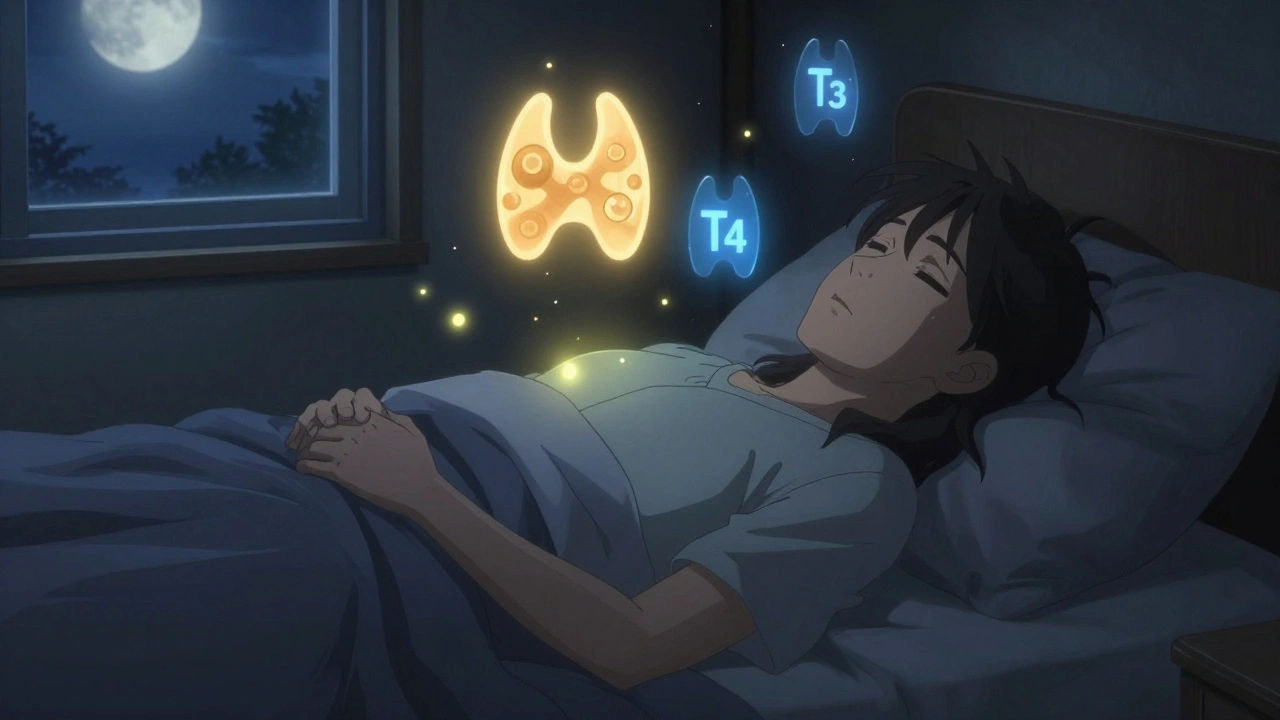
How It Compares to Other Mood Stabilizers
Not all mood stabilizers hurt your thyroid the same way. - Valproate: Can cause mild TSH spikes in 5-10% of users, but rarely leads to full hypothyroidism. - Carbamazepine: Almost no thyroid impact. - Lithium: Highest risk by far. 20-32% develop thyroid dysfunction. Lithium’s edge? It’s better than the alternatives at preventing suicide. One study showed a 14% absolute reduction in suicide attempts compared to other mood stabilizers. That’s huge. But that benefit comes with a trade-off: lifelong thyroid monitoring.What You Need to Do: Monitoring and Management
The American Thyroid Association says: test before you start lithium. Then every 6 months for the first year, then yearly after that. Don’t skip these. TSH levels can creep up slowly. Many doctors miss it because they wait for symptoms. Here’s a simple checklist:- Before starting lithium: TSH, free T4, and thyroid antibodies (TPOAb)
- Every 6 months for the first year: TSH and free T4
- After year one: TSH annually, or more often if levels change
- If TSH rises above 4.0: check free T4 and consider levothyroxine
- If you develop a goiter: get an ultrasound
New Hope: Selenium and Future Treatments
There’s promising research on selenium. A 2023 trial gave 100 mcg of selenium daily to people on lithium. After two years, hypothyroidism dropped from 24% to 14%. Selenium helps the thyroid process iodine and reduces inflammation. It’s not a cure, but it’s a low-risk, low-cost way to lower your chances. There’s also new lithium-like drugs in development. RG101, currently in Phase II trials, looks like it stabilizes mood just as well as lithium-but without raising TSH. That could change everything.
What Patients Are Saying
On Reddit, 68% of users on lithium reported thyroid issues. Most said they felt better once they started levothyroxine. But many also said they wished their psychiatrist had warned them sooner. One person wrote: “I’ve been on 900mg for 8 years. My thyroid is fine. But I’ve seen friends struggle. No one told me this could happen.” Another said: “I take 75mcg levothyroxine. My TSH is normal. But I still feel tired. I think my doctor just stops looking once the numbers are ‘okay.’” And one of the most common positive comments? “Better than the alternative. My bipolar symptoms are controlled, even with thyroid issues.” That’s the reality. Lithium isn’t perfect. But for many, it’s the best tool they have. The key is managing the side effects, not avoiding the drug.When to Consider Alternatives
You don’t have to stay on lithium forever. If your thyroid problems are severe-like persistent hypothyroidism despite medication, or repeated goiter growth-it’s fair to talk about switching. Alternatives like valproate or lamotrigine may be options, especially if you’re not at high risk for suicide. But don’t switch just because your TSH is slightly high. Talk to your psychiatrist. Get a second opinion. Lithium’s benefits for long-term stability and suicide prevention are unmatched. Don’t give it up unless you have a better, safer plan.Final Thoughts
Lithium and thyroid disease aren’t a dealbreaker. They’re a partnership you need to manage. The thyroid problems are real, predictable, and treatable. But only if you’re watching for them. Get your labs done. Track your symptoms. Ask for free T3 and T4 if you’re still tired. Consider selenium. Don’t panic over small TSH changes. And never stop lithium on your own. This isn’t about avoiding lithium. It’s about using it wisely-with your thyroid in mind.Does lithium always cause thyroid problems?
No. While up to 32% of people on long-term lithium develop thyroid issues, about 68% do not. Risk depends on factors like gender, age, dose, iodine intake, and genetics. Some people stay thyroid-normal for decades on lithium. Regular monitoring helps catch problems early.
Can I stop lithium if my thyroid gets worse?
Not without medical guidance. Stopping lithium suddenly can trigger thyroid storm in rare cases, especially if you’ve had thyroiditis. If your thyroid worsens, work with your doctor to adjust your levothyroxine dose first. Only consider switching mood stabilizers if your thyroid remains unstable despite treatment.
How long does it take for lithium to affect the thyroid?
It usually takes 6 to 8 weeks for lithium to start affecting thyroid hormone levels. TSH may rise slowly over months or years. That’s why monitoring every 6 months is critical-waiting for symptoms can mean missing early signs.
Is levothyroxine safe to take with lithium?
Yes. Levothyroxine is the standard treatment for lithium-induced hypothyroidism. Many people take both safely for years. You may need a higher dose than someone not on lithium, because lithium interferes with how your body uses the hormone. Always check TSH levels 6-8 weeks after starting or adjusting levothyroxine.
Should I take selenium supplements with lithium?
A 100 mcg daily selenium supplement may reduce your risk of developing hypothyroidism by nearly half, according to a 2023 clinical trial. It’s low-risk and affordable. Talk to your doctor before starting, especially if you have kidney disease or take other supplements. It’s not a replacement for monitoring, but it’s a helpful extra step.
Can lithium cause thyroid cancer?
No strong evidence links lithium to thyroid cancer. While lithium can cause goiter and thyroid cell growth, studies haven’t shown an increased cancer risk. Regular ultrasounds are recommended only if a nodule is found, not as routine screening.
What if I’m pregnant and on lithium?
Lithium use during pregnancy carries risks to the fetus, including heart defects. But untreated bipolar disorder also poses risks. If you’re planning pregnancy, work with a psychiatrist and endocrinologist. Thyroid function should be monitored monthly during pregnancy. Levothyroxine is safe in pregnancy and often needed. Do not stop lithium without medical guidance.



Comments
Webster Bull
Lithium saved my life. Thyroid issues? Yeah, I got 'em. Took me two years to figure out it wasn't just my brain being broken. Levothyroxine fixed me. Don't let fear stop you from living.
Scott Butler
This is why America's healthcare is broken. Doctors don't test thyroid until you're falling over. I had a TSH of 12 and they called it 'mood instability.' Pathetic.
Ronan Lansbury
You know who really controls the lithium narrative? Big Pharma. They've known about the thyroid damage since the 70s. Why? Because levothyroxine is a billion-dollar drug. They profit from your suffering.
sharon soila
If you're on lithium, please, please get your thyroid checked every six months. It's not complicated. It's not optional. It's how you stay alive. You deserve to feel well, not just stable.
nina nakamura
People who say 'lithium is worth it' are just rationalizing. You're trading your thyroid for a mood. That's not a trade. That's surrender. You're letting your body rot for a placebo effect.
Tom Zerkoff
I've been on lithium for 15 years. TSH was 8.2 at year 3. Started levothyroxine at 50mcg. Needed 100mcg to feel normal. Free T3 matters more than TSH. Most doctors don't know this. You have to advocate for yourself.
Sheldon Bird
Selenium is a game changer. Took 100mcg daily. My TSH dropped 3 points in 6 months. No side effects. Just feels better. 🙏
Karen Mccullouch
I hate how people act like lithium is some miracle drug. It's a chemical lobotomy with extra steps. And now you're hypothyroid? Congrats. You're just another statistic. 😒
Michael Gardner
Wait, so if I'm not a woman under 60, I'm safe? That's what this article implies. What about older men? What about people with Hashimoto's already? This feels like cherry-picking data.
John Fred
Lithium + levothyroxine = my new normal 🧠💊🩺 TSH was 10.5 → now 2.1 Still tired sometimes? Yeah. But I can hold a job, hug my kids, and not cry for no reason. Worth every lab test.
Hamza Laassili
This article is full of lies. Lithium doesn't cause goiters. It's the iodine in the water. The government is poisoning us. And they call this 'science.'
Rawlson King
The fact that you need to monitor your thyroid for decades just to take a mood stabilizer shows how flawed psychiatric medicine is. We're treating symptoms with side-effect bombs.
Casey Mellish
I'm Australian. We've got the same stats here. Selenium supplementation is now part of our national guidelines for lithium patients. It's not experimental. It's standard care. Why isn't this common knowledge in the US?