
When you prescribe a generic medication, you might think you’re doing the right thing-saving patients money, following guidelines, keeping costs down. But in today’s legal landscape, that simple choice can expose you to serious liability. The rules have changed. And if you’re not aware of how, you could be the one held responsible when something goes wrong.
The Legal Shift No One Talked About
In 2011, the U.S. Supreme Court ruled in PLIVA v. Mensing that generic drug manufacturers can’t be sued for failing to update warning labels. Why? Because federal law forces them to copy the brand-name drug’s label exactly. They can’t change it, even if new safety data emerges. Then in 2013, the Court doubled down in Mutual Pharmaceutical v. Bartlett, ruling that generic manufacturers can’t be held liable for design defects either. The result? A legal black hole. Patients injured by generic drugs have almost no path to sue the company that made the medicine.So who’s left? The doctor who prescribed it.
That’s not theoretical. Between 2014 and 2019, lawsuits targeting physicians for injuries caused by generic drugs rose by 37%. One case involved a woman who developed toxic epidermal necrolysis after taking generic sulindac. She lost 65% of her skin, spent 50 days in a burn unit, and was permanently disfigured. The manufacturer couldn’t be sued. The lawsuit went to the prescribing physician.
What Makes You Liable?
To win a malpractice case against you, a patient must prove three things: you had a duty to them, you breached that duty, and that breach directly caused harm. With generics, the breach often comes down to one thing: failure to warn.Let’s say you prescribe a generic anticonvulsant known to cause Stevens-Johnson syndrome. You don’t mention the risk. The patient develops it. The manufacturer is protected by federal preemption. The pharmacist didn’t change anything. So the patient sues you. And under the law, you’re the only one with a legal obligation to explain the danger.
That’s not just a worst-case scenario. It’s happening. In 2021, the American College of Physicians documented 47 malpractice claims tied to generic drug injuries. Twelve of them resulted in settlements averaging over $327,500.
State Laws Are a Patchwork
Forty-nine states allow pharmacists to substitute generics unless you write “dispense as written.” In 32 of those states, the pharmacist must notify you within 72 hours. In 17, they don’t have to tell you at all.Some states try to fix the gap. Illinois courts have ruled that generic manufacturers must change their label-or stop selling the drug-if it’s dangerously flawed. But in most states, the federal preemption rule stands. That means your liability isn’t just about the drug you prescribe-it’s about what you know, what you say, and what you document.
Brand vs. Generic: The Liability Difference
If you prescribe a brand-name drug and something goes wrong, the manufacturer can be sued. They can change their label. They can recall the product. They have a legal duty to warn.With generics? None of that applies. The manufacturer is shielded. So the responsibility shifts-fully-to you.
Some doctors tried to push back. In 2014, Alabama’s Supreme Court ruled that brand-name manufacturers could be liable for injuries caused by generics. But the state legislature quickly passed a law in 2015 shutting that down. Now, even brand-name makers are off the hook. The burden falls squarely on the prescriber.
What Doctors Are Doing Now
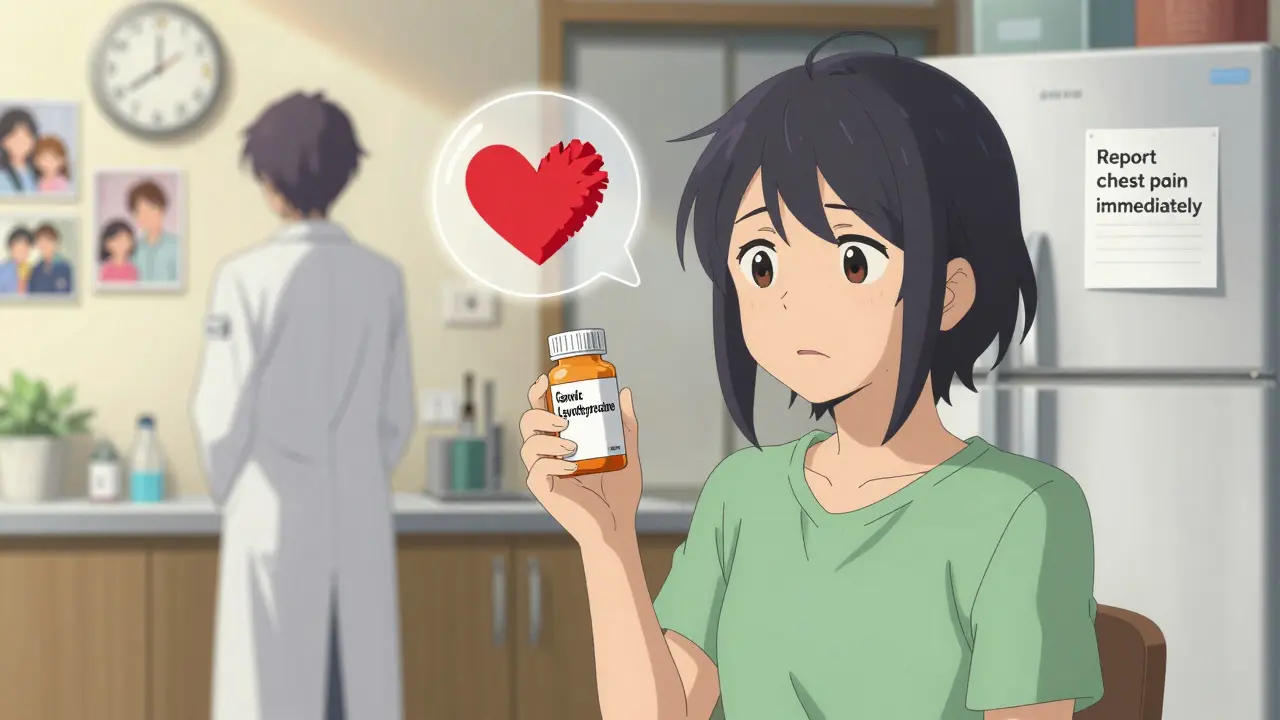
A 2022 AMA survey of 1,200 physicians found that 68% feel more anxious prescribing generics. Forty-two percent admit they sometimes choose the more expensive brand-name drug-not because it’s better, but because they’re afraid of being sued.On physician forums, stories are pouring in. One doctor in Massachusetts says he now adds 15 to 20 minutes to every visit to document side effects. Another wrote a detailed warning for a patient taking generic levothyroxine: “This drug can cause heart rhythm problems if levels fluctuate. Do not switch brands without monitoring. Report chest pain or dizziness immediately.” He printed it, handed it to the patient, and signed it.
That’s not overkill. That’s risk management.
Documentation Is Your Shield
The single most effective way to protect yourself? Document everything.Don’t just write “medication discussed.” That’s meaningless. Say exactly what you said. For example:
- “Discussed with patient that generic warfarin may have variable absorption. Advised to take at same time daily, avoid cranberry juice, report bruising or bleeding.”
- “Warned patient that generic lamotrigine carries risk of life-threatening rash. Instructed to stop immediately and seek care if rash develops.”
- “Patient aware that generic metformin may cause GI upset. Advised to take with food. No alternatives discussed due to cost.”
Electronic health records now have mandatory fields for this. Epic Systems added them in 2021. If you skip them, you’re leaving yourself exposed.
Studies show doctors who document specific counseling on generic substitution reduce their liability risk by 58%. Insurance companies know this. The American Professional Agency reports a 7.3% premium increase for physicians who don’t document these conversations.

High-Risk Medications to Watch
Not all generics are created equal. Some have narrow therapeutic indices-small changes in dose or absorption can cause serious harm. These include:- Warfarin (blood thinner)
- Levothyroxine (thyroid hormone)
- Phenytoin, carbamazepine, valproate (anti-seizure drugs)
- Lithium (mood stabilizer)
- Cyclosporine, tacrolimus (immunosuppressants)
In 32 states, writing “dispense as written” prevents substitution. Use it. Don’t assume the pharmacist will know the risk. Don’t assume the patient will understand the difference.
What’s Changing Now?
The legal landscape is still shifting. In March 2023, the 9th Circuit Court ruled that if a brand-name manufacturer updates its warning label, the generic maker must follow-or face liability. It’s a small crack in the preemption wall. But it’s not nationwide yet.The AMA is pushing for state laws requiring pharmacists to notify physicians within 24 hours when they substitute a generic for a high-risk drug. Bills are pending in 18 states.
Meanwhile, premiums keep climbing. Between 2013 and 2022, malpractice premiums for primary care physicians rose 22.7%. The reason? Generic drug liability.
Your Action Plan
You can’t stop prescribing generics. They’re 90% of all prescriptions filled. But you can protect yourself.- Know your high-risk drugs. If it’s narrow-therapeutic-index, assume substitution is dangerous.
- Write “dispense as written” on prescriptions for those drugs-especially if your state allows it.
- Document specific counseling in the EHR. Don’t use boilerplate. Name the drug, the risk, the advice.
- Don’t assume the patient understands. Use plain language. Ask them to repeat back what you said.
- Stay informed. If the brand-name label gets updated, check if your generic does too. If not, consider switching.
This isn’t about fear. It’s about responsibility. The system changed. The law changed. Your practice has to change with it.
Can I be sued if I prescribe a generic drug and the patient gets hurt?
Yes. Because federal law protects generic manufacturers from lawsuits over labeling or design defects, patients who are injured often turn to the prescribing physician. Courts have ruled that physicians have a duty to warn patients about known risks, regardless of whether the drug is brand or generic. Failure to document that warning increases your liability risk.
Is prescribing generics less safe than brand-name drugs?
The FDA considers generics bioequivalent to brand-name drugs, meaning they work the same way in the body. But for drugs with narrow therapeutic indices-like warfarin or levothyroxine-even small differences in absorption can cause harm. That’s why many doctors avoid switching patients between generic versions of these drugs. It’s not about safety overall-it’s about consistency for high-risk medications.
Do I have to tell patients I’m prescribing a generic?
You’re not legally required to say “this is generic,” but you are required to explain risks. If a generic has the same risks as the brand, you must warn the patient. If the patient asks why you’re prescribing a generic, answer honestly. But more importantly, document your discussion of side effects and instructions. That’s what matters in court.
Can I be held liable if the pharmacist substitutes a generic without my permission?
Yes. In most states, pharmacists can substitute generics unless you write “dispense as written.” If you didn’t block substitution and the patient is harmed, you can still be sued. The fact that you didn’t authorize the substitution doesn’t absolve you of your duty to warn about the drug’s risks. Your liability comes from what you prescribed, not what the pharmacist dispensed.
Are there any legal protections for physicians prescribing generics?
The only real protection is thorough documentation. If you clearly explain the risks, provide written instructions, and record that conversation in the medical record, you significantly reduce your liability. Some states are considering laws that would require pharmacists to notify physicians of substitutions, but those aren’t law yet. Until then, your documentation is your shield.




Comments
Cara C
Wow, this is eye-opening. I never realized how much legal risk comes with prescribing generics. I’ve been doing it for 15 years thinking I was saving patients money-turns out I might’ve been walking into a minefield.
Christina Weber
Let’s be clear: if you didn’t document the counseling, you deserve every lawsuit. It’s not the system’s fault-it’s yours. ‘Discussed risks’ is not documentation. You need to write exactly what you said, when you said it, and how the patient responded. No excuses. Grammatically, this is non-negotiable.
Meina Taiwo
Write ‘dispense as written’ on warfarin, levothyroxine, and lithium. Always. It takes 3 seconds.
Erika Putri Aldana
Big Pharma is laughing all the way to the bank 😂 doctors are getting sued so the brand names can stay expensive. This is capitalism at its finest. I’m done trusting the system.
Brian Furnell
It’s a fascinating confluence of tort law, federal preemption, and pharmacoeconomics-essentially, the legal system has created a liability vacuum, and physicians, as the last identifiable actors in the chain of care, are being held to an absolute standard of informed consent, despite having zero control over product labeling or manufacturing. The structural asymmetry is staggering.
Jason Silva
They’re setting us up to fail. 🤫 The FDA, the courts, the manufacturers-they all got together and said ‘let’s make doctors the scapegoats.’ You think this is about safety? Nah. It’s about profit. And now your EHR is a trap. 😡
Sarah Williams
Thank you for sharing this. I’m going to start using your exact phrasing in my notes. This is exactly the kind of info we need.
mukesh matav
Interesting. I’ve been prescribing generics for years without issue. Maybe I’m just lucky-or maybe I’ve been documenting better than I thought.
Dan Adkins
It is imperative to underscore that the legal precedent established by PLIVA v. Mensing and Mutual Pharmaceutical v. Bartlett constitutes a systemic abdication of corporate accountability, thereby transferring the burden of risk mitigation entirely onto the individual practitioner-a phenomenon which, in the absence of legislative intervention, constitutes an unconscionable distortion of the fiduciary relationship between physician and patient.
Peggy Adams
So wait… if I prescribe a generic and the patient dies, I go to jail? 😳 I’m switching to brand only now. Who cares if it costs $500?
Swapneel Mehta
This is heavy. I’m going to review my EHR templates tomorrow. Good reminder that good care isn’t just about the medicine-it’s about the paper trail too.