

When you're on antiretroviral therapy (ART) for HIV, your life changes in many ways-but one thing that doesn’t get talked about enough is how your HIV meds can clash with everyday drugs you might be taking. It’s not just about pills you get from your HIV specialist. It’s the statin for your cholesterol, the painkiller for your back, the nasal spray for your allergies, even that herbal supplement you think is harmless. These aren’t theoretical risks. These are real, documented, life-threatening interactions that happen every day-and they’re easier to avoid than you think.
Why Some HIV Meds Are More Dangerous Than Others
Not all antiretroviral drugs play the same way with other medications. The biggest troublemakers are the ones that mess with your body’s drug-processing system, especially the CYP3A4 enzyme. This enzyme is like a factory worker that breaks down half the drugs you take. When it’s blocked or overworked, things go wrong fast. Protease inhibitors like ritonavir and cobicistat are the worst offenders. They don’t just slow down CYP3A4-they slam the brakes. Ritonavir alone has over 200 known drug interactions. That’s not a typo. It’s more than most other drugs combined. These boosters are often used to make other HIV drugs work better, but they turn your body into a minefield. Take simvastatin or lovastatin, two common cholesterol meds. When mixed with ritonavir, their levels can spike 20 to 30 times higher. That’s not just a side effect-it’s a recipe for rhabdomyolysis, a condition where muscle tissue breaks down and can lead to kidney failure or death. On the other end of the spectrum, newer drugs like dolutegravir and bictegravir (both integrase inhibitors) barely touch CYP3A4. Dolutegravir has only eight major interactions. Bictegravir? Just seven. That’s why most new HIV guidelines now recommend these as first-line treatment. Simpler. Safer. Fewer surprises.The Silent Killers: Over-the-Counter and Herbal Traps
You wouldn’t think a nasal spray or a herbal tea could be dangerous. But they are. Inhaled steroids like fluticasone (Flonase) and budesonide (Rhinocort) are common for asthma and allergies. But when paired with ritonavir or cobicistat, they don’t get broken down. They build up. And up. That can trigger Cushing’s syndrome-weight gain, moon face, high blood sugar, even adrenal crisis. One study found 17% of patients on boosted ART who used these sprays ended up hospitalized. That’s not rare. That’s predictable. Then there’s St. John’s Wort. People take it for mild depression. It’s natural, right? Wrong. It’s a powerful enzyme inducer. It can slash efavirenz levels by 50-60%. That’s not just a drop in effectiveness-it’s a full-on treatment failure. HIV can rebound. Resistance can develop. And once resistance sets in, your options shrink fast. Even something as simple as ibuprofen or naproxen can be risky if you’re on multiple meds. These NSAIDs are cleared by the same liver pathways as some HIV drugs. When you stack them, your kidneys and liver get overloaded. The risk isn’t always immediate, but over time, it adds up.Sex, Heart Health, and the Hidden Risks
Men on ART often take medications for erectile dysfunction. Sildenafil (Viagra), tadalafil (Cialis), avanafil (Stendra)-all of them are metabolized by CYP3A4. With ritonavir or cobicistat, their levels can jump 4 to 5 times higher. That means severe low blood pressure, dizziness, fainting, even heart attack. The fix? Dose limits. Sildenafil is capped at 25mg every 48 hours. Avanafil? Absolutely off-limits. No exceptions. Same goes for amlodipine, a common blood pressure pill. Ritonavir can push its levels up by 60%. That’s enough to send someone into shock. Many doctors don’t catch this until the patient shows up in the ER with a blood pressure of 70/40. And let’s not forget heart disease. Nearly 1 in 4 people with HIV over 50 have it. That means statins, beta-blockers, aspirin-all common. But statins like simvastatin and lovastatin are off-limits. Pitavastatin and fluvastatin? Those are your safest bets. The HHS Guidelines list them specifically for this reason.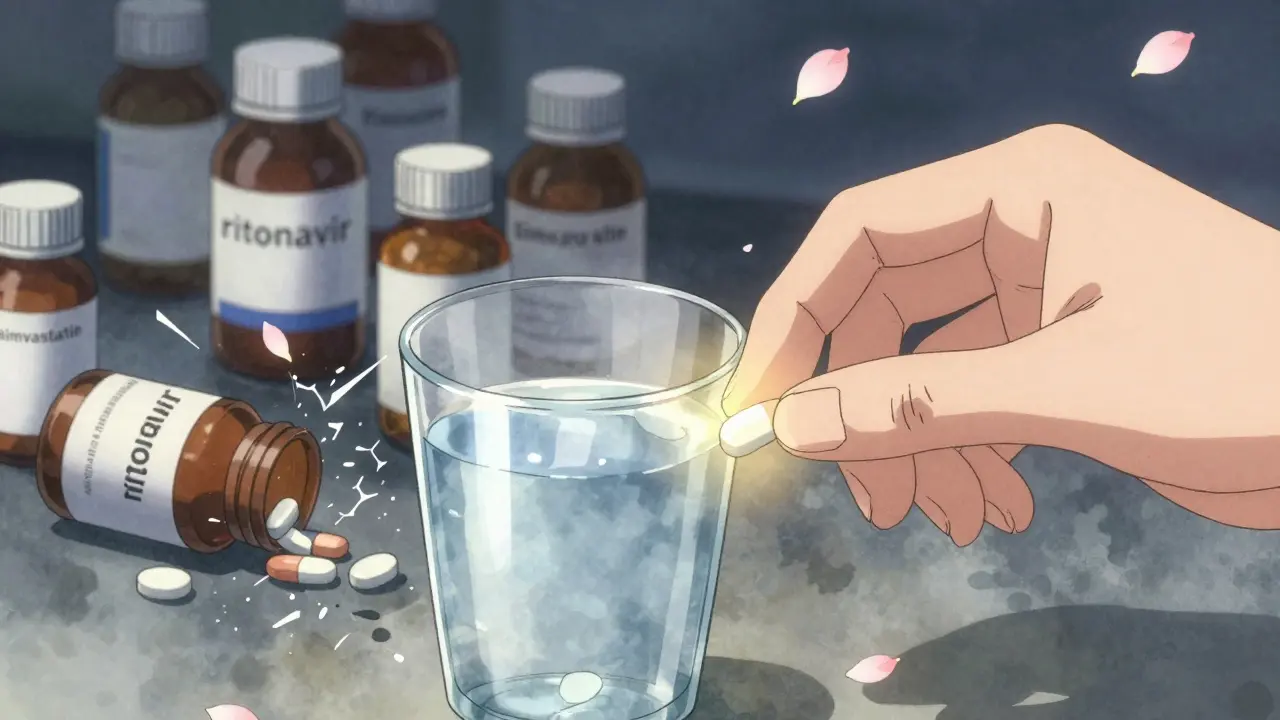
The Aging HIV Population: A Perfect Storm
HIV is no longer a young person’s disease. Half of all people living with HIV in the U.S. are over 50. That means they’re managing diabetes, high blood pressure, arthritis, depression, osteoporosis-all with multiple pills. The average 65-year-old with HIV takes over nine medications daily. That’s not just polypharmacy-it’s a drug interaction waiting to happen. Each extra pill increases your risk by 18%. Each year since your HIV diagnosis? Another 7%. That’s not a small number. That’s a ticking clock. And it’s why the Department of Veterans Affairs found that 68% of older veterans with HIV have at least one dangerous interaction. Many of them didn’t even know. The worst part? These interactions don’t just hurt. They kill. Rhabdomyolysis. Adrenal failure. Serotonin syndrome. All documented. All preventable.What You Need to Do Right Now
You don’t need to be a doctor to protect yourself. Here’s what actually works:- Make a full list of every pill, patch, spray, vitamin, and herb you take-including what you buy over the counter. Don’t forget the supplements your cousin swore by.
- Bring it to every appointment. Not just your HIV doctor. Your cardiologist, your GP, your pharmacist. Everyone.
- Use the Liverpool HIV Drug Interactions Checker. It’s free, updated daily, and trusted worldwide. Type in your meds. It tells you what’s dangerous, what’s okay, and what needs adjusting.
- Never stop or change a dose without checking. Even if you feel fine. Even if it’s been years.
- Ask about alternatives. If you’re on a ritonavir-boosted regimen and need a statin, ask: “Is there a safer option?” Pitavastatin is often the answer.

When Switching Meds, Don’t Assume It’s Safe
A lot of people think switching from a boosted PI to dolutegravir means they’re in the clear. Not always. If you were on ritonavir and taking tacrolimus (for a transplant), your dose was likely raised to compensate for the drug-blocking effect. Switch to dolutegravir? That same dose can now be toxic. You need a 75% reduction. Same goes for warfarin, methadone, and some antidepressants. Your body doesn’t adjust overnight. Your doctor has to.The Future Is Simpler
Good news: the next generation of HIV drugs is designed to avoid these problems. Lenacapavir, given as a twice-yearly shot, has almost no CYP3A4 interaction. New INSTIs are being developed with cleaner profiles. By 2030, experts predict 80% fewer dangerous interactions than today’s boosted regimens. But that’s the future. Right now? You’re living in the present. And the present still has risks. The bottom line? Your HIV meds are powerful. But they’re not magic. They interact. They compete. They can hurt you if you don’t pay attention. The best defense? Knowledge. Communication. And never assuming anything is safe just because it’s over the counter or natural.Can I take ibuprofen with my HIV meds?
It depends. For most people on integrase inhibitors like dolutegravir or bictegravir, occasional ibuprofen is fine. But if you’re on a ritonavir- or cobicistat-boosted regimen, long-term or high-dose use can strain your kidneys and liver. Always check with your pharmacist or HIV provider before using NSAIDs regularly. Safer alternatives like acetaminophen may be recommended.
Is St. John’s Wort safe with HIV treatment?
No. St. John’s Wort is one of the most dangerous herbal supplements for people on HIV meds. It reduces levels of efavirenz, nevirapine, and some protease inhibitors by up to 60%. This can cause your HIV to rebound, leading to drug resistance. Even if you’ve been stable for years, this interaction can break your treatment. Avoid it completely.
Can I use Viagra if I’m on ART?
Only under strict conditions. If you’re on ritonavir or cobicistat, sildenafil (Viagra) is limited to 25mg every 48 hours-never the standard 50mg or 100mg. Avanafil (Stendra) is completely contraindicated. If you’re on an INSTI like dolutegravir, standard doses are usually safe, but always confirm with your doctor. Never self-prescribe ED meds without checking for interactions.
Do I need to tell my dentist about my HIV meds?
Yes. Many dental procedures involve local anesthetics like lidocaine or epinephrine, which can interact with certain HIV drugs. Also, some antibiotics prescribed after dental work-like clarithromycin or erythromycin-can dangerously increase levels of boosted PIs. Always give your dentist your full medication list before any procedure.
Are generic HIV drugs as safe as brand names regarding interactions?
Yes. Generic antiretrovirals contain the same active ingredients as brand-name versions and have identical metabolic profiles. A generic dolutegravir has the same interaction risks as Tivicay. A generic tenofovir disoproxil fumarate behaves the same as Viread. The issue isn’t brand or generic-it’s the drug class and how it’s metabolized. Always check the active ingredient, not the label.
What should I do if I accidentally took a dangerous combination?
Don’t panic, but act fast. If you took simvastatin with ritonavir, or an erectile dysfunction drug without adjusting the dose, stop taking it immediately. Call your HIV provider or go to urgent care. Symptoms to watch for: unexplained muscle pain or weakness, dark urine, dizziness, fainting, or unusual bruising. These can signal serious complications. Don’t wait for symptoms-seek help as soon as you realize the mistake.
Can I use CBD oil with my HIV meds?
CBD can inhibit CYP3A4 and CYP2D6 enzymes, similar to ritonavir. That means it can raise levels of boosted HIV drugs and other medications like statins or antidepressants. While research is still emerging, current guidelines advise caution. If you’re on a boosted regimen, avoid CBD unless under direct supervision of your HIV specialist. For INSTI users, low-dose CBD may be acceptable, but always disclose use.
How often should I review my meds for interactions?
At every visit with any provider-HIV specialist, GP, cardiologist, pharmacist. New prescriptions, over-the-counter buys, supplements, or even changes in dosage can introduce new risks. If you’re on a boosted regimen or take five or more medications, review your list every three months. Use the Liverpool HIV Drug Interactions Checker as your go-to tool. Don’t rely on memory.





Comments
Eileen Reilly
i literally just started on dolutegravir last month and i was about to buy some st. johns wort for my 'mild anxiety'... thanks for the wake up call. i deleted the amazon cart before i even clicked buy. 🙌
Bryan Wolfe
This is so important!! I can't tell you how many people I've talked to who think 'natural' means 'safe'-and then end up in the ER. Seriously, if you're on ART, treat every new pill, spray, or tea like a potential landmine. Your life depends on it. Keep sharing this info!! 💪
Sumit Sharma
The data is unequivocal: CYP3A4 inhibition by ritonavir/cobicistat elevates statin concentrations by 20-30x, directly correlating with rhabdomyolysis incidence. Pitavastatin and fluvastatin are the only statins with acceptable pharmacokinetic profiles in this context per HHS 2023 guidelines. Failure to adhere constitutes medical negligence.
Jay Powers
i used to think ibuprofen was harmless until my kidney numbers spiked after a few months of daily use with my old regimen. now i stick to tylenol and check every new med with my pharmacist. its not hard just gotta be consistent
Sona Chandra
MY COUSIN TOOK VIAGRA WITH HIS BOOSTED REGIMEN AND ENDED UP IN THE ICU. HIS BP DROPPED TO 68/39. HE WAS LUCKY HE DIDNT DIE. WHY ISN'T THIS ON EVERY HIV CLINIC WALL??
Jennifer Phelps
so if im on bictegravir can i take cbd oil for my back pain or is that still risky
beth cordell
just got my new prescription for fluticasone and was like 'yasss allergy relief'... then i remembered this post. 😳 saved me from a hospital trip. thanks for the heads up!! 🙏❤️
Lauren Warner
The fact that 68% of older veterans on ART have dangerous interactions and don't know it is a systemic failure. This isn't about patient ignorance-it's about healthcare providers failing to coordinate care. Someone needs to be held accountable.
Craig Wright
In the UK, we have similar issues. The NHS rarely screens for ART interactions unless the patient explicitly mentions it. Pharmacists are overworked and undertrained in HIV pharmacology. This is not an American problem-it is a global oversight.
Cassie Widders
i just read this while waiting for my appointment. kinda scared but also glad i found it before i started that new herbal tea. thanks for writing this.
Konika Choudhury
why do americans think every herb is safe just because it grows in the ground? in india we know better. st johns wort is a known enemy of antiretrovirals since 2008. this should be common sense
Darryl Perry
The article is accurate. But why is this not in the standard HIV provider training? Why do we still have patients dying from preventable interactions?
Windie Wilson
so let me get this straight... i can't take my 'natural' mood booster, my 'safe' allergy spray, my 'harmless' painkiller, or my 'everyday' ED pill... but i can take a daily cocktail of 8 antivirals? thanks capitalism. 🤡