
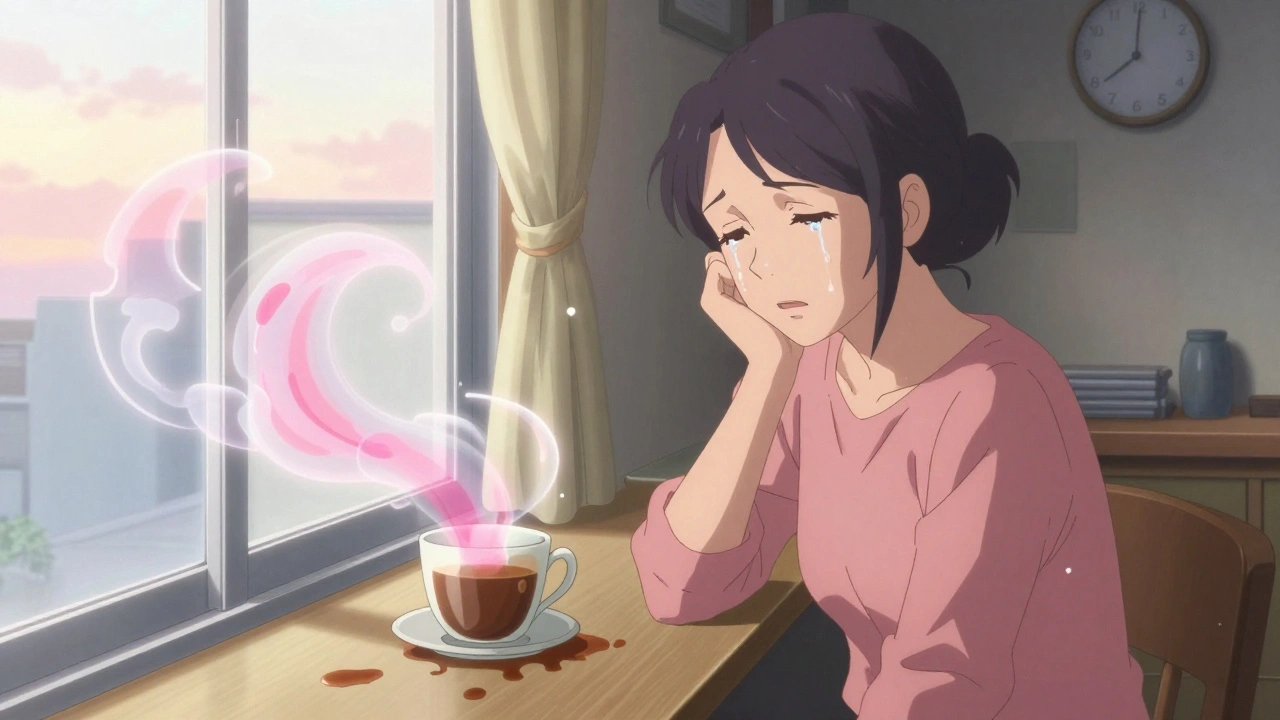
For many women in their 40s and early 50s, the emotional rollercoaster of perimenopause comes out of nowhere. One day you’re fine; the next, you’re crying over a spilled coffee or snapping at your partner over something tiny. It’s not just stress. It’s not just being "hormonal." It’s biology. Estrogen and progesterone are dancing unpredictably in your body, and your brain is feeling every twist.
Why Your Mood Feels Like It’s on a Tilted Floor
Estrogen doesn’t just control your period-it’s a key player in your brain’s chemistry. It helps regulate serotonin, the chemical that keeps your mood steady, and dopamine, which affects motivation and pleasure. When estrogen levels swing wildly-sometimes dropping 50% or more within a week-your brain struggles to keep up. Progesterone, which calms your nervous system by boosting GABA, also dips. That’s why you might feel anxious, irritable, or overwhelmed even when nothing major is happening.Studies show that 10% to 20% of women going through perimenopause experience clinically significant mood changes. For some, it’s mild frustration. For others, it’s deep sadness, panic attacks, or sudden rage. The Cleveland Clinic found that 15% of women need medical help because their mood symptoms are severe. And it’s not just about hormones. Sleep gets wrecked by hot flashes (75% of women experience them), and poor sleep makes mood problems worse. Stress from work, family, aging parents, or life changes adds fuel to the fire.
It’s Not Depression-But It Can Look Like It
Many women are misdiagnosed with clinical depression when what they’re really dealing with is perimenopause. The symptoms overlap: low mood, fatigue, trouble concentrating, loss of interest. But here’s the difference: perimenopausal mood swings don’t follow a steady pattern. They come in waves, tied to hormonal shifts, not life events. You might feel fine for weeks, then suddenly fall apart for no clear reason.Research from the American Journal of Psychiatry shows that women with perimenopause-related mood issues are 3.2 times more likely to resist standard antidepressants. That’s because SSRIs target serotonin levels-but if your brain is being rocked by estrogen drops, the medication alone won’t fix the root problem. A 2023 study found that only 45% to 55% of women saw mood improvement with estrogen therapy alone, while SSRIs helped about half. But when you combine low-dose estrogen with an SSRI, success rates jump to over 70%.
What Actually Works: Evidence-Based Treatments
There’s no one-size-fits-all fix, but several approaches have proven results.- Low-dose estrogen therapy: For women without contraindications (like a history of breast cancer or blood clots), daily estrogen patches or gels (0.25-0.5 mg) can stabilize mood within 6-8 weeks. The North American Menopause Society updated its guidelines in March 2023 to recommend this as a first-line option for moderate-to-severe mood symptoms.
- SSRIs and SNRIs: Medications like sertraline or venlafaxine help about half of women, even if they’re not clinically depressed. Doses are often lower than those used for depression-sometimes as low as 25 mg of sertraline daily.
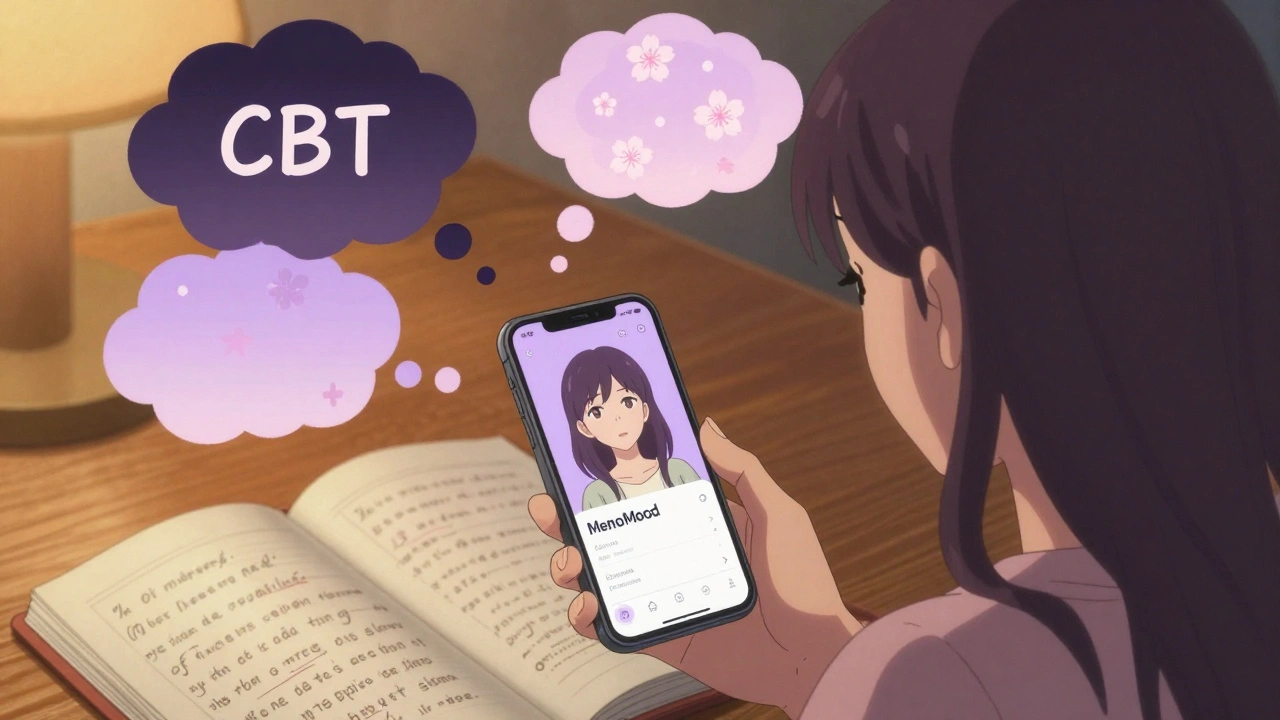
- Digital therapy apps: In June 2023, the FDA approved the first digital therapeutic for perimenopausal mood: MenoMood. This app uses cognitive behavioral therapy (CBT) techniques to help users reframe negative thoughts and manage emotional triggers. Clinical trials showed a 35% reduction in mood symptoms after 12 weeks.
- Lifestyle tweaks: Regular exercise (even 30 minutes of brisk walking 4 times a week) boosts endorphins and improves sleep. Reducing alcohol and caffeine helps too-both can trigger hot flashes and anxiety. A 2022 study in Menopause journal found that women who practiced mindfulness meditation daily saw a 40% drop in irritability scores.
Some women swear by supplements like black cohosh or vitamin B6, but the science is weak. The National Institutes of Health found no consistent benefit in large trials. Magnesium and omega-3s may help with sleep and inflammation, but they’re not mood stabilizers. Don’t waste money on unproven products-focus on what’s backed by data.
What to Do Before You See a Doctor
You don’t need to suffer in silence. Start tracking your symptoms for at least 90 days. Use a simple notebook or a free app like Wild AI. Note:- When your mood shifts
- Whether you had a hot flash or poor sleep the night before
- What you ate, how much you moved, and any stressors
Patterns will emerge. Maybe your worst days always come right before your period gets late. Or maybe your anxiety spikes after you skip a workout. This data is gold. It helps your doctor tell whether your mood changes are hormone-driven or tied to other factors like stress or sleep apnea.
Why Finding the Right Doctor Matters
Not all OB/GYNs are trained in perimenopause. A 2023 survey found that only 54% of OB/GYNs routinely screen for mood symptoms-up from 29% in 2018, but still too low. Look for a certified menopause practitioner. These are clinicians with extra training in hormonal transitions. You can find one through the North American Menopause Society’s directory.Telehealth services specializing in perimenopause have grown by 210% since 2020. If you’re in a rural area or can’t find a specialist nearby, a virtual consult with a menopause-focused provider is a real option. Don’t settle for a doctor who says, “It’s just stress.” You deserve better.
What to Expect on Your Treatment Journey
Finding the right treatment takes time. Most women try 2 or 3 approaches before finding what works. The average time to relief is 6 to 9 months. That’s frustrating, but it’s normal. Don’t give up after one failed trial.Estrogen therapy usually takes 6-8 weeks to show mood benefits. SSRIs can take 4-6 weeks. Digital therapies need at least 12 weeks of consistent use. Insurance often doesn’t fully cover HRT-only 38% of prescriptions are fully covered. Ask your doctor about generic options or compounding pharmacies, which can be cheaper.
And here’s something most women don’t know: if you’re on estrogen therapy, you may need to adjust your dose every few months. Hormones keep changing during perimenopause. What worked at 46 might not work at 49. Regular check-ins with your provider are key.
You’re Not Broken. You’re Changing.
The hardest part of perimenopause isn’t the hot flashes or the sleepless nights. It’s the guilt. The shame. The feeling that you’re losing control, that you’re “not yourself.” But you’re not broken. Your body is doing exactly what it’s supposed to do-it’s transitioning. The problem isn’t you. It’s that medicine has spent decades ignoring this phase.Now, things are changing. The NIH just launched a $47 million study tracking 10,000 women to map exactly how hormones affect the brain. By 2026, we may have blood tests that can tell if your depression is hormone-driven. That means better, faster help.
Until then, know this: your mood swings are real. They’re biological. And they’re treatable. You don’t have to wait until you’re in crisis to ask for help. Talk to your doctor. Track your symptoms. Try one evidence-based strategy. You’ve carried your family, your job, your life for decades. Now it’s time to take care of yourself-not as an afterthought, but as a priority.
Is mood swings during perimenopause normal?
Yes, mood swings are a common part of perimenopause. Around 85% of women experience at least one symptom during this transition, and 10% to 20% have significant mood changes like irritability, anxiety, or sadness. These are linked to fluctuating estrogen and progesterone levels, not personal weakness.
Can perimenopause cause depression?
Perimenopause doesn’t cause depression in everyone, but it can trigger it-especially in women with a history of depression or anxiety. Hormonal shifts affect brain chemicals like serotonin and GABA, making emotional regulation harder. Women with prior depression are five times more likely to have severe mood symptoms during this time.
Do antidepressants work for perimenopausal mood swings?
Antidepressants like SSRIs help about 50% to 60% of women with perimenopausal mood symptoms, even if they’re not clinically depressed. But they work better when combined with estrogen therapy. If you’ve tried an SSRI and it didn’t help, it might not be the right tool-your hormones may need balancing first.
Is hormone replacement therapy (HRT) safe for mood symptoms?
For most healthy women under 60 and within 10 years of their last period, low-dose HRT is safe and effective for mood symptoms. The risks-like blood clots or breast cancer-are very low at this stage and are outweighed by benefits for many. Talk to a menopause specialist to assess your personal risk profile.
How long do perimenopause mood symptoms last?
Mood symptoms typically last 2 to 5 years, peaking in the 2 years before your final period. For some, they fade quickly after menopause. For others, they linger if not managed. The good news? Most symptoms improve significantly once hormone levels stabilize post-menopause.
Can lifestyle changes help with perimenopause mood swings?
Yes. Regular exercise, good sleep hygiene, reducing alcohol and caffeine, and practicing mindfulness can reduce mood swings by 30% to 40%. One study found that women who walked 30 minutes four times a week saw the biggest drop in irritability. Lifestyle changes won’t fix everything-but they make other treatments work better.
What Comes Next
The science around perimenopause is evolving fast. By 2026, we may have genetic tests to predict how your body will respond to hormone therapy. Gut microbiome treatments are already in early trials, aiming to help your body recycle estrogen more efficiently. Primary care doctors are getting better trained, and telehealth access is expanding.But you don’t need to wait for the future to feel better. Start today. Track your symptoms. Talk to your doctor. Ask if you’re a candidate for low-dose estrogen or a digital therapy app. You’re not alone-and you don’t have to power through this alone anymore.
Comments
vinoth kumar
Finally someone lays this out without the fluff. I’ve been telling my wife for months that her mood swings aren’t ‘stress’-they’re biology. We started tracking her cycle with Wild AI and it’s been a game changer. She’s calmer, I’m less confused, and we’re actually talking again.
shalini vaishnav
As an Indian woman who grew up being told to ‘just endure,’ I’m tired of Western medicalization of natural transitions. Hormones fluctuate-so what? We survived generations without antidepressants or patches. Your body isn’t broken, it’s adapting. Stop pathologizing womanhood.
bobby chandra
Let me just say-this article is a goddamn masterpiece. Clear, evidence-based, and written like someone who actually understands the human brain instead of just reading abstracts. The part about estrogen being a serotonin modulator? That’s the missing link for so many women. And the FDA-approved app? Brilliant. I’m sending this to every woman I know over 40.
Archie singh
Of course the pharmaceutical industry loves this narrative. Estrogen patches? SSRIs? You’re being sold a solution while the real issue-endocrine disruptors in plastics, processed food, chronic stress-is ignored. They want you dependent on pills, not empowered by awareness. Wake up.
Gene Linetsky
Anyone else notice how every study mentioned here was funded by Big Pharma? The ‘70% success rate’ with estrogen + SSRI? Probably paid for by Pfizer. And that FDA-approved app? Looks like a marketing ploy. The real data? Buried. You’re being manipulated to believe this is a medical crisis when it’s just aging.
Ignacio Pacheco
So let me get this straight-you’re telling me that if I cry over spilled coffee, it’s not because I’m a mess, it’s because my estrogen dipped 50% last week? And I’m supposed to believe that’s more valid than just… being tired? Interesting. I’ll take the coffee spill over the patch any day.
Jim Schultz
Let’s be brutally honest: most women in perimenopause are drowning in unaddressed trauma, sleep deprivation, and societal pressure-and now we’re blaming it on hormones? That’s convenient. Estrogen therapy? Great. But what about the 40-hour workweeks? The unpaid emotional labor? The fact that no one asks how you’re *really* doing? Fix the system, not the ovaries.
Kidar Saleh
I’m from London, and I’ve seen this play out with my sister and three of her friends. The silence around perimenopause in the UK is deafening. We’re told to ‘grin and bear it’ until menopause. This article? It’s a lifeline. I’ve printed it and left it on my GP’s desk. It’s time we stop treating this like a whispered secret.
Chloe Madison
As someone who’s been through this and now helps other women navigate it, I can’t stress this enough: tracking your symptoms isn’t optional-it’s your superpower. I had a client who thought she was depressed until she saw her mood crashes aligned perfectly with her estrogen dips. She started on low-dose estradiol and within six weeks, she was laughing again. Not cured. But alive again.
Vincent Soldja
Interesting. But where’s the data on long-term HRT risks? And why is digital therapy being pushed over real human therapy? Also, no mention of thyroid dysfunction, which mimics this exactly. This feels curated.
Makenzie Keely
I’m 47 and I just started estrogen gel last month. I cried for three days straight because I felt… normal again. Not ‘better.’ Not ‘fixed.’ Just normal. I didn’t realize how much I’d been holding my breath. This isn’t vanity-it’s survival. And yes, the insurance fight is real. But it’s worth it. Don’t give up.
Francine Phillips
I tried the app. Didn’t help. Took the pill. Didn’t help. Just stopped caring. I’m tired of trying to fix something that’s just part of getting older. I’ll keep walking. I’ll keep drinking tea. And I’ll stop apologizing for being quiet.
Katherine Gianelli
To every woman reading this who thinks she’s losing it-you’re not. You’re becoming. This isn’t the end of your story, it’s the quiet, messy, powerful rewrite. You’ve raised kids, held jobs, carried grief, and still showed up. Now it’s your turn to be held. Ask for help. Try one thing. Even if it’s just writing down how you feel for five minutes. You matter. Your body matters. And you’re not alone.