
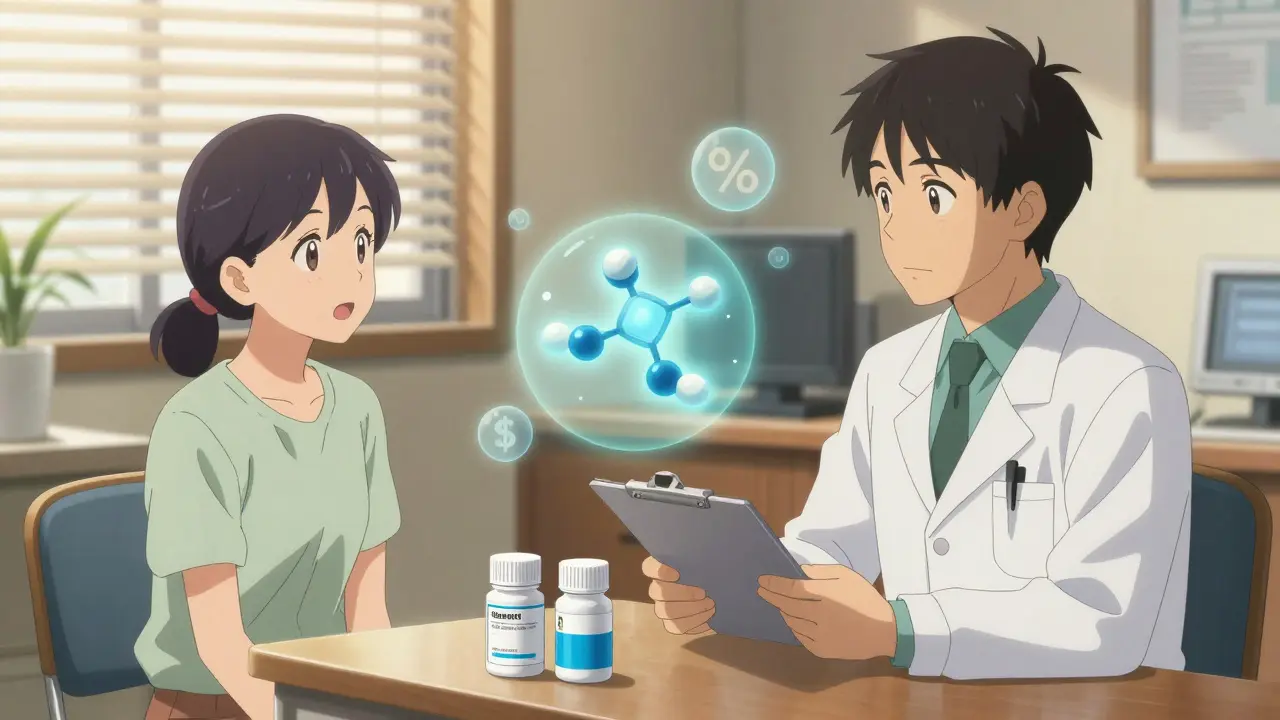
Every year, millions of people in the U.S. pay hundreds or even thousands of dollars more than they need to for prescriptions-simply because they never asked if a cheaper option exists. Generic alternatives aren’t just a rumor or a last resort. They’re FDA-approved, clinically proven, and often cost 80-95% less than the brand-name version. The problem isn’t availability. It’s silence. If you’re paying full price for a medication, you might be missing out on a safe, effective, and far more affordable option. And the only person who can help you switch is your doctor.
Why Generics Are Just as Effective
Let’s clear up the biggest myth first: generics aren’t “weaker” versions. A generic drug has the same active ingredient, strength, dosage form, and route of administration as the brand-name drug. The FDA requires strict bioequivalence testing-meaning the generic must deliver the same amount of medicine into your bloodstream at the same speed as the brand. The acceptable variation? Between 80% and 125%. That’s not a loophole. That’s science.
For example, if you’re taking lisinopril for high blood pressure, the generic version works just as well as the brand-name Zestril. A 2022 FDA analysis found that 95% of all generic drugs perform identically to their brand-name counterparts in real-world use. Studies tracking patients on generic versions of antidepressants like sertraline or statins like atorvastatin show no difference in outcomes. In fact, 78% of patients who switched on Drugs.com reported no change in effectiveness.
So why do people still hesitate? Often, it’s because the pill looks different. Generics can have different colors, shapes, or markings. They might use different inactive ingredients-like fillers or dyes-which can rarely cause minor side effects (like stomach upset) in sensitive people. But those differences don’t affect how well the medicine works. The active ingredient? Identical.
When Generics Aren’t the Best Choice
There are exceptions. About 5% of medications fall into a category called narrow therapeutic index (NTI) drugs. These are medicines where even tiny changes in blood levels can cause serious problems. Examples include:
- Warfarin (blood thinner)
- Levothyroxine (thyroid hormone)
- Phenytoin and carbamazepine (seizure medications)
- Cyclosporine (organ transplant drug)
For these, consistency matters. If you’ve been stable on one brand for months, switching between different generic manufacturers might cause fluctuations. That’s why some doctors recommend sticking with one manufacturer-even if it’s generic-or even staying on the brand-name version. But here’s the key: you should only do this if your doctor specifically says so. It’s not automatic. And it’s rare.
Most patients don’t need to worry. The vast majority of prescriptions-like those for blood pressure, cholesterol, diabetes, or depression-are perfectly safe with generics. If your doctor says, “We should stick with the brand,” ask why. If they can’t explain it clearly, it’s worth getting a second opinion.
How to Bring Up Generics at Your Appointment
Asking about generics isn’t rude. It’s smart. But how you ask matters. Don’t say: “Can I get the generic?” That puts your doctor on the spot. Instead, frame it as a shared goal.
Try this: “I want to make sure I’m getting the most effective treatment at the lowest cost. Is there a generic version available for this medication?”
Or: “I’ve heard generics work just as well. Would it be safe and appropriate for me to use the generic version?”
Bring a list. If you’re taking multiple medications, write them down. Ask about each one. Some drugs you’ve been on for years might now have a generic. Others might have one you didn’t know about.
Here’s what to ask:
- Is there a generic equivalent for this medication?
- Would it be safe and effective for me to use it?
- Are there any reasons I should stay on the brand-name version?
- If a generic isn’t available now, when might one become available?
Timing is everything. Ask during your initial prescription-not when you’re at the pharmacy and the price shocks you. If your doctor says, “I’ll check,” follow up. Don’t assume they’ll call you. Most doctors don’t track when new generics hit the market. In fact, Cedars-Sinai found that most physicians can’t reliably say which generics are covered by your insurance.

What Your Insurance Really Covers
Insurance plays a huge role. Medicare Part D plans dispense generics 89% of the time when available. Commercial plans? Only 72%. That means if you’re on a private plan, you might be paying more than necessary.
Many insurers require you to try the generic first. If you refuse, you might pay the full brand-name price. Others have tiered formularies-generics are usually Tier 1 (lowest cost), while brand-name drugs are Tier 3 or 4 (much higher).
Check your plan’s formulary online. Search for your medication. If the generic is listed and covered, you’re likely paying $5-$15 instead of $200-$500. For example:
- Nexium (brand) = $284/month
- Omeprazole (generic) = $4/month
- Humira (brand) = $6,300/month
- Adalimumab (generic) = $4,480/month
That’s not a typo. One patient saved $1,820 a month just by switching. And that’s not rare. AARP’s 2022 survey found seniors who asked about generics saved an average of $427 per year.
What to Do If Your Doctor Says No
If your doctor refuses to prescribe a generic, don’t accept it without clarification. Ask:
- Is this because it’s an NTI drug?
- Are you concerned about switching from one generic manufacturer to another?
- Is there a specific brand you recommend, and why?
If they say, “It’s just better,” ask for evidence. The American Medical Association’s 2022 policy update says physicians should routinely discuss generics because the evidence of equivalence is overwhelming.
If you still feel stuck, ask for a referral to a pharmacist. Pharmacists are medication experts. They know which generics are available, which are covered, and which might be better suited for your insurance. In 48 states, pharmacists can substitute a generic unless the doctor writes “Do Not Substitute.” That means they can often suggest an alternative even if your doctor didn’t think of it.
Real-World Success Stories
One patient with rheumatoid arthritis was paying $6,300 a month for Humira. After switching to generic adalimumab, her out-of-pocket cost dropped to $4,480. Her doctor checked her CRP levels-measuring inflammation-and confirmed her disease control stayed the same.
Another patient on levothyroxine had her thyroid levels go out of range after switching between two different generic manufacturers. Her doctor then prescribed a specific brand-name version and stabilized her. That’s the exception-not the rule. But it shows why consistency matters for NTI drugs.
And then there are the thousands who never spoke up. They kept paying $300 for a medication that had a $12 generic. They didn’t know. Or they were too embarrassed to ask. Or they assumed their doctor already knew.
What to Do Next
Here’s your action plan:
- Look at your current prescriptions. Pick one.
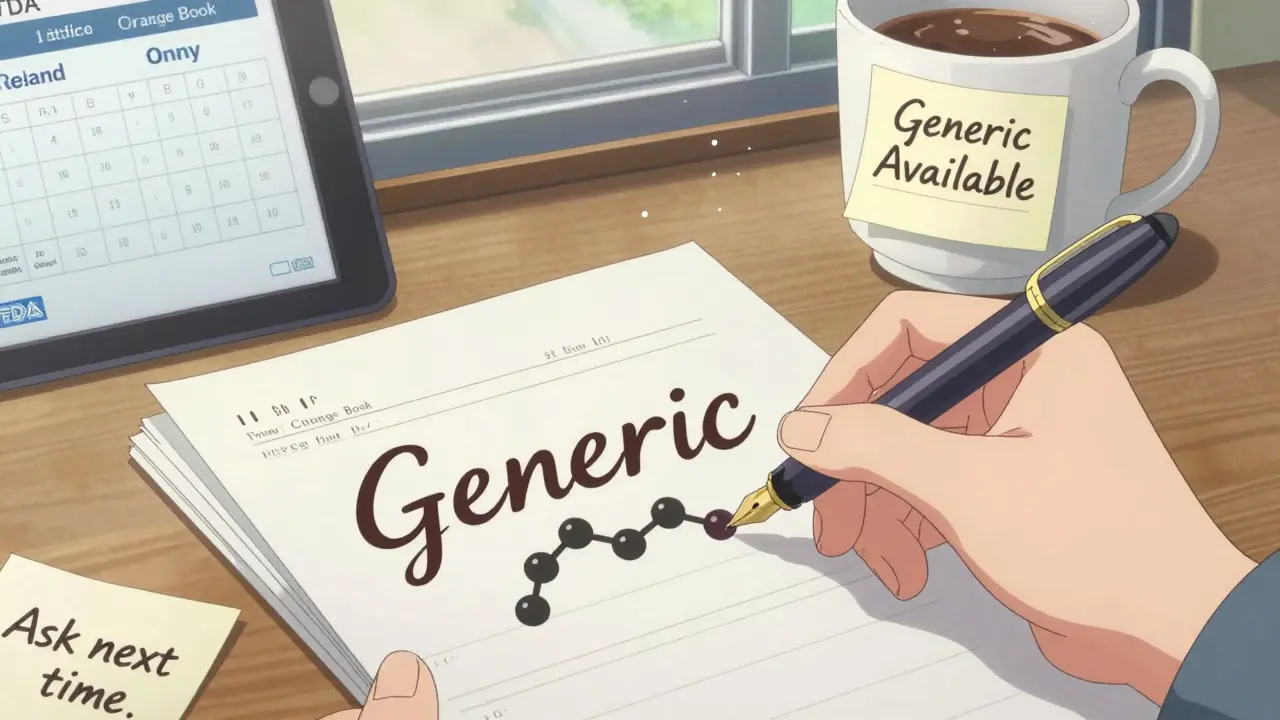
- Search the drug name + “generic” online. Check the FDA’s Orange Book or Drugs.com.
- Call your pharmacy. Ask if a generic is available and how much it costs.
- At your next appointment, say: “I’d like to explore whether a generic version is appropriate for me.”
- If your doctor agrees, ask them to write “Dispense as written” or “Allow generic substitution.”
Don’t wait until your bill arrives. Don’t assume you’re stuck. You have more power than you think. Generics aren’t second-rate-they’re smart. And asking about them isn’t being cheap. It’s being informed.
Are generic drugs really as effective as brand-name drugs?
Yes, for the vast majority of medications. The FDA requires generics to prove they deliver the same active ingredient in the same amount and at the same rate as the brand-name drug. Studies show 95% of generics perform identically in real-world use. The differences are in color, shape, or inactive ingredients-not effectiveness.
Why do some doctors hesitate to prescribe generics?
Some doctors aren’t aware that a generic has become available. Others worry about patients who’ve been stable on a brand-name drug and fear switching might cause issues-especially with narrow therapeutic index drugs like thyroid or seizure meds. But for most medications, this concern isn’t supported by evidence. The American Medical Association now encourages doctors to routinely discuss generics.
Can I switch from brand to generic mid-treatment?
For most medications, yes. But for drugs with a narrow therapeutic index-like warfarin, levothyroxine, or phenytoin-switching between different manufacturers can cause fluctuations. If you’re stable on a brand-name drug and your doctor hasn’t mentioned a generic, it’s safest to ask before switching. Never switch without consulting your provider.
Why are generics so much cheaper?
Generics don’t need to repeat expensive clinical trials. The original drug company paid for research, testing, and marketing. Generic manufacturers only need to prove their version works the same way. This cuts costs dramatically. Once multiple companies start making the same generic, competition drives prices down by 80-95%.
What if my pharmacy won’t give me the generic?
Pharmacies are allowed to substitute generics unless your doctor wrote “Do Not Substitute” on the prescription. If you’re being charged full price and a generic is available, ask the pharmacist to check if the prescription allows substitution. If they say no, ask your doctor to clarify the prescription. You have the right to the lowest-cost option unless there’s a medical reason not to.

Comments
Milad Jawabra
Bro, I switched my blood pressure med from the brand to generic last year. Went from $280/month to $12. My doctor acted like I was asking for a discount coupon at a car dealership. I told him, 'I’m not broke, I’m just not stupid.' He wrote the script same day. 🤝
Ethan Zeeb
Generics aren’t just cheaper-they’re the norm in every other developed country. We’re the only ones who still treat them like second-class medicine. The FDA doesn’t cut corners. The system does. And we’re the ones paying for it.
Darren Torpey
Let me tell you about the day I found out my $400/month antidepressant had a $9 generic. I sat in my car and cried-not from sadness, but from rage. How many people have been quietly suffering financially because no one told them they had a right to this? This isn’t about saving money. It’s about dignity. 🙏
Lebogang kekana
YOOOOO! I JUST SAVED $5,000 A YEAR BY SWITCHING TO GENERIC STATIN!! 😱 My pharmacist was like 'You didn't know?' and I was like 'I thought generics were like knockoff sneakers!' But nope-same pill, same results, same life. My bank account is doing a happy dance. 💃💸
Jessica Chaloux
I just cried reading this. My mom took levothyroxine for 15 years and never knew generics existed. She paid $180/month until I found out and switched her. Now she says she feels 'lighter.' Not physically-emotionally. 💔🫶
Mariah Carle
There’s a philosophical paradox here: the more effective a system is at delivering care, the more it hides its own inefficiencies. Generics are the mirror held up to healthcare’s performative complexity. We worship innovation while punishing prudence. We call it 'value-based care'-but only if the value isn’t in the pill, but in the profit margin.
Tildi Fletes
As a clinical pharmacist with 18 years of experience, I can confirm that generic substitution is not only safe but statistically superior in adherence rates. Patients who switch to generics are 23% more likely to continue therapy due to affordability. The notion that generics are inferior is a myth perpetuated by marketing, not science. Always verify bioequivalence via the FDA Orange Book. This is not opinion-it is evidence.
Siri Elena
Oh sweetie, you’re telling people to ask their doctor? How adorable. Did you also tell them to please ask nicely and use a smiley face? 🙃 The real issue isn’t that patients don’t ask-it’s that doctors are incentivized to keep prescribing brands. Ask your doctor if they get kickbacks for writing brand-name scripts. (Spoiler: They might not even know they do.)
Divya Mallick
Let me elucidate the systemic epistemological dissonance inherent in American pharmaceutical policy: the patent cliff is not a market correction-it is a manufactured scarcity. The FDA's bioequivalence thresholds are not scientific benchmarks but regulatory compromises engineered to preserve monopolistic rents. The so-called 'generic' is merely a pharmacological simulacrum, a shadow of the original's ideological capital. In India, we don't have this delusion-our generics are exported globally because we understand that medicine is a public good, not a corporate asset. This is why your healthcare system is a dystopian parody.
Pankaj Gupta
While the emotional appeal of this post is strong, it’s worth noting that the 80-95% cost reduction figure is often misleading. Many generics are priced at $15-$40/month, not $5. Also, some insurance plans have fixed copays that make the brand cheaper than the generic if it’s on a lower tier. Always check your formulary, not just the sticker price. Knowledge is power, but incomplete knowledge can backfire.
Alex Brad
Ask. Always ask. It’s that simple.