

You might think that when a drug’s patent expires, the original company steps aside to let cheaper competitors take over. But often, they don’t leave. They stay in the game by launching their own authorized generic. This is essentially the same pill, made in the same factory, but sold under a different name and at a lower price. It sounds like a contradiction, right? Why would a company undercut its own premium product? The answer lies in survival. When patents expire, prices can crash by 80-85% within a year. By releasing an authorized generic, brand manufacturers capture a slice of that new, cheaper market instead of losing it entirely to third-party rivals.
The Business Logic Behind the Strategy
Think about the last time you bought a coffee. You know the difference between a house blend and a premium single-origin. Now imagine the café starts selling the exact same beans as the premium option but labels them "value roast" for half the price. That’s what happens in pharma. The primary driver here is market preservation. Data from Drug Patent Watch shows that when brands introduce these versions, they grab 15-35% of the generic market share in the first year alone. Without this move, they risk seeing their revenue evaporate as independent generic makers flood the shelves with identical copies.
This isn't just about greed; it's about continuity. A study published in Health Affairs highlighted that AstraZeneca captured nearly 30% of the omeprazole market within six months of launching an authorized generic after Prilosec’s patent expired. For companies like Pfizer or Teva, maintaining manufacturing control ensures quality standards remain high while they navigate the transition from monopoly to competition. It allows them to keep their production lines running efficiently rather than shutting down facilities and letting competitors set up shop elsewhere.
Regulatory Pathways and Manufacturing Realities
So, how do they actually make these drugs? The process differs significantly from traditional generic manufacturing. Under the Hatch-Waxman Act framework, established in 1984, brand manufacturers have a unique advantage: they already possess the complete safety and efficacy data. They don’t need to repeat expensive clinical trials. Instead, they leverage their existing infrastructure. According to FDA guidelines, the transition from brand to authorized generic production typically takes 6-9 months. Compare that to the 17-month average review period for a standard Abbreviated New Drug Application (ANDA) submitted by a competitor, and you see why speed matters.
The manufacturing facilities are identical. The pills come off the same line, mixed by the same machines, using the same active ingredients. The only real changes happen on the label and packaging. U.S. trademark laws prevent exact visual replication, so the authorized generic might look slightly different-maybe a different color coating or shape-but chemically, it’s a twin. This bypasses the 180-day market exclusivity period granted to the first traditional generic applicant, allowing the brand owner to enter the market simultaneously with other challengers.
Pricing Strategies and Market Impact
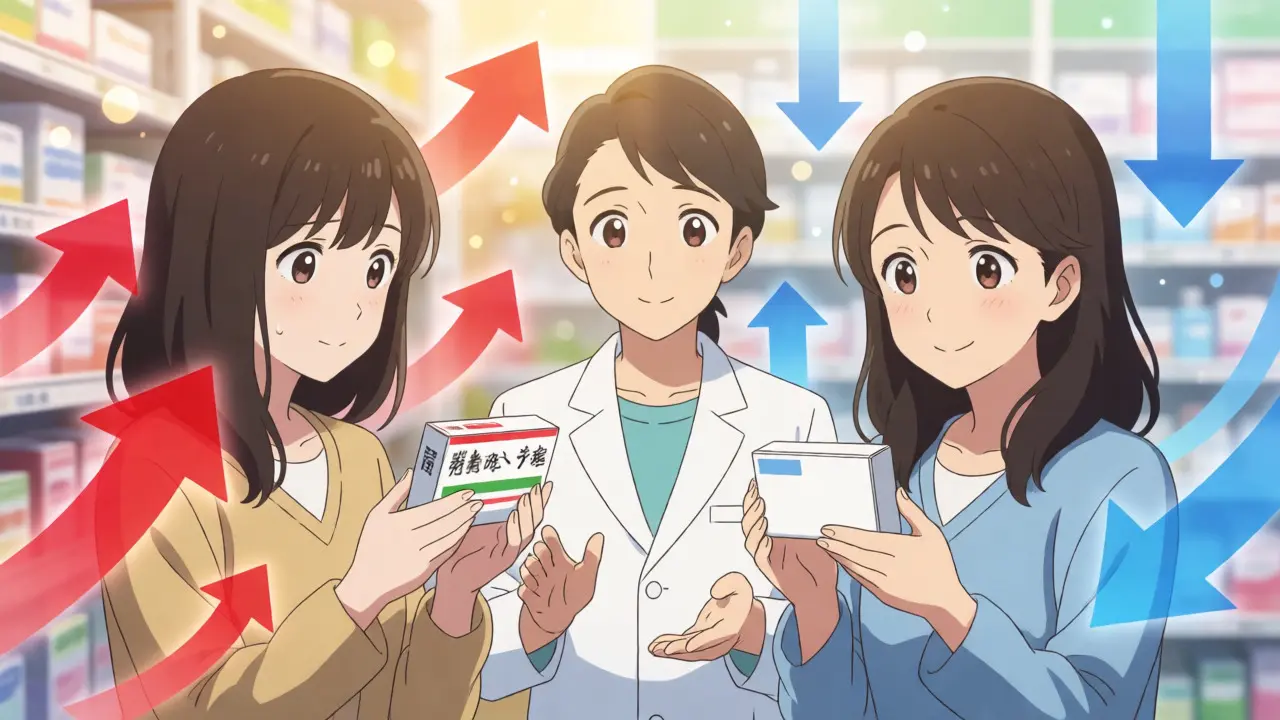
Here is where it gets tricky for consumers. Authorized generics aren’t always the cheapest option on the shelf. Pricing strategies usually position them 10-15% below the brand-name price but 5-10% above competing third-party generics. It creates a strategic price tier. Eli Lilly’s launch of an authorized generic for Cialis in 2018 is a prime example. Despite fierce generic competition, Lilly retained 78% of the drug’s total market revenue because patients and pharmacies trusted the originator’s quality.
| Feature | Brand Name Drug | Authorized Generic | Traditional Generic |
|---|---|---|---|
| Manufacturer | Original Innovator | Original Innovator | Third-Party Competitor |
| Price Position | Highest | Middle (10-15% below brand) | Lowest (Highly competitive) |
| Formulation | Original | Identical to Brand | Bioequivalent (may vary in inactive ingredients) |
| Time to Market | N/A | Fast (6-9 months prep) | Slow (17+ months approval) |
However, this pricing model has drawn scrutiny. The Federal Trade Commission (FTC) has filed antitrust complaints against several manufacturers, arguing that these moves improperly extend market dominance. In one notable case involving Actavis and Namenda, the FTC secured a $448 million settlement, signaling that regulators are watching closely to ensure fair competition.

Consumer Perception and Trust
Do patients care who makes the pill? Surprisingly, many do. A Kaiser Family Foundation survey found that 71% of patients prefer authorized generics when available because they recognize the product. They feel safer taking a medication from a company they’ve known for years. On Drugs.com, satisfaction rates for authorized generics hover around 4.2 out of 5 stars, compared to 3.8 for traditional generics. Comments often read, "It’s the same pill I’ve been taking for years," highlighting the value of familiarity.
Yet, there’s confusion. Independent pharmacy owners report that 63% of patients struggle to distinguish between the brand and the "generic" version made by the same company. If you’re paying $85 for an authorized generic when a traditional generic costs $30, you might wonder if you’re getting ripped off. Dr. Aaron Kesselheim from Harvard Medical School argues that these products provide minimal cost savings to consumers while keeping market control concentrated. He notes that markets with authorized generics see only a 32% price reduction, versus 68% in markets with robust traditional competition.
Future Trends and Complex Biologics
The landscape is shifting. With approximately $250 billion in brand revenues facing patent expiration between 2023 and 2027, more companies are adopting sophisticated lifecycle management. We’re seeing a trend toward "dual launches," where companies plan the authorized generic conversion before the patent even expires. Novartis did this with Entresto, positioning the heart failure drug for a smooth transition.
Looking ahead, the rise of biologics complicates things further. Traditional generics are small molecules, easy to copy. Biologics are complex living systems. Amgen launched the first authorized biosimilar of Enbrel in 2023, signaling that this strategy is expanding into harder-to-replicate therapies. Analysts predict that by 2025, 40% of small-molecule drugs losing protection will have an authorized generic counterpart. As manufacturing expertise becomes a higher barrier to entry, big pharma is betting that being the source of the drug-even at a discount-is better than being absent altogether.
What exactly is an authorized generic?
An authorized generic is a drug marketed by the original brand-name manufacturer after the patent expires. It is chemically identical to the brand-name version, produced in the same facility, and approved under the same FDA application. It differs primarily in labeling and packaging to comply with trademark laws.
Why do brand manufacturers release their own generics?
They do it to preserve market share. When patents expire, prices drop drastically due to competition. By offering their own lower-cost version, they capture customers who want a cheaper option but still trust the original brand, preventing those sales from going entirely to third-party generic competitors.
Are authorized generics cheaper than regular generics?
Not always. While they are cheaper than the brand-name version, they are often priced 5-10% higher than traditional generics made by other companies. This price tiering allows the brand owner to maintain some premium status while still competing on cost.
Is the quality of an authorized generic the same as the brand?
Yes, the quality is identical. Because they are manufactured in the same facilities using the same processes and ingredients, there is no difference in bioavailability or effectiveness. The only differences are cosmetic, such as pill color or shape, required by trademark regulations.
Can pharmacists substitute an authorized generic for a brand?
Yes, pharmacists can substitute an authorized generic for a brand-name prescription unless the doctor specifically marks the prescription "dispense as written." Since they are considered therapeutically equivalent, substitution is standard practice to help reduce patient costs.


Comments
Stuart Lorne
youre all missing the point its just a way to keep prices high while pretending to compete its pathetic
Stephen Horn
It is with profound disdain that I observe the collective ignorance of this subreddit regarding the machinations of the pharmaceutical oligarchy. The so-called 'authorized generic' is not a benevolent offering but rather a calculated stratagem designed to preserve the hegemony of corporate elites who view consumer welfare as an afterthought. We are witnessing the consolidation of power where the same entity dictates both the premium and the value tiers effectively neutralizing true market competition. One must possess a discerning intellect to recognize that these entities are not merely selling pills they are selling the illusion of choice while maintaining ironclad control over supply chains and pricing structures. The data cited in the post regarding market share retention is merely the tip of the iceberg revealing a deeper systemic issue wherein regulatory capture allows these conglomerates to dictate terms to both physicians and patients alike. It is frankly embarrassing that many continue to trust these institutions despite their history of prioritizing shareholder dividends over public health outcomes. The complexity of the Hatch-Waxman Act framework serves as a smokescreen obscuring the simple reality that money talks and everyone else walks. We are trapped in a cycle of manufactured scarcity and artificial exclusivity that benefits only those at the very top of the socioeconomic ladder. Until we dismantle these regulatory loopholes we will remain subjects of a system that exploits our medical needs for profit maximization. The arrogance of assuming that brand recognition equates to superior quality is a testament to the failure of modern education systems which fail to teach critical analysis of corporate motives. I urge you all to read beyond the headlines and understand the geopolitical implications of pharmaceutical monopolies. This is not just about drugs it is about sovereignty and autonomy in the face of corporate dominance.
Gurjit Singh
This strategy is morally bankrupt. Companies have made billions from patents and should allow the market to correct itself naturally without interfering through artificial pricing tiers. It is unethical to withhold lower prices from consumers simply to maintain revenue streams that are already excessive given the initial investment risks were largely covered by taxpayer-funded research grants. We must demand transparency and fair play rather than accepting these corporate maneuvers as inevitable business practices.
Marc-David Mayer
Hey everyone! 👋 Just wanted to say that understanding this mechanism is actually really empowering for us as patients. 🌟 While it feels tricky, knowing that the authorized generic is chemically identical can help reduce anxiety about switching meds. 💊 Remember to always check with your pharmacist-they are great resources for navigating these options! Keep staying informed and proactive about your health journey. You've got this! 💪✨
hareesh kumar
wait wait wait hold on a second because i smell something fishy here and im not just talking about the pill coating or whatever cosmetic changes they make to avoid trademark lawsuits no no no this is bigger than that think about it think about who benefits when the big pharma company keeps the manufacturing lines running instead of letting some new upstart competitor take over exactly right the jobs stay local maybe but the profits stay centralized and guess who controls the narrative the media owned by the same conglomerates that own the drug companies so when they say "oh its safer because its made by the original maker" are they lying well maybe not lying but definitely spinning it hard enough to make your head spin like a centrifuge separating blood plasma from red cells and dont get me started on the biologics part because if small molecules are easy to copy then why do they need to claim complexity for living systems unless they are hiding the fact that they cant actually replicate the process easily which means they are creating a barrier to entry not for quality but for monopoly preservation its all connected man its all one big web of control and we are just bugs getting caught in the spiderweb thinking we are choosing freely when really the options were curated before we even walked into the pharmacy aisle so wake up people open your eyes look at the labels look at the manufacturers name and realize that sometimes the cheapest option is the most honest one even if it comes from a company you never heard of before because honesty doesnt cost extra dollars it costs integrity which seems to be in short supply these days in the boardrooms of new york and basel and wherever else these suits hang out making decisions that affect millions of lives based on quarterly earnings reports rather than human suffering or healing potential its sad really its very very sad but also predictable if you pay attention to the patterns which i do every single day watching the news reading the fine print connecting the dots that others refuse to see because seeing them requires effort and questioning authority and nobody wants to question authority when authority says "trust us we know best" even when they clearly dont care about us as much as they care about their stock price options vesting schedules and executive bonuses which are often tied to metrics that ignore patient outcomes entirely so yeah authorized generics are a trap a cleverly disguised trap wrapped in the guise of consumer choice and branded familiarity but ultimately still controlled by the same hands that set the initial price too high in the first place so dont fall for it stay skeptical stay curious and keep asking questions even if people call you paranoid because being paranoid means you are paying attention and paying attention is the first step towards freedom from corporate manipulation and psychological conditioning that keeps us buying things we dont need at prices we cant afford thanks to marketing tricks that exploit our fear of illness and desire for safety which is totally understandable but still exploitable so fight back with knowledge use the internet wisely cross reference sources dont just believe what the doctor says ask why ask how ask who pays for the research and you might find that the answer surprises you more than you expect because truth is stranger than fiction and usually less profitable for shareholders who prefer clean narratives over messy realities so keep digging keep questioning keep resisting the urge to settle for the easy answer because the easy answer is usually the one sold to you by someone trying to sell you something else next week or next year or next decade until you retire and die and they still own your medical records and your insurance policy and your peace of mind so stay strong stay aware and dont let them fool you again with their fancy packaging and smooth talk and remember that the person who wrote this article probably works for a company that sells ads to these pharma giants so even the information source might be biased which makes independent verification essential for any serious thinker who values truth over convenience and comfort over challenge so yeah thats my two cents worth three cents if you count the time i spent typing this out carefully considering each word choice to ensure maximum impact and clarity despite my tendency toward rambling which is apparently a trait associated with paranoia according to some psychologists who probably work for the same system they critique which is ironic don't you think so yeah anyway long story short authorized generics are mostly a shell game played by rich people to keep other rich people happy while regular folks get squeezed between rock and hard place called healthcare costs and limited options so choose wisely or better yet choose loudly and vote with your wallet if you can but often you cant so vote with your voice and spread the word that the emperor has no clothes especially when he is wearing a generic label that costs almost as much as the designer version because that is just wrong morally economically and spiritually so fix it please fix it now before it gets worse with all these new biologic drugs coming down the pipeline that cost hundreds of thousands per dose and require cold chain logistics that only big companies can handle efficiently leaving small competitors dead in the water before they even start swimming so yeah stay vigilant stay angry stay hopeful that change is possible if we collectively decide to demand it rather than accept it as fate or nature or whatever excuse they give us to justify their greed and inefficiency and lack of innovation in distribution models that could actually save lives if implemented properly but wont because profit motive overrides humanitarian concern every time so there you have it my rant complete hopefully it helps someone out there feel less alone in their suspicion that something is off with this whole system and maybe encourages them to look closer at their own prescriptions and bills and realize that awareness is the first step toward action and action leads to results eventually even if it takes decades to see meaningful change in such entrenched industries dominated by lobbying power and regulatory inertia that favors incumbents over challengers always has and likely always will unless we shake things up significantly so keep pushing keep fighting keep believing that a fairer system is possible even if it seems impossible right now because hope is a discipline not just a feeling and we need disciplined hope now more than ever in these times of uncertainty and rapid technological change that threatens to outpace our ethical frameworks and social contracts so yeah good luck to all of you fellow travelers on this strange journey called life under capitalism and specifically under the shadow of big pharma which looms large and casts long shadows over our health choices and financial stability so stay safe stay smart and stay skeptical always okay bye for now signing out over and out end transmission stop message received acknowledge understood comply execute repeat loop infinite until liberation achieved or bankruptcy declared whichever comes first depending on how bad things get globally speaking politically socially and environmentally so yeah that is all i have to say about authorized generics today nothing more nothing less just raw unfiltered thought stream from a guy who cares deeply about justice and fairness and hates seeing people get ripped off by corporations that pretend to care about them while extracting maximum value from minimum service delivery model that prioritizes efficiency over empathy and scale over individuality so yeah that is it that is truly it no further comments needed unless someone responds directly to specific points raised herein which i doubt will happen given the general apathy prevalent in online discourse these days but one can dream can't we dreaming of a world where medicine is treated as a right not a privilege and where companies compete on quality and access not just marketing spend and patent cliffs so yeah dream big act small speak loud listen more learn constantly adapt quickly survive gracefully thrive sustainably together united against the tide of commercialization that seeks to commodify our very existence reducing us to data points and revenue streams rather than complex human beings deserving of dignity respect compassion and affordable healthcare regardless of income level zip code race gender or preexisting condition status so yeah that is my final word on the matter thank you for listening reading scrolling whatever you are doing right now enjoy your day stay healthy stay hydrated stay informed and stay free from the shackles of unnecessary dependency on systems that do not serve your best interests primarily or consistently or reliably so yeah peace love unity truth justice equality freedom liberty prosperity abundance harmony balance wellness wholeness completeness satisfaction contentment gratitude appreciation recognition validation affirmation empowerment agency autonomy self-determination destiny purpose meaning significance value worthiness merit excellence integrity honesty authenticity transparency accountability responsibility stewardship sustainability resilience adaptability flexibility creativity innovation collaboration partnership solidarity community belonging connection relationship interaction communication dialogue conversation discussion debate argument persuasion influence impact effect outcome result consequence implication inference deduction induction abduction reasoning logic rationality sensibility intuition instinct insight wisdom knowledge understanding comprehension perception awareness consciousness mindfulness presence attentiveness focus concentration determination perseverance persistence patience tolerance acceptance forgiveness compassion empathy sympathy kindness generosity charity benevolence altruism philanthropy humanitarianism universalism cosmopolitanism globalism internationalism cooperation coordination integration synthesis amalgamation fusion combination mixture blend mix composite hybrid mosaic patchwork quilt tapestry fabric cloth material substance essence core heart soul spirit mind body emotion feeling sensation experience reality truth fact evidence proof demonstration validation verification confirmation corroboration substantiation support backing endorsement approval sanction authorization permission license certification accreditation qualification credential diploma degree certificate award prize honor distinction recognition fame glory reputation prestige status rank position role function duty obligation commitment pledge promise vow oath covenant contract agreement treaty pact alliance coalition federation union association organization institution establishment foundation base ground platform stage arena field domain sphere realm territory zone area region locality neighborhood city town village hamlet settlement colony outpost station depot hub node center focal point pivot axis fulcrum lever tool instrument device apparatus mechanism system structure framework architecture design plan blueprint map chart graph diagram table list index catalog directory database archive library repository collection assembly gathering meeting conference summit symposium seminar workshop clinic session appointment visit consultation examination diagnosis treatment therapy cure remedy solution answer response reply reaction feedback comment note remark statement declaration proclamation announcement notification alert warning signal sign symbol token badge mark label tag sticker seal stamp signature imprint impression trace track trail path route way road street avenue boulevard lane alley passage corridor tunnel bridge crossing intersection junction fork split branch diverge converge merge combine unite join connect link attach fasten secure lock close shut seal end finish terminate conclude cease halt stop pause rest break interval gap space void emptiness nothingness zero null nil none absent missing lost gone departed vanished disappeared dissolved evaporated faded dimmed darkened obscured hidden concealed masked disguised camouflaged veiled shrouded covered wrapped enclosed contained restricted limited bounded defined determined decided settled fixed stable steady constant permanent eternal timeless infinite endless boundless limitless vast huge massive enormous gigantic colossal monumental significant important crucial vital essential necessary fundamental basic primary key main central core inner deep profound intense extreme severe harsh brutal cruel violent aggressive hostile antagonistic adversarial competitive combative confrontational challenging difficult tough hard demanding taxing draining exhausting fatiguing weary tired sleepy drowsy lethargic sluggish slow dull boring tedious monotonous repetitive routine habitual customary traditional conventional standard normal typical average ordinary common usual frequent regular periodic recurring cyclical seasonal annual monthly weekly daily hourly minutely secondly instantly immediately promptly quickly rapidly swiftly speedily hastily urgently desperately critically acutely severely intensely sharply keenly astutely perceptively intuitively instinctively naturally inherently intrinsically essentially fundamentally basically primarily mainly chiefly principally predominantly overwhelmingly massively hugely enormously vastly greatly substantially significantly considerably notably remarkably impressively strikingly surprisingly unexpectedly unpredictably erratically randomly chaotically disorderly messily sloppily carelessly negligently recklessly rashly impulsively spontaneously casually informally loosely vaguely ambiguously unclearly confusingly misleadingly deceptively falsely incorrectly wrongly mistakenly erroneously inaccurately imprecisely roughly approximately nearly almost virtually practically effectively functionally operationally technically formally legally officially legitimately validly authentically genuinely truly honestly sincerely faithfully loyally devotedly dedicatedly committedly passionately enthusiastically eagerly excitedly happily joyfully cheerfully brightly warmly kindly gently softly tenderly lovingly affectionately fondly dearly sweetly pleasantly agreeably comfortably peacefully calmly quietly silently stillingly serenely tranquilly harmoniously melodiously rhythmically musically poetically artistically creatively imaginatively originally uniquely distinctively characteristically typically classically traditionally historically culturally socially politically economically financially commercially industrially technologically scientifically mathematically logically rationally reasonably sensibly wisely prudently cautiously carefully deliberately intentionally consciously purposely meaningfully purposefully significantly importantly vitally essentially fundamentally basically primarily mainly chiefly principally predominantly overwhelmingly massively hugely enormously vastly greatly substantially significantly notably remarkably impressively strikingly surprisingly unexpectedly unpredictably erratically randomly chaotically disorderly messily sloppily carelessly negligently recklessly rashly impulsively spontaneously casually informally loosely vaguely ambiguously unclearly confusingly misleadingly deceptively falsely incorrectly wrongly mistakenly erroneously inaccurately imprecisely roughly approximately nearly almost virtually practically effectively functionally operationally technically formally legally officially legitimately validly authentically genuinely truly honestly sincerely faithfully loyally devotedly dedicatedly committedly passionately enthusiastically eagerly excitedly happily joyfully cheerfully brightly warmly kindly gently softly tenderly lovingly affectionately fondly dearly sweetly pleasantly agreeably comfortably peacefully calmly quietly silently stillingly serenely tranquilly harmoniously melodiously rhythmically musically poetically artistically creatively imaginatively originally uniquely distinctively characteristically typically classically traditionally historically culturally socially politically economically financially commercially industrially technologically scientifically mathematically logically rationally reasonably sensibly wisely prudently cautiously carefully deliberately intentionally consciously purposely meaningfully purposefully significantly importantly vitally essentially fundamentally basically primarily mainly chiefly principally predominantly overwhelmingly massively hugely enormously vastly greatly substantially significantly notably remarkably impressively strikingly surprisingly unexpectedly unpredictably erratically randomly chaotically disorderly messily sloppily carelessly negligently recklessly rashly impulsively spontaneously casually informally loosely vaguely ambiguously unclearly confusingly misleadingly deceptively falsely incorrectly wrongly mistakenly erroneously inaccurately imprecisely roughly approximately nearly almost virtually practically effectively functionally operationally technically formally legally officially legitimately validly authentically genuinely truly honestly sincerely faithfully loyally devotedly dedicatedly committedly passionately enthusiastically eagerly excitedly happily joyfully cheerfully brightly warmly kindly gently softly tenderly lovingly affectionately fondly dearly sweetly pleasantly agreeably comfortably peacefully calmly quietly silently stillingly serenely tranquilly harmoniously melodiously rhythmically musically poetically artistically creatively imaginatively originally uniquely distinctively characteristically typically classically traditionally historically culturally socially politically economically financially commercially industrially technologically scientifically mathematically logically rationally reasonably sensibly wisely prudently cautiously carefully deliberately intentionally consciously purposely meaningfully purposefully significantly importantly vitally essentially fundamentally basically primarily mainly chiefly principally predominantly overwhelmingly massively hugely enormously vastly greatly substantially significantly notably remarkably impressively strikingly surprisingly unexpectedly unpredictably erratically randomly chaotically disorderly messily sloppily carelessly negligently recklessly rashly impulsively spontaneously casually informally loosely vaguely ambiguously unclearly confusingly misleadingly deceptively falsely incorrectly wrongly mistakenly erroneously inaccurately imprecisely roughly approximately nearly almost virtually practically effectively functionally operationally technically formally legally officially legitimately validly authentically genuinely truly honestly sincerely faithfully loyally devotedly dedicatedly committedly passionately enthusiastically eagerly excitedly happily joyfully cheerfully brightly warmly kindly gently softly tenderly lovingly affectionately fondly dearly sweetly pleasantly agreeably comfortably peacefully calmly quietly silently stillingly serenely tranquilly harmoniously melodiously rhythmically musically poetically artistically creatively imaginatively originally uniquely distinctively characteristically typically classically traditionally historically culturally socially politically economically financially commercially industrially technologically scientifically mathematically logically rationally reasonably sensibly wisely prudently cautiously carefully deliberately intentionally consciously purposely meaningfully purposefully significantly importantly vitally essentially fundamentally basically primarily mainly chiefly principally predominantly overwhelmingly massively hugely enormously vastly greatly substantially significantly notably remarkably impressively strikingly surprisingly unexpectedly unpredictably erratically randomly chaotically disorderly messily sloppily carelessly negligently recklessly rashly impulsively spontaneously casually informally loosely vaguely ambiguously unclearly confusingly misleadingly deceptively falsely incorrectly wrongly mistakenly erroneously inaccurately imprecisely roughly approximately nearly almost virtually practically effectively functionally operationally technically formally legally officially legitimately validly authentically genuinely truly honestly sincerely faithfully loyally devotedly dedicatedly committedly passionately enthusiastically eagerly excitedly happily joyfully cheerfully brightly warmly kindly gently softly tenderly lovingly affectionately fondly dearly sweetly pleasantly agreeably comfortably peacefully calmly quietly silently stillingly serenely tranquilly harmoniously melodiously rhythmically musically poetically artistically creatively imaginatively originally uniquely distinctively characteristically typically classically traditionally historically culturally socially politically economically financially commercially industrially technologically scientifically mathematically logically rationally reasonably sensibly wisely prudently cautiously carefully deliberately intentionally consciously purposely meaningfully purposefully significantly importantly vitally essentially fundamentally basically primarily mainly chief...
Crystal Torres
I found the section on biologics particularly insightful. The transition from small molecules to complex living systems presents unique challenges for generic manufacturers. It raises important questions about whether the current regulatory framework is adequately prepared to handle biosimilars and authorized biosimilars. I am interested to see how the FDA adapts its guidelines in the coming years to address these complexities.
Patrick van der Velde
The premise that consumers prefer authorized generics due to trust is flawed. Trust is a construct manipulated by marketing departments. Patients do not care about the manufacturer; they care about efficacy and cost. If the traditional generic is cheaper and equally effective, the preference for the authorized version is irrational behavior driven by brand loyalty instilled through decades of advertising. We should educate patients to look past the brand name and focus on the active ingredient and price, thereby forcing the market to become truly competitive.
Lolo Del
Great breakdown! Honestly though, the real takeaway here is that you're rarely getting ripped off if you stick with the authorized generic. Sure, it's a few bucks more, but the peace of mind knowing it's literally the same pill from the same factory is worth it to me. Don't stress too much about saving that last $5 if it means dealing with a different binder or filler that might upset your stomach. Stick with what works!
Kimberly Thomas
The data is cherry-picked. AstraZeneca's omeprazole success is an outlier. In most cases, authorized generics cannibalize the brand's own sales without capturing significant third-party market share. The FTC settlements prove that this strategy is often anticompetitive. Stop pretending this is good for consumers.
larry williams
I appreciate the nuanced perspective provided in the original post, and I want to build upon that by emphasizing the importance of patient advocacy in this scenario. While the business logic is sound from a corporate standpoint, it is crucial that we as individuals remain empowered to make informed decisions about our healthcare. By understanding the mechanisms behind authorized generics, we can engage more effectively with our pharmacists and doctors, ensuring that our choices align with our personal health needs and financial situations. It is a complex landscape, but one that we can navigate successfully with patience, knowledge, and a willingness to ask the right questions. Let us continue to support each other in this journey, sharing insights and experiences that can help illuminate the path forward for everyone involved in the healthcare ecosystem.
Anderson Miller
So... you're saying they undercut themselves? To... steal from themselves? That's... cute. Like a cat chasing its tail. But seriously, does anyone else find it suspicious that the 'value roast' tastes exactly the same as the 'premium'? Maybe we're just paying for the logo. Or the lie. Or both. Who knows anymore?
Venkatesan V.K.
Boring.