
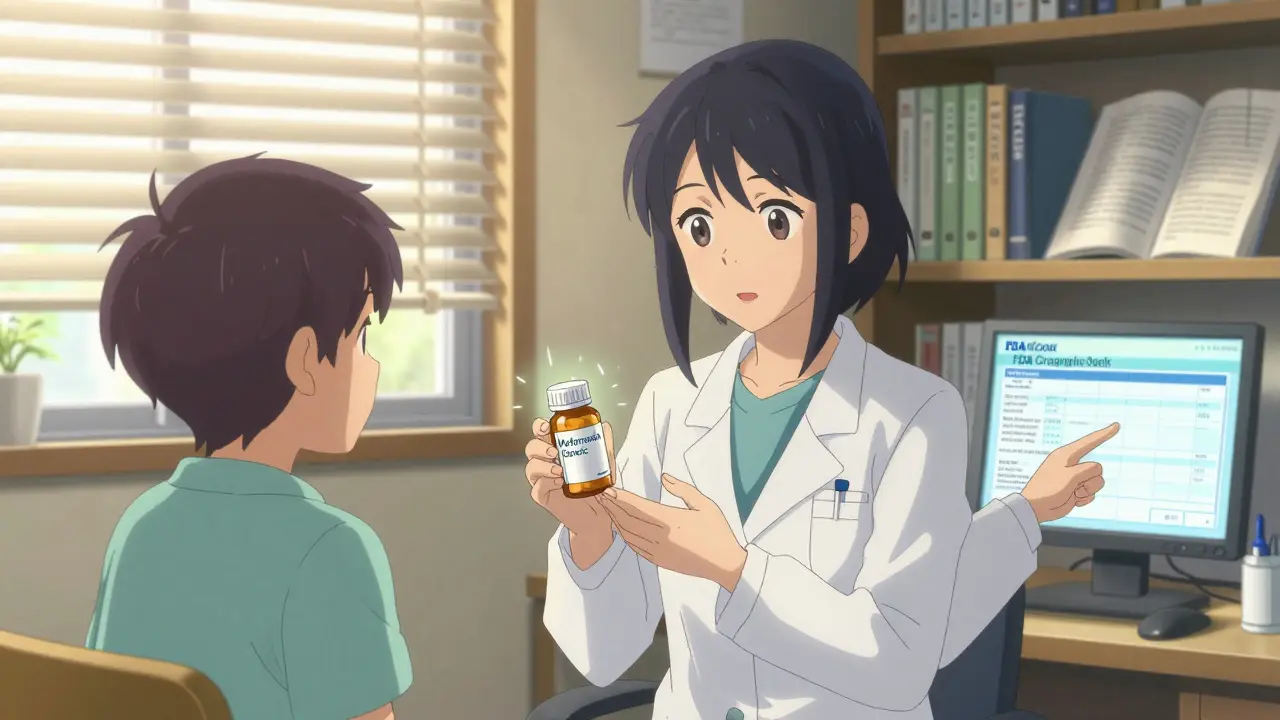
When a patient asks why they’re getting a cheaper pill with a different name, doctors need to answer with confidence. Not just any answer - the right one. That’s where continuing education comes in. It’s not just a box to check for license renewal. It’s the difference between a patient sticking with their meds because they trust their doctor - or stopping because they’re scared the generic won’t work.
In 2025, over 90% of prescriptions in the U.S. are filled with generic drugs. Yet, only 23% of total drug spending goes to them. Why? Because generics save money without sacrificing effectiveness. But that only works if doctors prescribe them correctly - and patients understand why. That’s not automatic. It takes ongoing learning.
Why Generics Matter More Than Ever
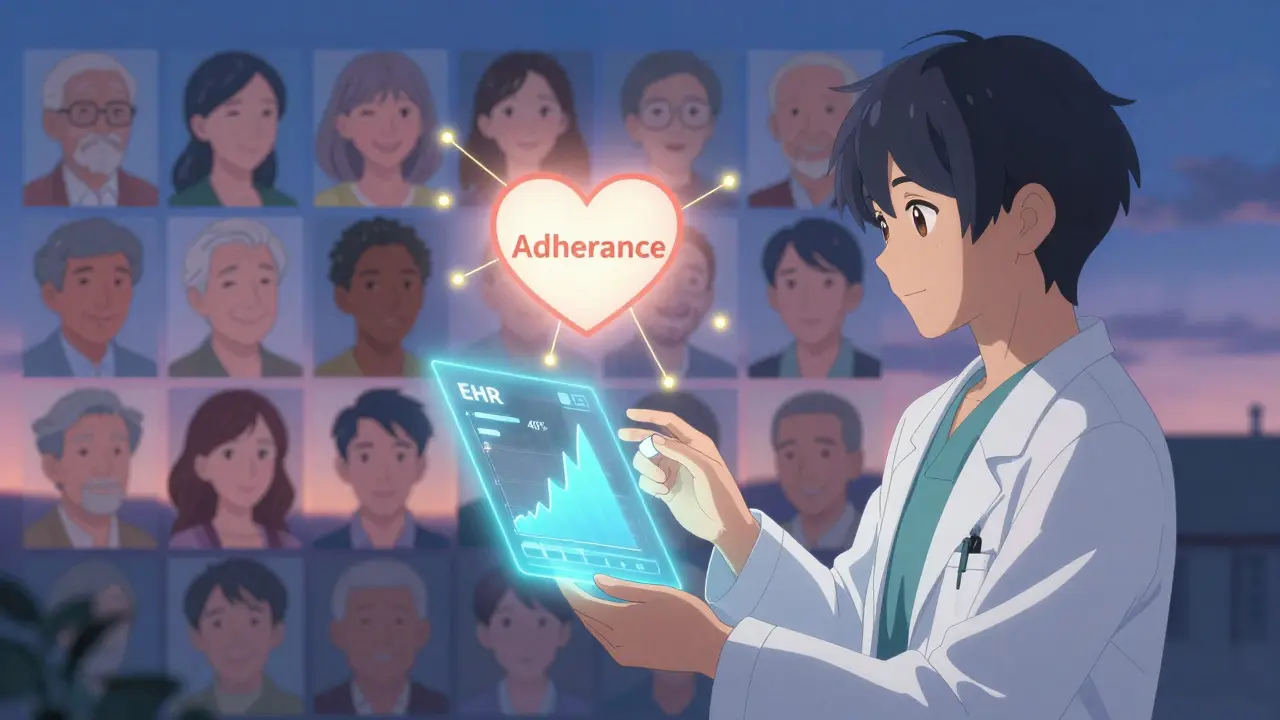
The FDA doesn’t approve generics lightly. Each one must prove it delivers the same active ingredient, in the same strength, the same way, and works the same way in the body as the brand-name version. This is called bioequivalence. It’s not guesswork. It’s science. And the data backs it up: studies show patients are 23.7% more likely to stick with their treatment when they’re prescribed a generic.
But here’s the problem: not every doctor knows that. A 2023 survey by the National Board of Medical Examiners found that physicians who completed pharmacology-focused CME made 17.3% more accurate decisions about generic substitutions than those who didn’t. That’s not a small gap. That’s life-changing for patients with chronic conditions like hypertension or diabetes, where missing a dose can mean a hospital visit.
And cost isn’t just about the patient’s wallet. The RAND Corporation estimates that if generics were prescribed more consistently, the U.S. healthcare system could save $156 billion a year. That’s enough to cover free screenings for millions of uninsured people. But savings only happen if doctors know when and how to use them.
What’s Required - And What’s Not
CME rules vary wildly by state. In California, doctors need 50 hours of Category 1 CME every two years. But there’s no specific requirement for generics. In Maryland, you need three hours on opioid prescribing - and half an hour on how to use the state’s prescription drug monitoring program. In Florida, it’s two hours on controlled substances. In Nevada, all 40 required hours must be Category 1 - but again, no mention of generics.
So what’s actually required? Forty-two states require physicians to demonstrate knowledge of drug nomenclature - meaning they must be able to tell the difference between brand and generic names. That’s the bare minimum. But it’s not enough.
The MATE Act, which went into effect in June 2023, changed the game. Now, every doctor with a DEA number - that’s anyone who prescribes controlled substances - must complete eight hours of training on substance use disorders. And yes, that includes learning about generic alternatives to opioids and other high-risk drugs. It’s the first nationwide mandate that directly ties generics to safer prescribing.
What Doctors Are Actually Learning
Not all CME is created equal. Some courses just list drug names. Others go deeper. The best ones teach how to read the FDA’s Orange Book - the official list of approved generic drugs and their therapeutic equivalence ratings. That’s where you find the letters: AB, BX, or no rating at all. AB means it’s interchangeable. BX means caution - especially for drugs with a narrow therapeutic index like warfarin, levothyroxine, or phenytoin.
Dr. Emily Rodriguez, a family physician in California, took a 10-hour pharmacology course through RenewNowCE. She says it changed how she talks to patients. “I used to say, ‘It’s the same thing.’ Now I say, ‘It’s the same active ingredient, same dose, same way it works - and here’s the FDA data that proves it.’” Her patient surveys showed a 40% drop in concerns about generics after the training.
But not everyone finds it useful. A radiologist in Texas told a physician forum, “I don’t prescribe pain meds. Why am I spending 12 hours on opioid guidelines? I need to know about contrast agents - not generics for arthritis.” That’s the real issue: CME is often one-size-fits-all. A neurologist needs different info than a dermatologist. But most platforms don’t personalize yet.

Where the Real Learning Happens
Most doctors don’t sit through 10-hour webinars. They learn on the fly. That’s why 63% of physicians now use CME that’s built into their EHR systems. UpToDate, for example, gives you 0.5 CME credits just for reading a drug monograph while checking a patient’s chart. That’s real-time learning - no extra time needed.
Other tools are helping too. The FDA’s free Orange Book Primers update quarterly. The American Society of Health-System Pharmacists offers short, focused modules on generic switching. And 41% of doctors say they use these resources regularly.
But the biggest shift is coming. By 2027, McKinsey predicts AI will drive personalized CME. Imagine your EHR flagging that you’ve prescribed brand-name metformin 12 times this month - and then suggesting a 15-minute module on generic alternatives, tailored to your patient population. That’s not sci-fi. It’s already being tested in pilot programs across 12 states.
The Gaps and the Risks
Not all generics are equal - and that’s where education fails. For drugs with a narrow therapeutic index, even tiny differences in absorption can matter. That’s why Dr. Alan K. Cohen from Harvard warns: “Assuming all generics are interchangeable is dangerous.”
And here’s another blind spot: biosimilars. These aren’t traditional generics. They’re complex biologic drugs - like insulin or rheumatoid arthritis treatments - that have similar but not identical structures. California updated its rules in January 2024 to require two hours of biosimilar education. Most other states haven’t caught up.
Meanwhile, the FDA approved over 1,000 new generics in 2023. That’s more than ever before. If doctors aren’t keeping up, they’re prescribing outdated versions - or worse, missing better, cheaper options entirely.
What You Can Do Today
You don’t need to wait for your state to mandate it. Here’s how to stay current:
- Check your state’s medical board website. Look for CME requirements around pharmacology and controlled substances.
- Use the FDA’s Orange Book. Bookmark it. Check it quarterly. Know the difference between AB and BX ratings.
- Take a 2-hour module on biosimilars - even if it’s not required. They’re the next wave.
- Use your EHR. When you look up a drug, click the CME link if it’s there. That’s learning without extra time.
- Ask your pharmacist. They know what’s new. They see what’s being dispensed. They can tell you if a new generic just hit the market.
And if you’re still skeptical? Look at the data. Patients who take their generics live longer. They’re less likely to be readmitted. Their out-of-pocket costs drop. And the system saves billions. That’s not theory. That’s what happens when doctors know what they’re prescribing.
What’s Next
The future of CME isn’t about ticking hours. It’s about proving competence. The National Academy of Medicine is testing competency-based assessments - not just counting hours, but testing whether you can actually choose the right generic in a real clinical scenario. That’s coming. And when it does, the doctors who’ve already been learning will be the ones who lead.
Generics aren’t second-best. They’re the standard. And the best doctors aren’t the ones who know every brand name. They’re the ones who know exactly when a generic is the right choice - and can explain why.
Do all states require continuing education on generic medications?
No. Only 42 states require physicians to demonstrate knowledge of drug nomenclature - meaning they must distinguish between brand and generic names. But no state currently mandates a standalone course on generics. Most pharmacology education is bundled under broader requirements like controlled substances or therapeutic prescribing.
Are generic drugs really as effective as brand-name drugs?
Yes - for the vast majority of medications. The FDA requires generics to prove bioequivalence: they must deliver the same active ingredient at the same rate and extent as the brand-name version. Studies show no meaningful difference in clinical outcomes for over 95% of generic drugs. Exceptions exist for narrow therapeutic index drugs like warfarin or levothyroxine, where small changes in absorption can matter - which is why ongoing education is critical.
What is the MATE Act, and how does it affect doctors?
The Medication Access and Training Expansion (MATE) Act, effective June 27, 2023, requires all DEA-registered practitioners to complete eight hours of training on substance use disorders. This includes education on generic alternatives to controlled substances like opioids. The goal is to reduce overprescribing and improve patient safety. Full compliance is required by June 27, 2025.
What’s the difference between a generic and a biosimilar?
Generics are chemically identical copies of small-molecule drugs (like metformin or atorvastatin). Biosimilars are highly similar versions of complex biologic drugs (like insulin or Humira). They’re not exact copies - their manufacturing process is more complex. While generics are often interchangeable, biosimilars require additional clinical data and are not automatically substitutable without a doctor’s approval.
How can I find reliable CME courses on generics?
Look for courses accredited by the Accreditation Council for Continuing Medical Education (ACCME). Platforms like UpToDate, Medscape, and the American Society of Health-System Pharmacists (ASHP) offer high-quality, evidence-based modules. The FDA also provides free resources, including its quarterly Orange Book Primers. Always check if the course covers therapeutic equivalence ratings and narrow therapeutic index drugs.
Why do some doctors resist prescribing generics?
Some worry about patient skepticism, especially if they’ve had a bad experience with a poorly manufactured generic in the past. Others are simply unaware of the latest data on bioequivalence. Specialty-specific gaps also play a role - a radiologist may not see the relevance of opioid generics, for example. Education that ties generics to real outcomes - like adherence and cost savings - helps overcome resistance.


Comments
Hanna Spittel
lol so now the FDA is our spiritual guide? 🤡 next they'll tell us the moon landing was real. generics are just big pharma's way of selling the same crap in a different box. they don't care about you, they care about profit. 🚨
John Chapman
YESSSS this is so important!! 🙌 I used to think generics were sketchy too until my mom’s blood pressure stabilized after switching. She saves $80/month and doesn’t even notice a difference. Doctors need to stop being lazy and actually explain this stuff. 💪💊
Emma Hooper
Oh honey, you’re telling me doctors are still acting like generics are some kind of discount bin miracle? 🤦♀️ I’ve seen patients panic because their new pill is blue instead of pink. One guy cried because his generic Adderall didn’t ‘feel’ the same. Spoiler: it’s the same damn molecule. But you gotta teach people like they’re not robots. 🌈✨
Robb Rice
I appreciate the data presented here, and while I agree with the general sentiment, I must point out that the statistical significance of the 23.7% adherence increase should be contextualized with confidence intervals. Also, typo in 'nomenclature' - it's spelled with an 'a', not an 'e'. Still, solid piece. 👍
Deepika D
As a pharmacist from India who's seen this play out across continents, I can tell you this: patients don't care about brand names. They care about feeling better and not going broke. In rural India, we use generics for everything - diabetes, TB, hypertension - and survival rates are better than in some US suburbs because people actually take their meds. The problem isn't the drug. It's the communication gap. Doctors need to stop treating patients like interns and start treating them like humans. And yes, EHR-integrated CME? Genius. I wish we had that here. 🙏🌍
Darren Pearson
The notion that a physician’s competence can be measured by their ability to distinguish between brand and generic nomenclature is frankly an insult to the profession. We are trained clinicians, not pharmacists. The real issue lies in the commodification of medicine - and this article, while well-intentioned, is merely a band-aid on a systemic wound.
Retha Dungga
the system is broken but we keep polishing the same broken spoon 🌌 maybe the real generic is truth itself... and we’re all just trying to swallow it without gagging
Jenny Salmingo
I just started med school and this made me cry a little. My grandma died because she stopped her meds after her brand got too expensive. I promise I’ll learn the Orange Book. I’ll tell my patients the truth. It’s not magic. It’s science. And it’s enough.
linda permata sari
I read this on my phone while waiting for my son’s pediatrician. I was about to ask for the brand-name antibiotic… then I stopped. I looked up the generic. Same active ingredient. Same FDA stamp. Same chance my kid gets better. I didn’t say a word. I just took it. And I felt… proud. 🤫❤️
Branden Temew
So let me get this straight - we’re celebrating a system where doctors are forced to learn about generics because they’re too lazy to read a 2-page FDA summary? And we call this 'continuing education'? The real CME should be: 'How to not be an idiot in 2025.' 🙄