
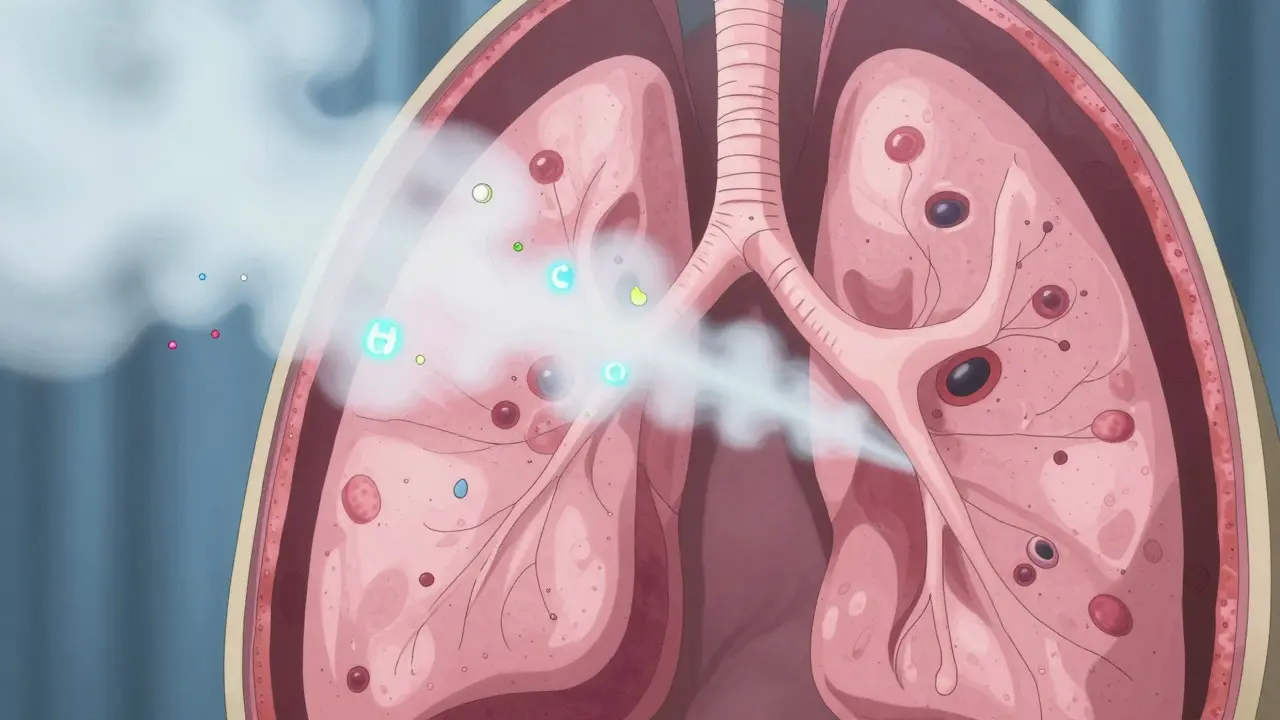
You’ve probably heard the argument: “It’s just vapor, so it can’t hurt your lungs.” It’s a common belief, especially among younger adults who switched from tobacco to e-cigarettes as a supposedly safer alternative. But the scientific picture is more complicated than that. While vaping does expose you to fewer carcinogens than burning tobacco, it isn’t harmless. The aerosol you inhale contains chemicals that irritate airways, suppress immune defenses, and may contribute to long-term respiratory disease. If you’re vaping-or considering it-you need to understand what the evidence actually says about your lungs, not just the marketing.
What’s Actually in the Vapor?
Let’s clear up the terminology first. When people say “vapor,” they usually mean an aerosolized liquid produced by heating nicotine, flavorings, and carriers like propylene glycol or vegetable glycerin. This isn’t water steam. A University of North Carolina study found that these base ingredients are toxic to cells, and toxicity increases with the number of additives in the e-liquid. The aerosol also carries volatile organic compounds like benzene (the same chemical found in car exhaust) and heavy metals such as nickel, tin, and lead from the heating coil. Flavorings add another layer of risk; diacetyl, once popular for its buttery taste, has been linked to serious lung disease, though it’s now banned in many countries. Even without diacetyl, the American Lung Association notes that e-cigarettes produce acetaldehyde, acrolein, and formaldehyde-chemicals known to cause lung and cardiovascular problems. So when you inhale, you’re not just getting nicotine. You’re introducing a complex mixture of irritants into delicate lung tissue.
The Four Critical Respiratory Concerns
As of 2025, experts identify four main ways vaping impacts lung health. First, airway inflammation: the aerosol irritates the lining of your airways, leading to chronic coughing, wheezing, or shortness of breath even if you’ve never had lung disease before. Second, impaired immune response: research from the American Thoracic Society shows that e-cigarette vapor suppresses key immune defenses in the lungs, making you more vulnerable to infections like pneumonia and bronchitis. Third, there’s the risk of EVALI, or E-cigarette or Vaping Use-Associated Lung Injury. This became a public health crisis in 2019 when thousands were hospitalized and several died, primarily from THC-containing products adulterated with vitamin E acetate. While rare, EVALI proved that unregulated substances in vaping products can cause severe, rapid lung damage. Fourth, there’s the growing concern about long-term respiratory disease development, including chronic obstructive pulmonary disease (COPD). A NIH PMC meta-analysis found that current e-cigarette users have a 48% higher odds of developing COPD compared to non-users, with pooled odds ratios of 1.48 (95% CI: 1.36-1.61). That’s significant, even if traditional smoking carries an even greater risk.
Vaping vs. Smoking: The Comparative Reality
Here’s where nuance matters. According to Our World in Data, vaping is substantially less harmful than tobacco because it lacks tar and many known carcinogens. The CDC agrees, noting that while breathing aerosols can irritate lungs and exacerbate asthma or bronchitis, “the health impacts are far lower than smoking.” But “less harmful” doesn’t mean “safe.” Traditional cigarette smokers still ingest up to ten times more diacetyl than vapers, and no cases of “popcorn lung” have been reported in either group despite early fears. However, vaping introduces unique risks that smoking doesn’t, particularly regarding immune suppression and the potential for new forms of lung injury like EVALI. For adult smokers trying to quit, vaping might be a harm-reduction tool-but it’s not a free pass. Dr. NeSmith, a pulmonologist, puts it bluntly: “No matter how you inhale nicotine-through smoke or vapor-you’re putting your lungs under stress.”
| Risk Factor | E-Cigarettes | Traditional Cigarettes |
|---|---|---|
| Tar Content | None | High |
| Diacetyl Exposure | Low (banned in many regions) | Up to 10x higher |
| COPD Risk Increase | 48% higher odds vs. non-users | Significantly higher (baseline risk) |
| Immune Suppression | Documented suppression of lung defenses | Present, but different mechanism |
| EVALI Risk | Yes (linked to vitamin E acetate/THC) | No |
| Secondhand Exposure | Nicotine, ultrafine particles, VOCs | Full tobacco smoke cocktail |

Who Is Most at Risk?
Not everyone vaping faces the same danger. Youth are particularly concerning because their lungs are still developing. The National Academies’ 2018 report found moderate evidence that young e-cigarette users have increased rates of cough, wheezing, and asthma exacerbations. There’s also the “gateway effect”: studies suggest some youth who start with vaping later transition to traditional smoking, compounding their lifetime lung exposure. Adults with pre-existing conditions like asthma or bronchitis are also more vulnerable, as the aerosol can trigger flare-ups. And then there’s the silent risk: people who vape casually, thinking they’re low-risk, may develop gradual symptoms like decreased exercise tolerance or recurring chest tightness. These aren’t dramatic enough to prompt immediate medical attention, but they signal underlying inflammation that could worsen over time. If you’ve ever felt winded after climbing stairs or noticed a persistent dry cough, it’s worth mentioning your vaping history to your doctor.
What Symptoms Should Prompt Action?
Lung damage from vaping rarely announces itself with one big event. Instead, it creeps in. Watch for these red flags:
- Persistent cough lasting more than two weeks
- Shortness of breath during mild activity
- Chest pain or tightness that doesn’t resolve
- Decreased ability to exercise compared to before
- Recurring bronchitis or respiratory infections

Can Your Lungs Recover After Quitting?
The good news: yes, partially. Some inflammatory changes in the airways are reversible once you stop exposing them to aerosol. Coughing and wheezing often improve within weeks to months. Exercise tolerance may gradually return. But “reversible” doesn’t mean “risk-free.” Chronic exposure may alter lung cell structure in ways we don’t fully understand yet. Studies suggest that long-term inflammation could increase cancer risk over time, though direct causation in vapers is still being studied. The bottom line? The sooner you quit, the better your chances of full recovery. Dr. NeSmith advises that “the safest choice is to quit both” traditional cigarettes and e-cigarettes. If you’re using vaping to quit smoking, treat it as a temporary bridge-not a permanent lifestyle. Set a timeline to taper off and seek support if needed.
Practical Steps to Protect Your Lungs
If you’re currently vaping, here’s how to minimize your risk:
- Choose regulated products: Stick to brands that comply with local regulations banning harmful flavorings like diacetyl. Avoid black-market or DIY e-liquids, which lack quality control.
- Monitor your symptoms: Keep a simple log of any coughing, wheezing, or breathlessness. Share this with your doctor.
- Avoid mixing substances: The EVALI outbreak was largely tied to THC cartridges cut with vitamin E acetate. If you vape cannabis, use lab-tested products only.
- Stay hydrated and breathe clean air: Hydration helps keep airway mucus thin, making it easier to clear irritants. Avoid secondhand smoke and pollution when possible.
- Plan your exit: If you’re an ex-smoker, work with a healthcare provider to create a quit plan for vaping too. Nicotine replacement therapy or prescription meds can help manage cravings without adding aerosol to your lungs.
Frequently Asked Questions
Is vaping really safer than smoking for my lungs?
Yes, generally. Vaping exposes you to fewer carcinogens and no tar, so the overall respiratory burden is lower than traditional smoking. But it’s not risk-free. You still inhale irritants that can cause inflammation, suppress immunity, and potentially contribute to COPD or other lung diseases over time. Think of it as “less bad,” not “good.”
Can vaping cause permanent lung damage?
Possibly. Acute injuries like EVALI can cause severe, sometimes permanent damage. Chronic exposure may lead to irreversible changes in airway structure or increased cancer risk, though long-term data is still limited. The American Lung Association warns that inhalation of harmful chemicals can cause irreversible lung disease, so caution is warranted.
Do I need to see a doctor if I vape but feel fine?
Yes, it’s wise. Many vaping-related lung issues develop gradually. Mentioning your vaping history during routine visits allows doctors to monitor lung function over time and catch subtle changes early. It’s proactive care, not panic.
What’s the fastest way to recover lung health after quitting vaping?
There’s no magic timeline, but stopping exposure is step one. Within weeks, acute irritation like coughing may ease. Over months, lung function and exercise tolerance often improve. Staying hydrated, avoiding pollutants, and staying active support recovery. See a doctor if symptoms persist beyond a few months.
Are flavored e-cigarettes more dangerous than plain ones?
Potentially. Flavorings add extra chemicals to the aerosol. Diacetyl, for example, was linked to lung disease and is now banned in many places. While not all flavors are equally risky, each additive increases complexity and potential toxicity. Plain nicotine-only liquids have fewer variables, though they’re still not harmless.